From curb to landfill: Where does trash around Kansas City go after we throw it away?
READ MORE
Let’s talk trash
Readers across the Kansas City metro kept asking us about trash: Is recycling really recycled? What’s up with all the trash on the highways? And where does our trash actually go when we throw it away? We’re digging in — literally.
Expand All
Editor’s note: This story is part of The Star’s series “Talking Trash.” All of the stories were inspired by questions and concerns we heard from Kansas Citians through listening sessions, an online callout and other conversations in our community. You can share thoughts in the form at the bottom of this story, or email kcq@kcstar.com.
Once your trash is out on the curb, it may feel out of your hands. But the route trash takes from your home to a landfill reveals a complex system of public and private service providers all working to keep the metro clean and safe.
In 2021, the greater nine-county Kansas City area sent around 2.8 million tons of trash to landfills in Kansas and Missouri. That comes out to a little more than 7 pounds of waste per person, per day, according to Lisa McDaniel, the Mid-America Regional Council’s Solid Waste Program Manager.
City data shows that the amount of trash collected in Kansas City declined steadily between 2004 and 2016 — but this trend may have reversed in recent years. In 2021, Public Works Director Michael Shaw shared on Twitter that “KCMO trash tonnages are up over 25% and climbing.”
Several requests to the city for trash tonnage data in the years since 2016 have not been returned.
While some of that weight comes from construction waste generated by builders and contractors, the rest is what we as residents throw out around the metro every day — from food and tissues to packaging, junk mail, bulky items and much more.
According to Shaw, over 70% of the waste produced in Kansas City is recyclable. And according to Indiana University, around 28% of waste from a typical household is compostable.
If you’ve ever wondered where your trash goes once it leaves your home, here’s its journey.
Step 1: Curbside collection
There are three main ways that trash can get collected in the metro:
The cities of Kansas City and Olathe provide trash collection services through their municipal governments. This means that sanitation workers are city employees. These services are funded with taxpayer money and include restrictions on the type and amount of trash collected. Buildings with more than six units aren’t included in Kansas City’s municipal system, and must arrange their trash service with a private company.
Other cities in the metro contract with private trash companies on behalf of their residents. That means that haulers like Waste Management, Republic Services, Stewart Hauling Company, Ted’s Trash Service, GFL Environmental or others collect the trash in these areas. Residents may pay these companies directly through customer bills or indirectly through city taxes.
In Overland Park, Shawnee, Independence, Raytown, Lee’s Summit and Grandview, residents are responsible for coordinating their own trash collection. That means that customers either arrange pickup with private companies directly or haul their own trash to transfer stations and landfills.
No matter which of these models is active in your area, residents are generally required to dispose of their trash somehow. That means you can’t burn it, let it pile up in your yard or dump it illegally on public or private land.
Some haulers also pick up recycling, compost or household hazardous waste. Some offer bulky item pickup. Others collect yard waste and natural materials like lumber.
Read more about Kansas City’s two-bag trash limit.
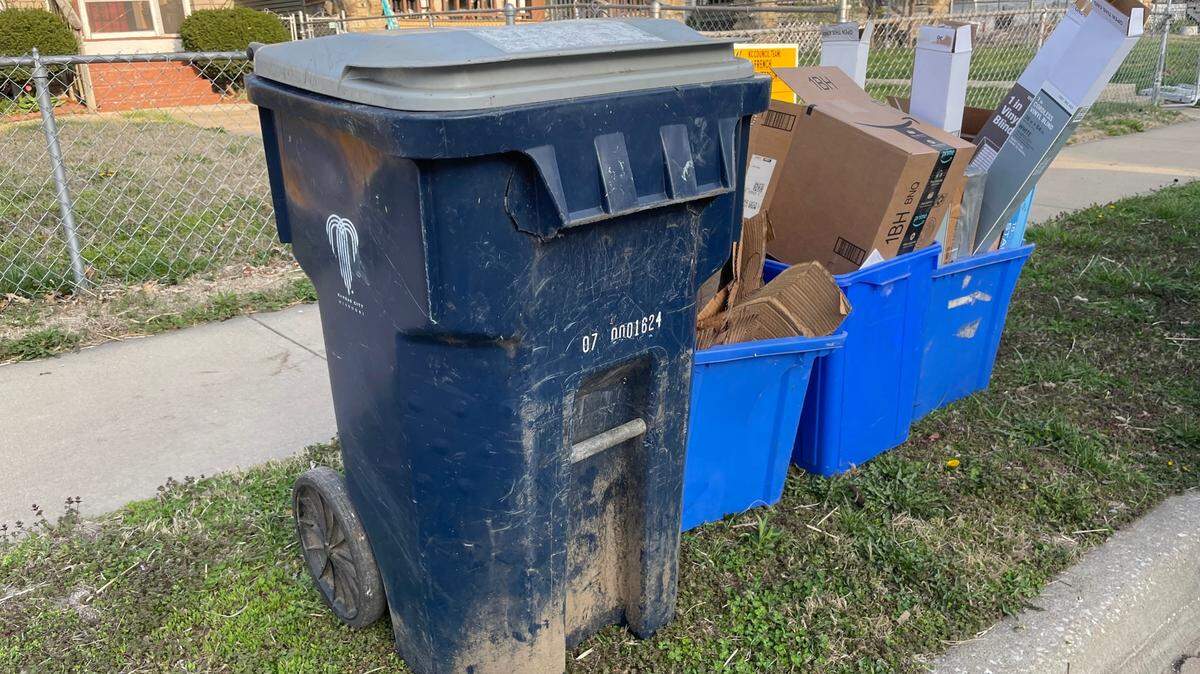
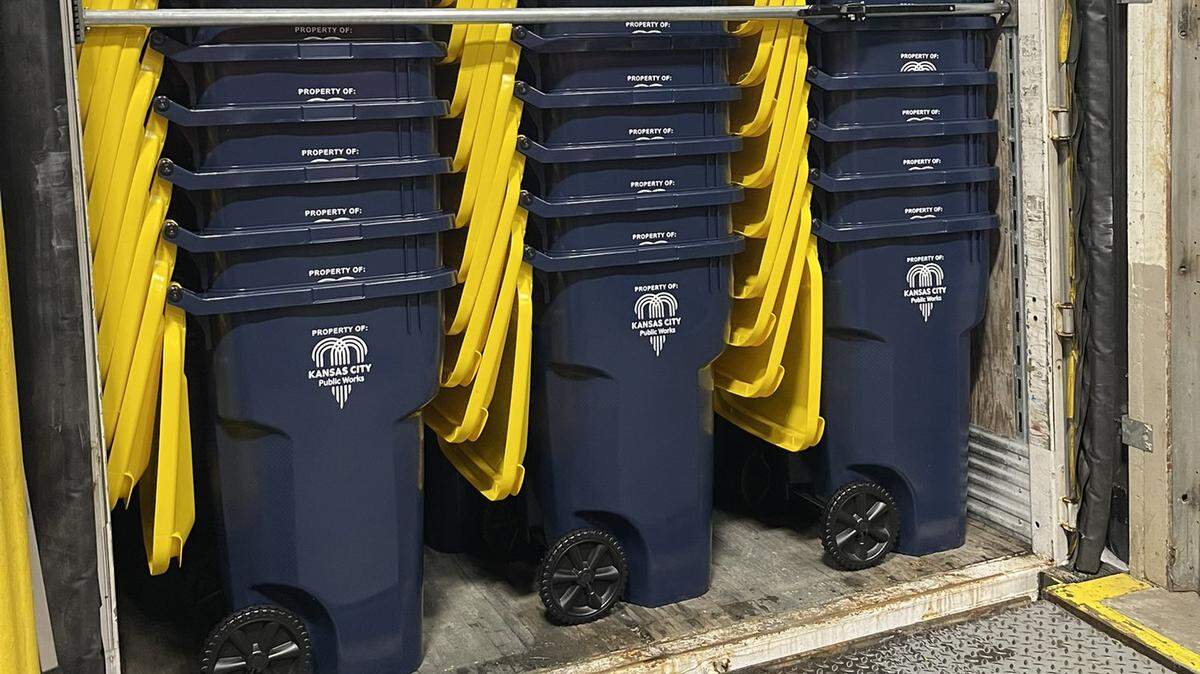
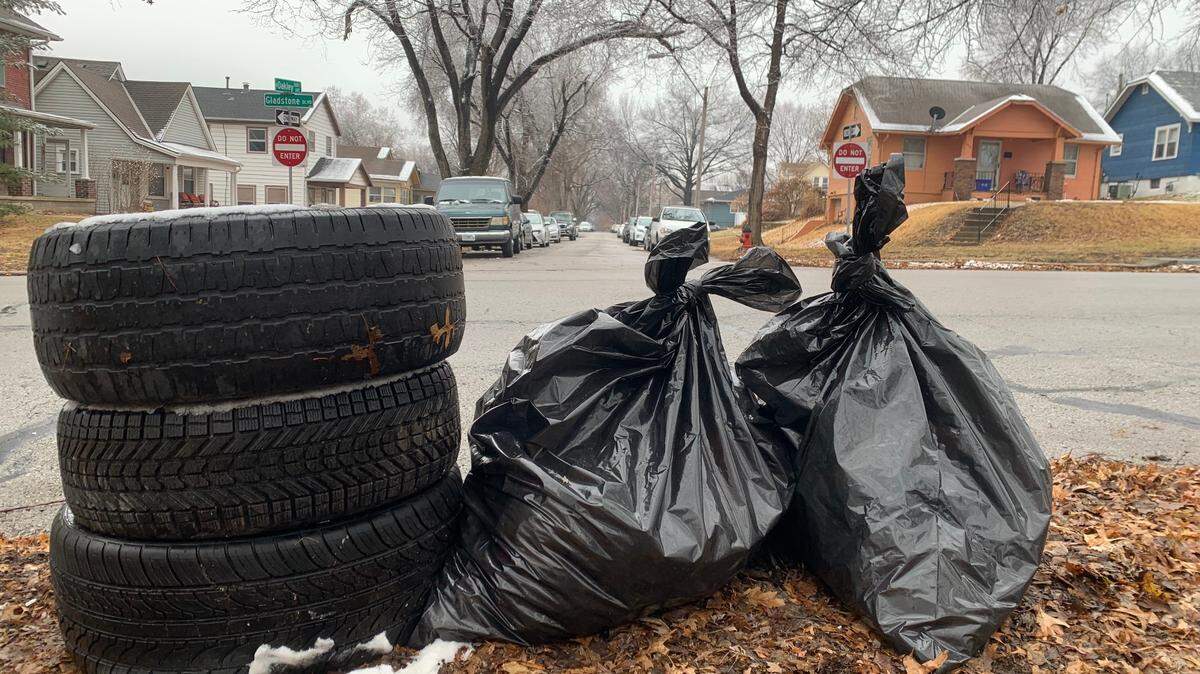
Depending on where you live, different materials may be collected by different companies. Some provide bins to place your trash in on pickup day. Others ask customers to provide their own bins, or simply to leave tied bags on the curb.
Step 2: Hauling
Once a bag of trash leaves the curb, it is usually loaded into a garbage truck that compresses it and transports it to its next location.
Some private companies, however, have a different way of doing things: Haulers like Junk King in the West Bottoms may sort through bulky items to find opportunities to resell, compost or otherwise repurpose unwanted materials.
Kansas City’s solid waste collection happens on a weekly basis, with trash and recycling collected on the same day. However, if you or your neighbors use private haulers, you may see trash trucks from different companies in your neighborhood on different days of the week.
Step 3: Transfer Stations
Your trash’s next stop is likely a solid waste transfer station. This intermediate point on your trash’s journey is where the contents of trash trucks are consolidated onto larger transports like semi trucks headed for the landfill.
“Trash trucks are heavy beasts,” McDaniel told The Star. “They’re not gasoline efficient. And so for them to have to drive very far, it just doesn’t make economic sense for a hauler. So a transfer station can be looked at as an intermediary point.”
There are seven transfer stations located around the metro. While you may refer to yours as a “dump,” they are not intended to be the final resting place of your trash. Instead, they are just where trash is repackaged for the next leg of its journey.
“We’ve only got two landfills in the metro,” McDaniel said. “So you’re discharging loads from a lot of these smaller trash trucks into a truck that’s designed to travel more efficiently over long distances.”
Step 4: Landfills
Three landfills primarily serve as the final resting place for Kansas City’s trash. Two are located in the metro: The Johnson County Landfill is operated by WM, while the Courtney Ridge Landfill is operated by Republic Services.
The third major landfill is the Central Missouri Landfill in Sedalia, Missouri, which is operated by GFL Environmental.
McDaniel told The Star that small amounts of trash from the metro are also sent to the privately owned Hamm Landfill near Lawrence, and the St. Joseph Landfill, which is operated by the city of St. Joseph.
Another landfill called Pink Hill Acres also serves the metro area, but it’s a construction and demolition landfill. That means it only takes building material waste from large construction and demolition projects — it doesn’t take the type of household waste that individuals produce.
Check out our guide to local landfills for more information about how these complex structures hold our solid waste for generations.
Do you have more questions about where Kansas City’s trash ends up? Ask the Service Journalism team at kcq@kcstar.com.
This story was originally published April 6, 2023 at 6:00 AM.
.jpg)