Two famous Kansas City families battle over art, money, a ‘cult’ and their legacies
READ MORE
The art of war
On one side of this legal tug of war is the family of famed painter Thomas Hart Benton. On the other, UMB Bank, run by the Kemper family. Both parties have filed incendiary lawsuits.
Expand All
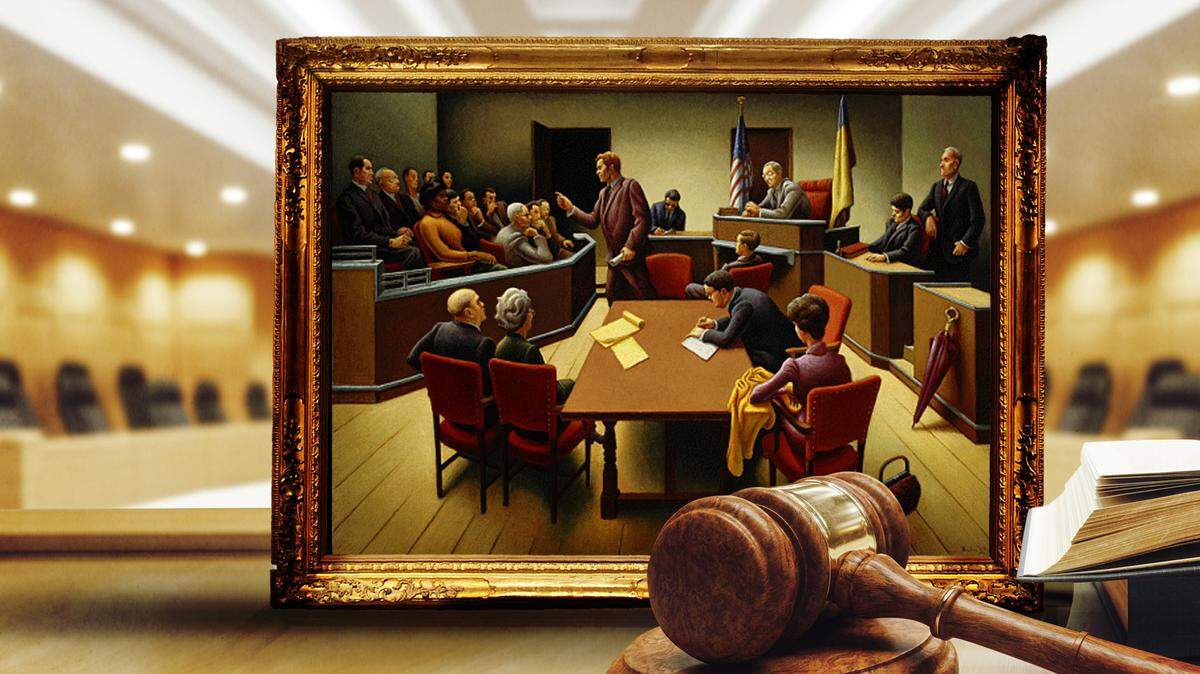
Two famous Kansas City families battle over art, money, a ‘cult’ and their legacies
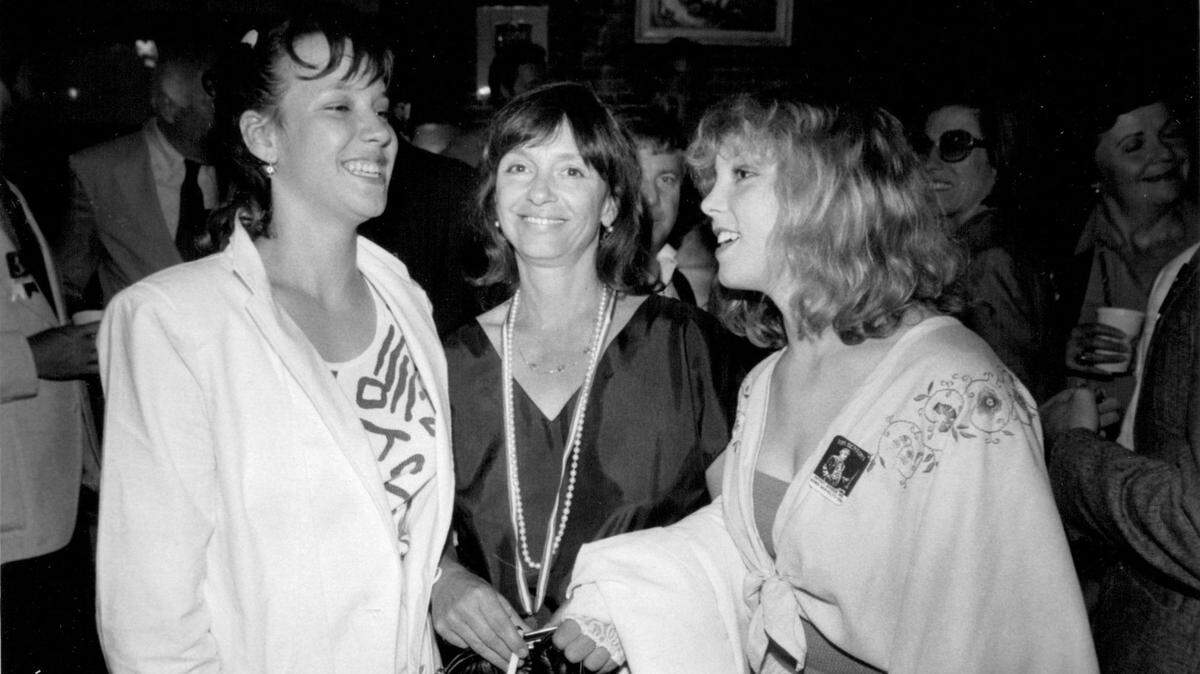
‘Irreplaceable art unaccounted for’: Read the suit Benton’s family filed against UMB

‘Scheme to defraud UMB of over $300 million’: Read bank’s claim against Benton family
Here’s where to see Thomas Hart Benton’s artwork around Kansas City
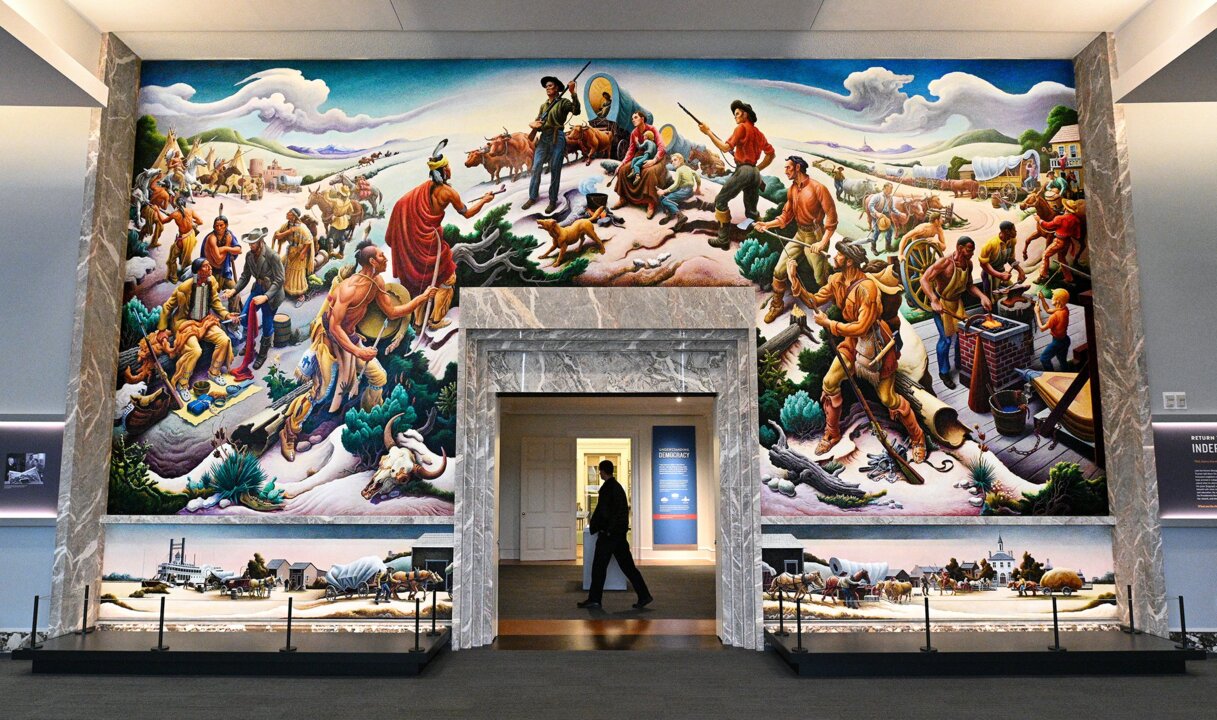
Thomas Hart Benton 101
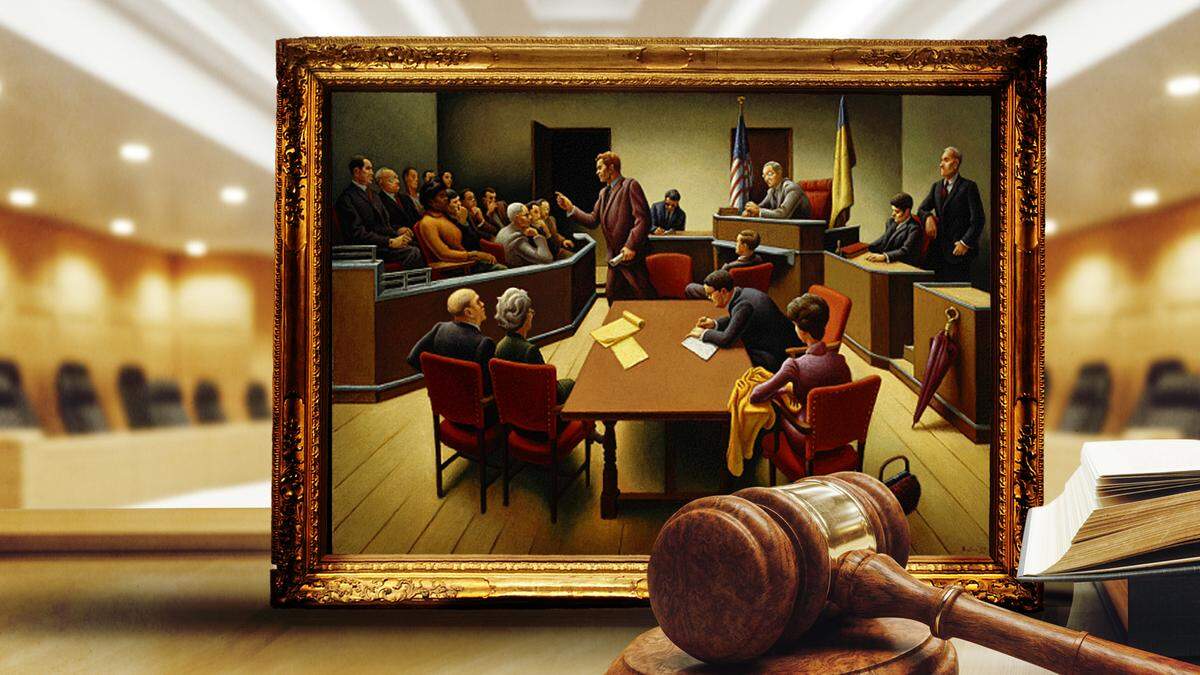
Kansas City artist Thomas Hart Benton — son of a congressman, great-great-nephew of Missouri’s first senator — understood that power often lurks in the background, unseen by the masses.
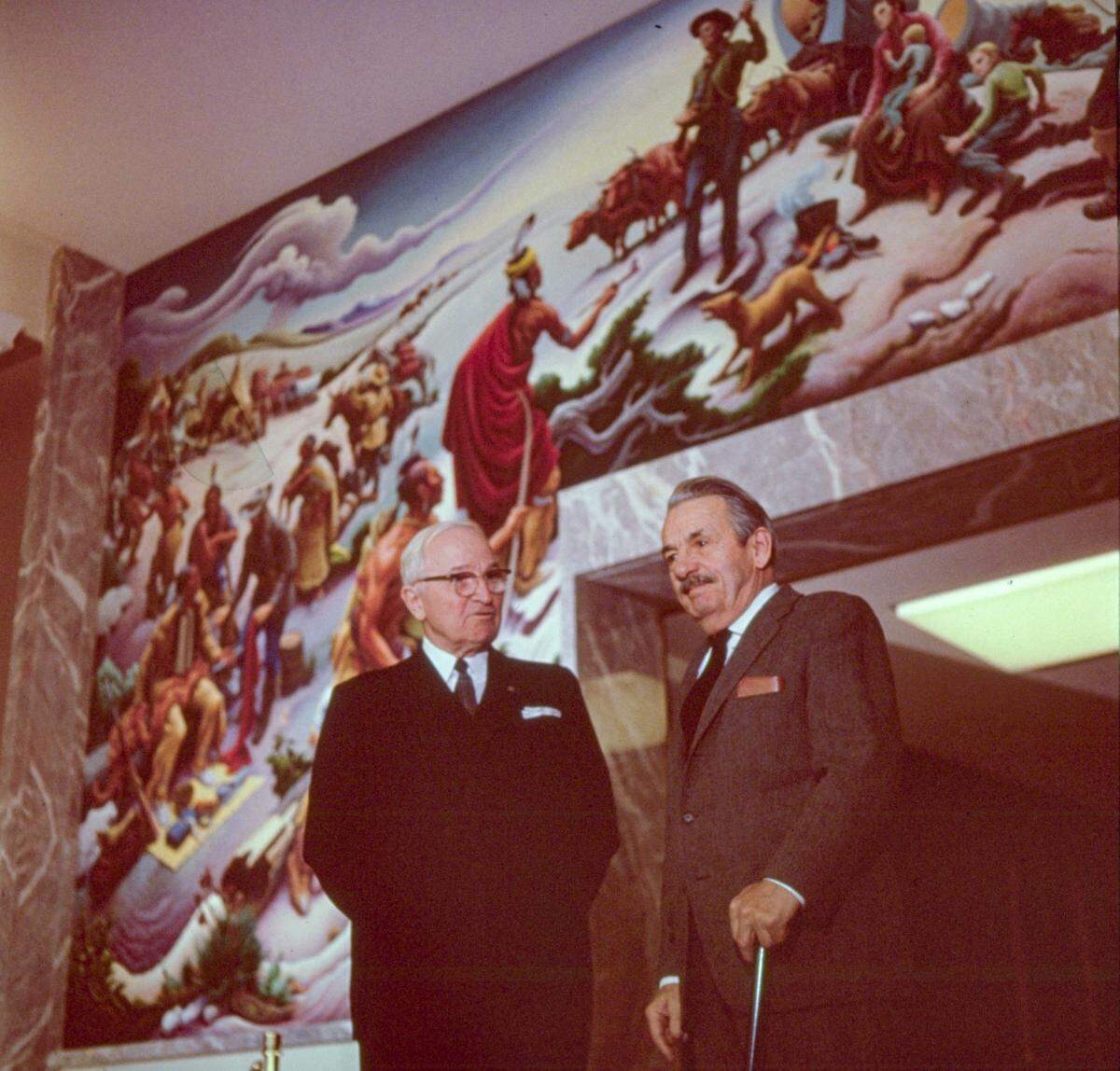
And so the immense mural he was commissioned to paint for the state Capitol in 1936, at the peak of his creative powers, was not the reverential tribute the legislature had bargained for.
“A Social History of Missouri” celebrated the state and its people, but also its dark chapters, its slave auctions and outlaws.
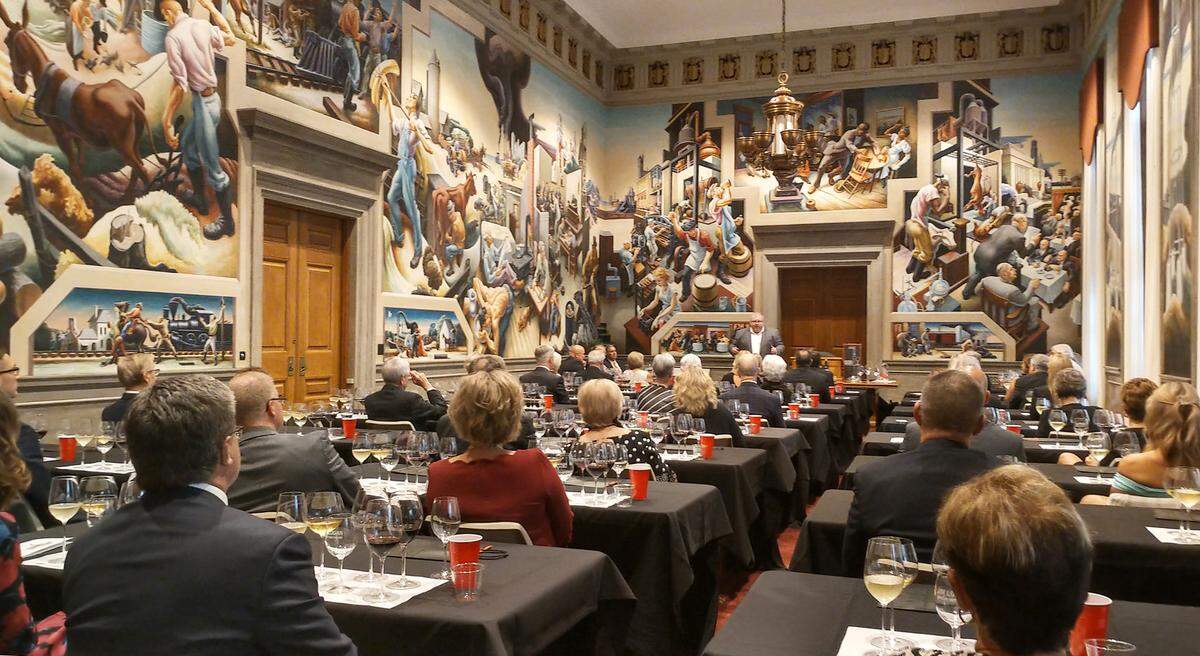
The Missouri governor was nowhere to be seen. But in a corner of the mural’s south wall were some of Kansas City’s most powerful men: Corrupt political boss Tom Pendergast. Real estate developer J.C. Nichols.
And, seated at a table looking a little bored, banking magnate William Thornton Kemper Sr., whose life and family would be intertwined with Benton’s for decades to come — beyond the Capitol mural, in ways both friendly and hostile.
Kemper and Benton have long since died — Kemper in 1938, Benton in 1975. But in their respective fields — banking and art — their legacies are unmatched in Kansas City. Benton is by far the city’s best-known visual artist, and Kemper’s heirs run the two largest banks in the state.
An avid art collector, scion R. Crosby Kemper Jr. often said Benton was his favorite painter. He would boast that they picnicked together on Martha’s Vineyard. Before Benton died, the artist appointed a Kemper-run bank, United Missouri Bancshares, to be the co-trustee and co-executor of his trust, which included several thousand works of art.
Years passed. Then Benton’s only living child, Jessie Benton, declared war on the bank.
Her allegations, outlined in a 2019 probate lawsuit that also included the artist’s three grandchildren as plaintiffs, were explosive. United Missouri Bancshares — now called UMB Bank and run by Mariner Kemper, William’s great-grandson — had lost more than 100 pieces of art it had been entrusted to manage, the lawsuit claimed, and other works had been improperly cared for. The bank was also alleged to have sold pieces for less than their market value and engaged in self-dealing.
“UMB in the short of it has failed to complete the most fundamental tasks from the beginning to adequately care for the property entrusted to it, and then charged fees to the Trust,” Jessie Benton’s attorney, Andre Boyda, told The Star after the lawsuit was filed.
The bank told The Star and other media outlets then that the beneficiaries’ claims were “misguided,” and that it looked forward to quickly resolving the matter in court.
That hasn’t come to pass. More than two years later, the dispute has only intensified. Recently, this legal brawl tumbled into federal court, where UMB has filed an incendiary lawsuit of its own. The Benton heirs have engaged in a racketeering effort aimed at defrauding UMB Bank out of hundreds of millions of dollars, the bank alleges, motivated by their involvement in a secretive community that some have characterized as a cult.
Art versus commerce, business and bohemia, the leveraging of the law and the manipulation of the media: The scope of this protracted feud seems to expand with each new case filing. At its core is a battle over legacy: The Kempers and the Bentons, two of the most influential families in Kansas City and Missouri history, colliding in court, their reputations on the line.
Jessie Benton and the Lyman Family
For the past two years, UMB and the Benton beneficiaries have been slugging it out in Jackson County Circuit Court. Eight months into the probate case, the Bentons filed an additional lawsuit, alleging that the bank kept some art that should have been gifted to them long ago and that it also sold some pieces that are rightfully theirs.
Then in December, UMB opened up another front in the war, this one in federal court.
The lawsuit, a colorful and provocative document filed by attorneys at Shook Hardy and Bacon in the U.S. District Court of Western Missouri, accuses the Benton beneficiaries of violating anti-racketeering laws. It draws a direct line from the parties’ current litigation all the way back to 1966, when a young Jessie Benton first became acquainted with a charismatic folk musician named Mel Lyman.
Jessie graduated from both Sunset Hill, now part of Pembroke Hill, and Radcliffe College, now merged with Harvard University, and married David Gude in 1962. Gude was a musician and recording engineer she’d met on Martha’s Vineyard, where the Bentons summered, and the ceremony was held at St. Francis Xavier Church, at 52nd Street and Troost Avenue.
But the cultural earthquake of the ’60s would soon intervene. One night in 1966, Gude brought Lyman over to the Benton home on Martha’s Vineyard, according to multiple published accounts. Jessie had been given some LSD by Owsley Stanley, the famous financial backer and LSD supplier of the Grateful Dead. It was her first experience with the drug, and Lyman helped guide her through it, singing to her and reading her poetry. The trip lasted two days. When it was over she told a friend, of Lyman, “I’ve found God and I’m moving in with him.”
Jessie was not alone in her belief that Lyman was a deity of some kind. In the mid-’60s, a group of counterculture types — artists, philosophers, writers, musicians, many of them well educated — began renovating a block of decaying Victorian homes in Boston’s Fort Hill neighborhood, repurposing them for communal living. Idealistic thinkers and lost souls kept wandering up the hill. By 1971, the group had swelled to over 100 members and was said to be expanding across the country. Their leader was Lyman, a former banjo player who had once self-published a book called “Autobiography of a World Saviour.” Lyman came from another planet, he explained in the book, “the planet of pure being, same place Christ came from.”
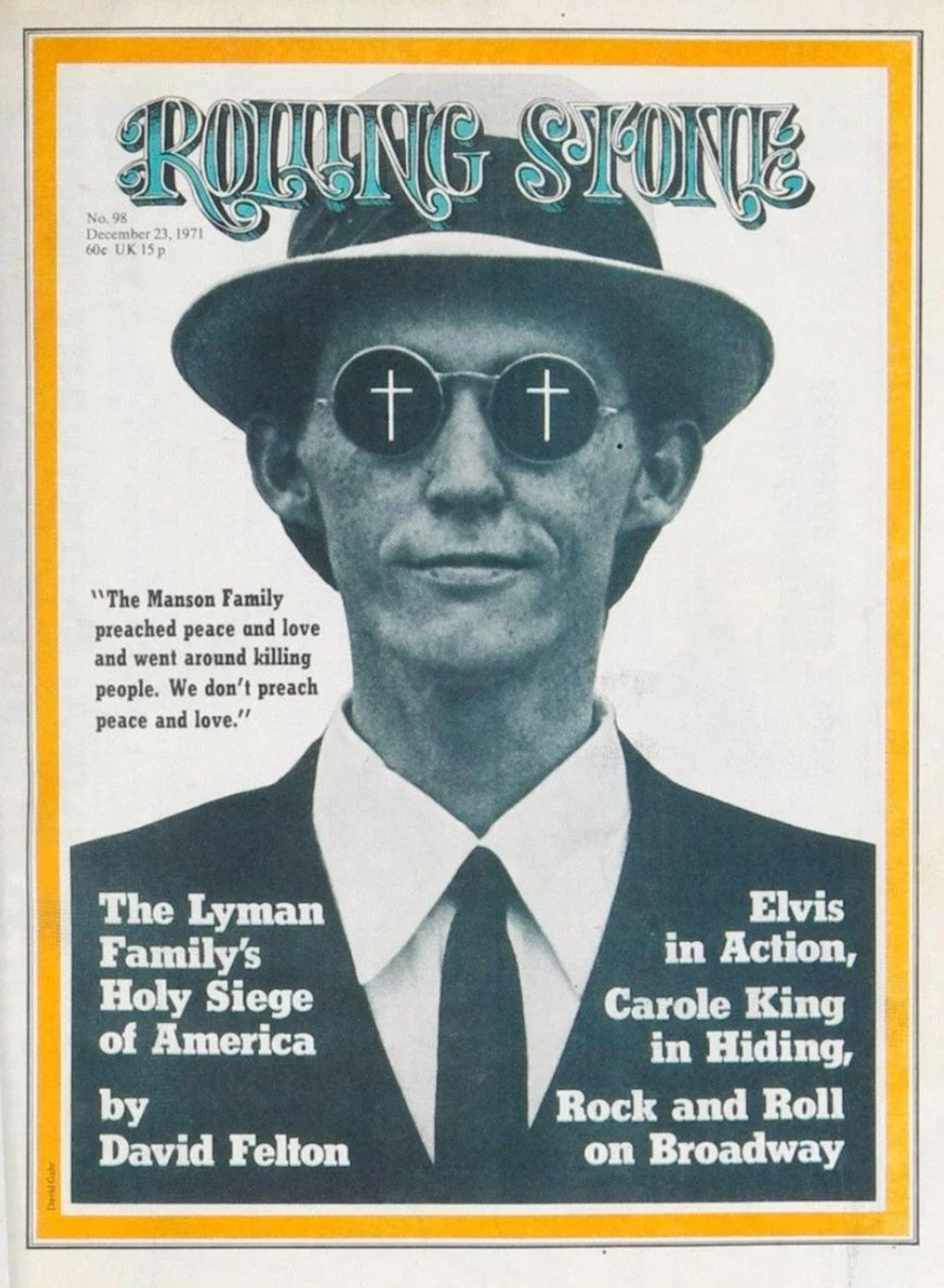
In 1971, a Rolling Stone writer named David Felton traveled to Boston to investigate this curious development. Felton’s resulting two-part Rolling Stone cover story, “The Lyman Family’s Holy Siege of America,” described a Manson Family in the making. Lyman’s power over the group bordered on absolute. In the basement of one of the homes was a windowless vault where members deemed to have behaved badly were allegedly sent to encourage “self-awareness.” Nearly every room in every house contained a framed photograph of Lyman. Bodyguards protected Lyman’s privacy and a “Karma Squad” roughed up outsiders — unsympathetic reporters, a supposedly incompetent mechanic, even other local communes — who ran afoul of the group.
Lyman’s capricious pronouncements were followed to the letter by his converts, many of whom had been manipulated by Lyman through the use of LSD — a mind-control strategy Felton dubbed “acid fascism.” As Lyman grew increasingly reclusive, the magazine reported, he issued “bulletins” dictating how and when members should eat, sleep and bathe. He once declared a one-year moratorium on sex; when a few members didn’t follow it, every woman was ordered to get an IUD. “We believe that woman serves God through man,” a woman told the magazine.
“Everything you’ve heard about Mel is true,” another female member told Rolling Stone. “He does manipulate us, but he doesn’t manipulate us for evil. He manipulates us to be what we truly are. He is our soul. … There have been times when he actually glows and the walls leave the room — that happens a lot.”
The woman speaking was Jessie Benton. By then the ex-wife of Lyman (he would go on to have 12 children with multiple mothers), Jessie was referred to in the Rolling Stone story as one of the very first members of the Lyman Family and “certainly the most powerful female influence in the community.”
Ray Riepen was hanging around Boston back then. An attorney, he’d known Jessie growing up in Kansas City and helped her get a divorce from Gude after she met Lyman. Riepen also owned a legendary Boston music venue, the Boston Tea Party, which operated from 1967 to 1970.
“She was the queen bee up there,” Riepen told The Star recently. “She had the money from her father and she was a bright gal — I’d say she had a little IQ on a lot of the people up there. The Fort Hill thing, I’d call it an attempt to do a cult. There was a lot of that in those days. It was a commune with a lot of acid, lot of marijuana, a lot of desperate people. I used to go up there and have dinner, but her boyfriend was in the habit of lacing your drink with LSD and taking you up into the attic and telling you how much he loved you. It wasn’t my thing.”
In one digression in the Rolling Stone piece, Lyman is quoted as saying he often didn’t get along with the parents of the community’s members — with one exception.
“One of the few parents who has understood me is Thomas Hart Benton, and that’s because he’s an artist, a creator,” Lyman said. “He creates in the medium of art, and I create in the medium of people.”
Felton’s story referred to the artist as “very important to the Lyman Family, sort of the benefactor. Not only did he give them Jessie, but many of his original works and two summer retreat houses at Martha’s Vineyard, where Mel takes certain followers to train as leaders.” The magazine noted that a collage on the cover of a recent album by Lyman Family member Jim Kweskin included a photo of Thomas Hart Benton, and that Benton’s original paintings hung on every wall in one of the family’s living rooms. Before he died, Benton painted a picture of an old farmhouse, sold it for $42,000, and used the proceeds to purchase a 280-acre farm in Marshall County, Kansas, on the northeastern edge of the Flint Hills. It soon served as a home base for the Lyman Family.
The negative coverage in Rolling Stone came as a surprise to the group’s members.
“They truly thought the story would show how wonderful they were and were shocked when it turned out to be the opposite,” Ryan Walsh, who interviewed roughly a dozen former and current members of the group for his 2018 book “Astral Weeks: A Secret History of 1968,” told The Star recently.
The family called the story defamatory and rife with lies.
“They (Rolling Stone) made a fortune doing the same thing with Charles Manson,” Jessie told The Star in 1986. “They equated us with the Manson Family and wanted to sell that many newspapers again, and most of it was libel and we should have sued them but we passed on the whole thing.”
Less than two years after the story’s publication, three members of the Lyman Family, including a Hollywood actor named Mark Frechette, attempted to rob a Boston bank. One was killed by police and the other two went to prison. Not long after that, a Lyman Family member burned down a neighbor’s property on Martha’s Vineyard.
The glare of the modern world felt increasingly harsh. Believing themselves the misunderstood victims of bad press, the community turned even further inward. They went underground.
Going straight as the Fort Hill Community
The world would end on Jan. 5, 1974. At least that’s what Lyman and his followers believed, according to Guinevere Turner, who was born into the family in 1968 and spent her first 11 years living with its members.
“On that date, Mel Lyman told us, we would be taken away to Venus,” Turner writes in “My Childhood in a Cult.” “We were told that the spaceships hadn’t come because our souls weren’t ready. We hadn’t done the work on ourselves that we needed to, and we had ruined things for Mel, whose soul was exactly where it needed to be. The year was set to 00, he decided we would no longer observe daylight-saving time (there would now be World Time and Our Time), and we kids weren’t allowed to speak for the foreseeable future.”
Turner’s account, published in The New Yorker in 2019, offered a rare window into an especially private era — the mid- to-late-1970s — of the family’s history.
“I grew up on compounds in Kansas, Los Angeles, San Francisco, New York, Boston, and Martha’s Vineyard, often travelling in five-vehicle caravans across the country from one location to the next,” Turner wrote. “My reality included LSD, government cheese, and a repurposed school bus with the words ‘Venus or Bust’ painted on both sides.”
In many ways, the childhood Turner describes was idyllic, bucolic. The kids fished and foraged for morel mushrooms in the woods. They had dogs and goats and cows and they played music and read books like “The Chronicles of Narnia” and “A Wrinkle in Time.”
But a dark fog loomed over the community, especially for the girls, many of whom, Turner writes, were “chosen” by adult males at a young age. She describes a 13-year-old who lived in a room near Lyman’s.
“It was commonly known that she belonged to Mel, and no one else would be allowed to have her or think about having her, for the rest of her life,” Turner writes. “When we were alone, she would cry and say that she didn’t want to have sex with Lyman but knew that soon she would have to. She already slept in his bed.”
Turner, a Hollywood screenwriter, told The Star, “Thomas Hart Benton and his wife were frequent visitors when I was a kid, and I grew up with his paintings on practically every wall in every house,” but declined to otherwise comment for this story, citing the fact that she is expanding her article into a book about her childhood in the Lyman Family.
In 1985, the family emerged from their self-imposed seclusion to promote a new magazine they had founded, the short-lived U&I. The Fort Hill Community, as they preferred to be called, had kept busy over the previous decade — prospered, even.
Several members had put to use the skills they’d acquired fixing up the dilapidated Boston houses through Fort Hill Construction, a Los Angeles outfit that enjoyed a sterling reputation for building and remodeling the homes of celebrities like Steven Spielberg, Dustin Hoffman and David Geffen.
The Los Angeles Times and others reported that the Fort Hill Community numbered more than 100 members and owned, in all, 20 homes. That included two Hollywood Hills mansions worth $4 million that were surrounded by a “high brick and mortar wall”; a Manhattan loft; the Kansas farm and the Martha’s Vineyard retreat, both gifted from Thomas Hart Benton; a villa in France; and an island off Maine.
But the family’s past troubles and current quirks did not escape notice.
“The Lyman Family has evolved strong values about marriage and sex, mixing traditionalism with the practical needs of their life style,” journalist David Cay Johnston, then of the Los Angeles Times, reported. “Marriages typically last three to seven years, but there is no divorce, in their view. Adultery, a serious social offense, is unheard of. The singles among them are celibate. Homosexuals are not welcome, they say.”
Jessie Benton, then 42, was quoted as saying, “Women should take care of men, should serve them so they can be creative.” She added: “We are our own separate universe. We have everything you have — even criminals.”
There was also the matter of Mel Lyman’s whereabouts. He’d last been heard from in 1978, when a Boston reporter was allowed only to communicate with him through a Ouija board. Rumors persisted that he had fled the family or moved to Europe. The family now told reporters that he had died in 1978 after a lingering illness at the age of 39.
But, Johnston with the LA Times wrote, “There was no funeral and no death certificate, and the Family’s leaders will not discuss with strangers, or even some members, what they did with Lyman’s body, if he did die.”
The mystery persists to this day. Walsh, the author of “Astral Weeks,” said his research into Lyman’s disappearance led him to the conclusion that Lyman indeed died sometime around 1978.
“I’m absolutely certain Mel is dead,” Walsh said. “My understanding is that he got very ill — it was indicated but not explicitly said that it was cancer — and somehow, whether with pills or a gunshot, killed himself. But it is very unusual that there would be no death certificate, and I suppose by some laws he would still be considered a missing person.”
There also remains speculation about where, exactly, Lyman might be buried. Recently, that very topic was raised in Jackson County Circuit Court.
Trust issues
The first public inkling of trouble with the Thomas Hart Benton and Rita P. Benton Testamentary Trusts cropped up in 2004, when the former head of UMB Bank’s trust audit department filed a lawsuit against the bank alleging he’d been fired for raising questions about the inappropriate sale of three Benton pieces.
The auditor, Jeff Whitman, said that in 2000, during a routine audit of the “Benton vault,” as the storage area was known, he discovered three lithographs — “Making Camp,” “The Benton Farm” and “Sorghum Mill” — had been sold to a man named Richard F. Jones for “significantly less than fair market value.”
Jones, the owner and president of Fidelity Security Life Insurance Co., was also a member of UMB Bank’s board. Whitman alleged the sale had been made with the approval of R. Crosby Kemper Jr., then the chairman of UMB Bank. Banking regulations prohibit banks from selling trust assets to bank insiders.
The sale also occurred one year after UMB Bank became the sole executor and trustee of Benton’s trust, following the 1999 death of Benton’s friend Lyman Field.
Whitman said in the lawsuit he had been pressured by UMB Bank management, including Kemper’s daughter Sheila Kemper Dietrich, not to include his findings in this final report. He blew the whistle anyway. He was demoted, then fired 16 months later.
UMB Bank responded with a counterclaim alleging that Whitman’s attorney had defamed the bank when he told The Star that Jones had “paid between half and a third of what at least two” of the lithographs were worth.
The two sides settled on the eve of the trial. The terms were confidential but involved the payment of money by UMB Bank.
Kemper Jr.’s son, R. Crosby Kemper III, who was chairman and CEO of the bank when the lawsuit was filed and is now director of the U.S. National Institute of Museum and Library Services, recently told The Star, “It was a major mistake on the part of our trust department. But I don’t believe my dad was aware of it (the transaction) until later.”
The incident didn’t appear to shake Jessie or T.P. Benton’s faith in UMB as the custodian of their father’s estate. Indeed, in 2007, Jessie wrote to Jan Leonard, the bank’s managing director of charitable trusts and foundations, to inform her of potential problems on the horizon. (The email was recently included as an exhibit in a 2021 federal lawsuit UMB Bank filed against Jessie Benton.) After discussing an upcoming reappraisal of the trust and whether to sell a specific painting, Jessie responded with the “not pleasant news” that she and the Lyman Family, which now went by the Fort Hill Community, had been threatened with a lawsuit that intended to target her father’s trust.
“I am afraid, although their allegations are completely unfounded, that they probably will not settle in mediation,” Benton wrote. “They are asking us for $16 million dollars. They are well represented. They are all ex-community members who left in the last few years. They will go after any assets of mine they can get.”
She continued: “I have good lawyers who represent us all, but I am afraid they might go after the Trust and then I am going to need separate representation. I think I can use all the help I can get as I have been the heart of this extended family for over 30 years, and because of my parents love and support, both financial and in terms of real estate, I am the target.”
It is not known what the outcome of the lawsuit was, or if it was even filed. The Star was unable to find record of it in a search of court databases, and Jessie, her family, and her attorneys all declined to comment for this story. Both UMB Bank’s attorneys, who did not include Leonard’s response in the exhibit filing, and UMB Bank also declined to comment for this story, other than to say the lawsuits “raise important issues which we believe need to be addressed by the Court.”
‘Mom has her war paint on’
And so the story of this scorched-earth battle between the Bentons and the bank must be told through the increasingly hostile legal pleadings their high-priced attorneys are filing in court. Jessie Benton’s version first:
In 2015, the Nelson-Atkins Museum of Art hosted the traveling exhibition “Thomas Hart Benton and Hollywood,” the first major Benton retrospective in 25 years. Jessie came to Kansas City for an event connected to the exhibition. While in town, she visited the “Benton vault,” a climate-controlled area UMB had constructed to store Benton’s paintings. She didn’t like what she saw there. Her father’s art had been moved into a smaller area without adequate temperature and preservation controls, she alleged. It also seemed to her that several paintings were missing.
At that point, Jessie contacted her attorney, Andre Boyda, setting in motion a years-long inquiry by Boyda and later the law firm Langdon & Emison into UMB’s handling of the Benton trust. They requested volumes of records from UMB dating back to the 1970s: receipts, disbursements, appraisals, inventories.
The Benton trusts granted UMB broad authority to sell and promote Benton’s art. But Jessie and her attorneys saw violations of fiduciary duty. In addition to the storage issues, they say, UMB was also unable to account for more than 100 pieces of Benton’s art. Some pieces had been sold at private sales when a public auction would have fetched higher prices; others were sold prior to the time when their value would have been maximized. The bank had failed to renew copyrights. It had failed to keep detailed inventories and sales ledgers. In some cases, UMB was unable to provide information as simple as the sale price of a piece of art it had sold.
The bank had also engaged in self-dealing, according to the lawsuit. One particularly galling example was Benton’s painting “Desert Artist,” which had been bequeathed in Benton’s will to the Nelson-Atkins. Somehow, it was now hanging in the Kemper Museum of Contemporary Art, where it was described as a gift from “Mr. and Mrs. R. Crosby Kemper Jr.,” the late UMB banking executive.
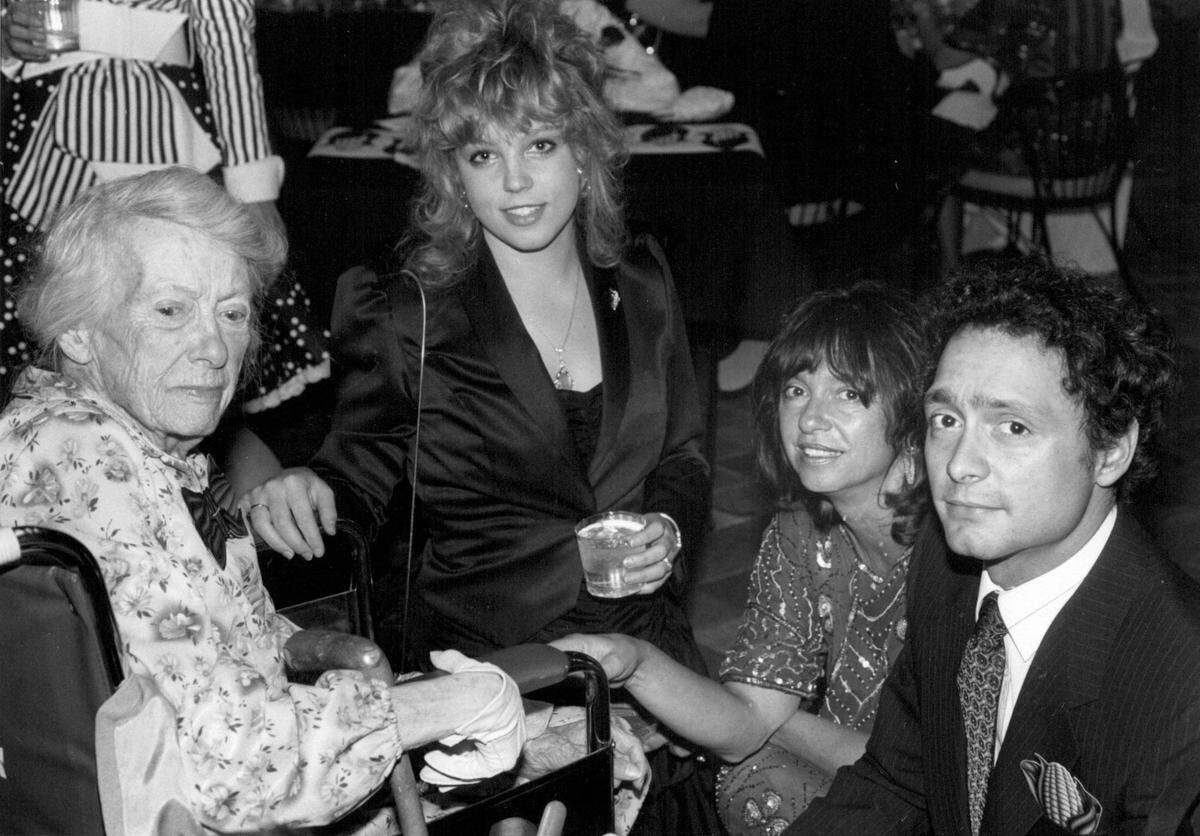
After three years of investigation, they’d seen enough. Jessie and her three children — Anthony Gude, Daria Lyman and Cybele Peper McCormick (Jessie’s brother T.P. had died in 2010) — filed suit in Jackson County on Dec. 17, 2019. They wanted UMB removed as the trustee of the Benton trusts, and they wanted damages.
“The Benton lawsuit came out today,” Daria Lyman texted another member of the family, according to an exhibit later introduced by the defense. “It will be in every national paper. Mom has her war paint on. She’s fighting her last battle for we [sic] own ancestors.”
Not every national paper covered the news, but some did, including the Wall Street Journal and NPR, as well as The Star. The headlines inevitably reflected poorly on the accused, UMB. But the bank and its attorneys would come to see something more nefarious in the media coverage: a conspiracy.
‘A deceptive years-long campaign’
UMB’s recent federal complaint against Jessie and her children opens dramatically, with a retelling of the Lyman Family’s botched bank heist in 1973 that likens its intent to the lawsuit she’d filed in Jackson County two years before.
“The Lyman Family has a long, well-documented history of operating as a criminal enterprise, engaged in violence and intimidation,” UMB’s attorneys write. Now these former followers of a “Messiah figure” had set their sights on a bank. “Instead of guns, Defendants now employ different means: a scheme to defraud UMB of over $300 million dollars.”
All those claims about lost art and self-dealing and negligent custodianship of copyrights? They were part of a “deceptive years-long campaign to apply undue public pressure on UMB to pay (the Benton beneficiaries) this unconscionable and unwarranted amount.” Jessie and her family engaged in mail, wire, and bank fraud to execute their plans.
They were motivated, in UMB’s telling, by the growing needs of their large and aging communal family, nearly all of whom are older than 50, with some in their 70s and 80s. In recent years, Jessie had begun requesting that the bank sell more paintings to fund additional distributions to her children.
“The Lyman Family has not expanded its membership over the last three decades,” UMB’s attorneys write. “The ‘graying’ of the Lyman Family has created a financial crisis for the enterprise. Fewer members of the Lyman Family are generating income as the members age and retire from employment. The health needs of the Lyman Family are expanding as the members age. The housing needs of the Lyman Family are changing and expanding as older members require housing more suitable for senior citizens instead of communal living in traditional houses.”
Enough assets remain in the trust, UMB says, to provide for the “current and long-term needs of the graying Lyman Family.” But they would have needed to convince UMB to liquidate a significant portion of Benton’s artworks and securities. There were several reasons why the Benton beneficiaries didn’t want to go that route, according to UMB.
One is that there would be some question as to whether the will allowed the Benton beneficiaries to liquidate the trust to support the Lyman Family as a whole, as opposed to just Jessie Benton and her children. A heavy liquidation would also trigger significant income tax consequences for the beneficiaries, who would be receiving millions of dollars in distributions. Also, liquidating the art collection would flood the market with Benton artworks, diminishing the value of the artist’s work.
So they instead instructed Boyda, who “went to school with Lyman Family members” while growing up near the Benton farm in Frankfort, Kansas, to begin “scouring UMB’s files” in an effort to find any information that could be used to “pressure, harass, embarrass, and injure UMB in the eyes of the public” by filing the Jackson County suit.
The headline-grabbing narrative they landed on, about UMB losing more than 100 paintings, was a dishonest distortion of the facts, according to UMB. Years before, the bank had sent Boyda a list of more than 100 paintings, but it was not a list of “irreplaceable pieces of art that were unaccounted for and lost,” as the Benton’s attorneys claimed. In fact, a follow-up letter from Boyda to UMB in 2017 only sought to confirm the location of 36 pieces of art. UMB alleges that over the weeks that followed, it “responded and provided additional information on each of the items listed in the letter.”
Though the Bentons and Boyda had “for months, if not years, multiple records and other documents from the Trust files proving the falsity of this claim,” they went ahead and included the “100 lost paintings” allegation in their suit. They then, UMB argues, carried out a “media blitz” in which news outlets published the Bentons’ “knowingly false” statements and claims about the bank.
“Nearly every media outlet that was either informed by (the Benton beneficiaries) of the (lawsuit) or that picked up the news story based on other reporting, parroted some version of (the Benton beneficiaries’) false statements and claims that ‘over one hundred irreplaceable pieces of art are unaccounted for and lost from the Benton Trusts because of UMB’s actions and inactions,’” UMB’s attorneys write.
It all added up, UMB says, to a conspiracy that has both dented UMB’s profits in its private wealth management division and damaged its reputation with the public and local civic institutions.
“Perhaps this should all come as no surprise,” UMB’s attorneys write of the beneficiaries’ alleged behavior, given a quote Jessie gave a Boston Globe reporter in 1973:
“To me, robbing a bank is like robbing the government. Everybody’s money is insured.
Bills piling up
Little has been resolved in the two-plus years since this litigation kicked off. But one thing has changed: After more than four decades, UMB is no longer the trustee and executor of Thomas Hart Benton’s trust.
The bank submitted its resignation as trustee in February 2021. The artist’s assets have been transferred to Fiduciary Trust Co. and a Massachusetts attorney named Nicholas S. Gray, the new trustees.
Leland Shurin, a local attorney, was appointed special master in the probate case in May 2020; he’s tasked with resolving the avalanche of complex pretrial issues in the case. As of October, UMB claimed to have produced more than 200,000 pages of documents for the case. More than 30 depositions had been taken, with three dozen additional depositions remaining.
One big bone of contention is how deep UMB’s attorneys will be able to probe into the Lyman Family. Recent filings indicate they are seeking the identity of more than 200 of the community’s members, citing the fact that the Lyman Family/Fort Hill Community has used trust property as communal living space for much of its existence.
UMB’s attorneys are also angling for more information regarding Mel Lyman’s death, arguing that the circumstances are critical to understanding the succession of leadership and what influence his successors might have over current and former members. They also note that it would be a misuse of the trust if Lyman is buried on trust property — the Kansas farm or Martha’s Vineyard. The Bentons’ attorneys have opposed all these attempts.
Court filings indicate both parties have spent large sums on expert testimonies. In addition to paying for Shurin’s services — he gets $395 an hour, his associate gets $200 an hour, and his paralegal gets $125 an hour — UMB and the Benton beneficiaries are paying through the nose for expert witnesses. A recent Jackson County filing states that an expert for the Benton beneficiaries prepared a report over 24 months, working 850 hours and billing $607,000. An expert for UMB, a retired chief trust officer at Citigroup, had billed UMB’s attorneys for 335 hours of work amounting to $175,000 — then died. As a result, the judge agreed to delay the trial, which was set for August. The parties will meet April 25 to determine a later date.
At least one claim in the Jackson County probate case has been disproved: the allegations over the painting “Desert Artist.” The painting was bequeathed to the Nelson-Atkins, and, the Bentons’ attorneys claimed, the Kempers engaged in self-dealing by exhibiting it in their own museum, the Kemper Museum of Contemporary Art.
In fact, subsequent court filings include records from the Nelson and a Santa Fe, New Mexico, art gallery that show the legitimate path the painting traveled on its way to the Kemper Museum. In 1990, Henry Adams, a Nelson curator, recommended that “Desert Artist” be put on the market for possible sale. Adams obtained Jessie’s blessing, and the museum board approved. In 1996, the painting was exchanged, along with 13 other works, for a Stuart Davis painting held by Gerald Peters Gallery, in Santa Fe. Four years later, Crosby Jr. bought the painting from the gallery, which is how it ended up in the Kemper Museum.
As a result of this and other inaccuracies in the original complaint, UMB demanded this past October that the Benton beneficiaries “issue public retractions in a form approved by UMB of all false and misleading statements made by the Benton Parties, their representatives or counsel through every media outlet contacted by them regarding the pending claims, UMB or its representatives.” No such retraction appears to be forthcoming, though the Bentons’ attorneys did recently remove the “Desert Artist” allegations from the original petition.
The Benton beneficiaries’ federal attorney, Andy Schermerhorn, filed a motion to strike references to the Lyman Family in UMB’s case involving the Racketeer Influenced and Corrupt Organizations Act, or RICO, in February, raising the temperature on an already hot legal quarrel. The bank’s attempts to dredge up the Lyman Family’s history are, Schermerhorn said, “completely unrelated to the hollow allegations of mail and wire fraud,” a “twisted and malicious misuse of the RICO statute,” and a “flagrant smearing and slandering” of Jessie and her children.
“Applying UMB’s logic, if any employee of UMB Financial Corp. committed a crime in the last fifty years, the Beneficiaries would be well within reason to smear J. Mariner Kemper, the ‘patriarch’ of UMB, and to accuse him (and other executive officers) of operating a criminal ‘enterprise,’” Schermerhorn writes, adding, “We are shocked to see members of the Bar stoop this low, but UMB and the Kemper Family are a powerful and influential force.”
UMB fired back in mid-March, reasserting its contention that the Lyman Family constitutes a RICO enterprise and revisiting sordid details of the group’s past, such as the Fort Hill vault where misbehaving members were once said to have been confined. UMB also cited the Rolling Stone story, saying Richie Guerin — Jessie Benton’s current husband and a founding member of the Lyman Family — allegedly threatened to kill a mechanic. The judge in the federal case, Beth Phillips, has yet to rule on the motion to strike.
Lasting images
Another Thomas Hart Benton mural: “The Sources of Country Music,” painted for the Country Music Hall of Fame in Nashville.
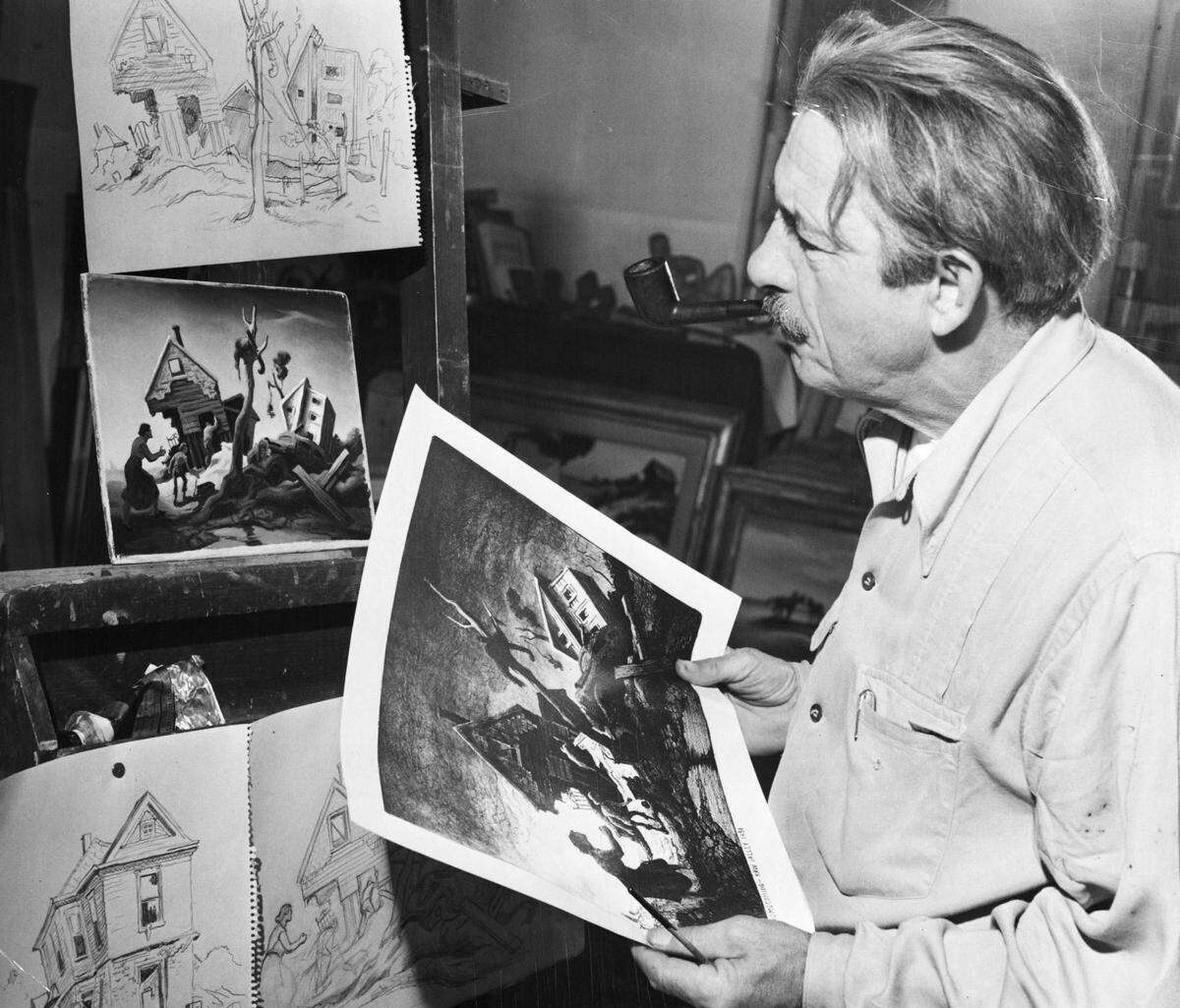
The mural — a nostalgic panorama of American life, unmistakably Benton — shows fiddlers and square dancers, hymn singers and blues singers and ballad singers. For much of his career, part of Benton’s process involved constructing clay models of his characters before committing them to canvas with paint. He liked to use real people for these models, often people who had some kind of connection to his topic. “Sometimes what people do for a long time in their life — their occupation — shows in their faces,” Benton once said.
For this mural, he recruited some musicians and artists close at hand to serve as figures: Jessie and her friends, then living out on the Kansas farm. The painting contains the faces and expressions and movements of members of the Fort Hill Community.
After that, Benton was planning another mural, one for a Kansas City institution. According to UMB’s self-published 1986 book, “Building a First-Class Bank,” the artist and Crosby Kemper Jr. struck a handshake deal in 1975.
UMB was going to be building a new headquarters downtown, and Kemper wanted Benton to paint a mural inside, just as he’d done in the Missouri Capitol and the Truman Library and many other public spaces. They agreed on a price: $25,000.
Before he could start, Benton died. He was found in his studio — the old converted stable on Belleview. He’d gone out to have a look at the mural he’d just completed, “The Sources of Country Music.”
The bank lost out that time. Whether it will prevail in its latest Benton encounter is anybody’s guess.
This story was originally published April 10, 2022 at 5:00 AM.