
What are you paying for? These taxes and charges determine your gas bill in Kansas City
READ MORE
Heating bill increases cause financial strain in Kansas City
Spire and Kansas Gas Service customers in the Kansas City area are struggling to pay for gas with price and rate increases this year.
Expand All
Soaring gas bills are straining Kansas City home budgets. Are more hikes on the way?
What are you paying for? These taxes and charges determine your gas bill in Kansas City
Looking for help on your gas bill in Kansas City? These relief programs could come through
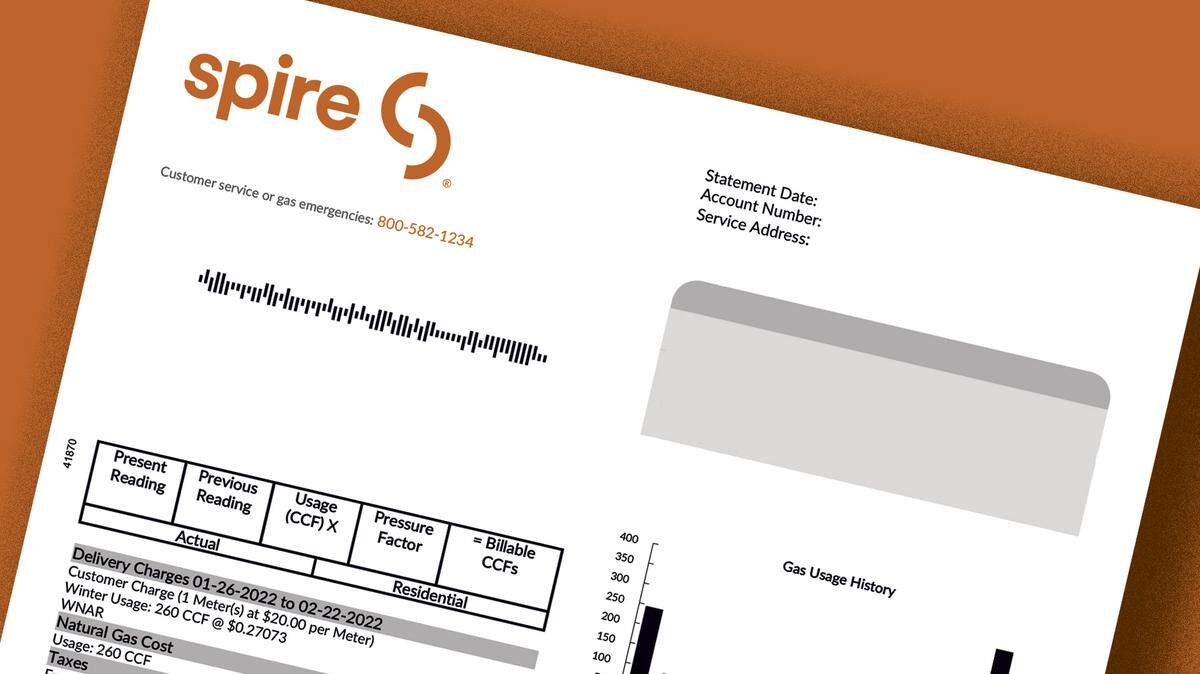
Confused by all the charges on your gas bill? Here’s a line-by-line explanation

Soaring natural gas bills compound Kansas City family’s financial worries
If your natural gas bill has skyrocketed in recent months, you aren’t alone: customers around the Kansas City area have seen significant increases on their bills from utility monopolies like Spire Energy in Missouri and Kansas Gas Service and Atmos Energy in Kansas.
But where do these numbers actually come from? Here’s a closer look at what goes into an energy bill in the Kansas City area.
Energy bill basics
No matter who your provider is, your natural gas bill is going to have three main components: the delivery charge, the gas cost, and taxes.
Taxes make up a pretty small percentage of the overall bill, and are levied by your city or state based on the amount you’re paying for the other two components. This leaves two main categories: gas cost and delivery.
The simplest way to think about these components is that gas cost covers everything needed to get natural gas into Kansas City’s pipelines, while the delivery cost pays for the business expenses that put that gas into your home and keep it there.
Now let’s break it down a little further.
What goes into the gas cost on your bill?
A number of components are factored into the gas cost component of your energy bill. They are:
The actual cost of the gas itself, purchased from wholesale suppliers
The expenses incurred from past purchases of natural gas
The contracts your utility company has to transport the gas from other states
The contracts your utility company has to store the gas it buys until customers need it
All together, these factors combine to make what’s called the Purchased Gas Adjustment, or PGA. Kansas Gas Service bills might call this the Cost of Gas (COG), while Atmos Energy customers may see it called the Gas Cost Recovery (GCR). No matter its acronym, this is the rate you pay your utility company for the gas you use.
Spire Energy recently raised their PGA from $0.40 to $0.79 per hundred cubic feet—a jump of around 96%.
The PGA combines the price of wholesale natural gas in the present and past with the amount your utility company plans to pay for storing and transporting gas it will buy in the future. This complex combination of factors means that the rate you pay won’t change dramatically whenever the market fluctuates. Instead, the PGA rate you pay will only change when your utility company adjusts it.
Adjustments to your PGA will depend on where you live. In Missouri, Spire usually only changes its PGA rate about once a year. But in Kansas, the rate that Kansas Gas Service and Atmos Energy charge their customers changes on a month by month basis to reflect shifts in the market.
This makes Kansas customers’ bills more variable month to month, but lets them avoid sudden, permanent price hikes like the one Missouri customers experienced in November.
Who controls the gas cost?
Ultimately, the wholesale price of natural gas is decided by the market. This price can fluctuate due to severe weather, global political events and other factors. State regulators cannot control this price. Instead, they merely keep tabs on the gas costs that utility companies pass along to their customers.
Regulatory groups make sure utility companies are entering into responsible contracts and buying from reliable wholesale suppliers at competitive rates. In Missouri, this job falls to the Missouri Public Services Commission (MPSC). In Kansas, it’s the job of the Kansas Corporations Commission (KCC).
The components of your gas cost are passed along directly from your utility company: They aren’t profiting off this portion of the bill, which is why their regulators often let them change this amount more often and with less scrutiny.
The delivery charge, on the other hand, receives much more attention from regulators. That’s because this is the portion of your bill where utility companies make their profit.
What goes into the delivery charge on your bill?
The Delivery Charge portion of your natural gas bill consists of several factors:
Customer charge: This is a flat amount that every customer is charged every month. It’s related to how many gas meters you are being billed for—generally that’s one per house or apartment. Kansas customers might see this called the Service Charge or the Facility Charge.
Volumetric charge: this is a rate that varies depending on the season. It might be listed on your bill as “Winter Usage” or “Summer Usage,” with the former generally higher than the latter. In Kansas, some bills call this the Consumption Charge. The amount you pay for this portion will depend on how much gas you use.
Surcharges for special circumstances: these additional charges fund projects like pipeline upgrades and correct for seasonal weather changes. You’ll see them on your bill with names like ISRS or WNAR.
The delivery charges levied by utility companies pay for all of their business expenses. This includes the salaries of their engineers and call center representatives, the local pipeline repairs and replacements they make in Kansas City, the meters they install and fix in homes and apartments, the office space their corporate staff uses, the utility trucks with their name printed on the side, and, yes, their corporate profits.
Delivery rates are calculated through a complex process that companies then have to justify to their regulators.
They don’t always make these rates easy to find: For instance, Atmos Energy’s most recent tariff sheet for Kansas customers is a 171 page document with the delivery rates buried on page 132.
The easiest way to check your delivery rates is to look at your most recent natural gas bill.
Local utility companies say that their recent delivery rate increases have been largely due to the impacts of Winter Storm Uri.
Atmos and Kansas Gas Service are asking the KCC for delivery charge increases in the coming months to make up for the expenses they took on during the storm.
Spire already raised their volumetric delivery rate in November by 73%, but plans to ask the MPSC for another increase this spring.
Who controls the delivery charge?
Regulatory groups analyze delivery rate increases very closely, often holding multiple public comment periods. In Missouri, the process to review a Spire delivery rate increase takes eleven months. That means that the company’s next rate increase request won’t go into effect until the beginning of 2023, if the MPSC approves it.
In the meantime, your feedback can help regulators decide whether or not to approve delivery rate increases.
Missouri customers can contact the Missouri Office of the Public Counsel by calling 573-751-4857 or emailing mopco@opc.mo.gov.
Kansas customers can contact the KCC by calling 800-662-0027 or 785-271-3140, or emailing public.affairs@kcc.ks.gov.
You can view upcoming MPSC and KCC hearings on each group’s website.
Do you have more questions? Ask us at kcq@kcstar.com.
.jpg)