
On The Vine: Open your books to the chapter on Racism

Give me an R!
Give me an A!
Give me a C!
Give me an I!
Give me a S!
You get the gist. School is in session and first thing on the syllabus is good ol’ racism. Over the last few weeks, Kansas City-area schools have made headlines, sparked outrage and fueled investigations as incidents of blatant and curious racism have sprung forward.
First (not like FIRST first, but you know what I mean) a student, or group of students at Park Hill South launched a Change.org petition to bring back slavery. Then an Olathe South high school student asked a young woman to homecoming in the most unromantic, antebellum south way possible: “If I was Black I would be picking cotton but I’m white so I’m picking you for HOCO.”
She said yes.
Racist incidents at area schools have been so pervasive that even Kansas City Mayor Quinton Lucas took to Twitter this week, saying more critical teaching of race in schools is needed.
“Just imagine you’re a Black child in that school — A Black parent who worked hard to get out there so your children could get a ‘good’ education, but afraid it devalues their humanity,” Lucas wrote. “It is abundantly clear that rather than removing race from education and marginalizing the history of all people in our region, we need critically to empower our students to fight and call out racism.”
These are not one off instances, or “kids being stupid kids.” This is the result of a society “we” have created in which racism is a taboo not to be poked or prodded in public or academic settings. It’s a volcanic society (they still teach volcanoes in school, right?) in which we keep adding to the gas and pressure and letting it build by simply ignoring the unavoidable mountainous specter that’s been there since we set foot on the soil.
We should be talking about it, exploring its history, how it works and teaching our kids and future leaders how it works, how to contend with it deal with the pressure that builds.
But we’re still living as if it’s not on the horizon, until every now and then it erupts.
Around the block

Racism at Park Hill South is part of a years-long pattern, students of color say
Aarón Torres writes for The Star:
One parent, who has a Black son attending Park Hill South, told The Star that the school’s administration hasn’t been proactive in its handling of racism.
“They just completely brush it off until it’s in the media and it’s a big deal and then they don’t tolerate stuff like that,” said the parent, who asked to remain anonymous out of fear of retaliation for her son. “My son was called a monkey, he was called racial slurs multiple times.”
Recent Park Hill South graduate Thyra Aguilar, 18, who is Hispanic, said white classmates often called her “pinto bean” and “beaner.” A white student told Aguilar if she was alive during slavery, she’d be getting whipped in the house, she told The Star.
“You’re not really safe at that school as a person of color,” Aguilar said.
She didn’t feel like she — and other students of color — had the support of the administration. She said she felt the administration would do more when a bathroom is vandalized than when she experienced racism.
Check this out too...
Park Hill leader: District hiring expert to fight racism after pro-slavery petition
Catholic school joins Johnson County district probing teens’ ‘explicitly racist’ post
‘Devalues their humanity’: Kansas City mayor decries racist sign, petition at area schools
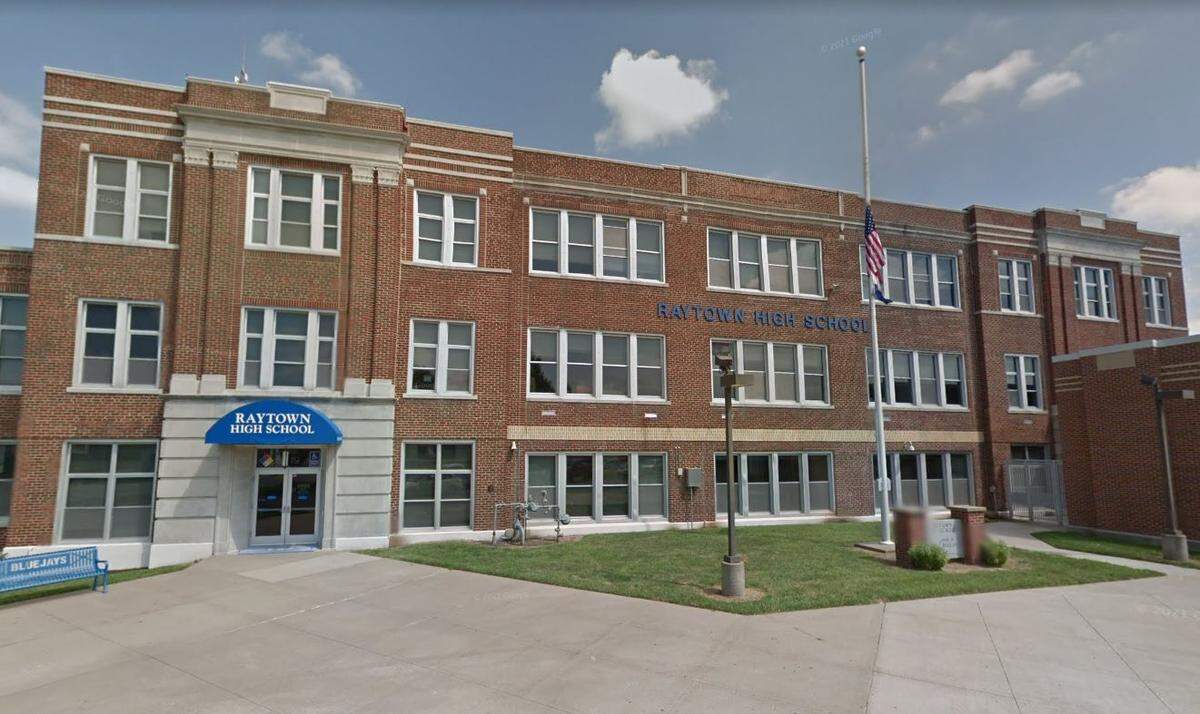
Raytown High School teacher under investigation for using N-word during class
Context is key. And I believe in everything I wrote above. I believe high school students (should be) capable of biting, nuanced and hard conversations about racism.
Where school did not, my parents had those conversations with me. They knew it was necessary.
We don’t yet know the context of the discussion this teacher was having with students. I hope the school, and district award us that transparency.
The Star’s Anna Spoerre reports:
On Wednesday, Raytown Superintendent of Schools Allan Markley said in a letter to parents and guardians that the district was aware of a Raytown High School teacher using the N-word during a discussion with students in class on Wednesday.
He said that the teacher’s actions will be addressed by the school board policy. However, Markley declined to give details in the letter about any disciplinary actions being taken towards the teacher.
“Regardless of the teacher’s intent, we understand the offensive and inappropriate nature of this word,” Markley wrote.
The incident is under investigation by the school district.
Beyond the block
The U.S. Census Bureau says Black homeschooling numbers jumped by 400% throughout the pandemic. But these Missouri homeschool mothers explained that COVID isn’t the only reason.
Bek Shackelford-Nwanganga and Zach Wilson report for KCUR:
More Black parents are choosing to educate their children at home. That’s partly due to the pandemic — but not entirely.
“I think that most of us didn’t know anybody else that looked like us that did it,” said Mishawnda Mintz, a Black mother of four who has been homeschooling her kids in Kansas City for 16 years. “It was looked at as something maybe that white people did.”
Many Black families were interested in homeschooling before the pandemic, Mintz said, but parents might have felt alone like she did, or worried they wouldn’t have the means to homeschool.
But that’s changed over the past couple of years, as social injustice and racial disparities intensified by the Trump administration caused many Black families to feel that at-home education would be safer.
“Of course with George Floyd and what happened with him I think families felt like they didn’t have anything to lose, when you add to it the pandemic and putting your kids in harm’s way,” Mintz said.
We out
Did someone forward this newsletter to you? You can sign-up here. If you’d prefer to unsubscribe from this newsletter, you can do so at any time using the “Unsubscribe” link at the bottom of this message.