Kansas advocate for brain cancer patients dies at 22 after giving voice to sick kids
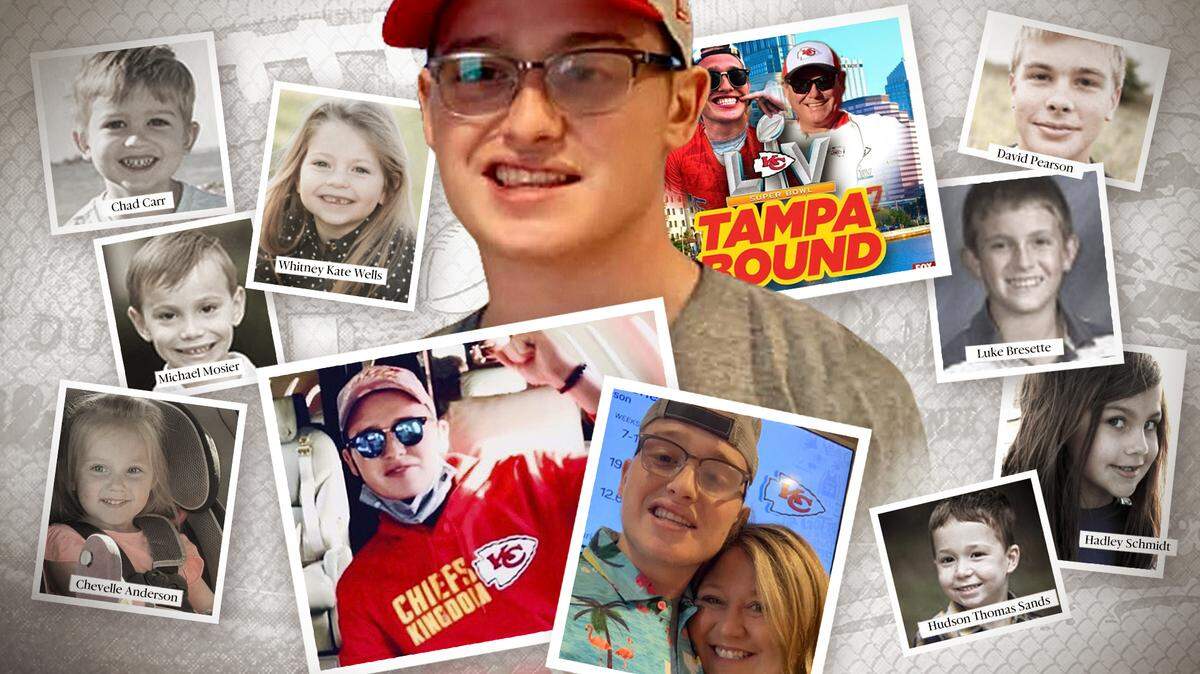
A young man from Kansas, who in the face of death became an unrelenting advocate for children with brain cancer, has died.
Jace Ward, 22, of Wamego, Kansas, died Saturday night, according to his family. His mother hugged him in his final moments.
In May 2019, Ward was diagnosed with diffuse intrinsic pontine glioma, or DIPG, a cancer that ravages the part of the brain that controls essential body functions. He was told he had an inoperable brain tumor. Doctors estimated he had about nine months to live. He survived for 26.
“Oh sweet boy — I’m brokenhearted not to watch you live life on earth but the way you brought people together in our family, among your friends, in DIPG/Pediatric Cancer, I can only imagine God plans an even better role for you in Heaven,” his mother wrote on Facebook Sunday. “Love you more and always.”
About 12 hours earlier, his family updated their Facebook followers with news of Ward’s deteriorating condition where he was under the care of doctors at St. Louis Children’s Hospital.
“Although our family and his friends will NEVER be ready to let Jace go. He has been so brave for 26 months,” they wrote. “Now it is our turn. We bravely follow his requests to keep him comfortable until he meets Jesus and the army of pint size angels who already know him.”
Five months ago, Ward sat in the stands at the Super Bowl with his dad after taking a private jet from Manhattan to Tampa, Florida, thanks to former Chiefs kicker Lawrence Tynes, who heard about his story.
He was a senior at Kansas State University at the time, cheering from seats given to him by Kansas City Chiefs fullback Anthony Sherman.
“Someone that can have his kind of optimism when staring death in the face is pretty inspirational in my eyes,” Tynes said at the time. “He knows he has an expiration date coming. I can’t imagine what that feels like at any age, no less 21. He’s facing death with bravery. He is not afraid of it.”
Ward became more widely known through his advocacy.
In the minutes after his diagnosis, Ward’s mother remembers her son telling the doctor, “How long do I have? I’m not afraid to die. I know where I’m going to go. I’m just afraid I won’t have time to make an impact before I die. And that matters to me.”
The doctor told him he had about nine months left. So Ward got to work.
He learned that DIPG is typically found in much younger children, ages 4 to 11. Some 300 to 400 cases a year are diagnosed. The five-year survival rate is less than 1%.
Ward spent the next two-plus years of his life fighting and advocating for children with DIPG.
By the time he arrived in Tampa Bay, Florida, for the 2021 Super Bowl, his phone was filled with pictures of other DIPG kids.
The year before, Ward flew to Washington, D.C., teenager among doctors — in the middle of chemotherapy treatments — to speak at a symposium at the National Institutes of Health: Pushing for patients, and not just doctors, to have personal control of their own genomic data to seek treatments.
“While we’re sitting deciding whether or not it’s OK for people to share their own genomic data,” he said to the crowd, “300 kids are dying every year. And they’re going without a voice.”
In February 2020, he was a key speaker at a DIPG advocacy briefing before Congress.
Once, while undergoing treatments, Ward took part in a video panel discussion. Reed Jobs, Steve Jobs’ son, who works to supports cancer research and policy, was on the panel. He offered Ward a paid internship..
Ward’s dad in a Facebook post early Sunday promised to keep raising awareness for DIPG and to help pushing for a cure.
“Cancer will never define Jace,” his parents wrote Saturday morning. “His tenacity forged by fire and committed to protect all he loved will live on in the spirit of all who love him. Go watch those fireworks tomorrow and forevermore remember our son.”
This story was originally published July 4, 2021 at 9:56 AM.