
New COVID vaccine? Here’s what makes Novavax different from other shots in US
Is there a new COVID-19 vaccine?
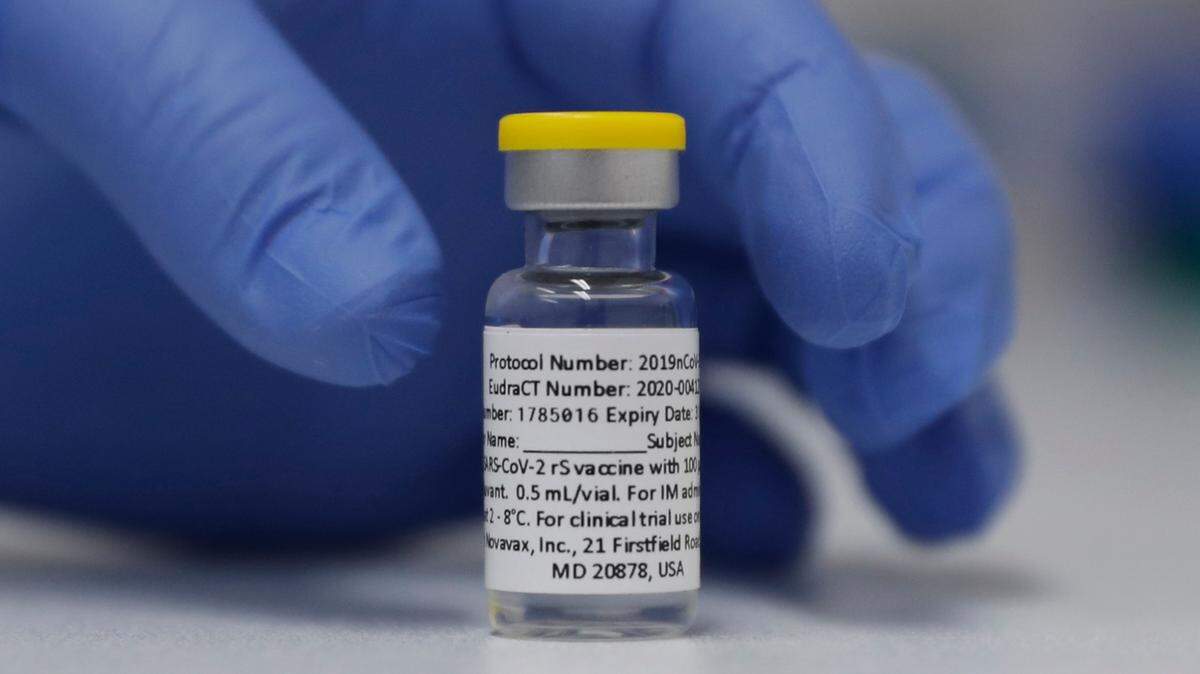
Novavax’s COVID-19 vaccine has been recommended for emergency authorization in the U.S. for adults 18 and older by the Food and Drug Administration’s Vaccines and Related Biological Products Advisory Committee. This came after a nearly unanimous decision made on June 7.
Most committee members voted “yes” when asked if the benefits of the two-dose vaccine series outweigh the risks for U.S. adults “based on the totality of scientific evidence available,” according to the live-streamed committee meeting. One person chose to abstain from a vote, and no one voted “no.”
If the FDA decides to authorize Novavax, which was created by the Maryland-based biotechnology company, it will make the vaccine the first of its kind in the U.S.
Here’s what makes it different from other FDA-approved shots such as the Pfizer and Moderna vaccines.
‘More traditional’
The Novavax vaccine has the potential to be the first protein-based COVID-19 vaccine option in the U.S.
During the vaccine advisory committee meeting, Dr. Jay Portnoy, committee member and a medical director at Children’s Mercy Hospital in Missouri, said he was initially “torn” over the need for an additional vaccine before voting “yes.”
“I realized this is a different technology. It’s a more traditional protein-based vaccine,” he said.
Protein-based vaccines are already widely used, and one example includes the hepatitis B vaccine, according to Gavi, the Vaccine Alliance.
Portnoy added that the Novavax vaccine “deserves the opportunity to be given and studied and used by individuals who wish to” use it.
The shot is “protein adjuvant,” meaning it involves “an ingredient used to strengthen the immune response,” according to Yale Medicine.
It includes parts of the coronavirus, specifically the spike protein, which gets adjusted in such a way that makes it unable to “cause disease,” Yale Medicine explains.
“When the vaccine is injected, this stimulates the immune system to produce antibodies and T-cell immune responses.”
This is different from the two FDA-approved vaccines — Pfizer and Moderna — which are messenger RNA vaccines.
These vaccines “teach our cells how to make a protein that will trigger an immune response inside our bodies,” according to the Centers for Disease Control and Prevention.
Meanwhile, the Janssen (Johnson & Johnson) COVID-19 vaccine is authorized in the U.S. for certain people 18 and older if other vaccines are deemed unavailable or not right for them, McClatchy News previously reported. The FDA limited its use in early May over concerns of rare blood clot risks.
It’s different from mRNA and protein-based vaccines because it “is a carrier, or virus vector, vaccine,” according to Yale Medicine.
During the FDA committee meeting, Dr. Peter Marks, the director of the FDA’s Center for Biologics Evaluation and Research, said the Novavax vaccine can provide others an “alternative” vaccine choice.
“The Janssen vaccine is currently not being used as a frontline vaccine the same way as the mRNA vaccines, which leaves the issue of vaccines for those who might not want to take an mRNA vaccine because of concerns they might have,” he said.
Efficacy
Before the FDA vaccine advisory committee’s vote, members viewed clinical trial data on the Novavax vaccine that was published Feb. 10 in the New England Journal of Medicine, according to a Novavax news release.
The study showed the vaccine had 90.4% efficacy against COVID-19 and “a reassuring safety profile,” according to the release. The research involved 30,000 people who were 18 and older in the U.S. and Mexico during the first half of 2021.
FDA vaccine advisory committee member Dr. Eric Rubin, the New England Journal of Medicine’s editor-in-chief, said during the meeting that it was “disappointing” that there wasn’t more updated information on Novavax’s efficacy.
He said the data demonstrated Novavax’s efficacy against COVID-19 “strains that don’t exist any longer” but ultimately concluded that the data was still “compelling.”
In the U.S., the omicron variant and its subvariants have made up almost all COVID-19 cases for several weeks as of June 4, according to CDC estimates. Omicron was first identified in November 2021.
Potential risks of Novavax vaccine
In a FDA briefing document on the Novavax vaccine, potential health risks of the Novavax vaccine were identified as myocarditis and pericarditis. Both of these conditions involve inflammation of the heart.
This reaction has been reported to rarely occur in some, particularly males, after receiving both the Pfizer and Moderna vaccines, according to the CDC.
Novavax said in a June 3 statement that in the company’s placebo-controlled studies, there were “balanced” myocarditis rates between those who received the shot (0.007%) and those who got a placebo version (0.005%).
“Furthermore, in the post-crossover portions of our studies, the cases we have seen are all within the expected rate,” Novavax said.
“We will continue to monitor all adverse events, including myocarditis and pericarditis,” the company added.
In its June 7 news release, the company said the “most common adverse reactions” observed in its Phase 3 clinical trial were “headache, nausea or vomiting, myalgia, arthralgia, injection site tenderness/pain, fatigue, and malaise.”
The Novavax vaccine has already been authorized for those 18 and older in more than 40 countries, the release said.
This story was originally published June 8, 2022 at 12:51 PM with the headline "New COVID vaccine? Here’s what makes Novavax different from other shots in US."
.jpg)