
Did you test positive for COVID at home? Here’s what to do next
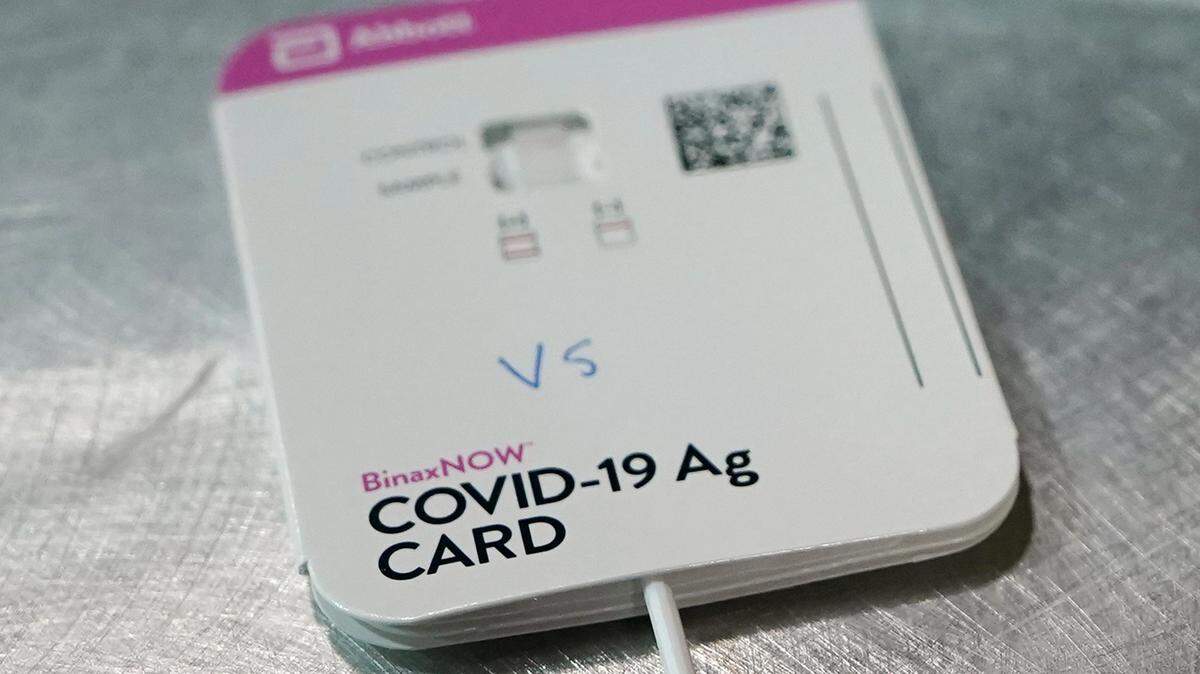
Have you tested positive for COVID-19 using an at-home test?
If so, your infection has come at a time when the omicron variant and its subvariants continue to circulate throughout the country, according to the Centers for Disease Control and Prevention. This has contributed to a rise in cases in some parts of the U.S.
Here’s what you should do after testing positive, according to health experts:
Quarantine and isolate
The primary step to take is to quarantine yourself at home and self-isolate from others who may live with you in order to limit spreading the virus further.
The latest CDC recommendations advise everyone, vaccinated or unvaccinated, to stay home for at least five days after getting a positive test result.
On the day of a positive test result, this is considered day 0 by the CDC. Day 1 is considered 24 hours after using an at-home test.
After five full days, you can end isolation if you’re not experiencing symptoms such as fever, according to the CDC. However, if you are feeling sick, the CDC advises isolating for 10 days.
Let others know
If you’re now positive for COVID-19, it’s possible that you were in close contact with others before receiving your test result.
You should notify those who had been at least six feet or closer to you for at least 15 minutes over the past two days before you tested positive, according to the CDC.
“They are at greatest risk of infection,” the agency says online.
Prepare to mask up
In the days after testing positive, be sure to wear a face mask if you are around others, the CDC says.
Some “high quality” masks that offer adequate protection are N95, KN95 and KF94 masks, Dr. Leana Wen, a public health professor at George Washington University, previously told McClatchy News.
Following five full days of isolation, the CDC recommends wearing a mask for at least five more days when around other people — even at home.
This is because it is possible to test positive after the recommended five-day isolation period.
In fact, a CDC study found that between five and 9 days after testing positive, 54% of participants tested positive for COVID-19 after taking another test, according to research published in February.
“The high percentage of positive antigen test results during the 5–9 days after symptom onset reinforces the importance of correct and consistent mask use during this period,” the study said.
Talk to a healthcare provider
COVID-19 can affect everyone differently, so consider talking to your doctor or a healthcare provider for an assessment in case you might need to get treated for your infection, the New York City Health Department advises online.
Older adults, such as those at least 65 years old, the immunocompromised and people with certain medical conditions such as cancer, diabetes, chronic diseases and more are at a higher risk of developing severe COVID-19, according to the CDC.
COVID-19 treatments are available for certain individuals if a healthcare provider deems it necessary.
One such prescribed treatment is the antiviral therapy Paxlovid, McClatchy News previously reported. This was recently prescribed to California Gov. Gavin Newsom following his COVID-19 positive test result.
Paxlovid is taken orally and used to treat mild to moderate COVID-19 for people who are at a greater risk of being hospitalized after an infection, Dr. Michelle Hormozian, a clinical coordinator and pharmacist with the University of Southern California School of Pharmacy, told McClatchy News.
Another oral antiviral treatment that can be prescribed for those at risk of developing severe COVID-19 is called Lagevrio (molnupiravir), according to the U.S. Department of Health and Human Services.
Other treatment options that may be beneficial to certain people include the monoclonal antibody treatment Bebtelovimab, which can be prescribed to some 12 years and older, and the intravenous antiviral treatment known as Remdesivir (Veklury), according to the CDC.
Treatment resources
In March, a tool was launched online by President Joe Biden’s administration called Test to Treat which helps people locate access to COVID-19 treatments nationwide.
“Through this program, people are able to get tested and – if they are positive and treatments are appropriate for them – receive a prescription from a health care provider (either on site or through telehealth), and have their prescription filled all at one location,” the webpage says.
It can be accessed online or can be called at 1-800-232-0233.
Additionally, your nearby community health center or health department can discuss whether COVID-19 treatment options are right for you, the CDC advises.
Ultimately, if you’re experiencing severe symptoms such as difficulty breathing, chest pain, pale skin among other symptoms, the CDC advises calling 911 or heading to an emergency room.
If you’re still positive after more than five days
“Some people may not be infectious at the end of their course even if still antigen-positive, whereas others may be infectious even if antigen-negative,” Dr. Yonatan Grad, an infectious disease expert at Harvard’s T.H. Chan School of Public Health, told The New York Times.
Health experts appear to be at odds when it comes to remaining in isolation after testing positive past the recommended isolation period, the outlet reported. Some recommend continuing to isolate as long as you test positive.
However, one expert, Dr. Tara Bouton, who is an infectious diseases assistant professor at the Boston University School of Medicine, told the university in an interview that they are comfortable with the CDC’s current recommendation of five days of isolation.
“Any longer and you would be holding a huge proportion of the population in isolation unnecessarily,” she said, according to Boston University.
But, she stressed “the importance of strict masking for an additional five days.”
This story was originally published June 3, 2022 at 11:36 AM with the headline "Did you test positive for COVID at home? Here’s what to do next."
.jpg)