‘With this, I’ve lost count:’ As COVID surges in KC, health workers, families struggle
By Katie Moore and
Katie Bernard
Nathan Jones wishes people could witness what he’s seen: Patients who arrive struggling to breathe. Patients sedated and intubated, relying on a machine to push oxygen into their inflamed lungs.
“It used to be you could count or remember the people that you’ve coded (lost), and their story,” said Jones, 31,a nurse who worked at AdventHealth Shawnee Mission and will be starting at Saint Luke’s.
“With this, I’ve lost count.”
COVID-19 killed eight people, on average, every day in metropolitan Kansas City last week. Two days in a row, more than 1,000 new cases were reported, with 5,100 total added last week. The University of Kansas Health System was hit with a record number of virus patients. Physicians voiced their concerns to elected officials during a call Friday.
The third wave appears to be the worst yet. Infection is crossing all categories of age and health. Last weekend, a 13-year-old Missouri boy died of complications from the coronavirus. Other young people are suffering strokes. Patients who contracted the virus months ago still can’t breathe without supplemental oxygen.
Jones is astounded that countless Kansas Citians continue to downplay the seriousness of the pandemic or are tired of taking the steps necessary to flatten the curve. Local elected officials have failed to lead, he said.
Over the summer, the vast majority of Kansas’ 105 counties rejected the statewide mask mandate issued by Gov. Laura Kelly. Research has shown that the counties that opted in saw significantly less growth in cases.
On the Missouri side, Gov. Mike Parson, who was re-elected last Tuesday, has refused to implement a mask mandate, characterizing the decision as one of “personal responsibility.”
In the meantime, there is hopelessness, burnout, depression among health professionals and the families they treat.
“You pronounce three people in a single shift and that gets to you,” said Jones.
State responses
After an outbreak last month in Norton, Kan., Gov. Kelly announced plans to institute a new mask mandate after her effort over the summer largely failed.
After speaking with Republican legislators, however, she backed away, opting instead for a strategy to increase mask usage and mandates statewide through a public service campaign and engagement with local leaders.
Last week’s election results have made the politics of COVID response even more daunting for Kelly. Republicans in the Kansas Legislature retained their veto-proof majority. Senate Minority Leader Anthony Hensley, a staunch ally, was defeated. A spokeswoman said in a statement Friday that Kelly will stay the course.
“Governor Kelly and her staff are having ongoing conversations with legislative leadership about engaging local county, city leaders, and stakeholders to implement commonsense mask requirements that work best for the communities and their economies,” the spokeswoman said.
Kansas reported 97,633 cases on Friday. A total of 1,166 people have died.
Voters last week affirmed their support for his policies, awarding him a full four-year term by an overwhelming margin over Democrat Nicole Galloway, who vowed to implement a statewide mask mandate.
The virus is no longer regional in Missouri, said Chris Prener, a sociology professor at Saint Louis University. It’s everywhere: St. Louis, Kansas City, smaller metros like Columbia and Springfield, and rural areas.
“It seems like from a political leadership position, the state kind of wants to keep on keeping on and I really question if that’s tenable,” Prener said. “We’re at a point where decisive action is needed.”
Prener said leaders should consider incremental strategies to prevent more drastic measures like another shutdown.
He pointed to ratcheting up interventions at a zip code level and to more effective messaging around the virus. For instance, on Thursday, Prener, who went to school in Massachusetts, received a call from the state. The Massachusetts Department of Public Health said it was concerned about the spread of the virus and gave guidelines to follow.
Prener said he immediately went to the department’s website, which showed a positive test rate in Massachusetts of 2.11%. Excluding repeat testing, Missouri’s was an alarming 31.7%.
With colder weather and the holidays on the horizon, Prener said the next few weeks are critical.
A statement from Parson’s office Friday gave no indication that said his approach will change.
“Governor Parson has said since day one, Missourians must do their parts and take responsibility for their own actions. Please social distance, wear a mask, and wash your hands. ‘COVID fatigue’ has set in for many people. However, it is critical that we stay focused and continue to be disciplined in our efforts, especially with winter, flu season, and the holidays approaching,” the statement said.
Frontline workers
One of the most difficult parts for Jones, the ICU nurse, is post-mortem care, which requires wrapping the deceased’s head with gauze to contain any virus particles.
“Every time we do it — it takes two people — one of us always mentions how much we hate it,” he said.
Some health care employees that Jones knows have relied on therapy, others have started taking antidepressants. Some have burned out, mentally and physically, and left the field.
“It comes in waves. If you have a good week where you don’t have a lot of passing or you get a break from COVID, you start to feel a little bit more like yourself,” he said. “If you have a week of COVID and you don’t have success and you get a bunch of deaths, you definitely start to feel it.”
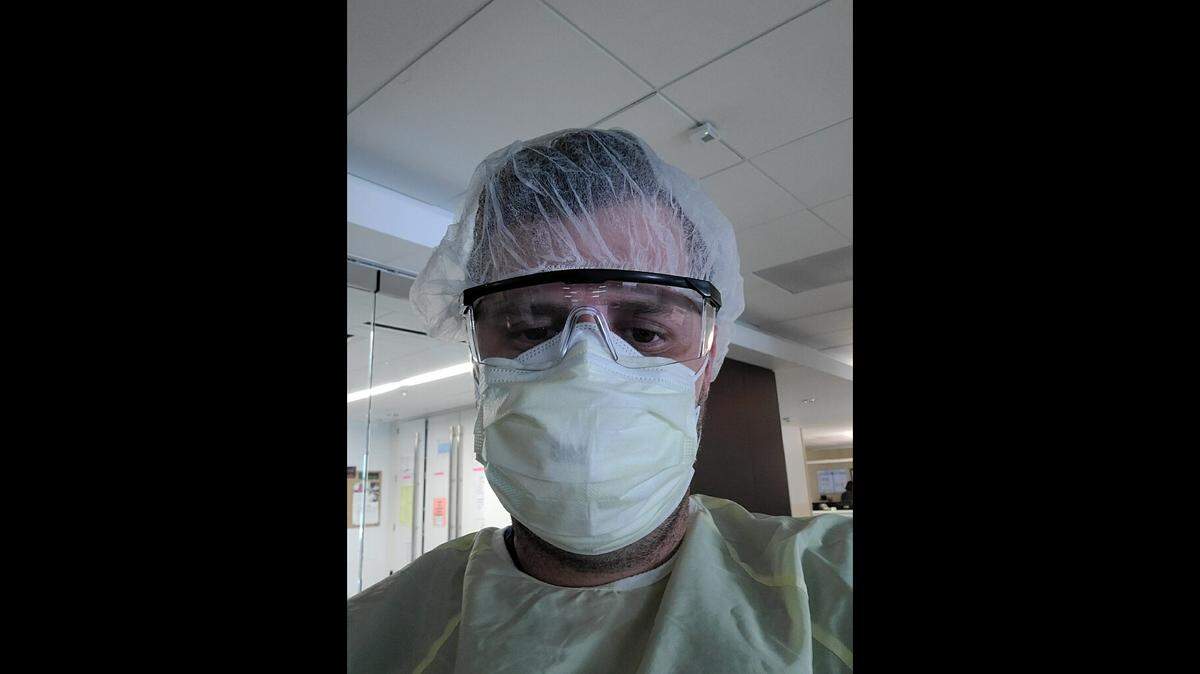
Nathan Jones, an intensive care unit nurse, has been treating COVID-19 patients since March. Submitted
Zoe Schmidt, a nurse at Research Medical Center, said she feels hopeless as cases rise, seemingly unabated.
She’s disappointed in her public officials, who have failed to institute statewide mask mandates or local lock downs as the situation worsens. And in her hospital’s administrators, who she feels aren’t providing adequate protection or support to staff.
With all that, she said, “there’s no end in sight.”
“Everything keeps rising and we’re losing staff and we’re already so understaffed and we’re already really burnt out and tired and scared and we keep getting sick,” Schmidt, 24, said.
She said more than 200 nurses have quit at Research since April. Many of those who remain are seeking therapy or counseling because of the trauma they’ve witnessed and endured.
Many, she said, have contracted the virus themselves and are scared of bringing it home to their friends and family.
“A lot of us are dealing with a strong emotional impact when we don’t really have as much of as support system as we’re used to,” she said.
COVID-19 patients, she said, aren’t able to see their family so hospital workers are their main source of support. This is more difficult, Schmidt said, because they don’t know enough about the virus to reassure patients that it will be okay.
She’s seen young people have strokes after contracting the virus and patients months after catching the virus who still need oxygen. She can’t tell these patients whether it will ever get better.
“It’s scary for them, and it’s scary for us,” she said.
“There are stories that haunt us all but we can’t talk about them publicly,” she said. “People of all backgrounds and races and ages are getting really sick and dying.”
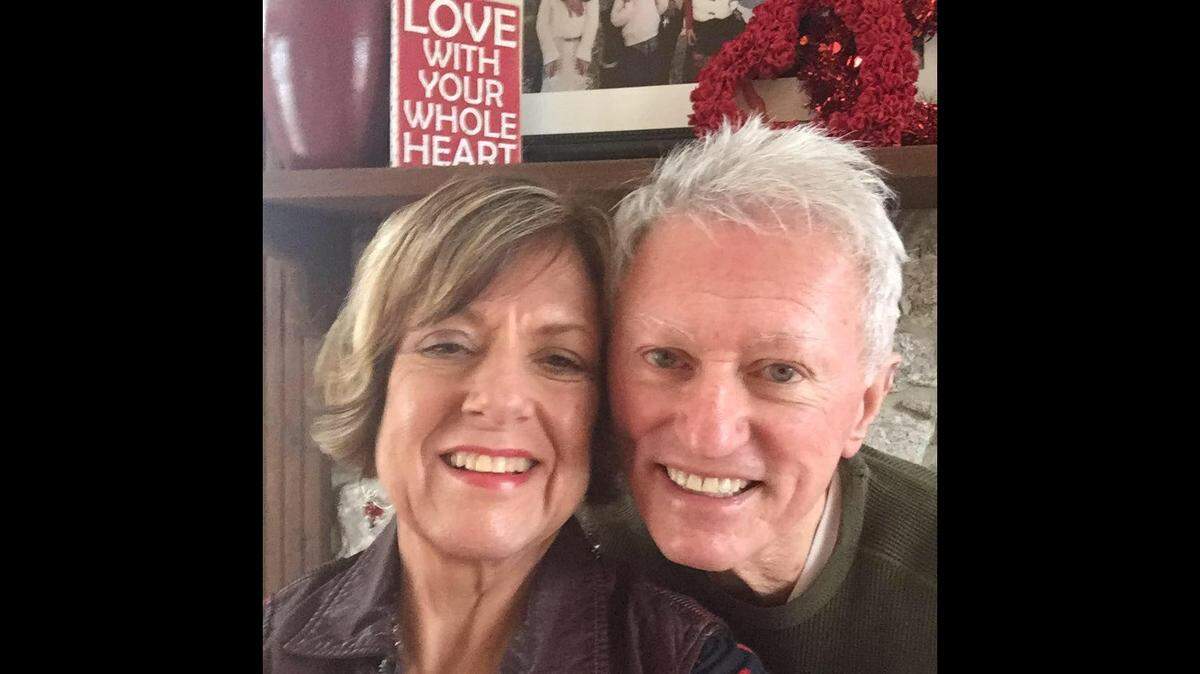
Joanna and Dennis Wilson Photo courtesy of Joanna Wilson
Deaths
Unlike homicides, where police report the names of each victim to the press, there will likely never be a public accounting of the identities of the 829 people dead from coronavirus in the Kansas City metro.
Reporting and obituaries, however, shed light on a few:
The past nine months, she said, have been “devastating” and “cruel.”
After her husband died, Wilson didn’t go home to a house full of friends and family. She went into isolation.
It was five months before her children walked into her house and she was left with the task of working through paperwork on her own because she couldn’t ask someone to come over and help.
The grief and the solitude, she said, was traumatic.
“You don’t know what to do with yourself as a single person without your mate of 50 years,” she said. “We hadn’t banked on this.”
Dennis Wilson, she said, was a healthy, vibrant man who was planning a party for their 50th wedding anniversary. Joanna Wilson is now using plansshe foundin a notebook of his to give her husband the celebration of life he deserves once it’s safe.
Last month, Kansas surpassed 1,000 COVID-19 related deaths. Wilson said she’s heartbroken by the number of families who have suffered like hers.
On social media and in public she’s been preaching the importance of mask use and social distancing. When she sees a cashier at a fast food restaurant without a mask on she tells them her story, hoping they’ll listen.
“That’s all I can do. I can’t do anything else. I’ll never have my husband back and I’ll have to learn how to live without him. And that’s a very hard thing to do,” she said. “But if I can help someone else not go through this terror that he went through with this that would make me very happy.”
Katie Moore was an enterprise and accountability reporter for The Star. She covered justice issues, including policing, prison conditions and the death penalty. She is a University of Kansas graduate and began her career as a reporter in 2015 in her hometown of Topeka, Kansas.
Katie Bernard covered Kansas politics and government for the Kansas City Star from 20219-2024. Katie was part of the team that won the Headliner award for political coverage in 2023.