As Kansas City Southern prepares for acquisition, focus turns to keeping local jobs
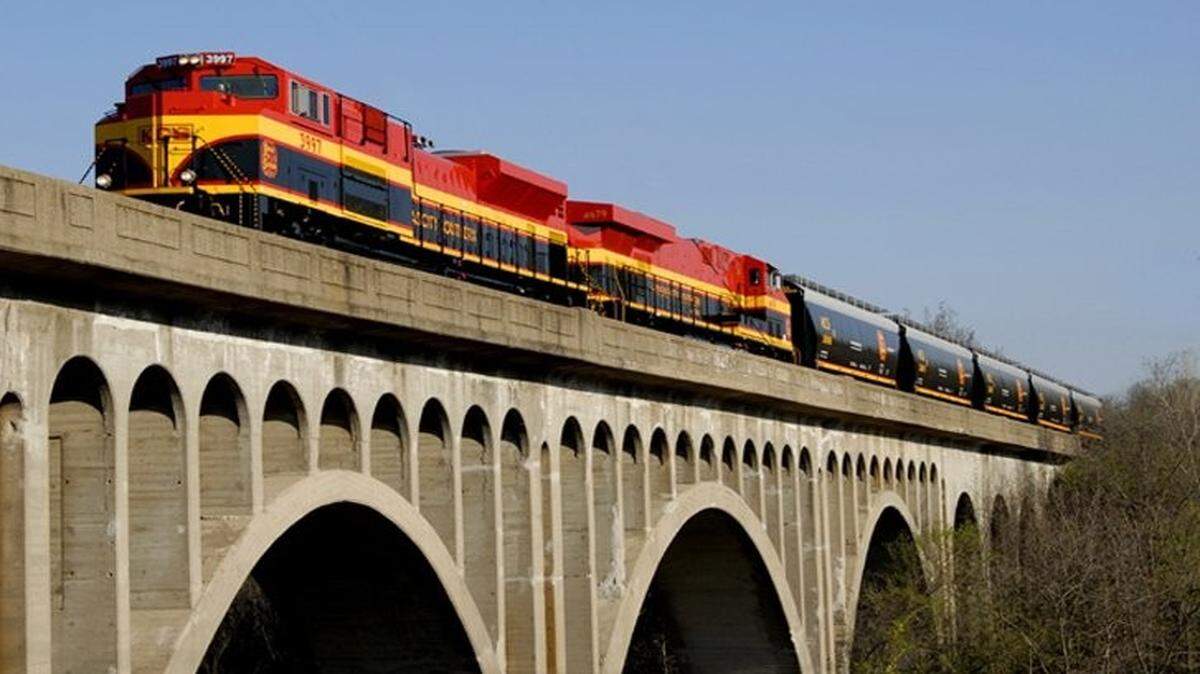
Patrick Ottensmeyer, chief executive of rail transportation company Kansas City Southern, has seen like everyone else how the broader Kansas City region has lost jobs through a series of corporate mergers in recent years.
And so with Sunday’s news that Canadian Pacific plans to buy Kansas City Southern in a $29 billion deal, Ottensmeyer sought to reassure a jittery Kansas City community that may worry about the effect that another corporate transaction could have on local jobs in a city that struggles to retain local ownership of longstanding, homegrown business institutions.
“I know Kansas City over the last decade or so has been the net loss of jobs because of mergers and other types of transactions,” Ottensmeyer told The Star Sunday morning. “Kansas City is going to be an incredibly important part of this network as you look at the map, it’s really dead center in the network connecting Mexico, Canada and the U.S.”
Keith Creel, president and chief executive of Calgary-based Canadian Pacific, echoed Ottensmeyer’s sentiments.
“The answer is this is all about growth,” Creel said in an interview. “The job creation that’s enabled by that growth across the entire network, but specific to Kansas City, I think this solidifies Kansas City, represents and respects their proud history and solidifies it for many, many decades to come.”
Kansas City Southern is a major employer in the region, with 700 jobs and its headquarters in downtown Kansas City. Kansas City is expected to become the U.S. headquarters for Canadian Pacific Kansas City as well when the deal closes, and the global headquarters will be in Calgary. Canadian Pacific’s current U.S. headquarters is in Minneapolis, which will remain a base of operations for Canadian Pacific Kansas City.
Commitments in the aftermath of corporate tie-ups are easy to make and often harder to keep. There are indications that Kansas City may endure as a lasting and significant segment of what will become Canadian Pacific Kansas City once the transaction closes.
On Sunday morning, Canadian Pacific and Kansas City Southern, two of the smallest Class 1 rail companies in the United States, announced plans to combine in a stock and cash transaction. It would result in a single company with 20,000 miles of rail and 20,000 employees and $8.7 billion in revenue, based on 2020 figures.
Canadian Pacific Kansas City would be the first rail network that connects Canada, the United States and Mexico, under the control of one company. It comes on the expectation of increased international trade as the result of a new trade pact between the three North American countries that was struck last year.
Canadian Pacific, under the terms of the proposal, valued Kansas City Southern at $275 per share and has Canadian Pacific assuming $3.8 billion of Kansas City Southern debt. That’s higher than the $20 billion takeover attempt of Kansas City Southern by private equity firms Blackstone Group and Global Infrastructure Partners that valued the company at $208 a share in September, according to published reports. Kansas City Southern’s board rejected that proposal.
Creel will remain the top executive of Canadian Pacific Kansas City if the deal closes, which is expected to happen in mid-2022. The board of the Canadian Pacific Kansas City will be expanded to include four directors of Kansas City Southern.
Opportunities in Mexico
Kansas City Southern’s and Canadian Pacific’s rail networks connect in Kansas City.
Canadian Pacific’s network stretches largely along southern regions of Canadian provinces and the Great Lakes with a line that stops in Kansas City. Kansas City Southern’s largely picks up from Kansas City and extends south into southern states like Louisiana, Texas and, importantly, spreads into Mexico and Panama.
Not an inch of their rail networks overlap.
“There’s no overlap at all,” Creel said. “So the complexity of it is ideal because there is none. It’s an opportunity to expand reach for customers, get into those markets, and create unique value that’s unparalleled for our customers.”
That network, a unique one that connects the Canada and Mexico through the United States, has appeal for both companies. That’s especially so since the U.S.-Mexico-Canada Agreement (USMCA) went into effect on July 1, 2020, and took the place of the previous trilateral trade agreement, the North American Free Trade Agreement (NAFTA).
Canadian Pacific’s acquisition of Kansas City Southern is a bet that trade between the three countries will pick up, particularly after the cooling of tensions between the U.S. and Mexico from the heated rhetoric between the two countries early in the Trump administration.
Mexico, in particular, is where rail opportunities appear likely to grow after it allowed both private investment in its oil and gas industries, imports of refined fuels and its expanding automotive business.
“Enormous opportunities,” Ottensmeyer said. “And the irony is cross-border traffic movements of goods between the U.S. and Mexico, even with the uncertainty of NAFTA has grown by double digit proportions every quarter for the last four years.”
Kansas City occupies a spot directly in the middle of what would become the Canadian Pacific Kansas City rail network.
Local reaction, history
Tim Cowden, the president of the Kansas City Area Development Council, an investor-owned organization tasked with attracting companies to the Kansas City region, expected the deal to be good news for Kansas City. The KCADC has marketed Kansas City’s strengths as a centrally located distribution and logistics powerhouse, given its proximity to rail and highway networks.
“KCS’ coupling with the CP (Canadian Pacific) allows both entities to leverage each other’s operational and marketing strengths now and as U.S./Canada/Mexico trade grows,” Cowden said in a text message. “While it’s sad to see the venerable KCS name disappear, Canadian Pacific Kansas City sure has a nice ring to it and honors the KCS and KC’s legacy in rail development and the integral role it will continue to play for years to come.”
Kansas City Mayor Quinton Lucas said on Sunday through social media that Kansas City Southern has been a vital part of the city’s business and cultural fabric since the 1880s and that he stands by employees and leadership as it enters a new phase.
Kansas City Southern’s corporate lineage ties back to 1887, when Rochester, New York, native Arthur Stilwell founded what was then known as Kansas City Suburban Belt Railway.
Over the years, the company grew its rail network through a series of acquisitions that extended the company’s reach into Mexico and Panama.
Kansas City Southern’s leadership over the years has had influence in the region’s civic affairs.
Former Kansas City Southern chief executive William Deramus III was a board member of civic institutions like the Kansas City Art Institute, the Kansas City Crime Commission and the University of Missouri-Kansas City, according to a profile by the Missouri Valley Special Collection. More recent executives like Michael Haverty and Warren Erdman have been similarly involved in local matters.
Deramus in the 1960s sought to expand Kansas City Southern’s business into industries unrelated to rail transportation, including insurance and data processing.
One of those companies that emerged from Kansas City Southern’s forays into other businesses was DST Systems.
DST Systems is an example of longstanding corporate institutions in Kansas City that have been targets for out-of-town concerns to either buy or control these companies. The result has often been job losses and reduced commitments to the region.
In 2018, SS&C Technologies Holdings bought DST Systems, which had been a major downtown employer and that also controlled large swaths of downtown Kansas City real estate had was crucial for the revitalization of the city’s inner core over the last 20 years.
Rounds of layoffs soon followed SS&C’s takeover of DST and its presence in Kansas City has been diminished.
A similar tale is playing out with Waddell & Reed, a financial services company that got its start in Kansas City in 1937 and now has its headquarters in Overland Park.
Waddell & Reed late last year was bought by Australian firm Macquarie Group, a move that ultimately thwarted Waddell & Reed’s plans to move to a halfway-built downtown office building. Waddell & Reed went through a round of layoffs earlier this year, shedding 219 jobs.
Asked about any concerns he had about Kansas City Southern diminishing locally as a result of the acquisition, Lucas said, “Any mayor would love to retain as many international headquarters as possible.
“I am heartened, however, to hear reports the combined firm will keep its U.S. operational headquarters in Kansas City. I look forward to learning more about the firm’s future.”
Creel, the Canadian Pacific chief executive, said Kansas City would remain part of the combined company’s future.
“Kansas City Southern has a long proud history, Canadian Pacific has a long proud history, we’re sensitive to both, we’re going to honor both in this combination and enhance both,” Creel said in an interview. “That’s what the plan is and that’s what the commitment is.”
Steps ahead
The Kansas City Southern-Canadian Pacific deal must get approvals from the U.S. Surface Transportation Board, which oversees and regulates the national rail industry.
Creel said he expected that regulators in Canada, the U.S. and Mexico would see the value in the transaction.
“We’re confident in the review process,” Creel said.
The U.S. rail industry went through a wave of consolidation in the 1990s. Since then, mergers of rail companies have been fewer and more difficult to pull off.
Interestingly enough, Kansas City Southern in 2001 received an exemption from the U.S. Surface Transportation Board that, in effect, would make it easier for the company to pursue a transaction like the one involving Canadian Pacific.
“It was done at a time when the rail industry was consolidating fairly rapidly in the 90s, and it really set out a path that defines a different set of rules for a consideration of a Kansas City Southern transaction versus the other larger Class 1 railroads,” Ottensmeyer said. “So yes, that that is going to be a factor here, because Kansas City Southern was at the time, after those larger transactions, was so much smaller than the rest of the industry.”
Rail mergers go through a unique process, called a voting trust, while regulators evaluate the deal.
When a voting trust occurs, Canadian Pacific can buy shares of Kansas City Southern and place it in a trust while regulators determine whether the transaction can close.
But that trust is overseen by an independent trustee; Canadian Pacific will not control Kansas City Southern until the transaction is finalized.
That means Kansas City Southern will effectively continue running as a standalone company as the Canadian Pacific deal awaits regulatory approvals and closing. Ottensmeyer will continue to be Kansas City Southern’s chief executive.
If the deal closes, Kansas City Southern shareholders will get $90 in cash for each share and enough Canadian Pacific shares to effectively own 25% the company’s outstanding stock.
Ottensmeyer said that when Canadian Pacific gets control of Kansas City Southern, he thinks Creel will be mindful of Kansas City’s place in the company.
“I know Keith is very serious about protecting the history of this company in this community, the significance of the rail industry in this community, and the outlook for for growth as we integrate these two companies,” Ottensmeyer said, “and really realize the long term benefits that we think this combination can offer.”