
Keith Chrostowski: No, Yellen is not going to kill the recovery
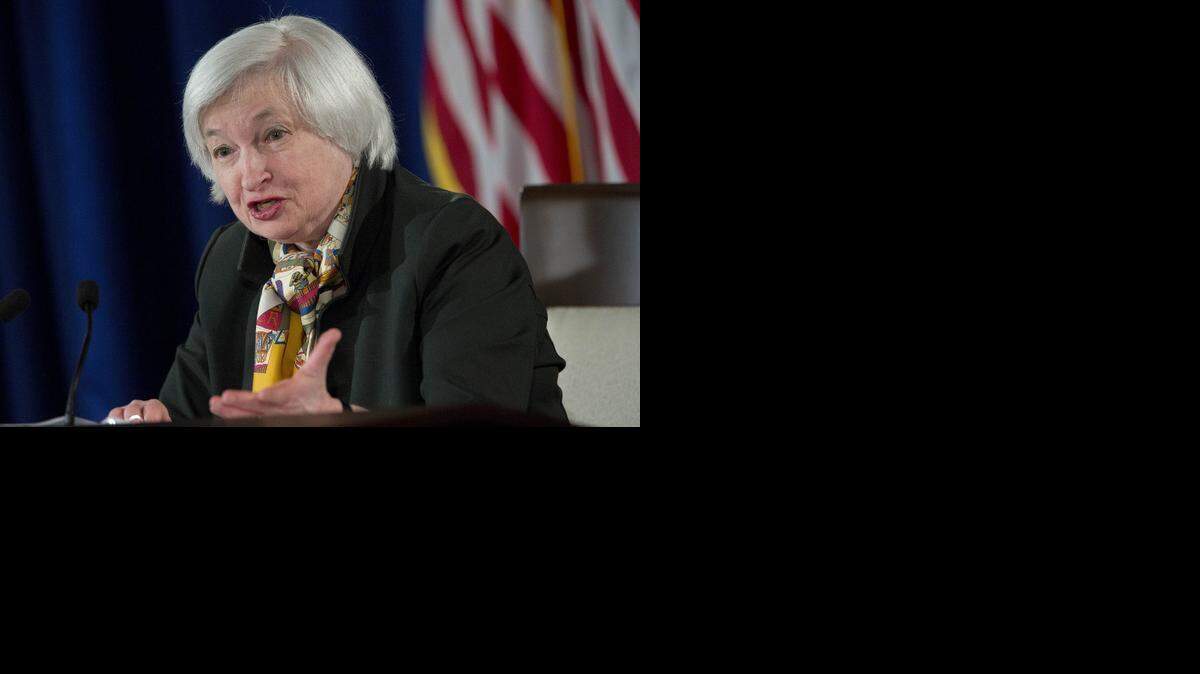
From all the stock market jumpiness and hand-wringing from analysts about interest rates rising a bit, you would think that Federal Reserve chief Janet Yellen is poised to harpoon the economy.
After last week’s meeting, the Fed did officially stop saying it would no longer be “patient” in lifting the benchmark Federal Funds rate, which has been pegged at 0 to 0.25 percent since October 2008. But, Yellen said, that “doesn’t mean we’re going to be impatient.”
That calmed those transfixed on when Yellen will pull the trigger. But you can be sure that until the deed is done, their fear will cycle up again.
The concern is that the likely .25 percent boost in the Federal Funds rate sometime this year, which will make borrowing more expensive for consumers and companies, could clamp down on what has been steady growth. The Fed is being warned not to repeat the “Mistake of 1937,” when it stalled the recovery from the Depression.
Specifically, what scares many the most is an interest rate ratchet. Once the Fed begins raising rates, it tends to keep raising them, sometimes quickly.
The last time the Fed increased the Federal Funds rate was in June 2004, taking it from 1 percent to 1.25 percent. But then in August, September, November and December it went up .25 percent each month.
In 2005, the Fed raised it a quarter percentage point eight times. And it still wasn’t finished; in 2006 it raised it four times, topping out at 5.25 percent.
It didn’t begin dropping the rate until September 2007, and it kept chopping it over the next year, a move many economists now say was a mistake (another one) because the lower rates added steam to the housing bubble.
There is reason to believe, though, that Yellen will indeed be patient and that a rate ratchet isn’t in the cards.
Yes, the recovery is solid. We’ve added 3.3 million jobs in the past year, the most since 2000, and the unemployment rate has dropped to 5.5 percent. Last year, housing starts picked up, vehicle sales accelerated, and industrial production popped. Gas prices fell and consumer confidence rose.
But wage growth remains stagnant, and the top-line jobless rate disguises still-deep problems. The labor participation rate is dismal, but the Fed is probably more concerned about the U6 rate. (The government counts the labor force several ways; the headline rate is U3.)
The U6 rate, which some say is the real jobless rate, accounts for people working part time for economic reasons, people looking for work, and people who want work but aren’t looking because they’re discouraged.
It’s at a heartbreaking 11 percent.
Also, the Fed has undershot its 2 percent inflation rate goal now for 33 straight months. A bit more inflation would mean companies could raise prices and possibly add jobs.
And, the economy did have a rough first quarter. There was the East Coast’s tough winter, and the West Coast’s dockworkers strike. Retail sales have been soft, and just Wednesday durable goods orders logged another decline.
One could ask why the Fed even continues to think at all about raising rates.
One reason is that an increase will indicate the Fed thinks the economy no longer needs as much support. Just that could boost business confidence and job creation.
Other Fed watchers point to a reason that doesn’t get as much attention, and that concerns the central bank’s much-debated course of quantitative easing: its purchasing of government and mortgage bonds to boost the money supply and spur bank lending.
As a result, the monetary base grew from $812 billion to more than $4.1 trillion.
The combination of low interest rates and the prospect of all that money flowing from banks to borrowers was a boon to the stock markets. Investors, dissatisfied with low returns on mere savings, were happy to accept higher equity risk.
By and large, though, the Main Street economy didn’t get much help. As it turned out, banks didn’t turn on the lending spigot. Rather, they kept that money at the Fed as reserves, which served to burnish their balance sheets and make them look healthier.
The Fed is no longer adding to its balance sheet and the monetary base, but it’s still buying securities to keep its holdings steady.
The danger now, Fed watchers say, is that many economists expect that the economy will revive from its first quarter swoon, strengthen and possibly boom the rest of the year. So the banks will begin lending those reserves out. And they could lend them out too fast or — as history has shown they have a propensity to do — too rashly.
That could lead to more inflation than the Fed wants or to the same kinds of asset bubbles that fed the 2008 crash; thus it’s time to move interest rates up.
I also think Yellen is getting worried that the Fed has never in its history had to consider raising rates while unwinding such a massive balance sheet.
The Fed has said it won’t move on its balance sheet until after the first rate increase. But I bet Yellen is thinking that the longer she waits, the more difficult the adjustment will be for the economy, and the hand-wringers.
The Fed really has sailed into uncharted waters, and it’s been battling rough seas for quite a while.
It’s not going to harpoon the economy, but it is time to head for shore.
To reach Keith Chrostowski, call 816-234-4466 or send email to chrostowski@kcstar.com.
This story was originally published March 26, 2015 at 11:30 AM.