
Federal Reserve signals that it may increase interest rates by midyear
The Federal Reserve on Wednesday moved to the verge of raising interest rates for the first time since the Great Recession, even as officials suggested that the Fed might not take that action until later this year.
In a statement released after a two-day meeting of its policymaking committee, the Fed said it would consider raising its benchmark rate as soon as June, and it removed from the statement a promise to remain “patient.”
But Fed officials also indicated in their latest economic forecasts that they thought unemployment could continue to fall without leading to inflation, suggesting little urgency about raising interest rates. The Fed said it would act “when it has seen further improvement in the labor market and is reasonably confident that inflation will move back to its 2 percent objective over the medium term.”
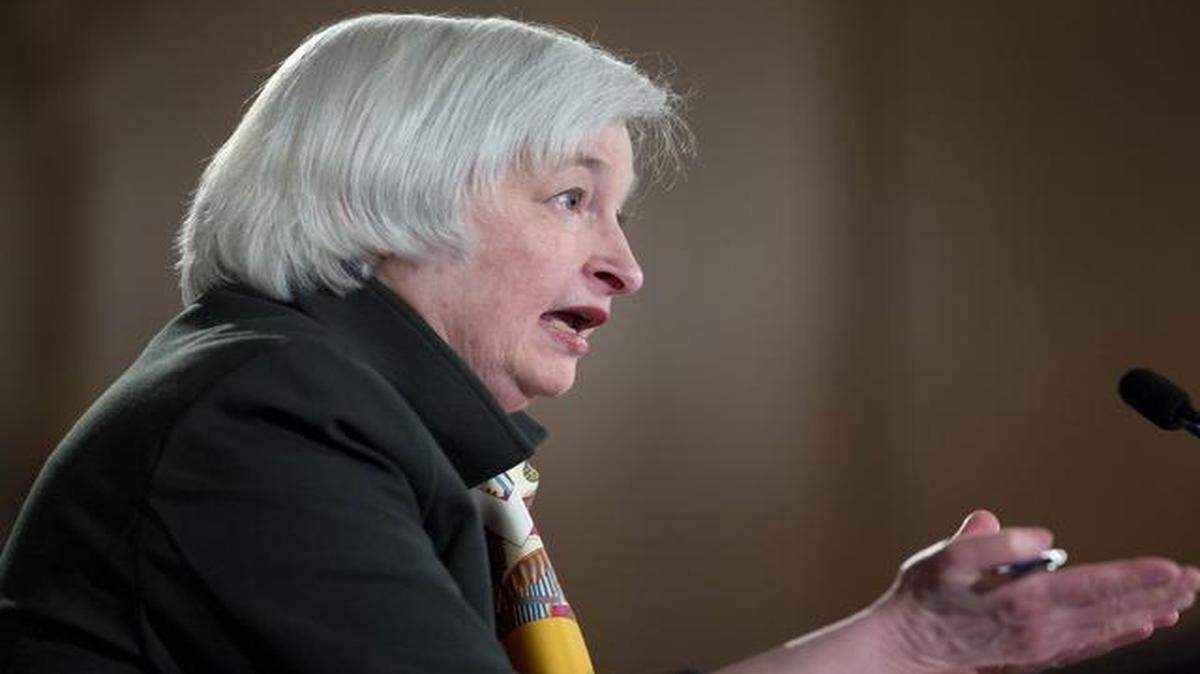
“Just because we removed the word ‘patient’ from the statement doesn’t mean we’re going to be impatient,” Janet Yellen, the Fed’s chairwoman, said at a news conference after the statement’s release.
The stock market has been up and down — mostly down — while awaiting the announcement, and investors liked the Fed’s measured stance. Stocks swung from losses earlier in the day to big gains after the Fed statement. Bonds also rallied, pushing the yield on the 10-year Treasury note back below 2 percent. The dollar plunged against the euro.
“There is very little to suggest that the Fed is going to raise rates aggressively this year,” said Jeremy Zirin, an investment strategist at UBS Wealth Management.
The Standard & Poor’s 500 index rose 25.22, or 1.2 percent, to 2,099.50. The Dow Jones industrial average rose 227.11, or 1.3 percent, to 18,076.19. The Nasdaq composite rose 45.39, or 0.9 percent, to 4,982.83.
The march toward higher rates reflects both the Fed’s optimism that the economy no longer needs quite as much help from the central bank and a sense of fatigue about its long-running campaign to encourage faster economic growth.
Unemployment remains above its normal levels in a healthy economy, and the Fed acknowledged in its statement that inflation has sagged even further below the 2 percent annual pace it regards as most desirable. It also said growth has “moderated somewhat.”
The statement said the Fed “remains unlikely” to act at its next meeting, in April, turning the attention of investors to the meeting after that, in June.
Yellen received unanimous support for the decision from the nine other voting members of the Federal Open Market Committee.
Officials continue to expect a rate increase in the coming months, but the average prediction of the 17 officials who participate in policy decisions is that the Fed’s benchmark rate would reach only 0.75 percent by the end of the year. The average predicted rate by the end of 2016 was still just 2 percent, according to quarterly forecasts the Fed released with its policy statement Wednesday.
The Fed has pointed steadily toward its initial rate increase in the summer of 2015 for the last few years, a consistency that reflects the economy’s steady-but-slow recovery over the same period. Yet as the time approaches, the recovery remains incomplete. Good jobs are still hard to find, wages are stagnant, and inflation has been persistently sluggish.
Employers have added more than 3 million jobs over the last year, yet wages have increased only modestly. And some analysts have cut forecasts for first-quarter growth after underwhelming reports on consumer spending and manufacturing. There are also growing concerns that the stronger dollar, which has been rising in part on expectations that the Fed will raise rates while other central banks are cutting them, will hurt U.S. exports and cut into corporate investment.
Some liberal politicians and activists have expressed fears that the Fed may begin to raise interest rates prematurely. They note that the Fed in recent decades has repeatedly used economic downturns to reduce inflation, often at the expense of tolerating higher unemployment. This time, they argue that the Fed should wait to raise rates until it sees evidence that inflation is climbing back toward 2 percent.
Republicans in Congress, on the other hand, are frustrated that the Fed has not started to raise rates. They have proposed measures that would impose greater congressional oversight on the conduct of monetary policy, including a requirement that the Fed publicly articulate the framework it uses for setting interest rates.
Alongside the debate about the timing, there is widespread concern that whenever the Fed moves, raising rates will disrupt financial markets. The Fed is likely to be the first major central bank to start raising interest rates, and it is also intentionally introducing greater uncertainty into the process. Fed officials say it is time to end the practice of providing explicit guidance about its plans for interest rates.
Christine Lagarde, the head of the International Monetary Fund, said Tuesday in a speech in India that the resulting turbulence could be bad for emerging markets.
“The danger is that vulnerabilities that build up during a period of very accommodative monetary policy can unwind suddenly when such policy is reversed,” she said.