‘Fight to the end’: Black-owned housing co-op made history in KC. Now it faces foreclosure
It started with a small drip.
Before long the water heater in Darrin Sherman’s apartment had been leaking for two months as he repeatedly called the front office at Parade Park Homes in search of help. But despite countless pleas, he says, it was never fixed.
Over time the neglect created a basketball-sized hole in his kitchen roof, sopping wet carpets throughout the first floor and unstable footing in his upstairs bathroom. Now, says Sherman, who is blind, he has been forced to move out.
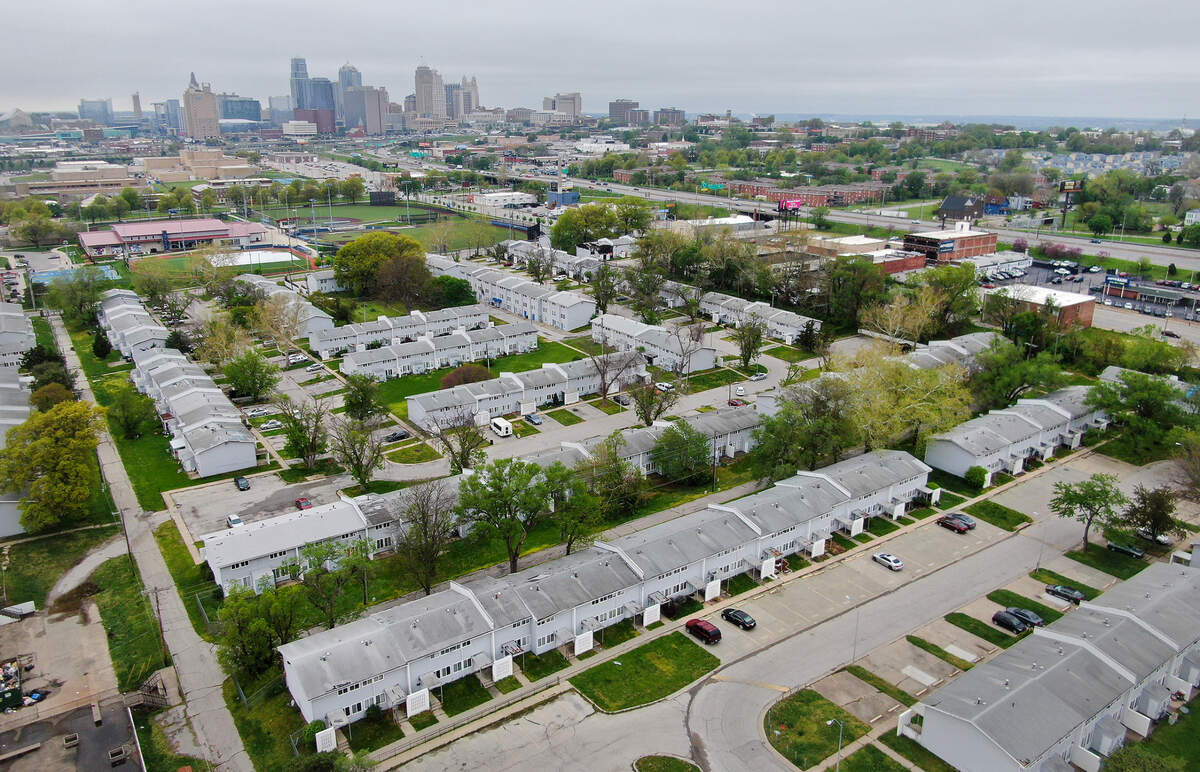
Sherman is one of many who have left Parade Park, a 510-unit housing co-op in Kansas City, as residences there have fallen into severe disrepair. Roughly half of the townhomes sit empty and some have become uninhabitable.
“Even in its decline this was still my home,” the 52-year-old said. “I was comfortable here. It was quiet here. I come home and live. I felt safe here, I felt secure here.”
“And that has been taken away from me totally,” said Sherman, who described his townhouse as a “mausoleum.”
Standing next to the heart of the 18th and Vine Jazz District, Parade Park is one of the oldest Black-owned housing cooperatives in the nation. Under the model, residents like Sherman are part owners of a corporation that owns the property.
Its affordable units were first built in the early 1960s as many Black families found the opportunity to build wealth through ownership. For decades Parade Park was recognized as a model of sustainable multifamily housing by its residents, Kansas City’s elected officials and the U.S. Department of Housing and Urban Development.
But in recent years, Parade Park has fallen apart. Roofs have caved in on some homes, exposing them to the elements. Rain gutters dangle from upper floors, and the charred remains of some burned townhouses stand unrepaired.
Residents express different views on how it came to this. Some suspect property managers deliberately neglected the complex as part of a plan to let the land fall into the hands of greedy real estate developers. Others think the co-op board, while meaning well, made crucial mistakes that doomed Parade Park.
However it happened, the danger is clear. After a February inspection by HUD, the co-op now faces the possibility of default and foreclosure. Parade Park has until July 7 to come up with a plan to address the “serious deficiencies” revealed by the inspection, which scored 14 out of 100 points and put the company in violation of its regulatory agreement.
Not everyone has given up. Recently, several new board members were elected to oversee Parade Park and have expressed a determination to find a way through the crisis.
A key desire shared by many is to remain a housing cooperative, where residents maintain some control over how much they pay and who lives there, even through a redevelopment of the property.
“We want to stay a co-op. And even those people (on the board) who may want redevelopment, honestly want to stay a co-op,” said John Jackson, a newly elected board member and treasurer for Parade Park.
It’s unclear whether a real estate developer stepping in now will allow Parade Park residents to govern themselves. Over the years, the board has struck tentative deals with developers, but none have come to fruition.
“Parade Park needs to be saved,” said Emmett Pierson, CEO of Community Builders Kansas City, who recently met with the board. “Whether it’s in its current form or not, that remains to be seen.”
Activists, namely the housing rights group KC Tenants, have also stepped in as some from the community fear that, without the right plan, Parade Park will become a large-scale example of middle and low-income Black residents being gentrified out of a historically Black neighborhood. These concerns are heightened by the possibility of a new Royals baseball stadium downtown.
“They’re not ready to die yet. They’re going to fight to the end. They don’t plan to lose,” Diane Charity, 72, a leader with KC Tenants who grew up in Parade Park and lived there for 30 years, said of the board. “They’re not taking no for an answer.”
Meanwhile, Kansas City politicians — including Mayor Quinton Lucas, whose mother lives in Parade Park — have pledged some support for the residents there, many of whom are elderly or disabled. But what that will ultimately look like remains to be seen.
For Sherman, the clock has already run out. After living in deteriorating conditions for months, he recently moved across town to an apartment complex in south Kansas City — a step he says he never wanted to take.
“The residents over here deserve better. We deserve better than this,” Sherman said.
“There are a lot of people that have been here since this property first opened — over 50 years — and they may not have the resources to move. They may just have to take this. And that’s not right.”
‘Nothing was ever done’
When Sherman first moved to Parade Park in 2013, one of the biggest selling points was becoming a part owner. He paid $1,200 to buy into the co-op and paid a monthly carrying charge, akin to rent, of $654.
He was happy to do it — for years, there was a waitlist to get in.
Under the housing co-operative structure, residents of Parade Park Homes buy into the nonprofit corporation Parade Park Homes Inc., and are given a share of the company. Each resident is a member of the co-op with the ability to vote for the nine-member board of directors.
Sherman’s home was a two-story, two-bedroom unit on 15th Terrace. Everything was in perfect condition when he moved in, he said. The AC kept him cool in the summer and the heat cranked in the winter. There was an open line of communication with the property manager if he needed something done.
There were the amenities of the neighborhood, too. He was within walking distance of a bus stop, convenience store, grocery store, pharmacy, park and barber shop. He had “full independence” with city life.
But over the past four years, Sherman began to notice a sharp decline around the property.
Lawn care headed downhill. Weeds and unkempt grass filled many of the common spaces and grew around vacant units. When roofs leaked, they were no longer fixed — just covered with blue tarps. When rain gutters fell, they were left hanging.
Every townhome in Sherman’s building was abandoned, except his. In the winter, vandals broke into vacant units, possibly for shelter or to scavenge copper pipes. When a large fire gutted several vacant units on the northern end of the complex in February, they were not torn down. They still stand, surrounded by burned debris and covered with graffiti.
Eventually the problems crept into Sherman’s own home when his water heater broke. The standing water put him in danger: He feared slipping and falling, being shocked by electricity or having the ceiling fall down on his head.
For weeks, Sherman said he felt like he got the run-around from the property manager. He heard there was no money to pay for a new water heater. Then he was told the board did not authorize a repair. Or there were others waiting for repairs. Or that the maintenance man was out sick.
“I’ve heard every story and nothing was ever done,” Sherman said.
Under an agreement with Parade Park’s board, the property managing firm Cohen-Esrey is tasked with handling maintenance requests and other operational needs of the community. The company is based in Overland Park and manages properties around the country.
In a statement last week, Ryan Huffman, the company’s chief operating officer, declined an interview request, saying the Parade Park board had not authorized the company “to speak to The Star regarding their community.”
Sherman finally gave up asking for anything to be fixed. He had to leave.
Last month, Sherman and his college-aged son were able to find an apartment across town. But it came at a cost: roughly $2,000 for application fees, moving expenses, rent, security deposit and the like. On top of that, Sherman fears he is still going to be held to the co-op agreement he signed with Parade Park, where he is required to give four-months notice before moving out.
Sherman is frustrated but said he is not entirely sure who is at fault. He believes the property management company fell short — and wonders if that was by design. He and other residents of Parade Park share a view — though none can prove it — that Cohen-Esrey was purposefully negligent as part of a larger plan so that a developer might get the land for a steal.
“It feels like they want people out of here,” Sherman said. “For whatever reason it is, I’m not sure. But that’s the way it feels.”
Compounding those frustrations over the months was a lack of communication from the co-op board, Sherman said.
By the time he left, Sherman was not sure what the board was up to — or who some of the members even were.
Parade Park in decline
Financial problems for Parade Park go back about 15 years, when residents started moving out.
Falling occupancy rates resulted in lower revenue. And the monthly carrying charges paid by the remaining residents did not increase to match rising costs. The community took out loans for maintenance and repairs, but the complex has not seen a major rehab in nearly 30 years.
Five years ago, Dalmark, a property managing and development firm based in Leawood, attempted to put in place a $76 million redevelopment plan for Parade Park that would have bulldozed the community and rebuilt it with 344 units designed to appeal to seniors. The redevelopment plan was said to include affordable and market-rate housing.
But a lawsuit tanked that idea after residents argued the Parade Park board acted improperly as it was moving ahead with Dalmark. Many feared the cost of redeveloping the property would price those living there out of their homes. The lawsuit ended after a mediated settlement where a new board was chosen and the plan was effectively killed.
More recently, the Parade Park board formed a partnership with St. Louis firm McCormack, Baron, Salazar, which sought funding from federal and state credits for a large-scale redevelopment. But residents of Parade Park say the developer has since backed away following the election of new board members.
Community Builders of Kansas City, a nonprofit developer invested in residential and commercial projects on the East Side, was brought in to speak with the current Parade Park board in March. Pierson, the group’s CEO, said the desire for the housing cooperative to remain under its current ownership structure “may or may not be feasible.”
“It’s a very challenging project, and I know that the board wants to remain in a position of strength. I’m just not sure that’s possible given where we are,” Pierson said.
“The overarching (issue) is that the membership and its leadership did not aggressively raise carrying charges to match inflation, rise of cost of doing things, particularly around maintenance. That’s how we got here.”
Roughly 240 families live there now, leaving more than half of the townhomes unoccupied. The empty units put the community in a tough position as costs rise and incoming revenues fall. Some have stopped paying monthly carrying charges as they seek to regain the equity they invested based on the assumption that the co-op will not survive.
Ballpark estimates for a full development of the property run between $80 and $100 million under the current costs of construction, which would likely be completed in phases.
Recent assessments by HUD suggest there may also be a multi-million dollar cost to stabilize the existing properties so they remain habitable.
New leadership
Many Parade Park residents have disagreed with the leadership of the community in recent years.
One is Brian Hullaby, who within the past year formed a tenant union with the aim of electing new members to the co-op board.
Under earlier leadership, Hullaby said, there were flagrant violations of the Parade Park bylaws. There had not been a legitimate board meeting for two years as COVID-19 kept many inside their homes, he said, but the board kept making decisions. Residents weren’t being properly informed about the co-op’s finances or relationships with real estate developers.
“They weren’t being transparent about what they were doing,” said Hullaby, who is also a leader with the housing advocacy group KC Tenants.
“And they were making a lot of backroom deals that were not beneficial to Parade Park. I believe their hearts were in the right place. I don’t think that they were trying to destroy it on purpose. I just think that the ideas they had weren’t effective and didn’t work.”
But now there is hope for what the community can still be as members examine ways to bring investment into Parade Park while keeping the cost of living there affordable. New members of the board were recently elected, along with a new board president.
“I know that things do look bad here. But we are optimistic,” Hullaby said, adding: “The only way that Parade Park can fail is if the people here fail. And that’s not something we do.”
Charity, also with KC Tenants, said the board needs an “honest advisor” as they seek to breathe new life into Parade Park.
“They need somebody that will really tell them what the truth is and not try to sell that place out from under them,” Charity said. “They are apprehensive. They don’t trust anybody but themselves. And I don’t blame them.”
City Hall support
At City Hall, Parade Park’s long history, and the safe and affordable housing it provides, carried weight. As the property faces financial turmoil, the City Council has continued to offer funding to help with redevelopment.
But that may not be enough to save it.
In 2020, the City Council appropriated $110,000 to put toward the first phase of a redevelopment project between Parade Park Homes, Inc, and the St. Louis firm.
In promising the money, the council’s ordinance also included a grim outlook.
“The Parade Park site is at the end of its useful life and requires the redevelopment of the entire site due to deferred maintenance, age and obsolescence of the units,” it read. “Over the years, the infrastructure system and the condition of the property have deteriorated and occupancy has declined.”
Since then, during a recent inspection required by HUD as part of an attempt by Parade Park to secure a $10 million loan, the homes scored “unacceptable,” city officials said.
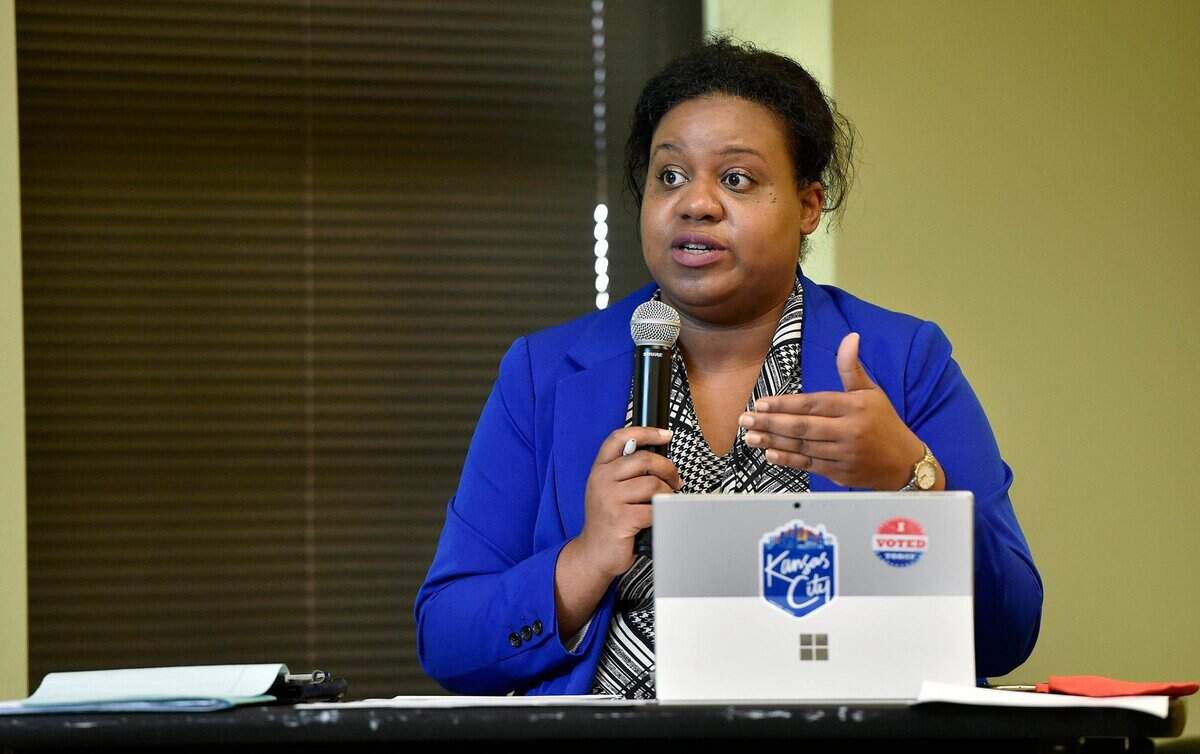
In mid-April, councilwoman Melissa Robinson, 3rd District, made a plea to the rest of the council.
“Parade Park homes has never been late on their payments, but the disrepair of the properties is causing a default, and over 240 families are facing the foreclosure on that full property,” she said.
The city has committed $2.6 million for Parade Park’s upkeep.
For the co-op to claim another $1.4 million from the city, the state will have to provide matching funds, and Parade Park will have to enter a redevelopment agreement “so that we can assure that ultimately this is a solvent project and it’s not just money going in to fix something and creating a new problem,” Lucas said last month.
The $1.4 million would go toward the first phase of HUD’s total redevelopment plan of the property, which would include relocation, demolition and re-development of senior housing. Some of it would also go toward deferred maintenance of 227 units.
Overall, that redevelopment could cost about $85 million. And it’s unclear where the rest of the funding would come from.
If the state match doesn’t come through, the city won’t abandon Parade Park “as an idea,” Lucas said. But it will need to re-assess the options.
“I don’t know if we have enough money alone to save it and fix it and make it long-term solvent,” Lucas said. The city’s decision to give part of the funding was an attempt to show the state and HUD that the city is committed to being part of the solution.
Lucas has long advocated for preserving Parade Park.
“I think it’s vitally important that we keep those folks around,” Lucas said in 2016 as councilman for the 3rd District at-large. “And as a sign to the community that we care about the long-term survival of low- and moderate-income neighborhoods.”
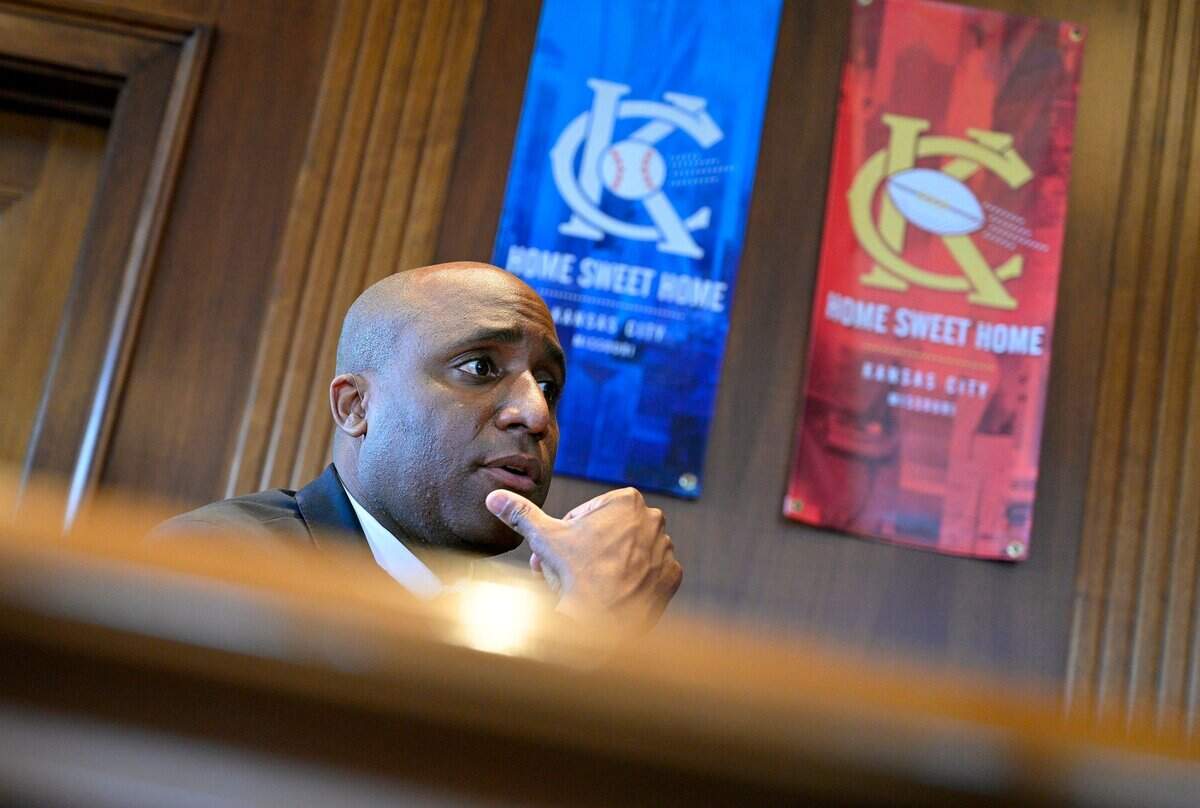
Rep. Emanuel Cleaver, who previously served as Kansas City’s mayor, said there are many challenges still to consider. The property is appraised at $6 million but Parade Park Homes is $10 million in debt, making it difficult to find a developer willing to sign on. There are the sheer number of empty buildings, and then there are likely environmental problems that will need mediating once a rebuild begins.
Cleaver recently met with Gov. Mike Parson about the future of Parade Park. He said the governor seemed interested in getting more involved.
“It’s getting worse by the day,” Cleaver said Friday. “I don’t think it’s beyond solving, but everybody’s got to be on the same page.”
‘This is home for me’
On a recent Saturday, residents of Parade Park gathered in a small community room to discuss their problems.
Few saw any easy solutions. But most agreed they did not want to give up.
“It’s a mess. But we still here fighting,” said Shariel Guthrie, 62, who has lived in the community with her husband for 43 years. She first moved to Parade Park when she was 19 years old.
Guthrie and her husband envisioned living out their retirement here. Now, if they are forced to move, her husband is not sure he’ll be able to retire when he planned.
“I don’t want to move,” Guthrie said. “I feel safe here. This is home for me.”
She wonders why the city doesn’t do more to help. She sees how other large scale developments in the city are promised far more.
Guthrie pointed to a recent announcement by local and federal officials of a plan, for which the financing was unclear, to build a $160 million park over Interstate 670 downtown. And she singled out Lucas for responsibility.
“Your mama still lives here, and you basically denied us,” she said. “But you on TV talking ‘bout y’all building a park over the freeway for $160 million? And you want me to vote for you?
“You better keep it moving, baby. It’s all about politics. In the end it’s all about politics.”
This story was originally published May 11, 2022 at 5:00 AM.