Black wealth, pride and decent housing: Why Parade Park matters to Kansas City
Rhonda Murphy remembers the day Parade Park Homes opened in Kansas City.
It was the early 1960s and she was an eighth-grader living on the East Side. The news was exciting, even for a 13 year old.
That the 18th and Vine neighborhood would be home to one of the first Black-owned housing co-ops in the nation was a point of pride in the community. It was an example of Black wealth in a place and time when many in the area lived with poverty and segregation.
Murphy remembers, too, the slums that stood there before: no running water, no indoor toilets, dirt floors. As many as 10 people crowded into the single room shacks that were bulldozed to make way for the Parade Park homes.
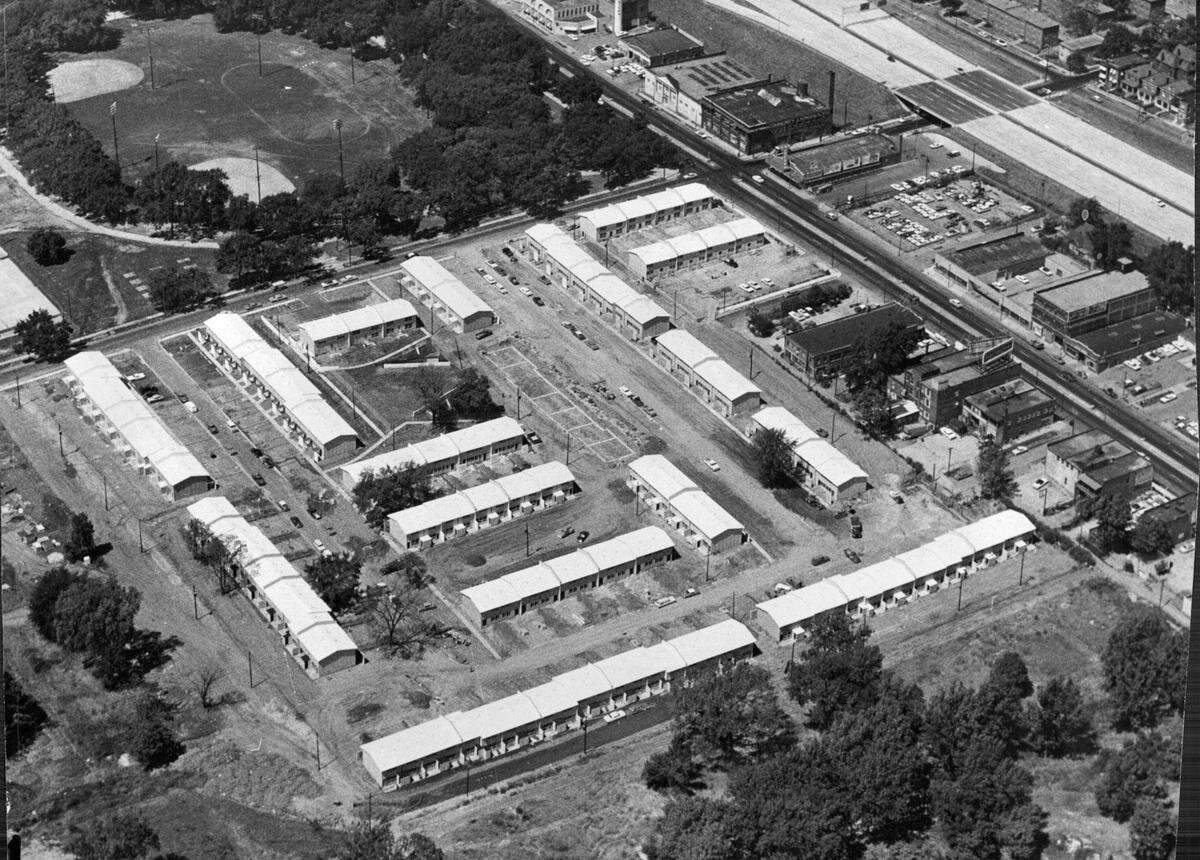
Between 1962 and 1967, 510 affordable units, known as Parade Park Homes, would be erected between Truman Road and 18th Street and between Woodland and Brooklyn avenues.
The homes, developed by U.S. Department of Housing and Development, were built by Reynolds Metal Development Corporation to demonstrate the use of aluminum siding.
At the time, monthly payments ranged from $66 to $78, depending on whether the unit had two or three bedrooms. Residents were given certificates saying they had permanent rights to the unit, and could pass it onto their children. The property’s title remained with the co-operative corporation.
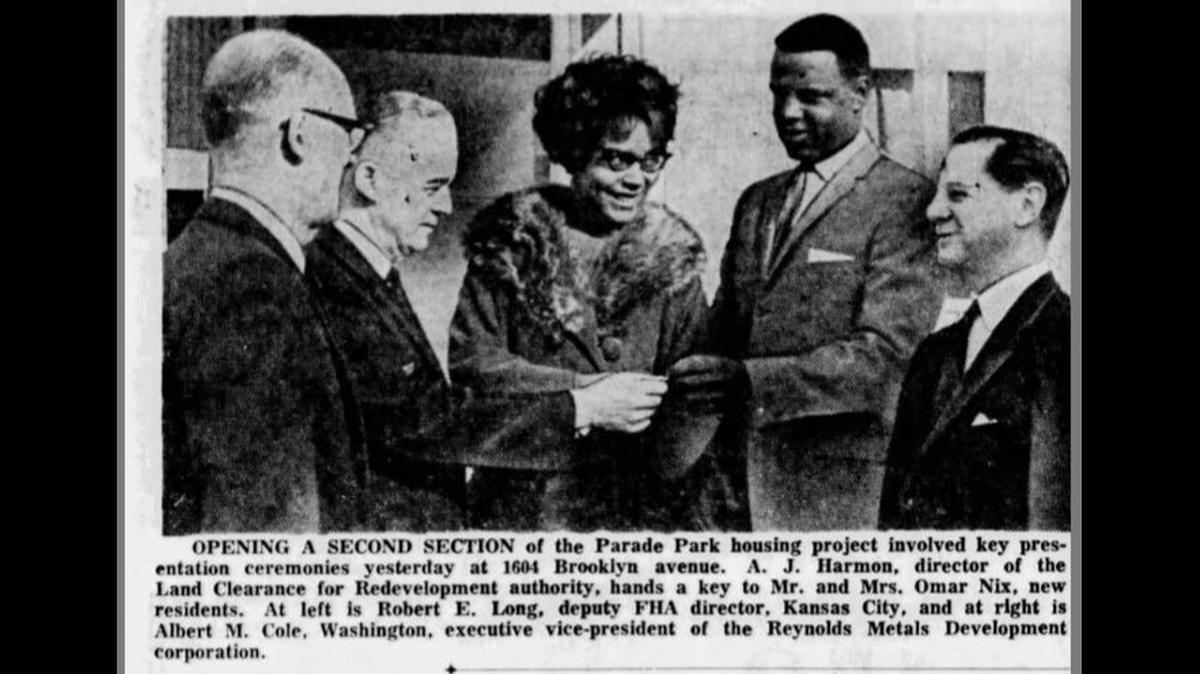
The first couple to move into the new Parade Park Homes, cited in the Kansas City Times only as 23-year-old Mr. and Mrs. Omar Nix, and their 5-month-old son, were handed a ceremonial key to the townhouses during a 1962 party.
In the years to follow, Parade Park was home to many prominent Kansas Citians, including baseball player Reggie Jackson, Bruce R. Watkins, a former Tuskegee Airmen and the first African American person elected to Kansas City’s City Council and Municipal Judge Kit Carson Roque.
“The Parade Park cooperative serves as one of the few examples in the country of housing built by private enterprise that is truly within the reach of families of moderate income,” a city report said.
In 1992, the housing complex, which continued to gain national attention and acclaim, received a $5.7 million loan from the Department of Housing and Urban Development and $1.6 million from the city to give the property a facelift.
The aluminum was swapped for light blue vinyl siding. A wall made of brick and wrought iron was added along 18th Street. Each home got new windows, front doors, cabinets, and ceramic tile in the bathrooms and kitchens.
Playground equipment was added for kids. Homes were full. Residents were happy. At that point, monthly charges were still below $200.
A Star reporter asked a resident at the time: Why does Parade Park work?
“Pride of ownership, self-determination and the fact that we are responsible for ourselves and to our neighbors,” Janet Marzett, then a member of the Parade Park board, said.
For decades it was recognized in Kansas City planning documents as one of the most stable and healthy urban-core neighborhoods. A 2004 story from The Star said that up to that point, Parade Park almost never had a vacancy.
But times have changed.
Today, Murphy looks upon Parade Park from her post across the street as an assistant archivist at the Black Archives of Mid-America. And she does not like what she sees.
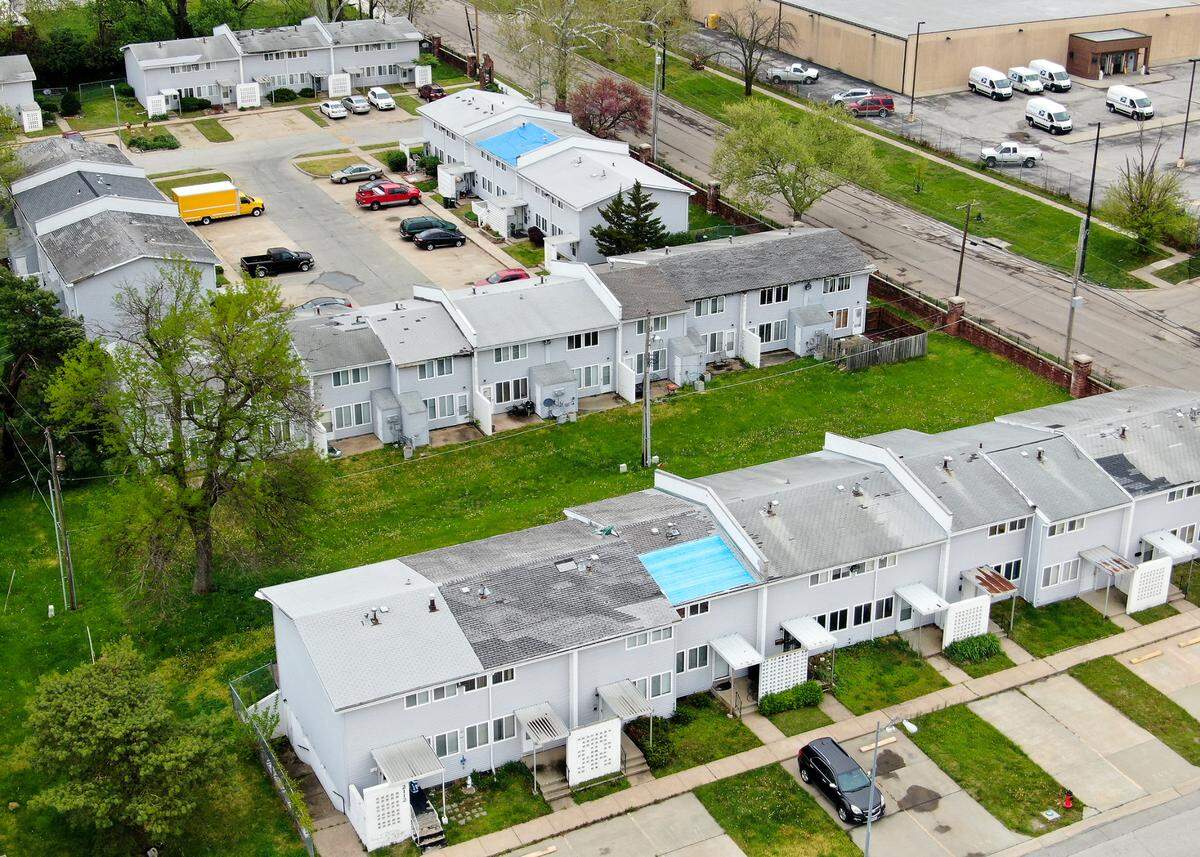
Roofs are falling apart, patched over with blue tarps. Gutters lay abandoned on the ground. The scars from a recent fire are an eyesore. More than half the units are vacant.
Those who remain Parade Park residents face an uncertain future as the co-op’s board attempts to find funding and support to re-develop the historic residence.
She worries that redevelopment will bring higher costs, pushing out the Black families, including many retirees, who live there now. She worries that it could be the next step on the slippery slope that leads to the gentrification of the Historic 18th and Vine District. She’s not alone.
Parade Park was built as a symbol of success in a city that had pushed Black residents into projects and ghettos, Murphy said. Instead, they had an opportunity at ownership that most Black Kansas Citians weren’t afforded, or allowed.
She wonders: Where did the pride go? Who will take responsibility for Parade Park’s future?
Murphy worries that if Parade Park’s fate is in the wrong hands, the thriving center of Black history will be just that: history.
The Star’s Bill Lukitsch contributed.
This story was originally published May 11, 2022 at 5:00 AM.