
Looking for blooms in the heat of summer? This tough, bold shrub is sure to delight
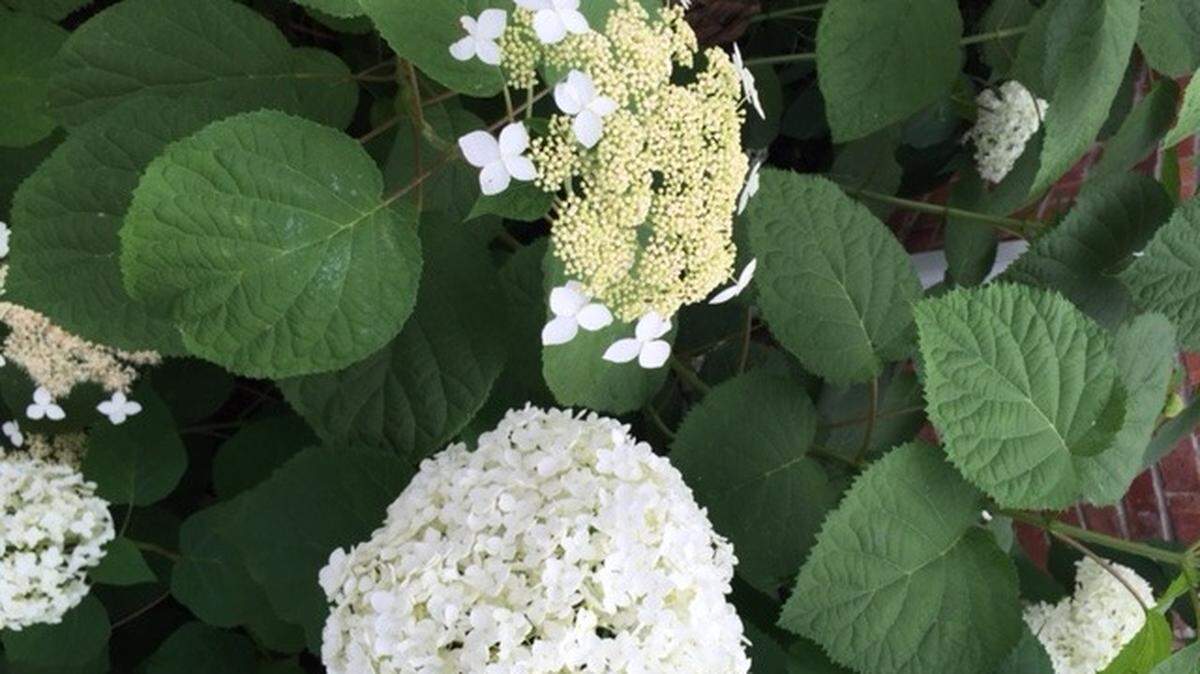
Bold creamy-white flowers are exploding in the landscape this summer, leaving many people in awe of the Hydrangea paniculata or panicle hydrangea. This old-time shrub has been reinvented over the last 10 to 15 years, becoming a summer staple.
Panicle hydrangeas deserve a place in the landscape as they are versatile problem-solvers, delivering beautiful flowers even in the summer heat. With minimal care, the plant will produce flowers that can range in size from a baseball to a football.
Like most flowering shrubs, they need at least a half-day of full sun. Shady locations reduce the numbers of blooms. Panicle hydrangeas thrive in our heavy clay soils as long as it is well-drained.
Water plays a major role in developing the biggest flowers. The plant tolerates dry conditions, but that results in a reduced number of flowers.
May and June rains this year in the Kansas City area, along with some supplemental irrigation, have resulted in one of the best shows in years. Fertilization is usually not necessary.
Unlike its cousin Hydrangea macrophylla, big leaf or Endless Summer types that bloom pink and blue, this species only flowers in white. Cooler summers may reveal light shades of pink.
The main advantage over big leaf hydrangeas is their blooming habit. Panicle hydrangeas bloom on new wood or summer growth.
New wood flowering shrubs are not subjected to winter-kill issues experienced by the big leaf hydrangea. With an ample supply of moisture, the result is dependable flowering.
Prune in the spring as new growth begins. How much to remove will depend on the variety. The harder pruned or more old growth that is removed, the stronger the new branches. This results in enormous flower heads.
Cut back larger varieties, reaching 5 feet or more, to about 18 inches to 2 feet from the ground. Dwarf varieties topping out at 2 feet may be cut back to about a foot from the ground.
Panicle hydrangeas are available in nurseries in shrub form. However, standards or tree forms are also popular. Standard panicle hydrangeas appear like a Popsicle: a short trunk 3 to 4 feet topped with the shrub-like head.
The tree form fits perfectly into tight spaces or creates a strong accent in the landscape. Each spring, prune the head to maintain its shape.
The flowers are striking as they have many sterile flowers with larger petals. Some varieties have more fertile flowers, not as showy, small and rounded. Fertile flowers provide a source of nectar for native pollinators.
Numerous varieties are on the market, each with similar flowering habits but varying in size. Popular dwarf varieties include Bobo, around 2 feet tall, to Little Lime and Little Lamb, growing to 3 feet.
Little Quick Fire reaches 3 to 4 feet while Quick Fire and Zinfin Doll grow to 5 to 6 feet. Limelight, Tardiva and Vanilla Strawberry can top 6 feet.
One pitfall of some varieties is the flower heads are so large and heavy they can weigh the branches down and flop to the ground. Varieties with stronger upright stems are preferred.
No matter the variety selected, you will be delighted by the summer show in the landscape on a hot day.
Dennis Patton is a horticulture agent with Kansas State University Research and Extension. Have a question for him or other university extension experts? Email them to garden.help@jocogov.org.