
Could those freezing February temps wipe out insects? Here’s what you need to know
I’ve frequently fielded this question in February: “How will the extreme cold snap in February affect the insects this summer?”
People like to think the extreme cold blast we experienced in February will pay off this summer with fewer pesky insects. I hate to burst your bubble, but the cold weather is just one of many factors affecting the population of insects emerging in the coming weeks.
Insects have survived for millions of years and evolve with the climate. Insects are cold-blooded, which means they do not generate heat. Their body temperatures fluctuate with the weather patterns, which gives them the ability to withstand just about any extreme weather nature brings their way. As cold-blooded insects, they go dormant or inactive when the temperatures drop below 50 degrees.
Cold temperatures are probably not the most significant influencer on their demise. The reason temperature has little effect on their survival is related to their life cycle. Depending on the species, insects overwinter in all life stages: from adults to eggs, larvae or in chrysalis and cocoons.
Insects overwinter in protected areas, sheltered from the extremes. They spend the winter deep in the soil, buried in plant debris, inside plants and even in our homes. These locations insulate and protect the developing stages, ensuring emergence and survival.
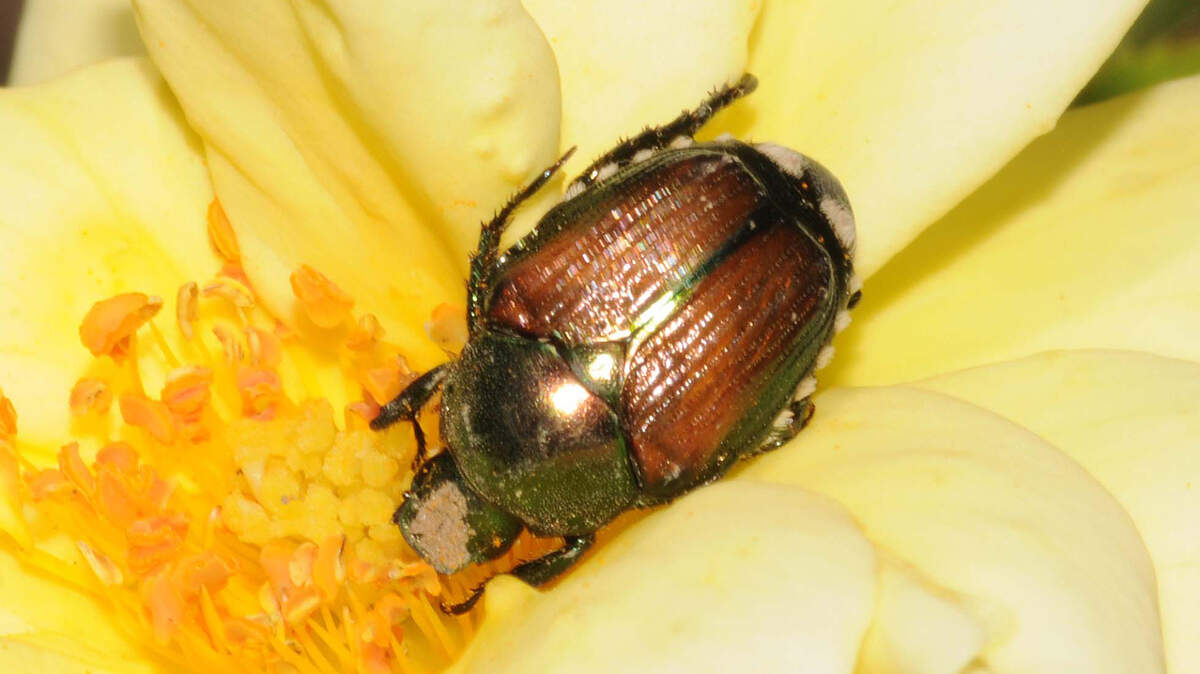
Insects such as grubs and the dreaded Japanese beetle overwinter in the soil. There are some indications these grubs cannot survive at temperatures around minus 5. But grubs can burrow deep into the ground, maybe 4 to 6 inches.
At this depth, the top layer of soil can be frozen, but temperatures farther down still hover in the upper 20s. Top it with a snow cover trapping in warmth and it may barely be below freezing.
Other insects burrow in leaf litter, close to the soil protected from the extremes. Wood-boring insects, like the emerald ash borer, are in the larval stage, dug deep in the wood of the tree. Here they lie in wait, protected by the bark, which also absorbs the rays of the sun.
Bagworms survive as eggs tucked inside a densely woven silken bag protected from the harshest elements.
Home invaders, like Asian ladybug, brown marmorated stink bug and boxelder bug, are warm in homes hiding in cracks and crevasses. Outdoor weather patterns have little effect on their survival.
The other piece to consider: If the cold affects the harmful insects, it will also be detrimental to the beneficial insects, like the pollinators and predatory species.
The bottom line is the nearly two weeks of below-freezing temperatures in February will have little effect on the potential number of insects this spring and summer. Winter temperature is only one factor. Spring freeze-thaw patterns, moisture levels and other climatic factors will play a role in the number of insects we see.
Dennis Patton is a horticulture agent with Kansas State University Research and Extension. Have a question for him or other university extension experts? Email them to garden.help@jocogov.org.