
Have a love-hate relationship with ornamental grass? Horticulture agent has your back
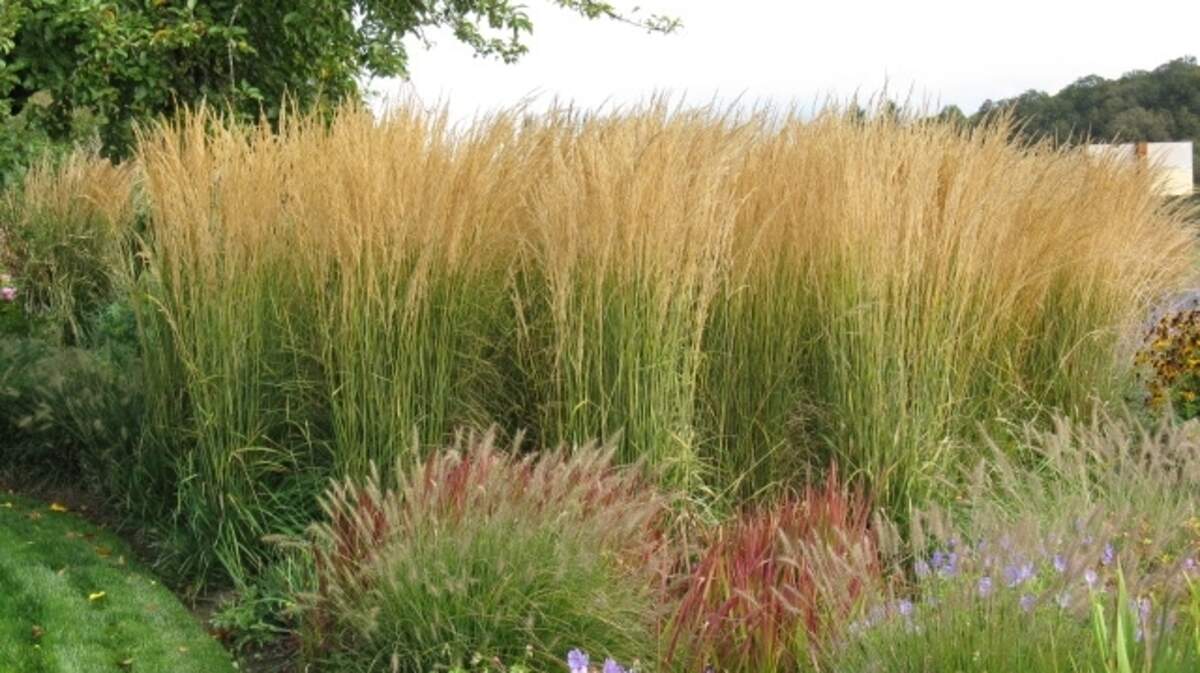
I have a love-hate relationship with ornamental grasses. These graceful grasses have been a landscape staple for decades. Prized for their structure, texture and easy care, they are frequently found in many gardens.
So what warrants this relationship? Let’s begin with people, including myself, who mostly love them.
Ornamental grasses flourish in the Kansas City area and are considered low maintenance. Just cut the grasses back in late winter before new growth begins to renew the clump for another season of beauty.
But removing the old growth can be a chore. Large clumps are hard to manage as the foliage edges can be as sharp as razor blades. Wear gloves, long sleeves and pants to protect exposed skin before tackling. Cuts from the blades can be slow to heal.
The next challenge is cutting back the thick, coarse stocks. Hand tools, clippers or a pruning saw work best. If there are several clumps, an electric hedge trimmer will make quick work.
Tie up the old growth with compostable twine before cutting to speed the cleanup. Once the cut is made, the clump is ready for disposal in the trash. These coarse stocks are difficult to compost at home.
The goal is to cut back the dead foliage as close to the ground as possible. There is no reason to cut off a foot or more from the ground. Doing so leaves more brown growth to be covered up by fresh spring green. Burning is not recommended.
Now let me share why people shrink away from adding these grasses to their landscape. Although they are considered low maintenance, there is nothing easy about dividing an overgrown clump. The bigger the stature of the grass, the harder it is to divide. Eventually, these grasses outgrow their space and die out in the center, resulting in a look that decreases the beauty of the grass.
Getting a well-established overgrown clump of grass out of the ground is difficult and may even require a backhoe. Personally, I have broken shovel handles and have wrenched my back swinging an ax in an attempt to get the clumps out of the ground. The best tool for removing an overgrown clump may already be in your tool shed — a reciprocating saw.
Our Extension Master Gardeners have ornamental grasses in their demonstration gardens. We have adopted this trick, making dividing easier. Once the clump reaches the size of a dinner plate, about 12 inches, we dig and divide. This size of a clump is small enough that it can be dug around and lifted out of the ground.
This clump is then cut into three or four sections, with only one being replanted. The downside is most grasses need to be divided every two to three years. The good news they are vigorous and quickly return to their glory.
Now is the best time to cut back and divide grasses. Don’t put off the task of dividing. It only gets harder. Trust me as I have learned the hard way, resulting in my love-hate relationship.
Dennis Patton is a horticulture agent with Kansas State University Research and Extension. Have a question for him or other university extension experts? Email them to garden.help@jocogov.org.
This story was originally published March 16, 2020 at 7:43 PM.