
Backyard Garden Ideas That Make Small Spaces Feel Like Luxury Outdoor Retreats
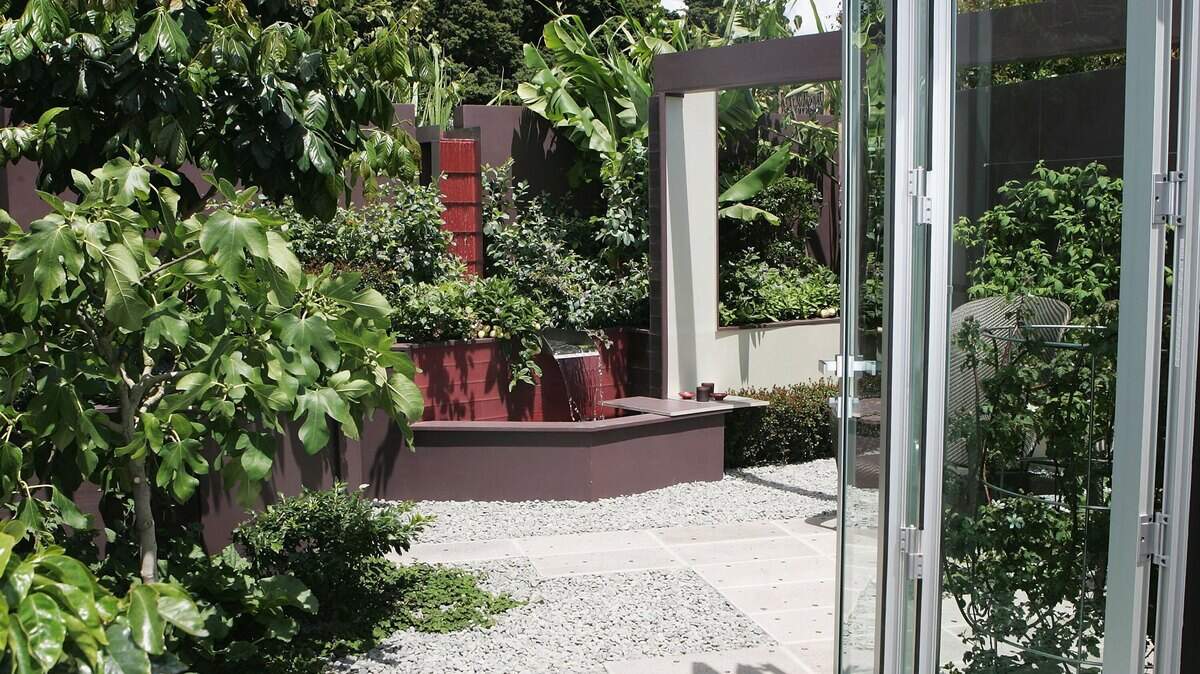
You know what good garden design looks like. You’ve spent years cultivating it — the perennial borders, the layered beds, the room to experiment with an ambitious palette each spring. And now, after moving to a patio home, a townhouse or a 55-plus community, the canvas has changed. The yard is tighter. The footprint is modest.
A smaller garden is not a lesser garden. It is simply a more edited one. And editing, as anyone with taste understands, is where elegance lives.
Lead With a Single Sculptural Statement
Choose one statement plant as a focal point instead of a lot of small ones. A Japanese maple, an olive tree or a dramatic cluster of ornamental grasses can anchor a compact space the way a great piece of art anchors a gallery wall. These sculptural plants carry visual weight without consuming precious square footage, and they reward you across seasons with shifting textures and forms.
Pair that focal point with a restrained color palette — greens plus one or two accent colors — and the entire space begins to feel intentional rather than incidental. Corner planting works especially well here, drawing the eye to a destination and giving your garden a sense of depth it might not otherwise possess.
Design the Ground Plane With Purpose
The path beneath your feet is one of the most powerful tools in a small garden, and two principles stand out: diagonal pathways and curved edges.
A straight walkway that runs fence to fence reveals the full dimensions of your space in a single glance. A diagonal pathway, by contrast, stretches the longest possible line across a rectangular lot, making the yard feel measurably larger as you walk it. Curved edges amplify this effect.
A gravel courtyard corner can deepen this effect even further, lending a Mediterranean feel that transforms a modest patio area into something that evokes a European garden room. Add crisp stone edging or mulch borders for clean lines, and the overall composition gains the kind of finish that separates a designed garden from a decorated one.
The Illusion of Space: Mirrors and Layered Sightlines
Perhaps the most rewarding design challenge in a downsized garden is the art of making it feel bigger than its boundaries. Two techniques stand above the rest: mirrors and layered sightlines.
Charlotte McCaughan-Hawes with House & Garden says: “Mirrors are the unsung decorative hero for your garden, helping to make a small garden appear larger (and to show off all the best angles of your planting). They also help to fill a blank garden wall or fence where climbers would be impractical.”
Reflective decor placed on a garden wall can double the visual depth of a border and bounce light into shaded corners. Pair that with layered sightlines — ensuring there is no straight, uninterrupted view to the back fence — and you create the sense of discovery that makes even a compact garden feel like it unfolds as you move through it.
The Built-In Herb Wall: Practical Beauty Near the Kitchen
For a gardener who has always valued function alongside form, a built-in herb garden wall near kitchen access is one of the most satisfying additions to a smaller property. Rail or wall-mounted herb gardens turn a tight patio into a productive growing space without surrendering a single square foot of ground.
This is living architecture — vertical, fragrant and within arm’s reach when you are cooking. Slim planter beds along fences operate on the same principle, replacing bulky garden beds with streamlined growing space that hugs the perimeter and keeps the center of the garden open and breathable.
Details That Elevate
In a small garden, every finishing touch registers. Matching pots and containers create cohesion. Bistro seating styled like a café — think Paris — turns a corner into a destination. Even lighting carries outsized impact at this scale.
Marie Iannotti with The Spruce writes: “Adding bright-hued furniture and ornaments can keep your garden colorful, even when your plants are not in flower. This is one time that having a small garden is a real advantage because you can get a lot of impact from only a few well-chosen pieces. They can be moved about the garden or they can become a part of the garden. You can also easily DIY this decor with a can of spray paint.”
A mini water feature — even a tabletop fountain — adds a layer of sensory richness. Janet Loughrey with Garden Design says: “A water feature can be as elaborate as a large pond or as simple as a tabletop fountain. It can be the main backyard water feature, a focal point that draws the eye through the landscape, or a background element.”
A Smaller Canvas, a Sharper Eye
Downsizing a garden is not about giving something up. It is about applying everything you already know to a space that demands more clarity, more intention and more design confidence. You have that knowledge. The garden just got smaller. Your vision does not have to.
This article was created by content specialists using various tools, including AI.