This Trained Dog Sniffs Out Hidden Mold in Your Home So You Don't Have to Tear It Apart
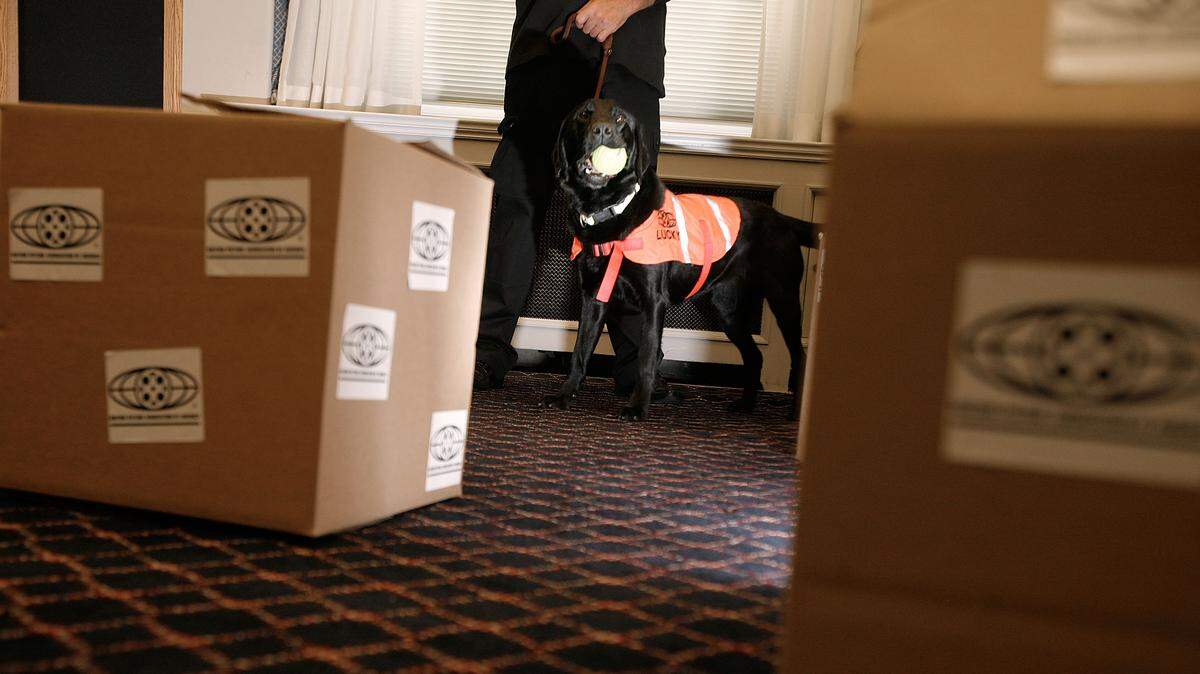
Mold has a frustrating habit of staying hidden until the damage is already done. It can spread behind drywall, under flooring, inside insulation and throughout HVAC systems long before homeowners ever spot a stain on the wall.
For many families, the first warning signs of mold are indirect: a musty odor that won’t go away, recurring allergy symptoms or unexplained respiratory irritation. And by then, finding the source can become an expensive guessing game.
That’s where a mold detection dog comes in. These specially trained dogs are taught to detect the volatile organic compounds mold releases as it grows, allowing them to pinpoint hidden contamination with remarkable speed and accuracy.
According to VCA Animal Hospitals, a dog’s sense of smell may be anywhere from 1,000 to 100,000 times stronger than a human’s — the same reason dogs are routinely trained to detect drugs, explosives and missing people.
One of the newest mold sniffing dogs is Spore, who works for 1-800 Water Damage in North Dakota. According to News Dakota, Spore recently completed several weeks of scent-detection training in Florida before joining the company’s inspection team.
“Spore’s specialized scent training allows us to pinpoint potential problem areas before damage spreads,” the company explains on its website.
The company says “using trained scent detection, Spore helps our IICRC-certified team locate hidden mold faster and with greater accuracy than traditional methods.”
During a demonstration with News Dakota, Spore was presented with a testing wheel containing several concealed samples. Only one cup contained mold. Spore correctly identified the mold sample three separate times and earned a treat after each successful alert.
Why Mold Detection Dogs Are Becoming More Popular
Spore is far from the only dog doing this kind of work. As awareness around hidden mold grows, more companies and homeowners are turning to mold detection dogs for help.
In Florida, Mold Hunt founder Zaneta Kuzel entered the field after developing pneumonia linked to hidden mold in her own home — despite completing traditional inspections. Her dog, Indy, later completed three months of training and became AWDA-certified in mold detection.
Kuzel told CBS Philadelphia that Indy can detect 16 different kinds of mold. Once he locates a source, he alerts by sitting and pointing his nose toward the contaminated area.
A similar story unfolded in Winchester, Virginia, where Jordan Meier founded Blue Ridge Mold Dog after her 5-year-old son became sick from mold exposure. Meier adopted a lab hound mix named Buck from the Winchester SPCA and later sent him through a five-month, 1,000-hour training program in Florida.
“We just learned a lot of limitations with traditional testing and we came across mold dogs and we never looked back,” Meier told WHSV.
Handlers stress that a mold detection dog is not a replacement for professional testing or mold remediation. The dogs cannot identify the exact species of mold or determine how severe the contamination is. What they can do is dramatically narrow the search area.
“All tests have limitations,” Meier explained. “But he’s able to detect things that other tests are missing.”
For homeowners trying to track down hidden mold, that can mean the difference between a targeted repair and tearing apart half the house searching for answers.
This article was created by content specialists using various tools, including AI.