A guide to Kansas City’s Marlborough neighborhood
READ MORE
City of Fountains Neighborhood Guides
Kansas City is home to more than 240 neighborhoods. They are almost like mini-cities that stand on their own, each with their own histories, things to do and unique vibes. These guides, shaped by recommendations from those who call each place home, will help you explore the city neighborhood by neighborhood. More are on their way, too.
Expand All
For Diane Hershberger, the Marlborough neighborhood—a southeast KC community that spans from Gregory Boulevard to 89th Street and Troost Avenue to Bruce R. Watkins Drive—is a comfortable place to be.
She’s lived in Marlborough for 26 years and currently serves as the interim executive director of the Marlborough Community Coalition. There’s a lot to love about Marlborough,she says, from its diversity, its green spaces, easy access to the highway and its interesting history.
Most of all, she said she enjoys how friendly and neighborly her community is.
“Marlborough is a community that cares,” six year Marlborough resident Anthony Barnes said. “We care about new residents. We care about our current residents and we care about the overall community.”
Barnes first moved to Marlborough while attending school at UMKC in the 1990s. He said at the time that the neighborhood felt easy and accessible. Now, years later, he’s back in the same community living with his longtime girlfriend.
“I think if you want to move to a location where you know you feel like you’re at home [and] people care about you and care about change, Marlborough is the place,” he said.
BEHIND THE STORY
MOREThis is one of many coming KC neighborhood guides
The Star is working on creating a series of neighborhood guides based on recommendations from Kansas Citians who call each neighborhood home. We will be adding more guides to this series over the coming weeks and months.
Do you have a favorite neighborhood you want to make sure we write about, or something about your neighborhood that we need to for sure include? Let us know at kcq@kcstar.com or by filling out this form.
Must eat or drink:
BB’s Lawnside BBQ has both food and live music for you to check out next time you’re near Marlborough, Barnes suggested.
The Borough is a new neighborhood food hall that includes an ice cream shop, cafe and a farm to table restaurant that Hershberger owns. She bought the restaurant with her husband after the previous restaurant occupying the building closed in 2019.
“We were concerned that no one was going to reopen it as a restaurant [and] we knew there was a need for a gathering place,” she said. The Borough opened in April 2022.
Must do:
Barnes and Hershberger agree that the parks and outdoor spaces in Marlborough are what make the neighborhood special.
To start, check out the park that sits at 81st Street and Troost Avenue. The space has a kid-friendly zip line and doubles as a green space, which hosts native plants and rentains stormwater to prevent sewage backup. The park is one of three major green spaces in the neighborhood that have grown to include more native plants and retain stormwater.
“It has this function,” Hershberger said, referring to the stormwater retention. “But it also has the function of creating a space where people can gather and learn about nature.”
The other two include a five acre park at The Paseo and Hickman Mills Drive and Arleta Park at 77th Street and Prospect Avenue.
The city recently added new protected bike lanes along Hickman Mills Drive that connect all the way to the end of the Trolley Track Trail.
Iconic thing about the neighborhood:
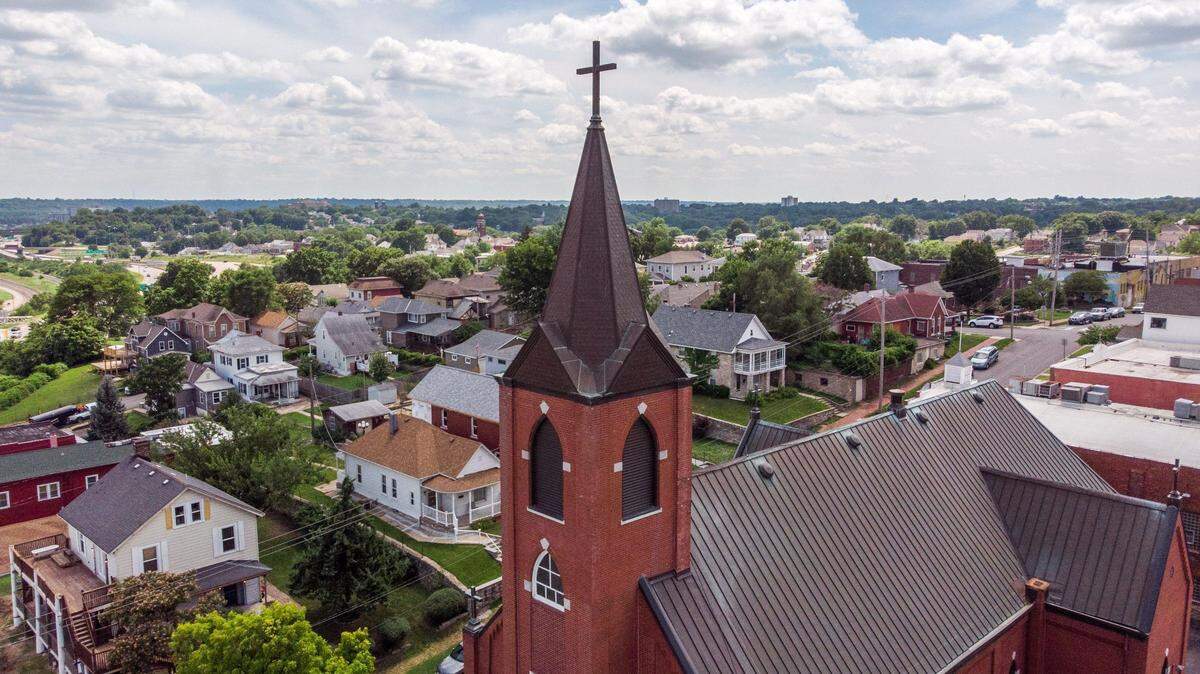
The St. Augustine Catholic church at 79th Street and The Paseo is a Marlborough landmark. The building was built in 1948. A seminary was also built nearby, and together the properties were used for Catholic school and as a hall for the parish.
The school closed in 1989 due to low enrollment, according to the Kansas City Public Library. Hershberger said the buildings that still stand feature some breathtaking architecture.
“Both facilities are gorgeous,” Hershberger said. “They’re bigger in stature than most anything else in the neighborhood.”
How to get involved:
Marlborough has both a community coalition and a community center. The coalition is a nonprofit and advocacy group that hosts events and activities to build cohesiveness in the neighborhood.
“One thing you want people to know is that just because you don’t pay HOA dues doesn’t mean that your neighborhood association is not working for you,” Barnes said.
Barnes joined the Marlborough Community Coalition’s Board this year after looking for a way to get more involved and voice his concerns about things in the neighborhood. He said he’s enjoyed being on the board and can see the impact of being involved.
“We do a very broad range of activities that focus on revitalizing the neighborhood into more of a vibrant healthy community after decades of disinvestment,” Hershberger said.
People can visit wearemarlborough.org and sign up for a monthly neighborhood newsletter. There are also community meetings once a month, which are announced in the newsletter.
What is Marlborough known for?
For Barnes, Marlborough is known for how neighborly it can be.
“[There’s a] strong sense of community,” he said. “People in the community can work together. It’s a decent place to live and raise a family.”
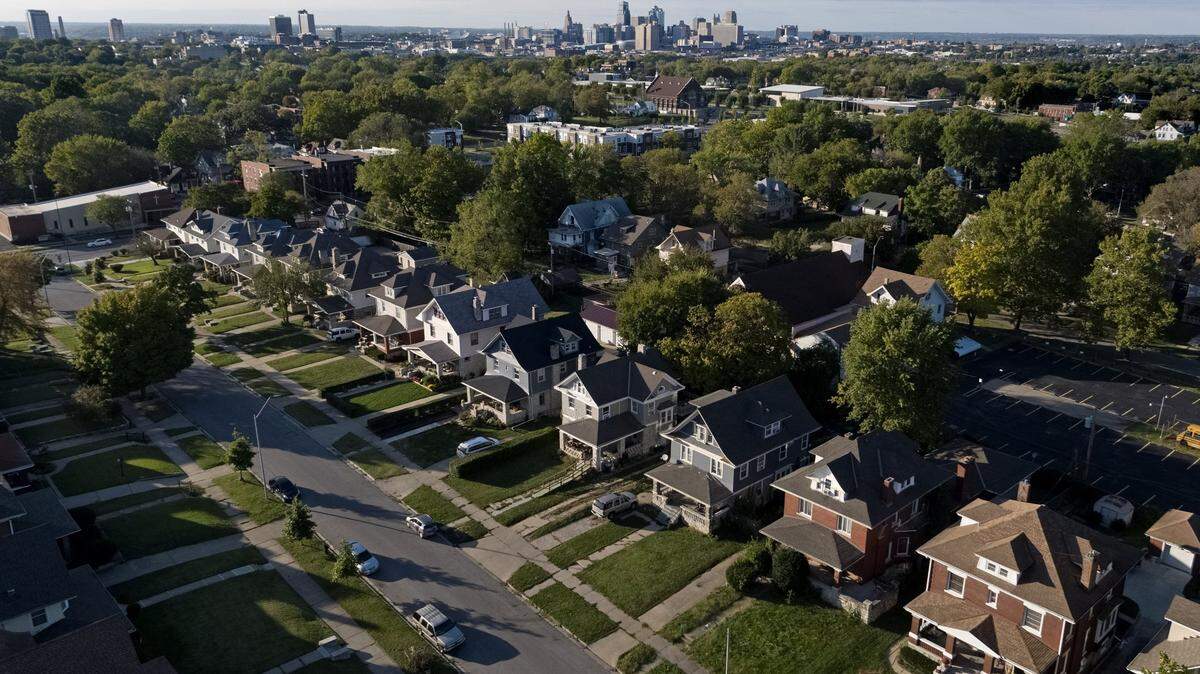
The diversity in housing stock is also something that stands out to Hershberger. She said when you walk down a street in the Marlborough community, it’s easy to see buildings from any era.
“There’s a lot of variants in the housing designs and to me that makes it interesting,” she said. “It shows a lot of individuality.”
Marlborough also has a community land trust that is working to create affordable homeownership opportunities for low to moderate income residents, and to redevelop a neighborhood school.
A historical fun fact?
The Marlborough neighborhood used to be connected to downtown and Midtown by Kansas City’s old streetcar system, which also connected to the Pacific railroad.
Before that, the history of the Marlborough neighborhood is also slightly intertwined with the Civil War, according to Hershberger.
“Part of the battle of Westport, during the Civil War, extended into a part of our neighborhood,” Hershbeger said.
The Battle of Westport took place in October 1864 and was the largest Civil War battle west of the Mississippi River.
“Our country was built on slavery and the fight against slavery was partially fought in our neighborhood. In my mind, it’s the continuation of the potential of what a country and a neighborhood could be,” Hershberger said.
This story was originally published September 20, 2022 at 8:00 AM.
.JPG)