
Bigfoot, taxidermy, love affair combine into unusual movie by Kansas City filmmaker
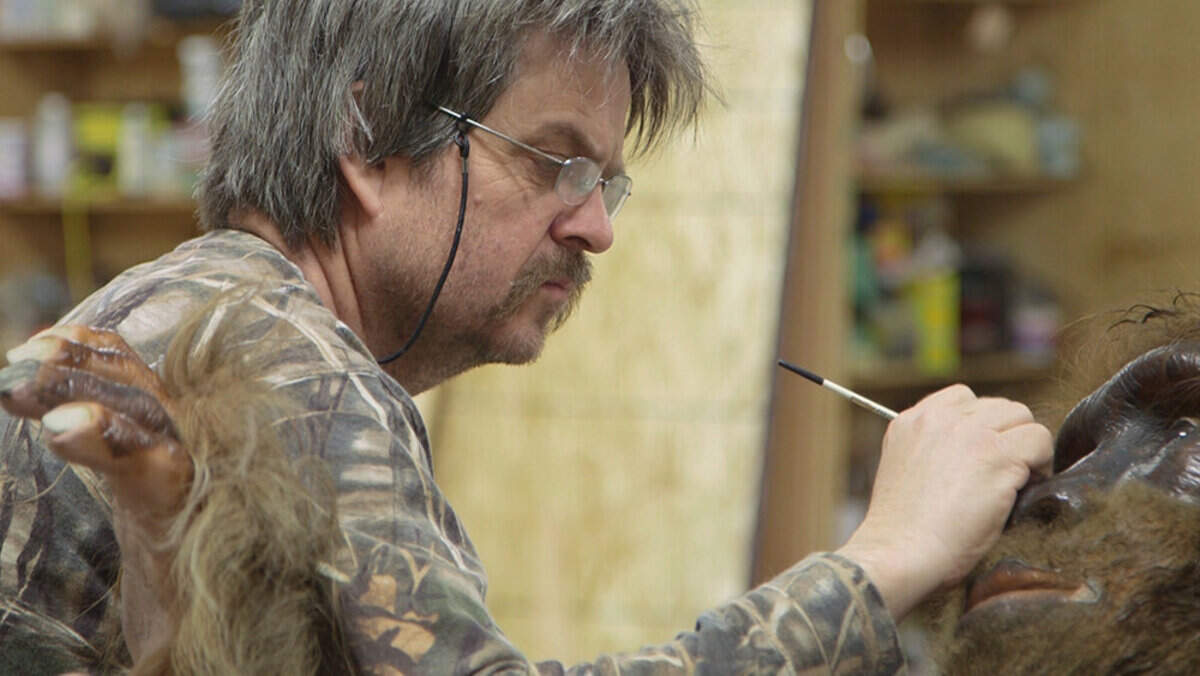
Kansas City filmmaker Dan Wayne first envisioned his documentary “Big Fur” as a look at the oft-maligned craft of taxidermy as viewed through the work of a three-time world champion.
Simple enough.
“And then,” Wayne recalled, “I went right down the rabbit hole.”
He soon found himself dealing not only in the universe of big-time taxidermy competitions, but also with the subculture of Bigfoot believers, a Roy Orbison tribute band and a real-life soap opera that unfolded before his camera.
“Big Fur” (it debuts Aug. 11 on Amazon Prime, Apple Movie, Vimeo and other pay-per-view streaming services) is an odd and oddly wonderful experience, thanks in large part to its central character, Canadian Ken Walker.
In Walker, the director had a subject who could not only sing “Blue Bayou” in a roof-raising falsetto, but a visionary who would devote the better part of three years to creating Patty, a minutely detailed eight-foot-tall recreation of a female Sasquatch (that’s another name for Bigfoot) crafted from Styrofoam and animal skins.
The name Patty is a nod to the famous 1967 Patterson-Gimlin film purporting to show a female Bigfoot strolling through a clearing in Northern California. Walker gave his creation to Wayne at the conclusion of filming, and it now dominates the director’s Kansas City living room.
She’s a heck of a conversation piece, though Wayne hopes to donate her to a museum.
“There just aren’t that many places I can put her,” the 53-year-old director said. “She takes up a lot of real estate.”
Taxidermy: ‘It’s weird’
Wayne’s taxidermy odyssey began several years ago when an earlier documentary project fell through. After years of working with area filmmaker George Langworthy (“Vanishing of the Bees”), Wayne felt he was ready to tackle his first feature.
“I’ve always been interested in taxidermy — mostly because it’s weird,” he said. “I love stuff that straddles the line of arts and crafts, but also employs a lot of science. So I got some books from the library, logged onto taxidermy.net, and got sucked in.”
It wasn’t just the mounting of animal skins that appealed to the filmmaker. “I quickly got more interested in the characters who were contributing to this online forum than in taxidermy itself. These were some of the world’s best, ranging from teenagers to people in their 80s.”
Ken Walker figures prominently in any discussion of the art form.
“He’s arguable the best in the world,” Wayne said. “But he also specializes in these recreations of extinct or imaginary creatures.”
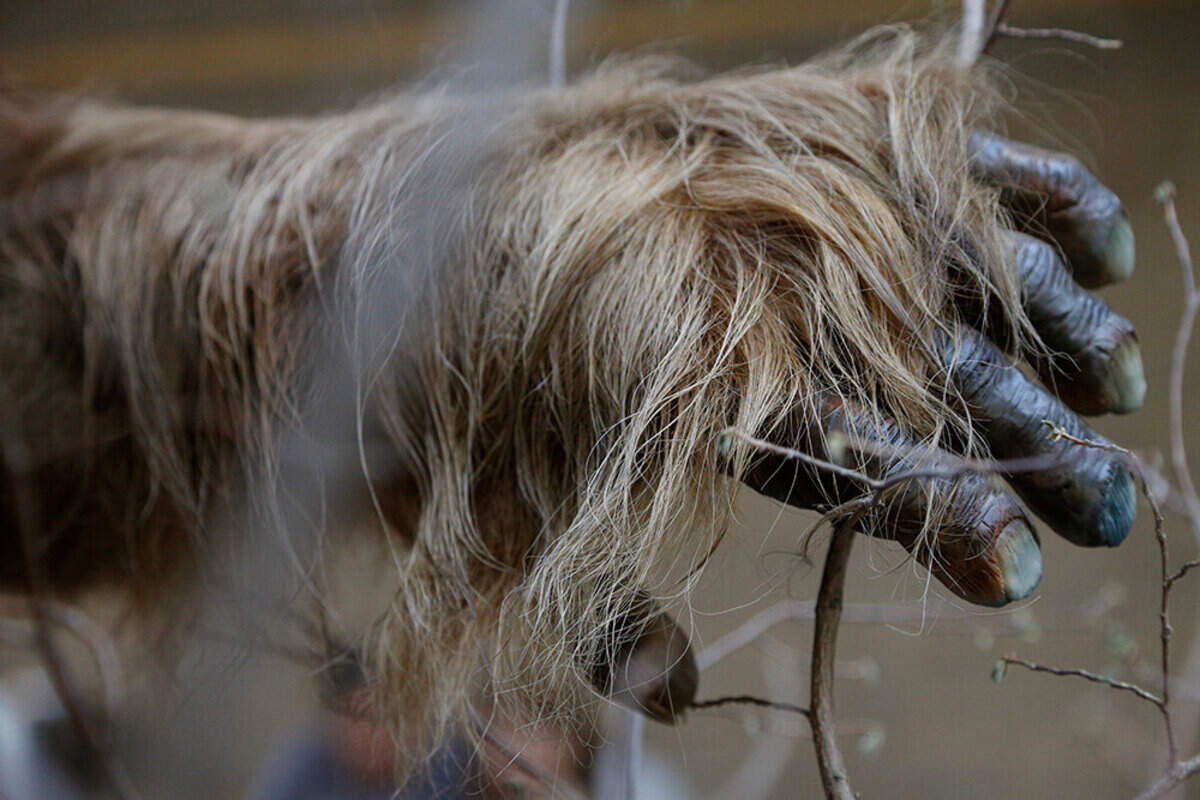
Walker has fashioned life-size recreations of the Irish elk and the saber-toothed tiger, both extinct, as well as a panda (using the skins of other animals). He does meticulous research, measuring bones and fossilized remains or, in the case of the panda, studying a dead specimen.
Wayne met Walker at a taxidermy convention, visited him at his rural home outside Edmonton, Alberta, and realized the Canadian would be a great film subject.
“On top of everything else, Ken is really funny. Which kept me from getting bored.”
Indeed, Walker is apt to drop delightful observations, such as his view that most taxidermists are “right wingers who don’t believe in art and don’t realize that they’re artists.”
The two men quickly hit it off, Walker said in a recent phone call from his studio. “Dan laughs at my jokes, and that makes him cool right there.”
Walker had reason for caution when it came to a documentary. Several years earlier he and other taxidermists had felt betrayed after participating in the making of “Taxidermy: Stuff the World,” a BBC film that turned into a critique of hunting.
“Thing is, I can usually get a take on people really quick,” Walker said, “and I realized early on that Dan was an OK guy.”
It didn’t take long for Walker to reveal to Wayne his obsession with Bigfoot. He even brought out one of his prized possessions, a plastic bag of purported Sasquatch poop he keeps in his freezer. (Walker said that after analyzing a sample, the experts could not identify the animal that produced it.)
Walker didn’t always have a thing for Bigfoot/Sasquatch, the hairy manlike creature purported to dwell in our continent’s wildest environments. But many of the hunters who brought their pelts to his studio for mounting related (sometimes reluctantly) their own encounters with the mysterious creature.
Walker points out that there have been more sightings in the wild of Sasquatch (which may not exist) than of wolverines (which definitely do exist).
‘It’s all true’
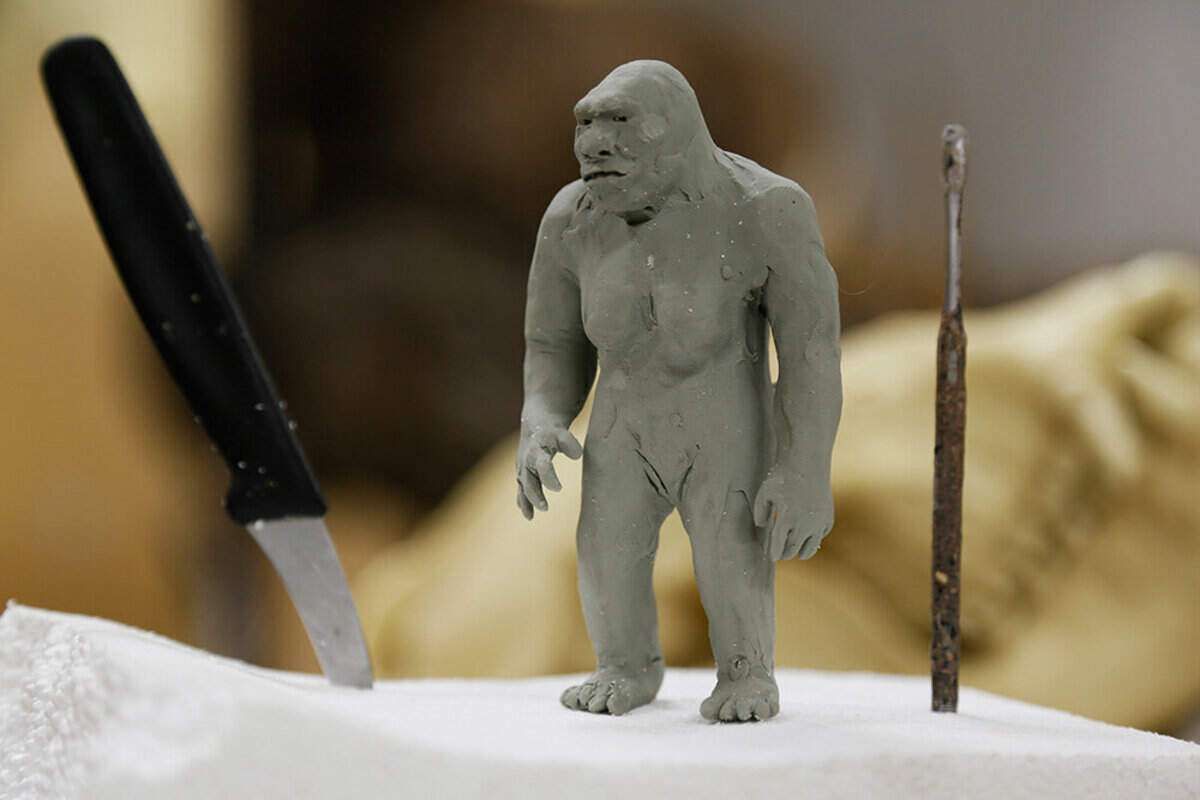
“Big Fur” carefully chronicles the creation of Patty, from research to public display. It took several years, Wayne said, because Walker “is a quirky artist who owns his own business and works by himself.
“There were times when I’d fly in and Ken would say he didn’t have time to work on Patty. He’d say, ‘The mortgage is due tomorrow. I gotta finish this goat and get paid.’”
Perhaps the most unexpected development caught by Wayne’s camera was a romance that suddenly blossomed between Walker and Amy Carter, who as a teenager had studied under him and is described by Wayne as “the sweetheart of the taxidermy world.”
Both were married and parents.
Wayne said he considered leaving the affair out of the film. “I did cut a version without Amy and it just didn’t play right.”
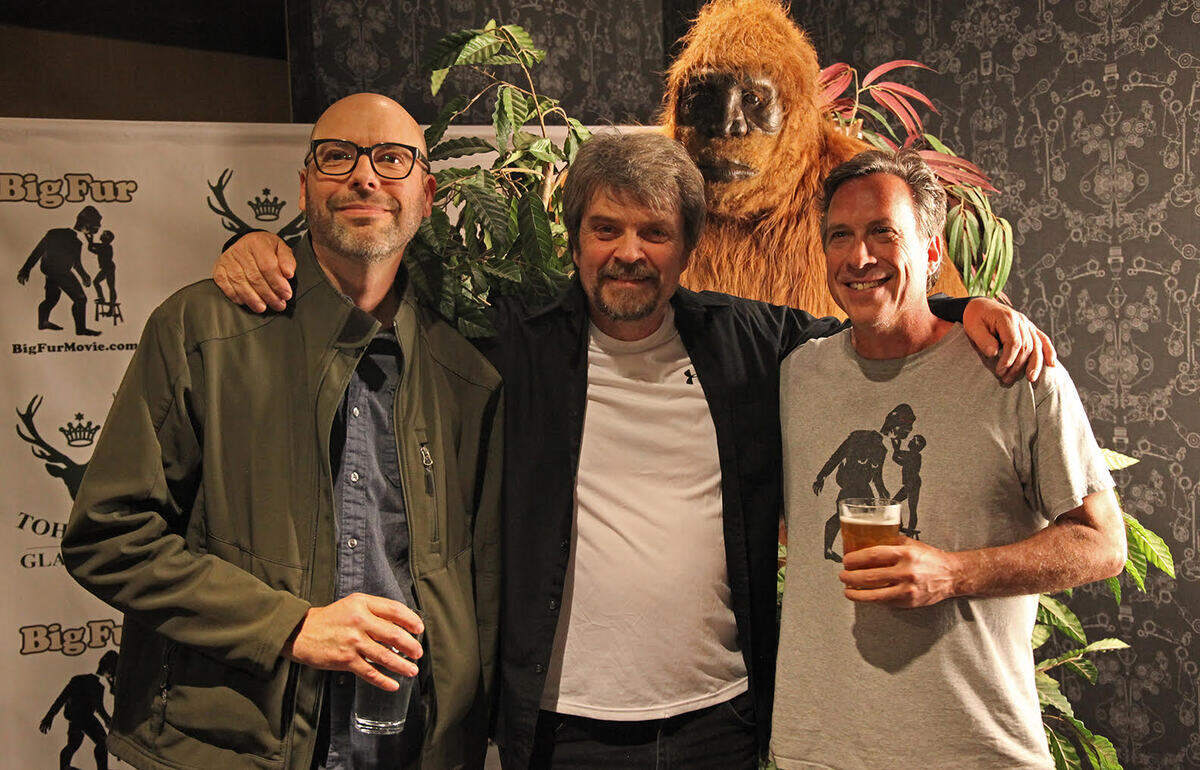
Producer Jon Niccum (who is also an occasional freelance writer for The Star) believes the Ken/Amy plot is key to the movie’s overall success: “This isn’t just a story about a guy making a taxidermy Bigfoot. It’s about relationships, about looking for something that may not exist.”
Walker apparently has few regrets about this particular bit of laundry being hung out for all to see.
“You can’t argue with the truth,” he said.
“Big Fur” debuted last year at the World Taxidermy Competition in Springfield, Missouri, then moved on to several prominent film festivals, including Slamdance in Utah.
Niccum said its reception at Slamdance was key. There, 1091 Media (the documentary distributor that last year had an art house hit with “Linda Ronstadt: The Sound of My Voice”) bought the film — though “bought” may not be the right word.
“The dirty little secret of the documentary industry is that the amount of money a filmmaker gets up front is negligible,” Niccum said. “Now, you make your money depending upon how many people pay to see the film. The days of someone handing you $300 grand for your documentary are long past.”
Under normal circumstances, a doc like “Big Fur” would make the rounds of art houses. But the coronavirus epidemic has temporarily suspended business as usual. Thus the streaming release.
“The flip side of all this is that I think we’ll get more media coverage simply because there isn’t that much new content out there,” Niccum said. “Journalists have to write about something.”
Walker said that during the filming he had no idea what the final feature would be like. Now, he says, “I’m actually shocked at how well-received the movie has been … and also shocked at how good it is.
“It’s uncomfortable. But it’s all true.”
This story was originally published August 9, 2020 at 5:00 AM with the headline "Bigfoot, taxidermy, love affair combine into unusual movie by Kansas City filmmaker."