
Spike Lee and his Kansas filmmaking partner, Kevin Willmott, go to war against racism
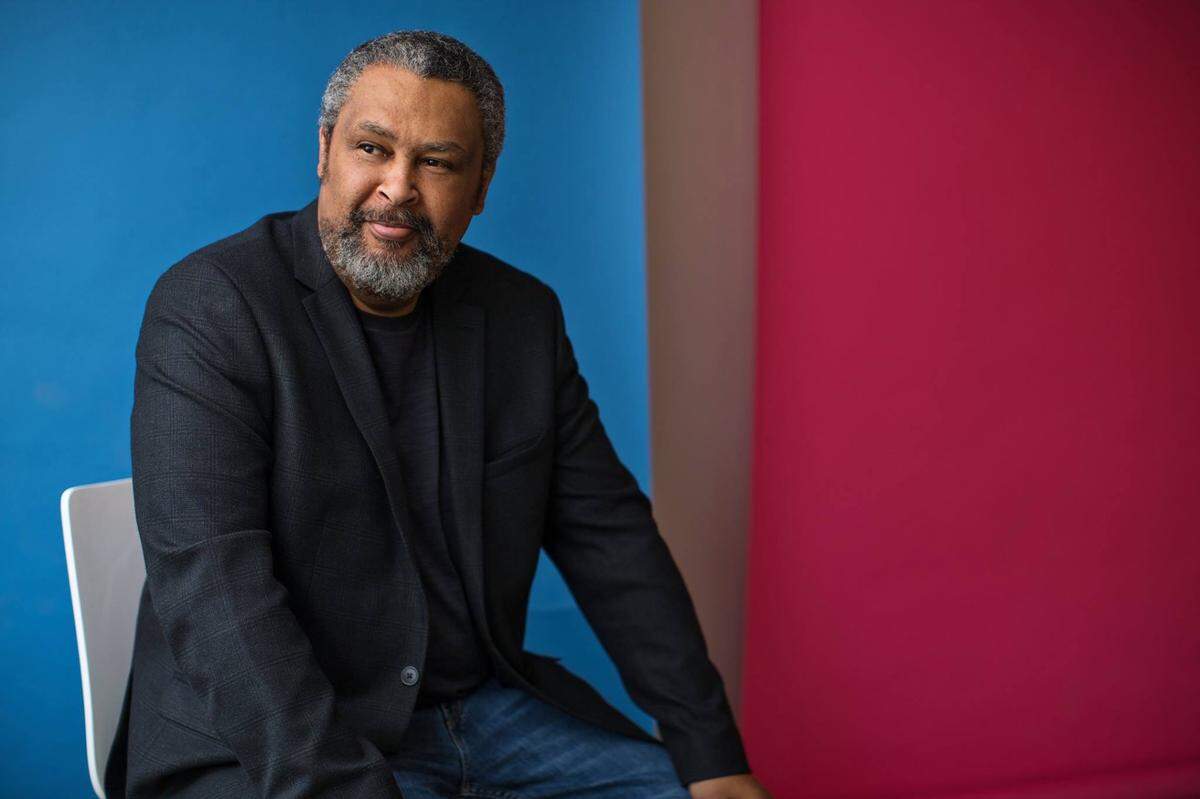
While the nation is gripped with protests over the death of an African American man in police custody, Kevin Willmott is also consumed with the racial tension of a different era: the Vietnam War.
Black GIs, said the Lawrence-based filmmaker, “were fighting to give the Vietnamese rights that black soldiers didn’t enjoy back home.”
That’s just one of the still-smoldering racial issues examined in “Da 5 Bloods,” debuting on Netflix on June 12.
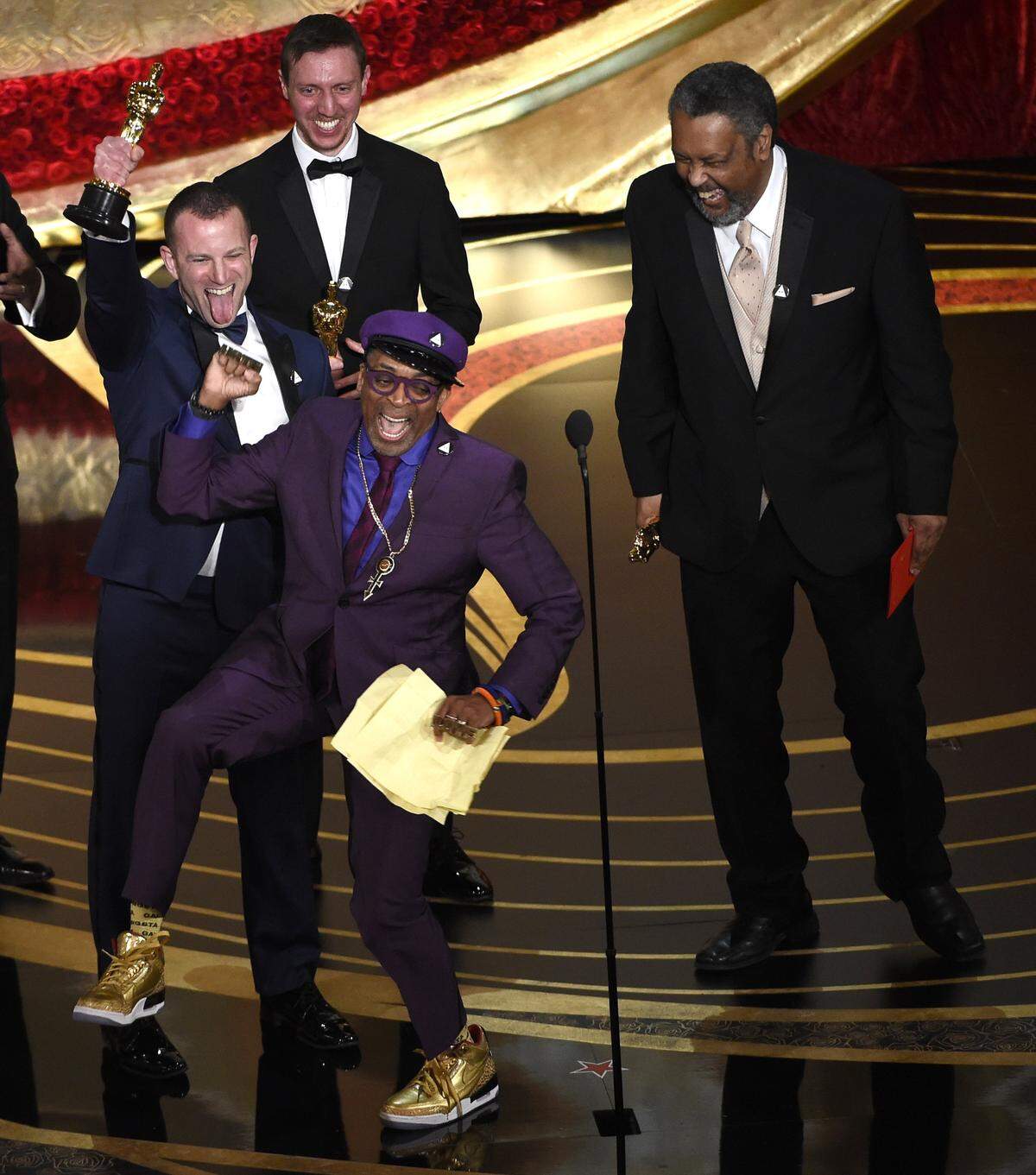
The film once again finds director Spike Lee collaborating with co-writer Willmott, the University of Kansas film professor who, along with Lee and two others, won an Oscar last year for their “BlacKkKlansman” screenplay, another film set decades ago that speaks to our times today.
Though “Da 5 Bloods” was written and filmed months ago, the racial disparities it explores have come roaring back to life on America’s streets in the wake of George Floyd’s death at the hands of Minneapolis police.
“It never goes away,” Willmott said. “It’s like 1968 all over again — there’s a rocket going off into space, we have a president who doesn’t understand a damn thing, police are still killing black folk.
“America is Sisyphus rolling that rock up the hill. It keeps rolling back down on us. We roll it back up again … and nothing ever changes.”
The new film stars Delroy Lindo, Clarke Peters, Norm Lewis and Isiah Whitlock Jr. as aging black veterans who return to modern-day Vietnam on a personal mission. Their goal is to recover the body of their fallen squad leader (played in flashbacks by Chadwick Boseman of “Black Panther” and “42”), along with the fortune in gold with which he was buried.
Incorporating vintage war footage and period music, personal stories and sweeping social issues, the project breaks down the boundaries between documentary and fiction.
And, Willmott said, it is the first feature film to examine the war from an exclusively black point of view.
Not that it started out that way.
A black Vietnam story
Lee and Willmott inherited the original screenplay “The Last Tour” from white writers Danny Bilson and Paul De Meo, whose credits include “The Rocketeer” and “The Flash” TV series.
“There was one black soldier in the group,” Willmott said. “But basically it was an adventure film. That’s what Spike liked about it. It was different than any of his other films.”
In fact, with its plot about the search for lost gold, the film has been compared to “The Treasure of the Sierra Madre.”
“We kept the adventure and added some twists and turns to bring out the African American experience.”
“The Last Tour” already had the financial backing of Netflix, which eliminated the need for Lee to raise money for the effort.
“It’s much easier to push a project forward when it’s already in the pipeline,” Willmott said. “But the thing with Spike is that he looks at every script in terms of making it a black story. We both do that. And here we saw the potential to tell the black Vietnam story, as an opportunity to fill a hole in the dramatic universe.”
As neither had served in the war, Lee and Willmott researched how black soldiers experienced the conflict.
For example, Willmott said, the assassination of the Rev. Martin Luther King Jr. in 1968 exacerbated battlefield tensions between black and white soldiers.
“That isn’t our invention — it’s fact-based stuff.”
The film even depicts a radio broadcast by Hanoi Hannah, the Communist propagandist who urged black soldiers to lay down their arms or turn on their white commanders.
These issues are examined in the flashbacks. In the present, “Da 5 Bloods” deals with post-traumatic stress disorder, fathers who abandon their families and political corruption. They filmed in Thailand, which, with its jungles and swampland, serves as a stand-in for Vietnam.
One of the film’s most daring conceits is to have the lead actors play their youthful selves in the flashbacks, rather than cast young actors who looked like the stars.
“With that choice I think Spike was emphasizing how the things that happen to you as a young person never leave you,” Willmott said. “The wounds are always fresh.”
But Lee also had pragmatic reasons for taking that route. As he told The New York Times, he didn’t have the sort of special effects budget that de-aged Robert De Niro in “The Irishman.” “I think we were able to turn a negative into a positive,” Lee said.
Netflix had planned to give “Da 5 Bloods” a wide theatrical release. But the COVID-19 pandemic forced the streaming service to scrap that and rush the film onto its platform.
The good news for the film is that it still will be eligible for Oscar consideration. The Academy of Motion Picture Arts and Sciences has decided to include in its deliberations movies that were to have played theatrically but were shut out when the pandemic closed theaters.
‘24th’ and holding
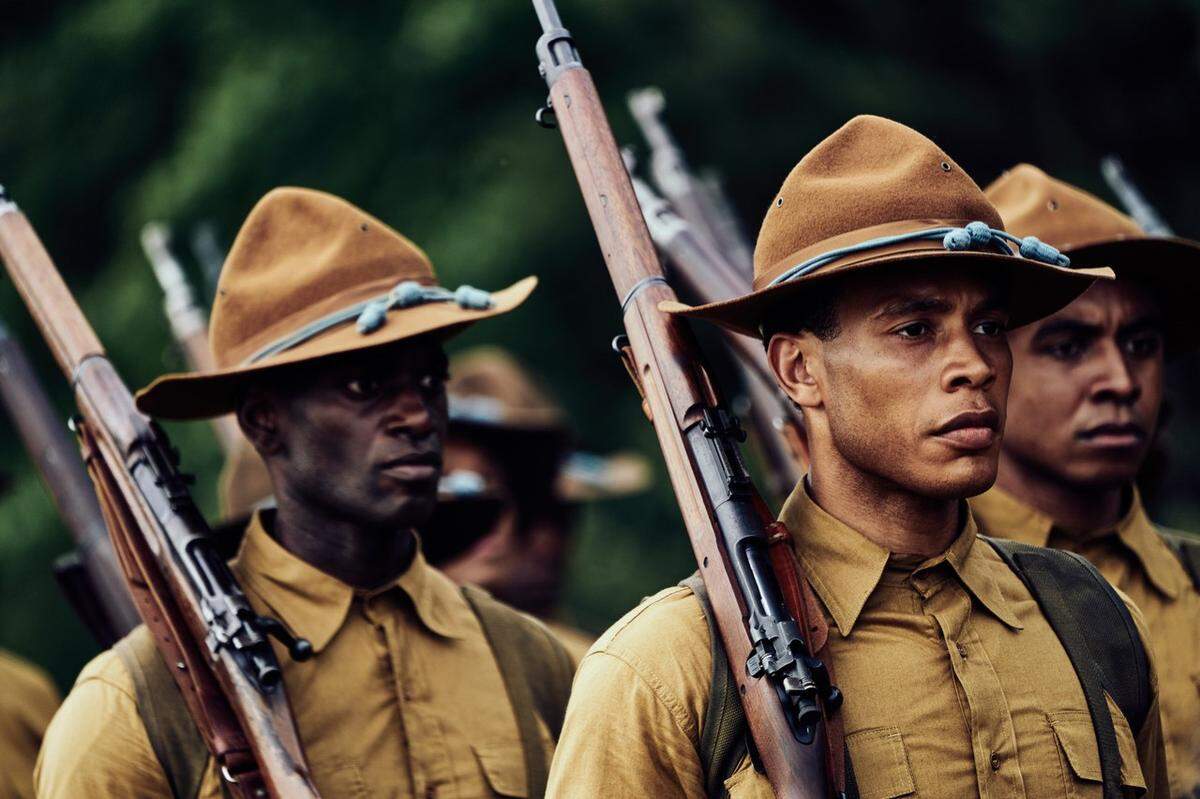
More problematic is the fate of Willmott’s feature “The 24th,” a drama based on the 1917 Houston race riots involving the all-black 24th U.S. Infantry Regiment.
The film features KCK native Trai Byers (a veteran of Willmott films, “Selma” and TV’s “Empire”), Blue Valley High and KU graduate Tosin Morohunfola (“The Chi”) and Oscar nominee Thomas Hayden Church.
It was to have debuted at this spring’s South by Southwest Festival in Austin, Texas, a major event with the potential to catapult a small movie into the big leagues. But the festival was canceled because of the pandemic.
“So we’re in a holding pattern right now,” Willmott said. “We’re probably looking at a Netflix or an Amazon buying it. You’ve got to wonder where the theatrical distributors’ heads are right now. Because of its subject matter, our film is a little harder to sell in the middle of a pandemic.
“We may just wait to see how it looks when things open up a bit more.”
According to Jerry Harrington, who for three decades ran the Tivoli Theatre in Kansas City and now programs films for the Nelson-Atkins Museum of Art, one of the big attractions of film festival exposure is that “buyers can see how a movie plays in front of a living, breathing audience. It gives an idea of the potential audience for a movie. And festival exposure builds media attention.
“For those reasons, festivals will remain a very important part of the process.”
Like just about everyone else in the movie business, Willmott wonders about the long-term effects of the pandemic. One concern is that as more consumers turn to streaming movies, theaters will suffer.
“Yeah, I’ve been told that a lot of people really don’t go to the movies,” Willmott said. “But for me, going to the movies is my recreation, my vacation. I don’t play golf. I go to movies.”
Willmott’s former screenwriting partner, Mitch Brian, who teaches film studies at the University of Missouri-Kansas City, agrees: “The movies are a particular and unique experience. You don’t get a sense of community by watching a movie in your home. Now you can visit the Nelson gallery online and look at paintings on a computer … but does that mean people will never again go to museums?”
“Of course not. Things may suck for a lot of people for a couple of years, but we’ll be back.”
In the meantime, Willmott continues to juggle a half dozen projects. There’s a documentary about black poet, novelist, playwright and activist Langston Hughes. A second doc, “No Place Like Home,” examines the struggle for gay rights in Kansas. Willmott is developing a film about former slave and abolitionist Frederick Douglass for Netflix.
He regularly makes pitches to studios, streaming services and possible investors.
And, of course, he has to prepare for the likelihood that for the foreseeable future he’ll be teaching his film courses over the Internet instead of a classroom. For an educator who relishes the Socratic give-and-take of teacher/student exchanges, it’s a downer.
“It definitely cramps my style,” Willmott laments. “I hope we figure something out before fall gets here. I’m sure I’m not the only teacher fearful of getting back into the classroom during a pandemic … but that’s where the magic happens.”
For now, he’s watching the protests. Could the current upheavals usher in a change?
“That’s clearly the hope,” Willmott said. “Things are different this time. One of great things this time is the numbers of white and Latino people out in the streets protesting. The civil rights movement always had some white people, but now the numbers are larger.
“I think people will stay in the streets until Trump is out of office. Not looting and burning, hopefully, but keeping George Floyd in the forefront of our consciousness. The powers that be are banking on us forgetting about it, and that we won’t be watching when the one police officer charged with murder gets off.
“There will be another uproar for a moment, and then it’ll go back to normal. That’s been the cycle, but this time we can’t let it go back to normal. If we stay in the streets, it may lead to a change in policing.”
This story was originally published June 7, 2020 at 5:00 AM with the headline "Spike Lee and his Kansas filmmaking partner, Kevin Willmott, go to war against racism."