
No bull, author explores ‘Secret Kansas City’: Fountains, trees and that big hereford
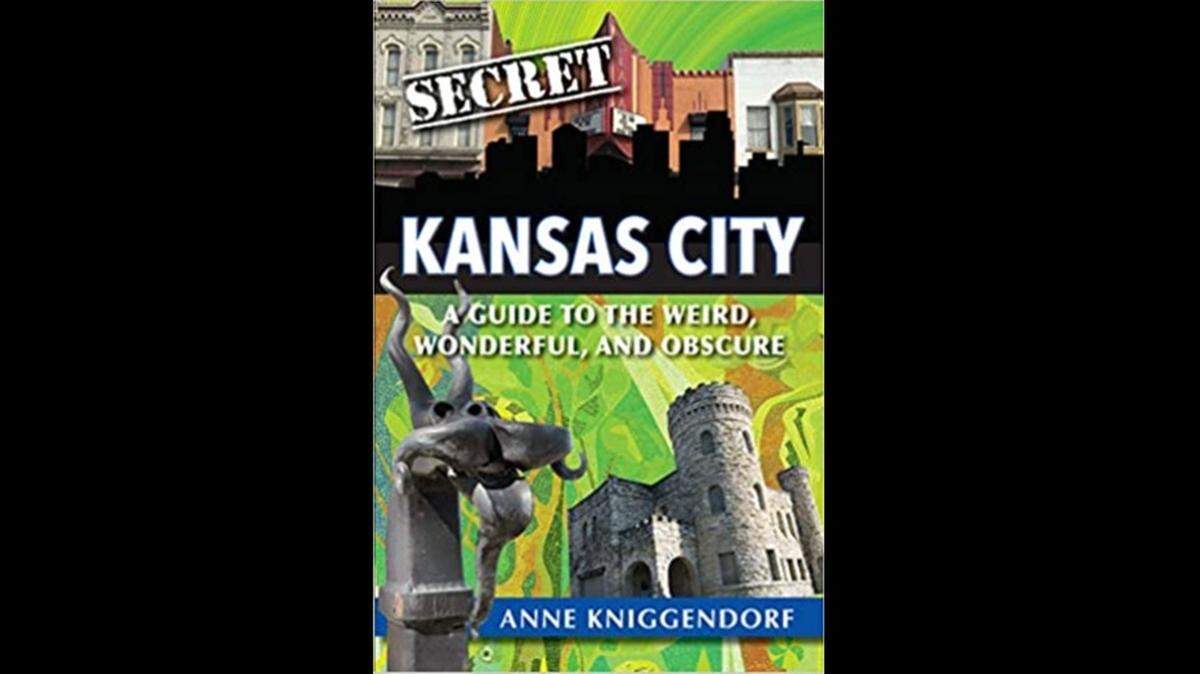
Editor’s note: Freelance writer Anne Kniggendorf’s new book, “Secret Kansas City: A Guide to the Weird, Wonderful, and Obscure,” was due out Sept. 1 from Reedy Press. See annekniggendorf.com for more information. Here are some excerpts:
Kansas City is a pretty open and welcoming place. Neither locals nor visitors seem to think of the town as cagey, shadowy, dark or secretive.
But not even Kansas City’s biggest fan can know everything about this metropolis of 500,000 — 2.34 million counting the surrounding suburbs.
Think of the city like, I don’t know, the Hereford bull way up on his pylon next to Interstate 35: Most likely you’ve seen him, but what do you really know about him? Do you know that his sculptor made him anatomically correct? Probably not, because he spends all his time up in the sky.
Listen, your fair city is full of many unexpected and hidden jewels, and this volume is just one native daughter’s curated collection of them. Is it all-inclusive? Not possible. Would you have included the largest snake in the world, a pink tree or so many references to books? Perhaps not.
But I’ll tell you right now that you’d definitely jump at the chance to tell others about the ghosts you’ve met, the various experimental societies you’ve run across, and, best of all, the very plain fact that according to three different groups, Kansas City is endorsed by a higher power as the absolute best place in the country to ride out nearly any type of apocalyptic scenario.
Let me be the first to welcome you to Secret Kansas City. Whether you’re just passing through or playing tourist in your own backyard, make a scavenger hunt of finding each and every location. It may take years, but that’s OK! When you visit a spot, take a picture and #SecretKansasCity to @AnneKniggendorf on your favorite social media platform.

This cow is all bull
Not to be off-color or offensive — this is an all-ages book — but Kansas City is home to some of the biggest cahones you could ever imagine. Some call the owner of said cahones “Bob.” Others just call him the Hereford Bull, the iconic 5,500-pound, 12-foot-tall bovine guardian of our fair city. He’s so high up in the air (90 feet) that it’s hard to see the anatomical details.
The American Hereford Association originally commissioned Bob for its then-new building at 715 Kirk Drive in Quality Hill and dedicated the 9.5-foot fiberglass marvel in a 1953 ceremony, with President Dwight D. Eisenhower in attendance.
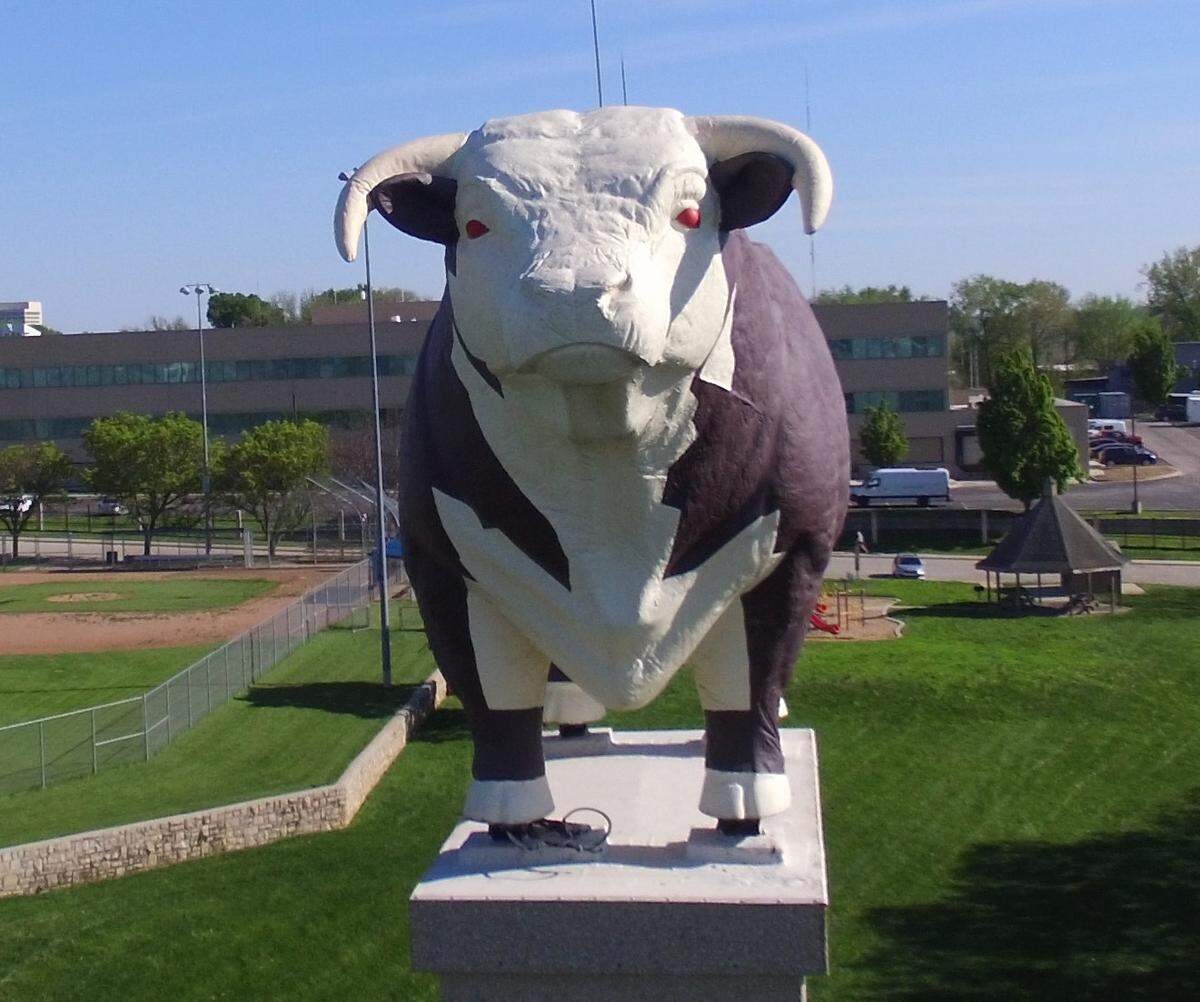
Bob went into storage in 1997 when the Hereford Association moved, but public outcry demanded his return to public view, according to the City of Fountains Foundation website. In 2002, he was put out to pasture in Mulkey Square Park.
The Hereford Bull, aka Bob, is in Mulkey Square Park, at West 13th and Summit streets. Pro tip: Bob is visible from I-35 near exit 2W, but if you go to the park, you can walk right up to the base of his pylon.
The well-traveled tree
Hundreds of visitors to outer space have been living around the globe, hiding in forests and parks, for decades.
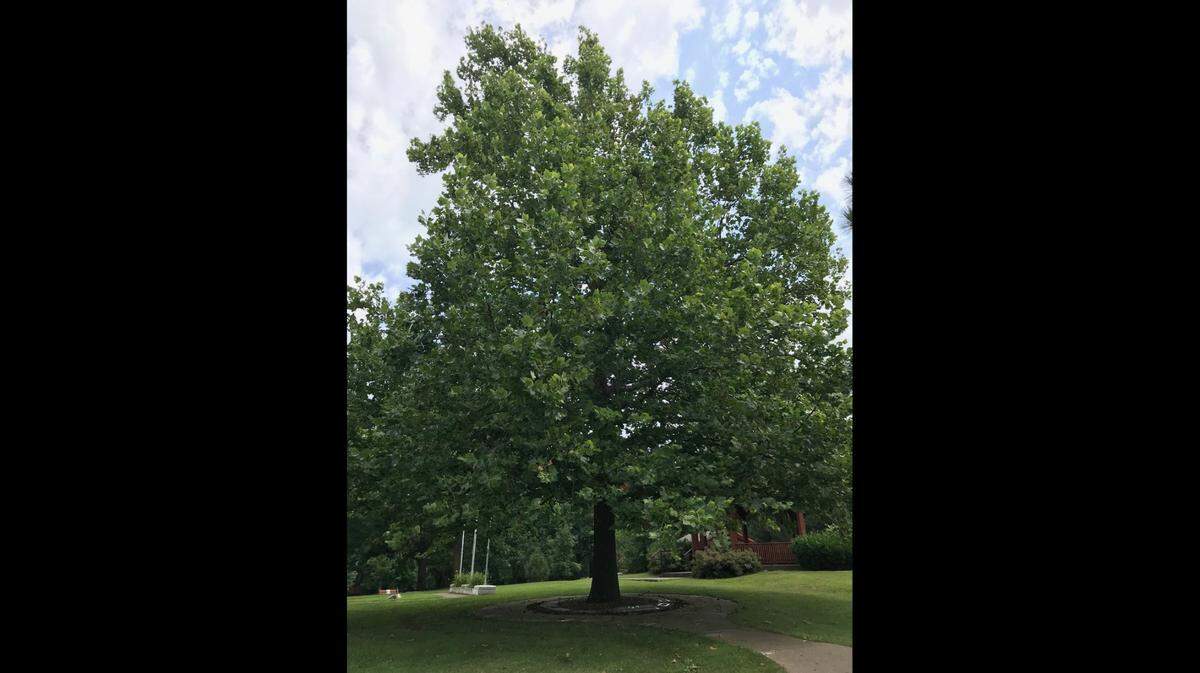
They go by many names: loblolly pine, redwood, sweet gum, sycamore, and Douglas fir. They are trees now, but when they were only tiny seeds, Command Pilot Stuart Roosa packed them in a tiny can and stowed them in his spacecraft.
On Jan. 31, 1971, Roosa and the seeds left the earth on Apollo 14. Eventually those little seeds orbited Earth 34 times. Apollo 14 was the third moon landing, but it was Alan Shepard and Edgar Mitchell who actually walked on the lunar surface; Roosa stayed in orbit.
In all, Roosa brought about 500 seeds, 450 of which the U.S. Forest Service later sprouted — no one was sure if, having left the Earth, the trees would achieve typical growth for their varieties, but they did.
In 1976, the Forest Service distributed the saplings to parks, colleges, government offices, heads of state and dignitaries as gifts across the world for America’s bicentennial. But most were lost in the shuffle; 450 is a lot of trees.
According to NASA, David Williams, a curator at the National Space Science Data Center in Greenbelt, Maryland, has taken on the task of locating as many of the “moon trees” as possible. As of April 2019, he’d located only 81.
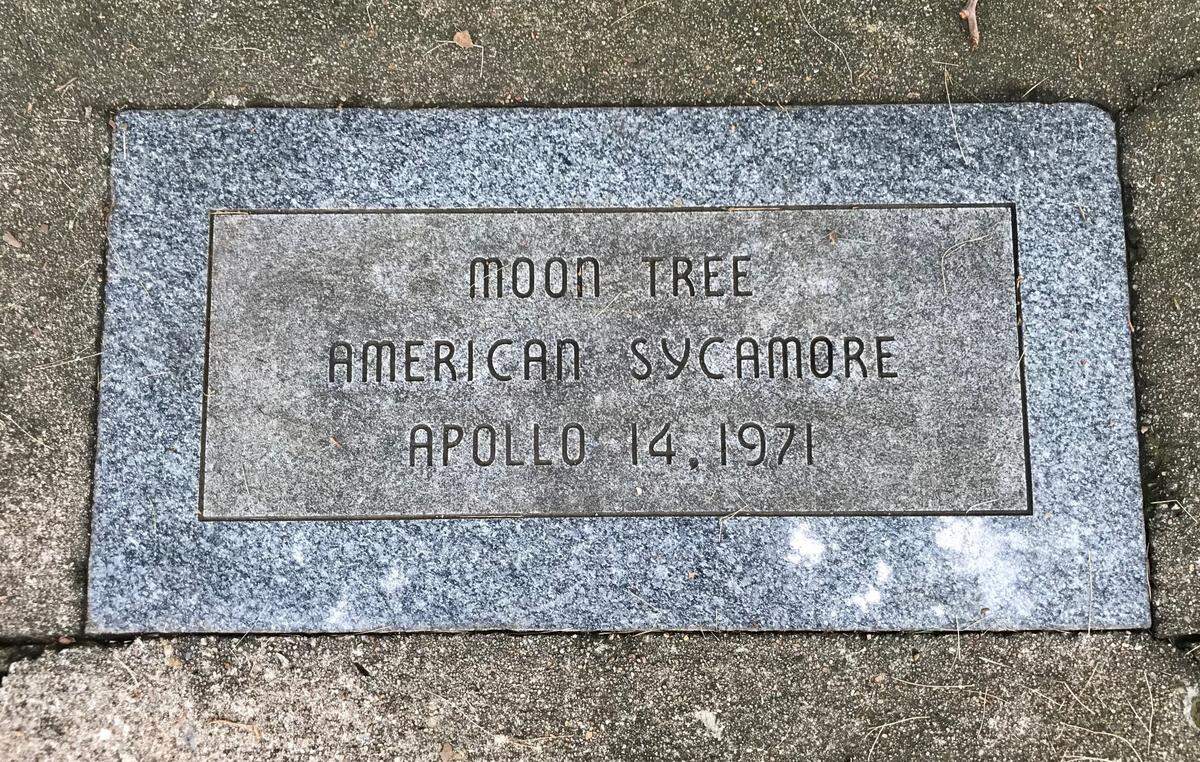
Fortunately for the Kansas City area, one well-documented moon tree, a sycamore, lives in Atchison, Kansas, in the International Forest of Friendship, itself an unexpected feature of the landscape. A group called the Ninety-Nines (the international organization of women pilots), along with the Kansas State University Forestry Extension, the city of Atchison, and Joe Carrigan and Fay Gillis Wells, established the park in 1976.
In addition to the moon tree, the forest features trees from every state and 36 territories and countries around the world.
The International Forest of Friendship, 1 Allingham Drive in Atchison, is free. Pro tip: Give yourself time to read all the names and tree related quotations along the path.
Horses have a powerful thirst
Has Kansas City always been the “city of fountains”? Nay (or neigh!). It didn’t gain that moniker until the 1960s. And get this: In the late 1800s, the very first fountains were not for general beautification, but for the roughly 70,000 horses that lived and worked across the budding metro.
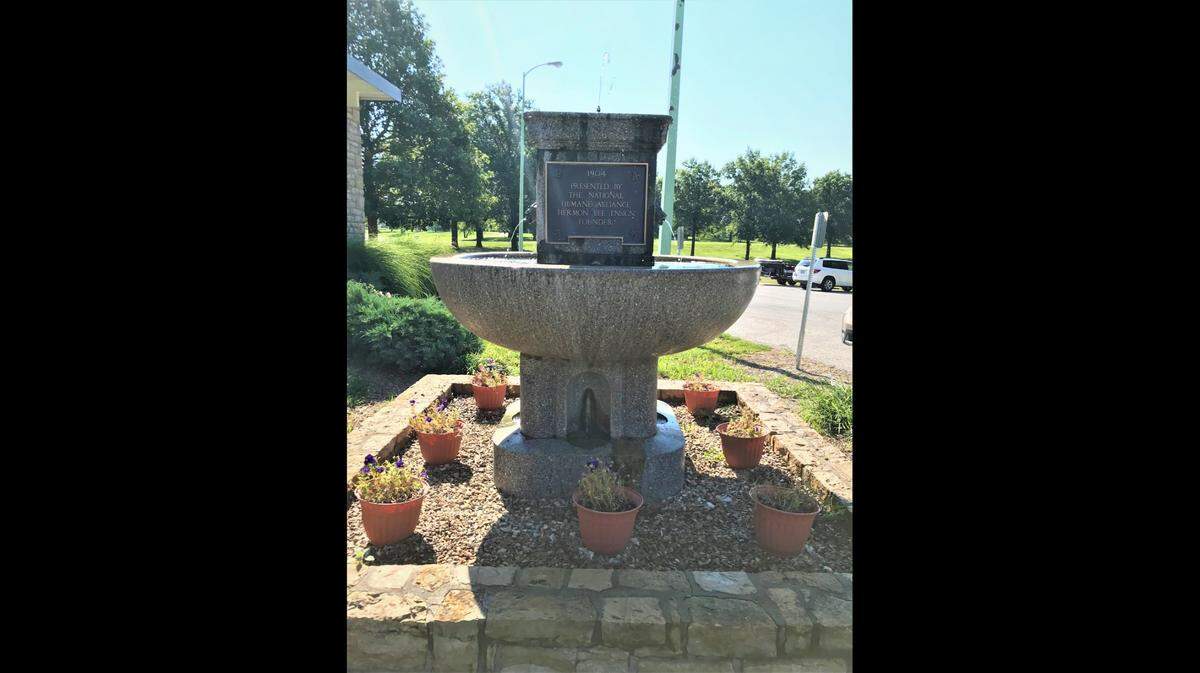
According to Sherry Piland’s “Fountains of Kansas City,” horse basins went in as early as 1887, and it’s easy enough to imagine old wooden troughs before that, once you’re in the groove of picturing the old West. After veterinarians linked the stagnant water in troughs to the spread of a nasty equine disease, Edwin Weeks, the president of the Humane Society, designed a special trough that burbled out moving water not just for horses, but for cats, dogs, and birds as well.
No one knows how many of these special animal fountains dotted the landscape before cars replaced the horses, but only one remains now, and it’s fully functional at the Wyandotte County Museum.
But how did Kansas City rack up such a collection of water-involved statues? Piland suggests that George Kessler was partly, though not entirely, responsible. The German-born designer took on cosmetic urban projects in about 100 cities in numerous countries, and the Kansas City Board of Parks and Boulevard Commissioners hired him in 1892 to perk up our own fair city.
Kessler loved fountains. You’d think, then, that every city he helped would have as many fountains as Kansas City, but after Kessler’s tenure, developer J. C. Nichols entered the scene, and he also loved the flair of a fountain. Nichols was responsible for the design of the Country Club Plaza as well as a good many of Kansas City’s boulevards and shopping areas, and he agreed that fountains were the way to decorate. However, the Department of Parks and Recreation board has since removed his name from the big fountain in Mill Creek Park because of the racist policies he espoused in his lifetime.
According to Kansas City Parks and Recreation archivist Ann McFerrin, the city maintains 48 fountains, but if you include others in the surrounding area, the number easily goes into the hundreds.
The area’s last horse drinking fountain is outside the Wyandotte County Museum, 631 N. 126th St., Bonner Springs. It’s free to see the fountain outside the front door. Inside the museum, donations are appreciated.
Meet the author
Author Anne Kniggendorf will give a virtual talk about “Secret Kansas City” at 7 p.m. Sept. 1 at Raven Book Store in Lawrence. More information here.