
Before its ties to J.C. Nichols, fountain’s story bubbles with an unlikely love story
The formerly named J.C. Nichols Memorial Fountain on the Country Club Plaza is the most recognizable and photographed among Kansas City’s 200-plus fountains.
Amid the current discussion of choosing a new name, it may come as a surprise to learn that long before the fountain arrived on the Plaza in 1960, its history included a Long Island estate, the 1929 stock market crash, an unlikely love affair and one of America’s most beloved songwriters, a man whose popularity soared anew after the 9/11 attacks.
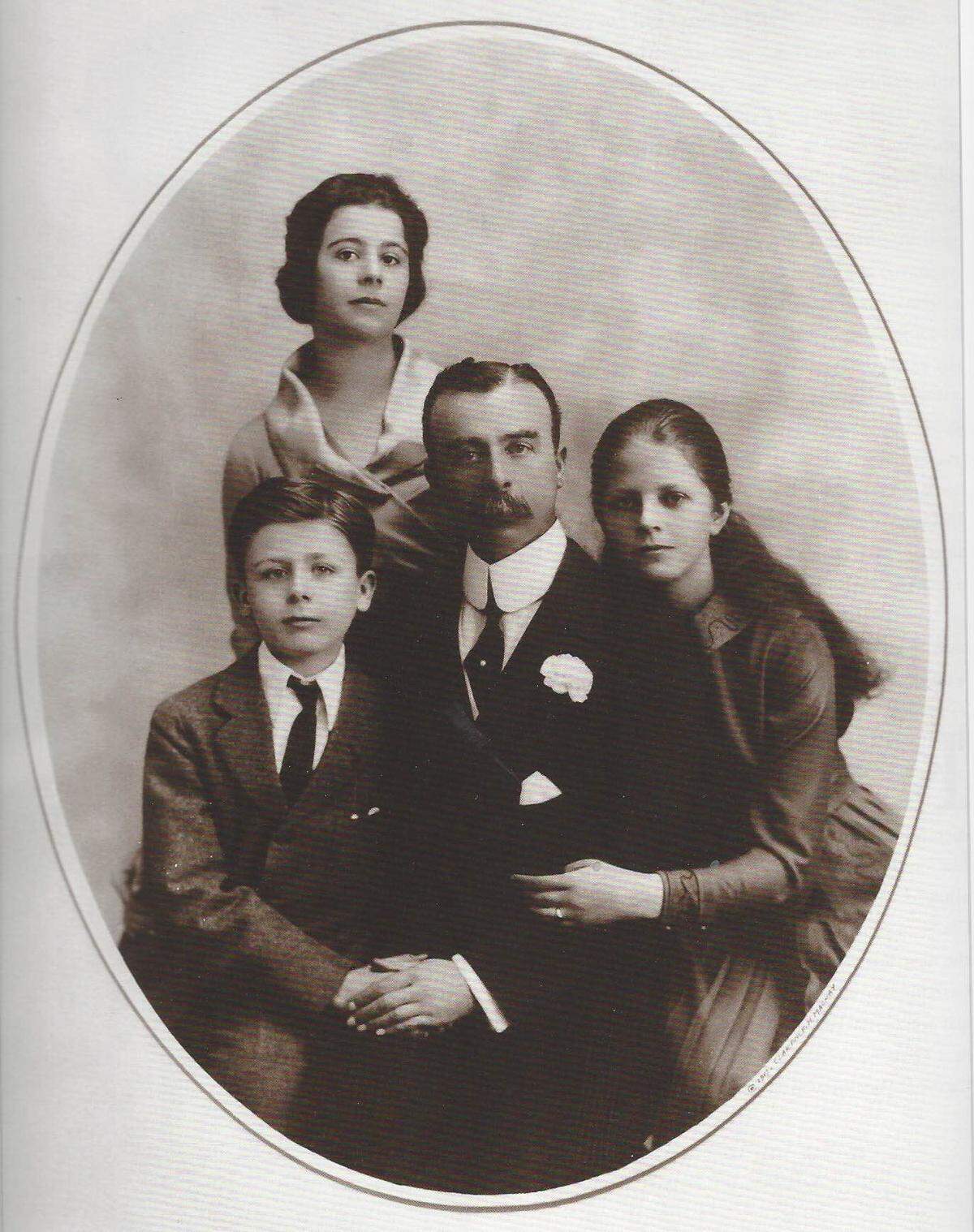
The fountain’s history goes back to the beginning of the 20th century. John Mackay (pronounced MACK-ee) was an Irish immigrant who became extremely wealthy through California and Nevada mining, and investments in transoceanic cables in the late 1800s. His son, Clarence Mackay, inherited his father’s wealth and his business role as a telegraph magnate.
When Clarence married New York socialite Katherine Duer, his father gave them a wedding present, one of the most opulent structures ever built in the United States, an estate called Harbor Hill in Roslyn on New York’s Long Island. Reminiscent of a French Renaissance chateau, it was designed by architect Stanford White and cost nearly $6 million to construct.
The entire estate encompassed 648 acres, and the mansion included 50 rooms and a staff of 134 servants, along with tennis courts, stables and a cottage with an additional 20 rooms. Clarence decorated Harbor Hill like a medieval castle, with French tapestries, Gothic and Renaissance works of art by European masters and a collection of armor.
The focal point of the estate’s garden was a fountain designed by French artist Henri-Léon Greber in 1910. Four equestrian figures were placed around a two-tiered basin, with smaller groups of children riding dolphins placed between the mounted figures. A vertical jet in the center propelled water 30 feet in the air, while the dolphins sent streams of water toward the center.
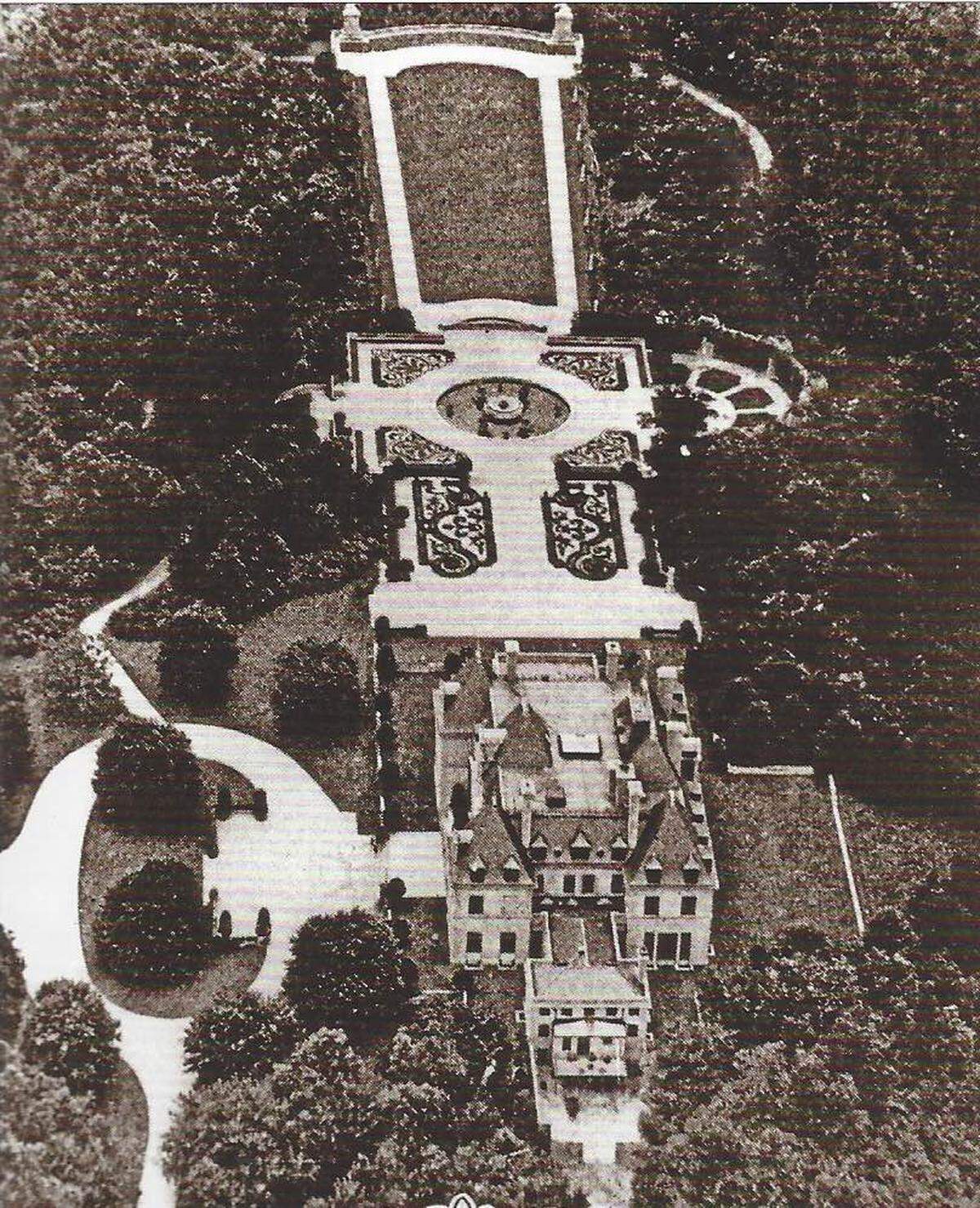
It was a stunning fountain that stood prominently on the magnificent grounds of Harbor Hill. Many dignitaries visited, including Pope Pius XII and the Prince of Wales.
And Irving Berlin, though he was not as welcome.
The world-famous Broadway songwriter had met one of Clarence’s three children, his daughter Ellin Mackay, one night at a New York City dinner party in 1924. The heiress, herself a writer, was a huge fan and told Berlin his new song “What’ll I Do?” was one of her favorites. He had already written hundreds of songs, including “Alexander’s Ragtime Band,” “A Pretty Girl Is Like a Melody” and an unpublished patriotic tune he had penned for the Army during World War I but felt wasn’t quite right and hid away in his writing trunk: “God Bless America.”
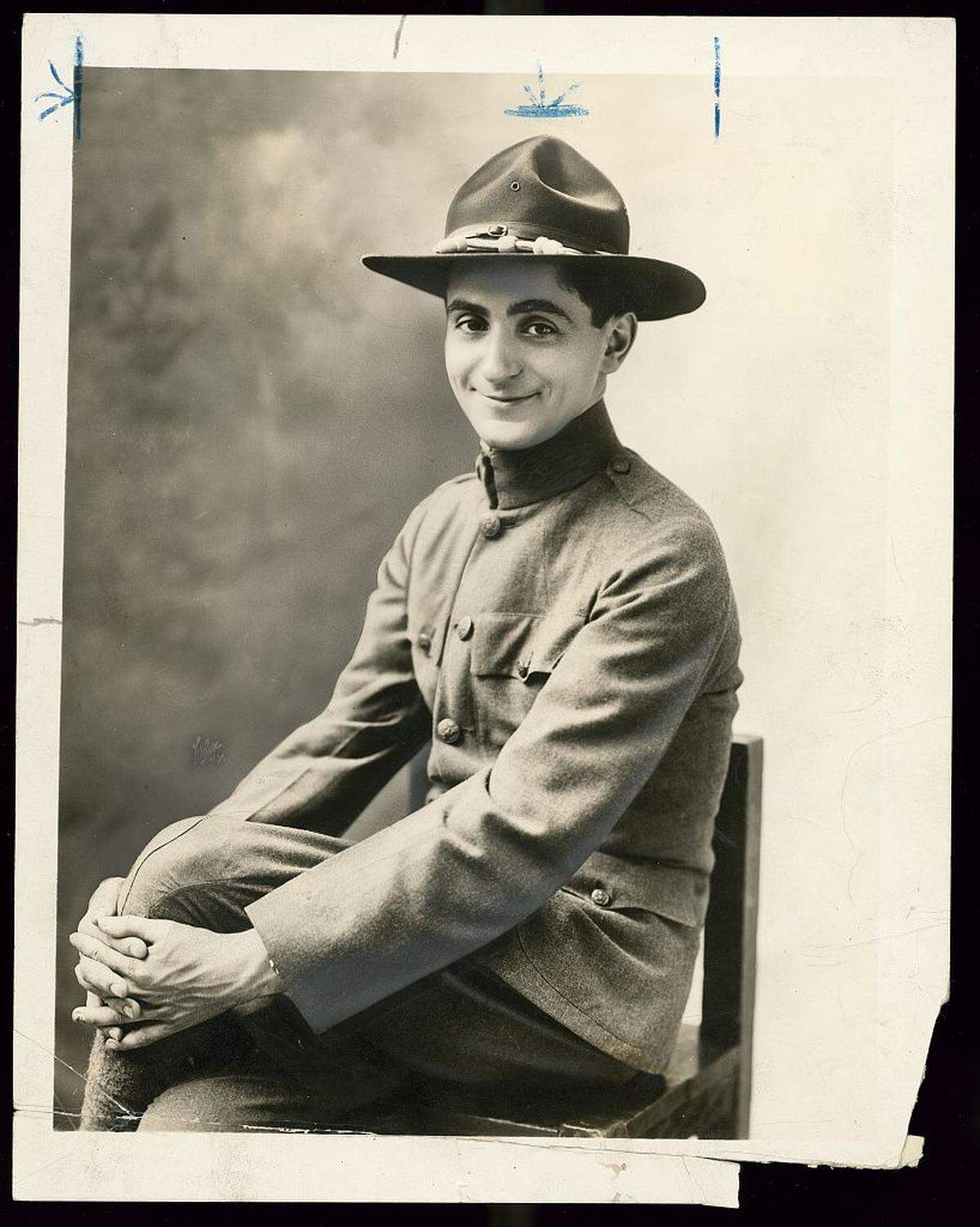
Ellin was fascinated by him. Berlin was 36. She was 21.
Besides the age difference, their upbringing and social circles were worlds apart. Berlin was a Russian-Jewish immigrant who grew up in the ghettos of the Lower East Side, and was now a widower who lived in the unfashionable world of show business. Ellin came from a staunch Irish Catholic family, who were prominent among Long Island society.
Clarence showed Berlin around the Harbor Hill grounds, but he soon made it known that he was adamantly opposed to the budding romance and made every effort to sabotage the couple. He hired a detective to watch and hopefully discredit Berlin, and finally sent Ellin on a six-month European tour. When she returned, the lovers realized the separation only cemented their commitment to each other. When Variety ran a story about their imminent union, Clarence replied they would marry “only over my dead body.”
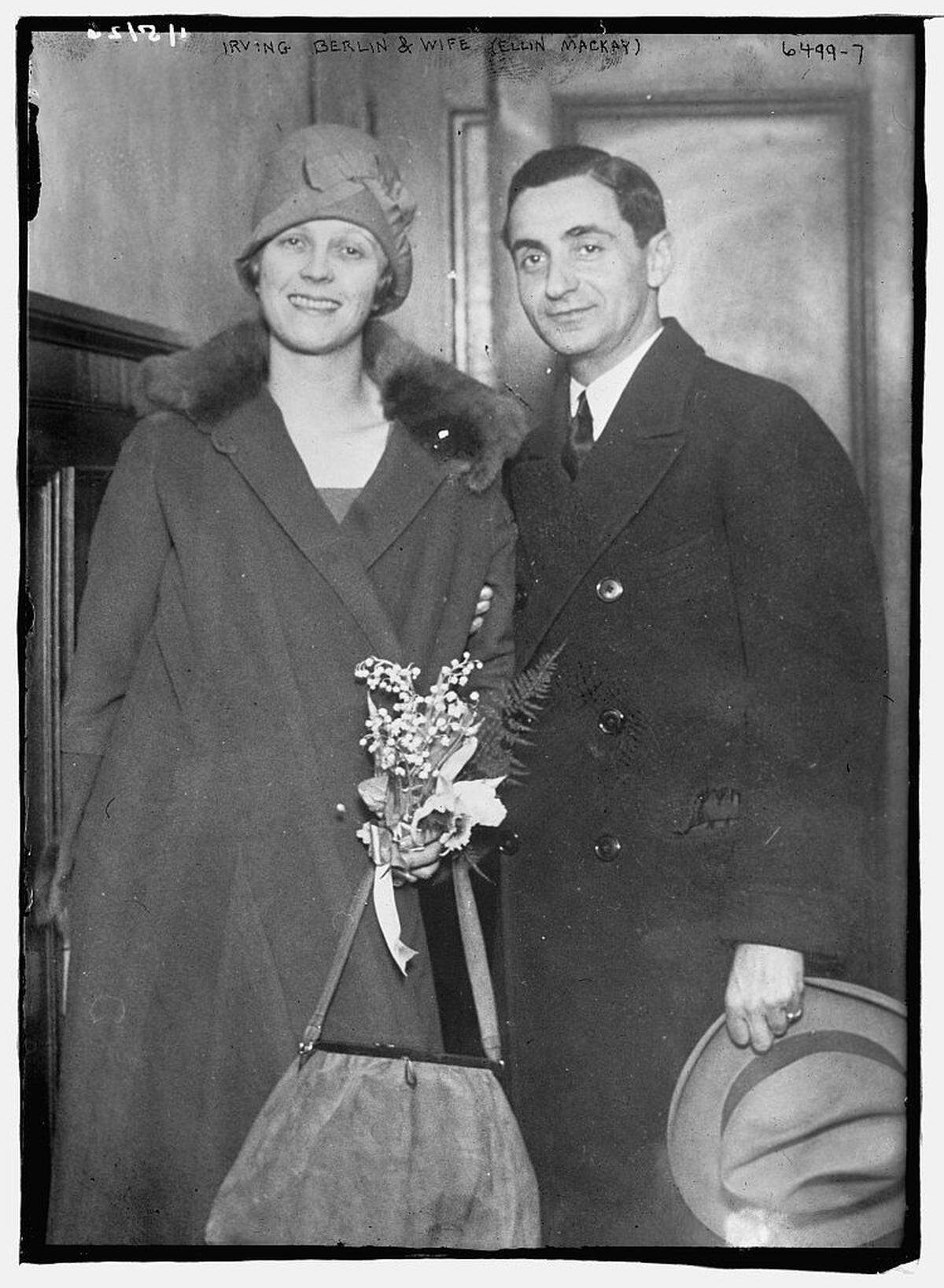
The courtship was a field day for reporters, one of the most publicized of the Jazz Age. Four months after Ellin’s return from Europe they decided to elope, and they worked on their wedding plans for all of two hours. Ellin met Berlin at his apartment and they took the subway — Ellin’s very first ride — to City Hall for the ceremony.
Clarence would not learn until later that day of his daughter’s defiance. When the newlyweds sailed to Europe for a two-month stay, they were again hounded by the press.
Clarence refused to acknowledge the marriage even after Ellin was pregnant and carrying his grandchild. Instead, Clarence immediately cut Ellin out of his will — her share being $10 million.
It took a tragedy three years after they married for Clarence to reconcile with his daughter. Three weeks after the birth of their second child, named Irving Berlin Jr., the baby died on Christmas Day, 1928.
Clarence soon arrived on their Manhattan doorstep to help console his grief-stricken daughter. In time, a degree of civility developed between Clarence and his son-in-law.
And Clarence’s move to cut his daughter out of the will was all for naught, because he suffered a terrible loss in the 1929 crash. Just the year before, he had sold his Postal Telegraph Company to International Telephone and Telegraph for $300 million, but unfortunately he opted to receive stock in lieu of cash.
After the crash, he moved out of the mansion and fired all the servants. The medieval artwork, tapestries and armor were purchased by the Metropolitan Museum of Art, and some paintings were acquired by the National Gallery in London and the National Gallery of Art in Washington, D.C.
With the rise of Hitler, Berlin pulled his WWI-era song “God Bless America” out of the trunk in 1938 and revised some of the lyrics to make it more peace-oriented. It was a monument to patriotism then, and became a symbol of unity after the attacks of Sept. 11, 2001.
But the day after the song’s debut, Clarence died, and Harbor Hill was soon abandoned. The remaining furnishings were either auctioned off or sold to New York City department stores.
Berlin kept writing the hits, including “White Christmas” and the Broadway musical “Annie Get Your Gun.”
Meanwhile, Harbor Hill was repeatedly vandalized, and remaining family members decided to raze the mansion. Fortunately for the citizens of Kansas City, a New York art dealer bought up the statuary.
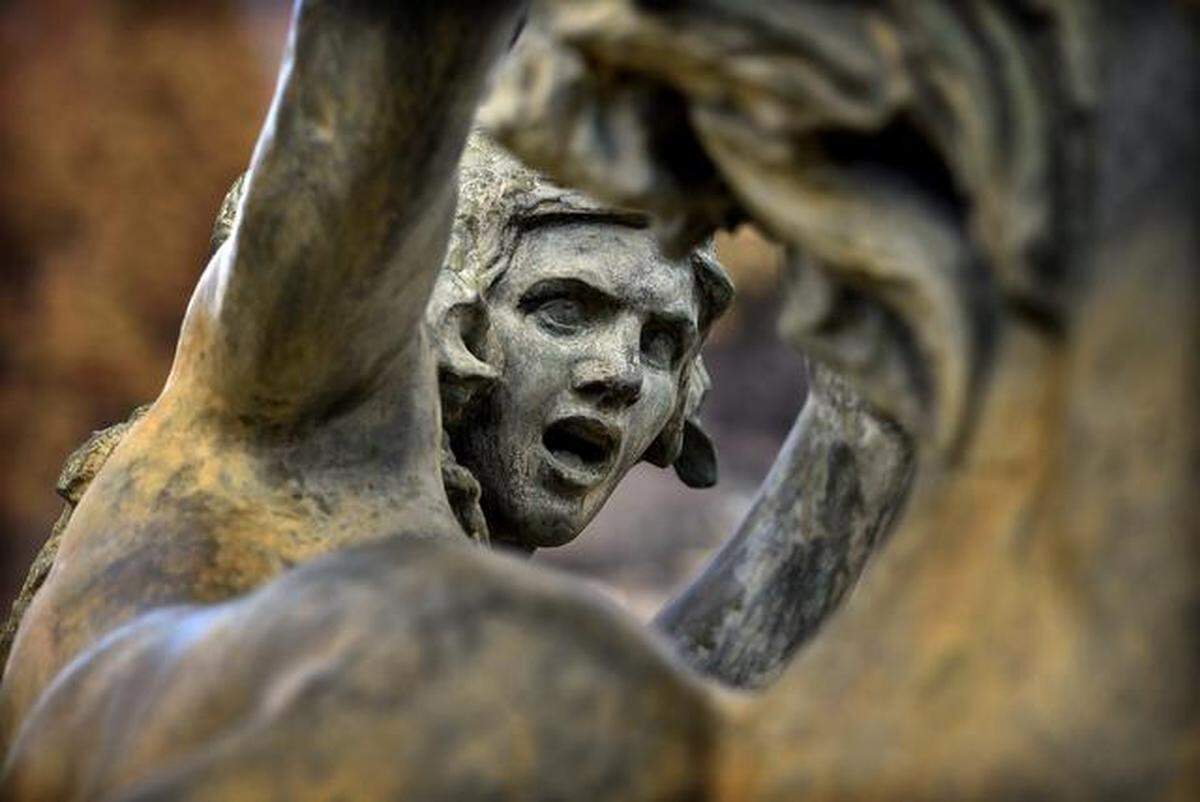
The story now becomes familiar. Jesse Clyde Nichols, the developer behind the Country Club Plaza and housing stretching into Kansas City to the south and into the new Kansas suburbs to the west, died in 1950. Citizens decided to create a monument that would pay homage to him. His three children initiated the purchase of the Mackay estate fountain, and necessary repairs were made by Kansas City sculptor Herman Frederick Simon, with an assist by a foundry in Florence, Italy.
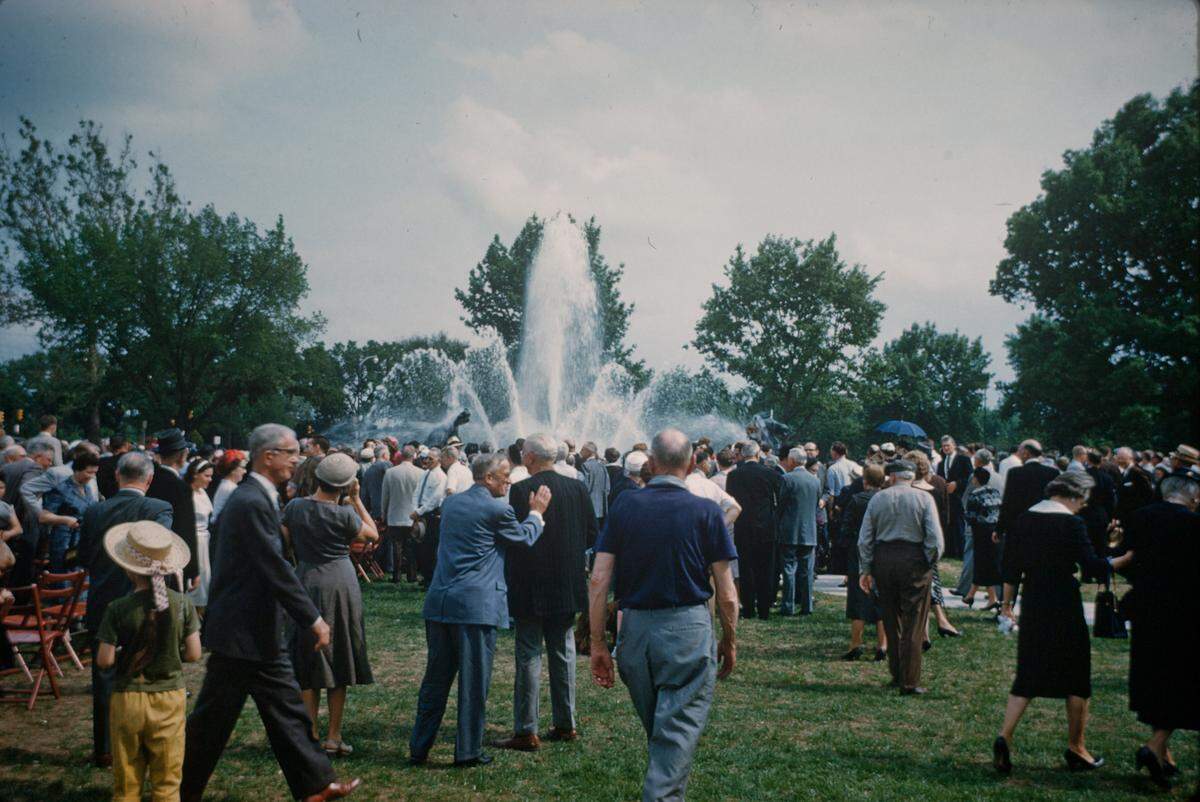
In 1960 the main basin, central tier and fountain sculpture were erected to match the originals. The four surrounding sidewalks are similar to its original Long Island location.
In 2014, thanks to $250,000 in private donations, the fountain was given its first major renovation in more than 50 years, with crews fixing crumbling concrete bases, replacing pumps and motors and cleaning the statuary.
Now part of Kansas City for 60 years, the 110-year-old fountain is back in the news again.
In June, the Kansas City Board of Parks and Recreation Commissioners voted to strip Nichols’ name from the fountain, saying the developer’s deed restrictions did much to create Kansas City’s racial divide. The next morning the city removed a plaque dedicating the fountain to him.
There will be much discussion in the coming weeks regarding the best way to honor our city in the renaming of the fountain.
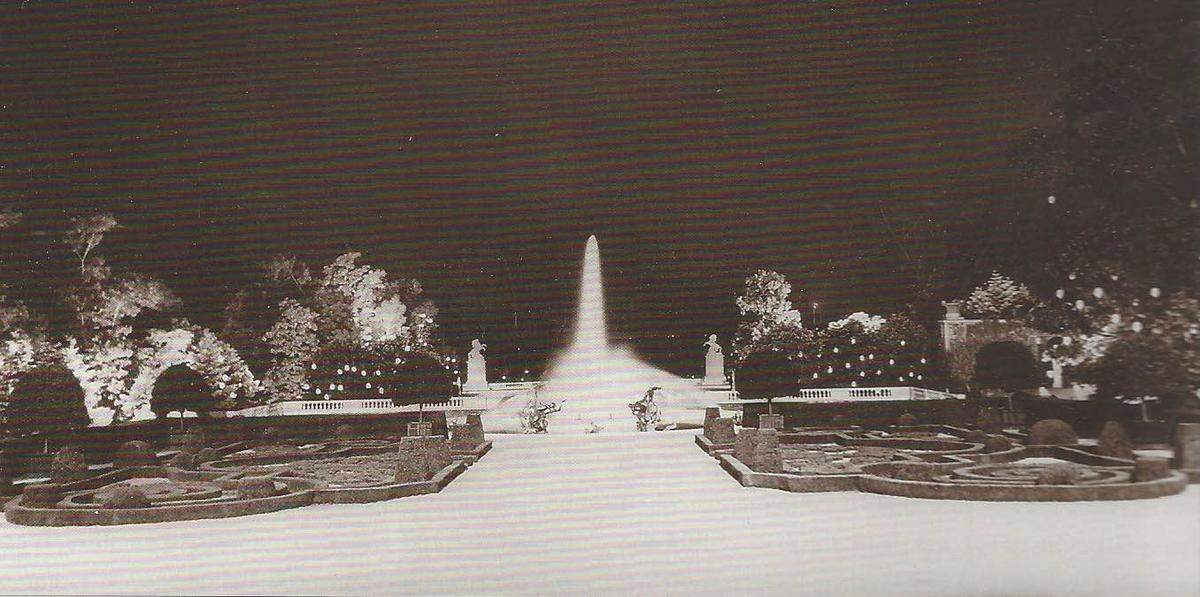
When I look at the fountain I think of Ellin Mackay, who grew up with this extraordinary work of art, and her loving 62-year union with Irving Berlin, which begat four children and many grandchildren. Their love story demonstrates how people from two different worlds can get along. I also think of the difficulty Clarence Mackay had in accepting Berlin as family, but that change of heart did happen.
Hopefully this fountain will also come to represent Kansas City’s ability to unite as one.
A nod to the following sources: “Harbor Hill: Portrait of a House” by Richard Guy Wilson, “As Thousands Cheer: The Life of Irving Berlin” by Laurence Bergreen, “Irving Berlin: A Daughter’s Memoir” by Mary Ellin Barrett and “Fountains of Kansas City: A History and Love Affair” by Sherry Piland and Ellen J. Uguccioni.
Patricia Shelley Bushman is the author of “Indelible Tracings: The Story of the 1961 World Figure Skating Team.” A Kansas Citian for 22 years, she enjoys hosting evenings celebrating the lives of America’s greatest songwriters.
This story was originally published August 2, 2020 at 5:00 AM.