
This reimagined ‘Gatsby’ mines the dreams and desperation of a modern Black family
For many of us, probably too many, the takeaway from F. Scott Fitzgerald’s classic “The Great Gatsby” is the glamour. Big parties and fancy clothes. Jazz Age excess. Hollywood has something to do with that.
Stephanie Powell Watts latches on to something deeper.
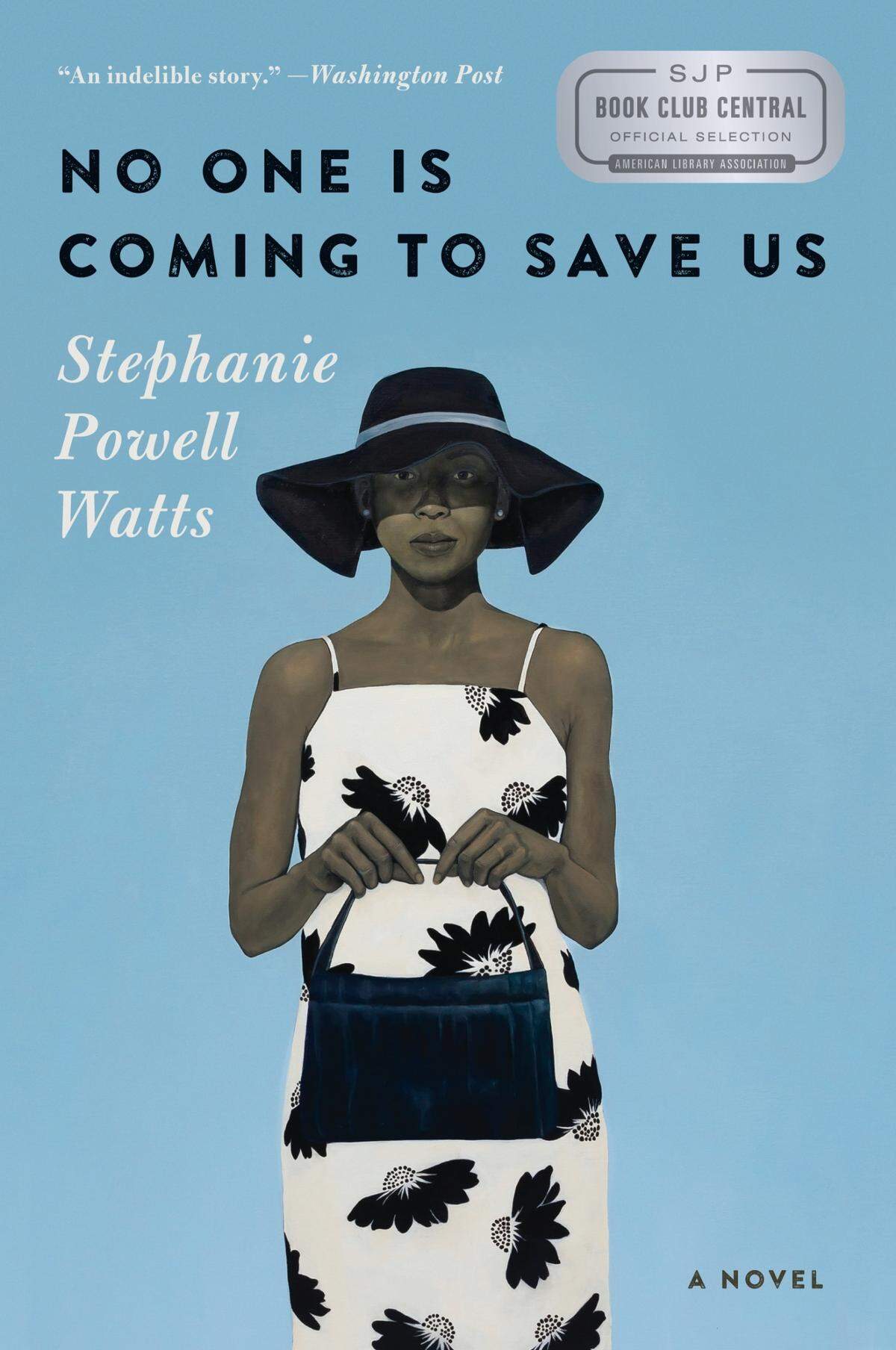
“Everybody in the book is desperate for something, desperately reaching for something,” says the Pennsylvania author, who writes that pervasive sense of longing into her debut novel “No One Is Coming to Save Us.” The story of an extended Black family in a small factory town in decline in the contemporary South is the latest selection of the FYI Book Club, a partnership of The Star and the Kansas City Public Library.
Watts deftly borrows from the atmospherics of “Gatsby” and, to a degree, from its theme of trying against the odds to recreate the past. Her JJ Ferguson has left home and returned 15 years later a success, particularly by the standards of the town’s disadvantaged Black community. He’s building a mountainside mansion. He reconnects with an old love, now married. Echoes of “Gatsby.”
But Watts was looking to poke through the cracks and crevices of Fitzgerald’s Great American Novel, not retell it. And her story is more about the women and feckless men in a family that has struggled for generations to get a foothold in life — and just about accepted that it never will. Past pulls relentlessly against the future.
“I can’t really deny that the influences are there, but I in no way set out to put the story of “Gatsby” in a Black space or anything like that,” says Watts, who grew up in the North Carolina foothills in which she sets her story. “I want the book to have its own life and integrity and be its own thing.”
Critics approved when it was first released in 2017. “The circumstances of her characters are vastly unlike Fitzgerald’s, and those differences are what make this novel so moving,” The New York Times wrote. Indeed, white privilege is relegated to background. There are no lavish, Gatsby-esque galas.
The Washington Post called “No One Is Coming to Save Us” an “indelible story” and selected it as a Best Book of 2017.
“When I read a book, I want to enjoy it,” Watts says. “But I also want to feel like some receptors in my brain have lit up that I really didn’t know were there. Or haven’t been activated in a while.
“I hope this a story that people can find resonance in, and relate to, in some ways. Even if they don’t necessarily see themselves reflected on the page, I hope it’s at least a window into something they know on a kind of emotional level.”
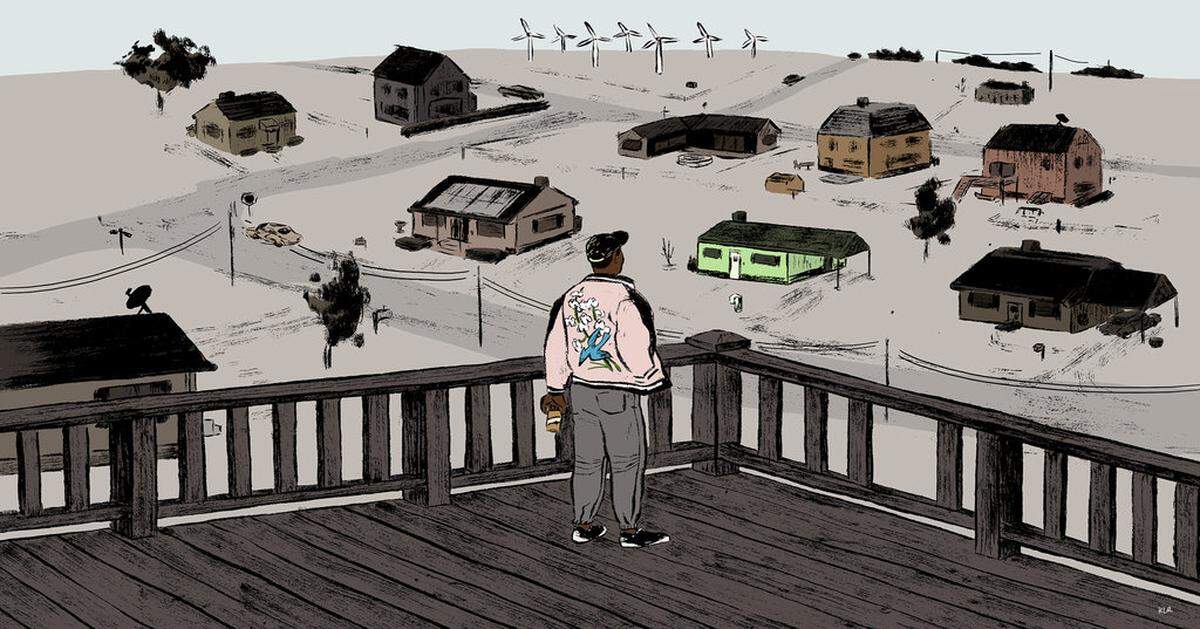
While her story — separated just enough from Fitzgerald’s — may not qualify, there’s a growing canon of modern adaptations of literary classics, from Michael Cunningham’s “The Hours” (a reimagined “Mrs. Dalloway”) to Susan M. Wyler’s “Solsbury Hill” (“Wuthering Heights”). Takeoffs on Jane Austen’s works have become a cottage industry.
“Gatsby” got the retrofitting treatment in Sara Bernincasa’s “Great,” released in 2014. It revolves around a teenage girl in the Hamptons.
Some are better executed than others (reviews of “Great” were decidedly mixed). But publishers and literary types see the new versions as a way to introduce the dusty originals, in at least a general sense, to new, more diverse audiences.
“The reason these works endure … is because they hit on something important,” says Watts, who first read “Gatsby” as a 16-year-old high schooler.
“When literature is working, it’s dealing with these kinds of mundane moments — will Heathcliff run away? — but asking you to look at bigger issues, to examine them. If people can find something in there that will move them to create some other work of art, I’m like, do it. Go for it.”
Watts, an associate professor of English at Lehigh University, earned her master’s degree and doctorate in creative writing and African American literature from the University of Missouri. Also an award-winning short-story author, she’ll join the Library’s Kaite Stover in a wide-ranging online presentation at 6:30 p.m. Wednesday.
Recently, she spoke with The Star about “No One Is Coming to Save Us,” her history with “The Great Gatsby” and the DNA shared by the two books. Excerpts from the conversation are edited for length.
Q: What are the origins of “No One Is Coming”?
A: I guess it was about 10 years ago that I was doing some research and talking to a funeral director in Taylorsville, North Carolina, who told me a story about a family who’d lost a child — I think he was 23 and had been in a car accident. The family was very religious and decided, along with their pastor, that the son had not passed over and still could be brought back if they did a prayer vigil. The idea to them was that he had not completely died. So, they set up a 24-hour vigil for several days and it was really upsetting to the community … and they were persuaded to shut it down.
I read a number of things about it in local newspapers, and the voice of the mother really shook me. And interested me. There was this longing. It was just a couple of minutes — not even that, it was a minute — that changed her life from the before to after. She thought that God would grant them those few seconds.
I started thinking about it and kind of reinvented the story. The family became Black. It was a little later in time. The parents were younger. It took me a year and a half, maybe two, to do a draft of it, and it just didn’t work. I started playing around with it, rethinking it. I felt like I had been telling the wrong story. I was writing about grief and the past instead of “here’s a moment when everything falls apart and what do we do when that happens and how do we keep living?”
Q: How did “Gatsby” enter the process?
A: I jokingly said in an interview that the book was about poor Black people in North Carolina, set in the early aughts, and so it was basically like Gatsby. In a certain way, I guess, I felt like maybe I was talking about Gatsby. The return of the son was a big idea of the story. And the idea of the past coming back to you.
Then, I started thinking about where it was that these people were and that became a much bigger part of the book. It was a post-industrial Southern town, very rural. It was a place that had been labeled post-racial, post-Jim Crow, and there were elements of that by law but not a lot by custom. I started thinking about the way the past intrudes and keeps coming back and finding some crevice to get into and manipulate the present and even the future.
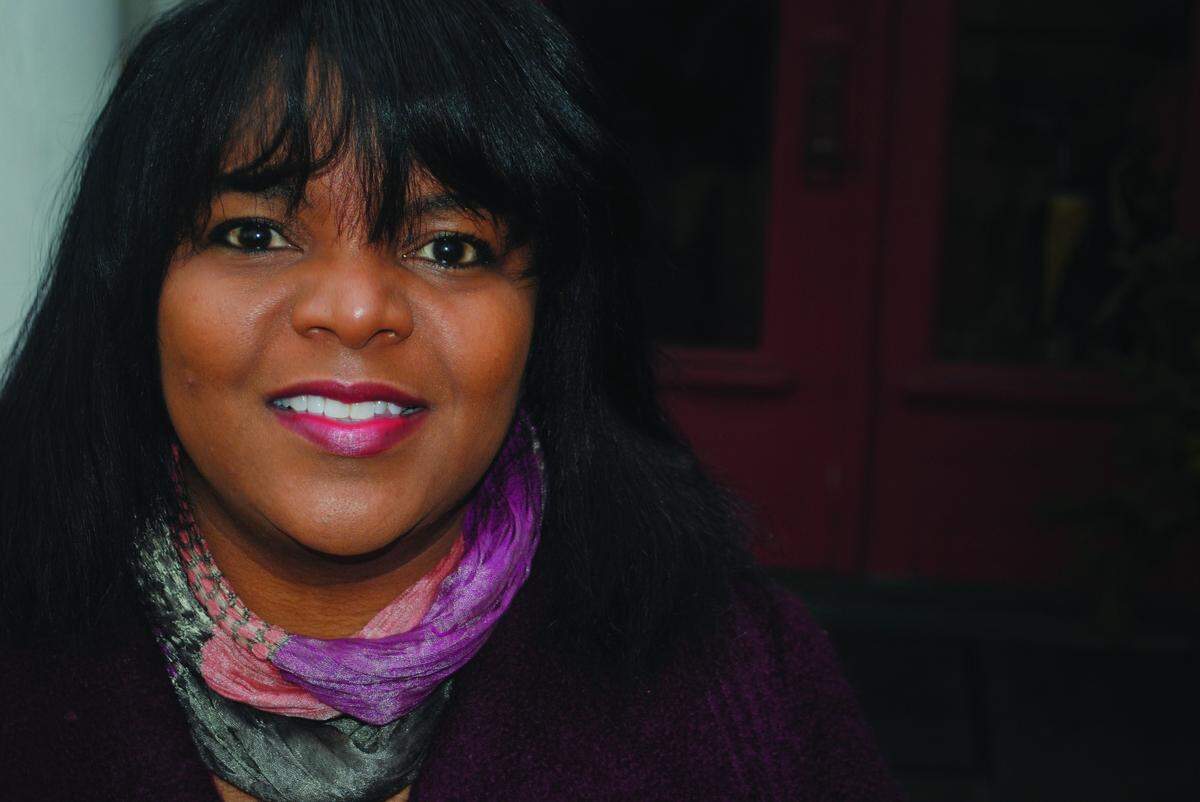
Q: What specifically do you think you drew from “Gatsby”?
A: I was thinking about what it means, in some ways, to be where you are as an American. I don’t mean that in the loftiest sense but in a really literal sense. These characters were in a place with great promise, that they had a dream for, but it seemed to be kind of crumbling around them. There were these very specific dreams and the Great American Dream, which no matter how hard they tried they couldn’t get access to.
Q: “Gatsby” has virtually no Black characters, but there are scholars who see a racial undertone. Do you?
I don’t think Fitzgerald was writing specifically about race, but I think race is insinuated all through the book. When we first meet the Buchanans, Daisy and Tom, Tom is animated about the rise of the colored civilization, that things are not going to be the way they were before.
There’s a great moment where they’re riding together, they’re basically going out to party, and this car drives by with Black people in it. It’s a beautiful car, and Nick says something like he can’t believe it. He’s just in disbelief that this is happening. That’s a scene that does not have to be in the book, certainly not plot-wise. Even thematically. You could throw that scene out, and it would be fine. But there’s a reason that it’s there.
Q: How many times have you read “The Great Gatsby”?
A: I don’t know … 10 anyway. In high school, I don’t think it was assigned but there are certain books you read because you’re told they’re what smart people read. You know what I mean? A book like that, I think there are things it teaches you once you read it over and over. My sympathies always were with Nick. But now, I’m more inclined toward Myrtle. And even Daisy. Both of those women are super interesting, and we just don’t hear very much from them.
A: Speaking of that, was it a conscious decision to make so many of your central characters women?
A: Yes, I absolutely wanted to hear from the women. … Sylvia (Ross, a world-weary woman of about 70 in an empty marriage) is the conscience of the book in some ways. She sort of has a husband, her family is almost gone, and she doesn’t have the sorts of things that once might have tied her to the community — like family, like church. Both of the other main characters who are women, her sister and her daughter, don’t have any children. And she (Sylvia) is kind of a lonely person.
A: Their stories are fairly aching until the end. Did you want to leave them a little more hopeful than Fitzgerald did his characters?
A: I did want to end at a place where they had a little bit of redemption and were in a more hopeful place, where there was promise for their lives. I felt like “Gatsby” was saying, “Stay in your place. There is an invisible force field in America and, if you dare (breach it), some terrible things can happen to you. Still, there is still promise and maybe somebody will break the force field someday.”
Those things are true. There are personal feelings and there are laws, but you can get around them. It will be hard and you’ll get hurt, but you can find some place that maybe Flannery O’Connor would call grace.
Q: What’s the landscape for Black authors today, and for Black female authors in particular?
A: I feel like there’s added attention to Black stories and Black storytelling. That’s all to the good. But it’s a conversation that I’ve seen play out before – in 1983, when Alice Walker won the Pulitzer for “The Color Purple,” and when Toni Morrison won the Nobel Prize 10 years later. Those were going to be the moments for Black storytellers and, in particular, Black female storytellers.
I do think that people in the industry are trying … and they want, at least in literary fiction, to be a part of creating a solution to some of these issues. But these are businesses, and the public’s appetite has to be more diverse. That’s part of the equation, too.
Q: Are we at a moment in history that will whet that appetite?
A: I think so, but there have been inflection points before. … The road to inclusion and diversity is a long one. Just when you feel like you’ve reached the end, there’s a detour.
Steve Wieberg, a former reporter for USA Today, is a senior writer and editor for the Kansas City Public Library.
Join the discussion
The Kansas City Star partners with the Kansas City Public Library to present a book-of-the-moment selection every six to eight weeks. We invite the community to read along. Kaite Mediatore Stover, the library’s director of readers’ services, leads two online discussions of “No One Is Coming to Save Us” by Stephanie Powell Watts.
▪ Watts joined Stover in a conversation about the book on Aug. 12. You can watch the event here.
▪ Stover leads an FYI Book Club discussion of “No One Is Coming to Save Us” via Zoom at 6:30 p.m. Sept. 15. Watts will join the discussion around 7:15 p.m. Email Stover at kaitestover@kclibrary.org for details on joining in. The book is available as an e-book or audiobook through the Library’s hoopla service.
An excerpt
From Chapter 38 of “No One Is Coming to Save Us” by Stephanie Powell Watts, published by HarperCollins. Here, unhappily married Ava Bailey has reconnected with the returned JJ (Jay) Ferguson, whose plans include a striking new mansion and wooing her back.
For a few panicky seconds when she awoke that morning Ava was unsure where she was. Death is an empty house hollow and echoing. She quickly calmed herself and sat up from Jay’s bed while the morning still crackled awake, the air cool like an exhalation on her skin. She heard the manic whir of a lathe in the back of her brain that meant Jay was already building something in his workshop. She’d fumbled for her jeans, slid her cool, bare feet into tennis shoes. She didn’t want to talk to anyone. She considered never speaking another word. It was too early to be awake and stirring, but Ava walked outside to the front of Jay’s house into the yard, bald except for the dandelions and wild onions that had already taken root. Before her was the kind of vista you might see in a romantic movie. A stately house surrounded by tall pines at the top of a mountain. In the movie, sheets would hang from a clothesline and billow like sails in the breeze. The white girl in the scene would walk between the sheets, her shift dress clinging to her thin frame with the blustery wind, her hair flapping behind her, like at any moment she might take flight. Ava stepped into the yard. In two steps her shoes were covered with a thick sole of red mud. She cried at the sight of her ruined shoes. Couldn’t she have one moment safe from the threat of ruin?
This story was originally published August 11, 2020 at 5:00 AM.