
She wanted to write about the night she was raped. So she interviewed her rapist
How do you prepare to visit the man — one of your closest friends growing up — who’d raped you 14 years earlier?
Jeannie Vanasco obsessed over everything from what to wear to whether to have a drink to exactly what to say and ask. And she would come to wonder something else: Was she doing the right thing?
She was writing a book about that abominable violation and act of betrayal, delving into its impact not only on her life but her former friend’s as well. How, exactly, would that go over amid the revelations, pain and anger of the rising #MeToo movement?
Should she give this guy a voice?
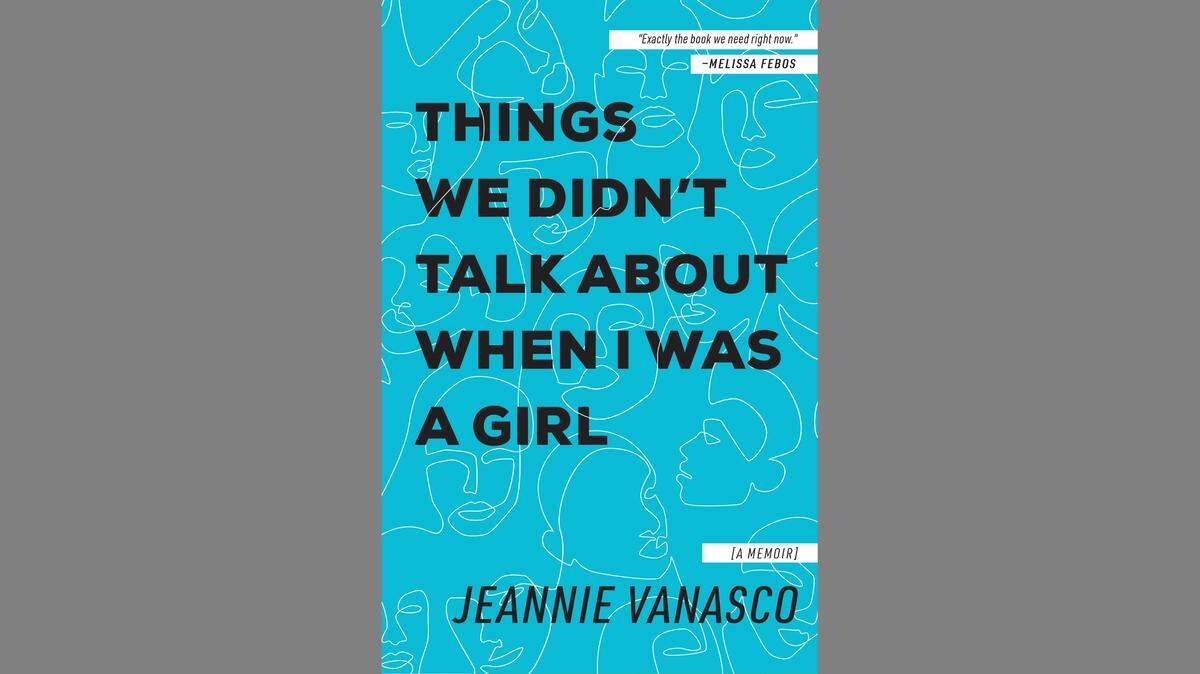
Vanasco did, and it lends her memoir “Things We Didn’t Talk About When I Was a Girl” a distinctive place in the #MeToo narrative.
The book, Vanasco’s second, is more exploration than exercise in revenge. She found herself struggling after the attack with emotions — and in some respects a lack of emotion — that she didn’t fully understand. She questioned why she didn’t hate her former friend, with whom she’d been close since high school. She needed to know how he had processed his criminal lapse, beginning with whether he felt any remorse.
She writes, “I’m genuinely interested in the psychology of it all — like, is it possible to be a good person who commits a terrible act?”
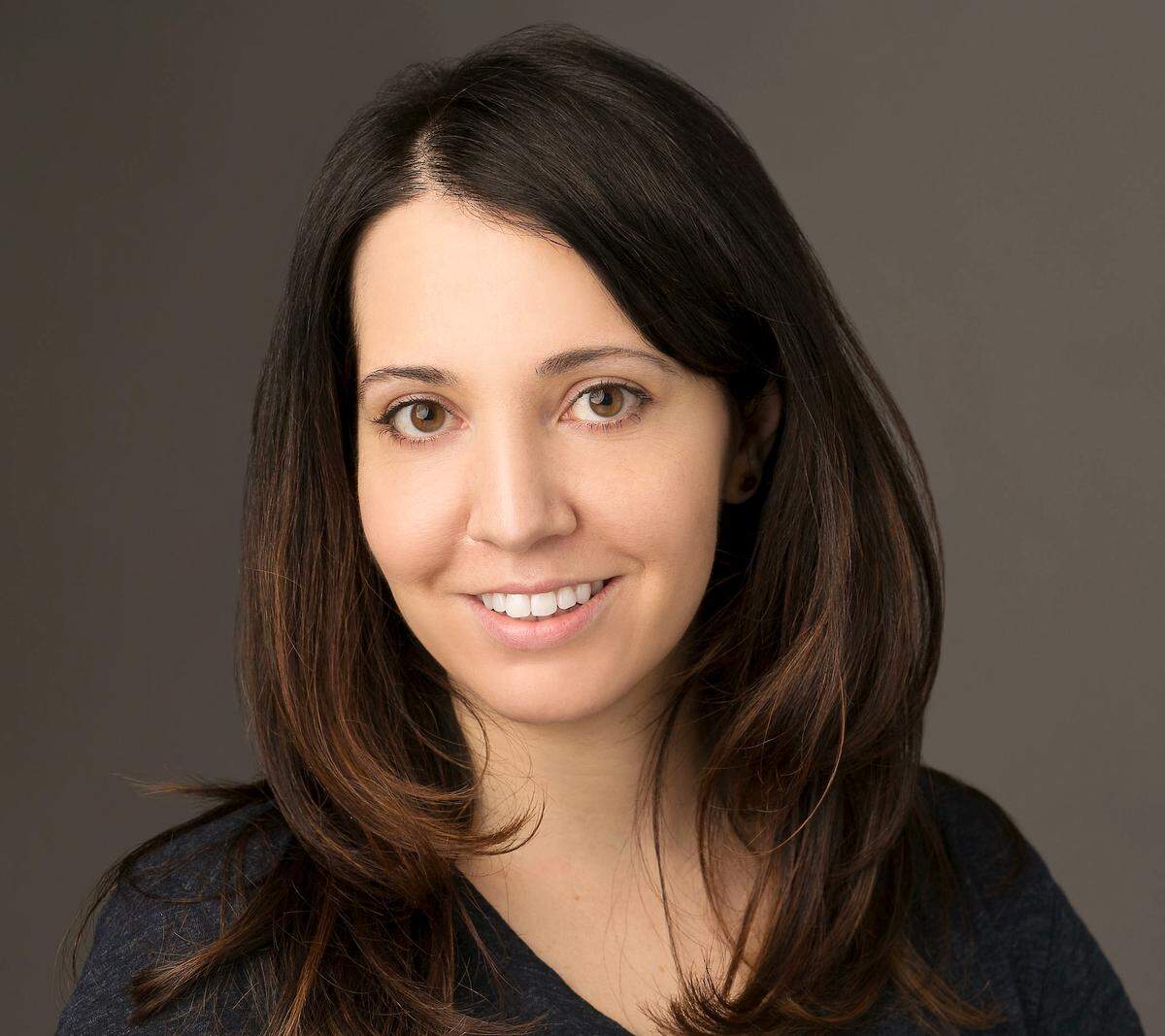
Vanasco was 19 and a sophomore in college when Mark (a pseudonym) and another male friend carried her down to Mark’s basement room during a house party. She was passed-out drunk. They laid her in Mark’s bed.
Stunningly, Vanasco awoke to him removing her clothes and instructing her to stay quiet, telling her she was dreaming. He slipped his fingers inside her. She remembers shivering in the cold bedroom. And softly crying.
Mark would call and apologize a few days later, saying he’d been drunk, and the two drifted out of touch. In later conversations with Vanasco, after she’d decided to look him up for the book, he told her he was both drunk and depressed, that he liked her but she had a college boyfriend, that he hoped she was so drunk that she would forget the incident happened.
But it had given her nightmares, real nightmares, for 14 years.
The National Sexual Violence Resource Center puts Vanasco’s experience in distressing perspective: One in five women in our country will be raped at some point in their lives. In better than 40 percent of those cases, the perpetrator is an acquaintance.
Mark had been more than that — he was a kindred spirit — before that night in December 2003.
“When the #MeToo movement was becoming more visible with the reporting about Harvey Weinstein, I started thinking about the ways in which my story didn’t fit into that narrative, how much I wanted to feel anger (but didn’t),” Vanasco says in a recent interview. “I thought: What do we do with people we cared about (before they committed an assault)?
“As a writer, I’m more interested in slippery narratives where it’s hard to determine what I think or feel. If I’m afraid to write something, I usually figure that’s a good sign, that it’s something I should write.”
Vanasco was surprised, she says, that Mark agreed to talk to her for the book. They spoke three times by phone in 2018 and finally in person, meeting in the restaurant of an art museum in their home state of Ohio. She says she felt he was forthright and sincere. She also worried: “I don’t want to be an apologist for rapists.”
Now an assistant English professor at Towson University outside Baltimore, Vanasco recently discussed “Things We Didn’t Talk About When I Was a Girl” and the doubts, concerns, reasoning and personal reckoning that formed the book. Excerpts are edited for length.
Q: People are calling this book — calling you — brave. Do you buy that?
A: A lot of times they’re describing my decision to reach out to Mark and talk with him. That didn’t feel brave to me. The book kind of felt like armor. I had a reason to contact him, and it immediately put me in a position of power — like I’m writing about this, I’m controlling the narrative.
What felt more brave to me was releasing the book. That’s what was so terrifying for me … because I understood why people would be upset with it.
Q: You wrote, “The very fact that I’m interested in how the assault affected Mark … could upset a lot of women.” So, what are you hearing?
A: I’m not on social media, but I had my email address on my website. And someone sent me some really mean emails about how my book was going to cause such harm and I was a terrible person. It was like, “I hope you make a lot of money from this book,” an accusation that I was just trying to profit from this. That really hurt.
I removed my email address and didn’t hear from many people unless I went to readings. Then, I started getting letters to my university address — a lot of them from men who were in prison for rape, all very long letters and reflecting on their behavior and how it began for them. One said that how it started for him was what Mark did to me, digital penetration, and not thinking it was that serious. And from there, he became more violent.
I’ve put my contact information back on my website, and now I’m hearing from other people again. They’ve all been very positive. They feel less alone. And that’s been nice.
Q: What did you want women, and men, to take away from it?
A: I hoped that anyone who’s been a victim or survivor of sexual assault would feel less alone. I felt guilty because I wasn’t angry at Mark, and I think that’s a common experience, at least from what I’ve observed of my students when they tell me their experiences with sexual assault and how they still felt kind of bad for their attackers.
I hope more men read it. I want them to be aware of how common this. As my editor pointed out, so often women know other women who’ve been sexually assaulted. And yet, when I talked to my male friends, they couldn’t say whether any of their friends had sexually assaulted someone. That disconnect is interesting to me.
Q: You told Mark, “If there’s any way to make it up to me, this (talking to me for the book) is definitely it.” Did that make up for the assault?
A: That’s a good question. I found myself frustrated toward the end of the project and then after the book came out. He apologized to me directly, he talked with me, but he never told his parents. I was thinking: Why am I so fixated on this? And I realized that by keeping the apology private between him and me, there’s a way in which he still gets to evade some responsibility.
I was so close with his parents, and I lost that relationship and never explained why. I’ve felt bad about that ever since. It’s important, I think, for people to recognize that their sons or their brothers are capable of sexual assault. That’s harder to do if the people who are committing sexual assault aren’t coming forward and apologizing to people beyond the person they harmed.
Q: Have you heard from Mark since the book was released?
A: I checked in with him in August to get his address to send him an advance copy, and I gave him a heads-up. I said, “This is probably going to be a very difficult book for you to read. And anyone who was in our friend group who reads it would immediately know it’s you. If your parents read this book, they’ll know it’s you.” And he wrote back — it was a really thoughtful reply — and said, “I’m sure you were more than fair. And even if you weren’t, who am I to complain?” And he said, “If my family reads it, so be it.” That was coming close to what I wanted from him.
I checked in with him a month later to see if he’d gotten it, if he’d read it and how was he doing, and he hadn’t read it yet. I haven’t heard from him since. I haven’t checked in.
Q: Does this close the book on him as far as you’re concerned?
A: Yes. I don’t know why I felt nostalgic for that friendship, but I don’t anymore. I’m not really interested in keeping up communication with him, partly because I think I would expect him to keep apologizing over and over. It would be hard to move past this, just hang out and talk about something else. … I don’t think we could ever go back to being friends.
Q: Was the project, the experience, cathartic for you? Are the nightmares gone?
A: Definitely, there was catharsis in writing it. I wasn’t necessarily expecting it, but I really don’t think about it (the assault) anymore. After writing about it, it almost feels like it didn’t happen to me. I spent so much time thinking about myself as a character or the narrator, thinking about the technical aspect of it, maybe that helped me feel some control over the material. … I’m past it.
Steve Wieberg, a former reporter for USA Today, is a writer and senior editor for the Kansas City Public Library.
An excerpt
From Part 1, The Idea, of “Things We Didn’t Talk About When I Was a Girl” by Jeannie Vanasco, published by Tin House Books. Here, Vanasco is weighing her first contact with the onetime close friend who raped her two years after they graduated from high school.
If he says yes, I won’t thank him.
I won’t tell him that everything is okay between us.
I won’t comfort him.
I am assuming he’ll need comforting.
Politeness isn’t needed.
You ruined everything, I’ll tell him. You realize that, right?
I can say everything.
I’ll ask him:
Do You still think about what happened?
Is it the reason you dropped out of college?
Did you ever tell anyone? A therapist, maybe?
How did you feel the next morning? The next month? The next year? Today?
Do you remember how I felt, or seemed to feel?
Did you ever miss me? …
Have you dated anyone?
Have you done to anyone else what you did to me?”
Join the discussion
The Kansas City Star partners with the Kansas City Public Library to present a book-of-the-moment selection every six to eight weeks. We invite the community to read along. Kaite Mediatore Stover, the library’s director of readers’ services, will lead a discussion of “Things We Didn’t Talk About When I Was a Girl” by Jeannie Vanasco at 1 p.m. Saturday, March 14, at the UMKC Women’s Center, 105 Haag Hall, 5100 Rockhill Road. To attend, email Stover at kaitestover@kclibrary.org. Vanasco will participate via Skype.