
Murder in miniature: How a grandma used her tiny hobby to help launch modern-day CSI
It is, at first glance, a quaint kitchen scene, rendered in typical 1-foot-to-1-inch dollhouse scale.
Sheer white curtains hang from the windows, tied back to reveal a line of drying clothes outside. There’s a mixing bowl and rolling pin on the table, and a pie is cooling nearby. An ironing board stands unfolded. A laundry basket sits to the side.
Steps away, on the floor in front of an open refrigerator, a woman in a polka-dot dress and printed apron lies … dead.
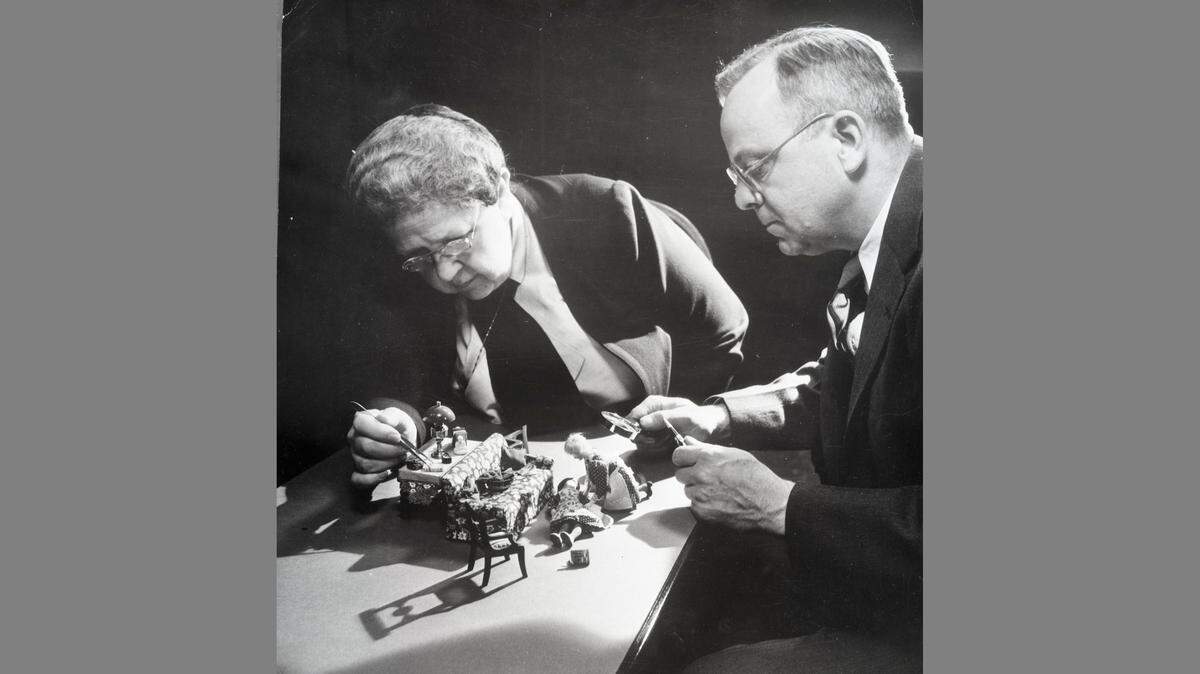
The scenario was pulled from real-life police and autopsy reports and meticulously recreated in miniature by Frances Glessner Lee, a Chicago-born heiress with a bent for science and an obsession for getting to the bottom of suspicious deaths. She made 20 of the intricately detailed dioramas in the 1940s and early ’50s — the first when she was 65 years old — using them to train law enforcement officers in the use of observation and deduction in the investigation of violent crimes.
Hardly child’s play.
Bruce Goldfarb first wrote about the Nutshell Studies of Unexplained Death, as Lee named her small set pieces, in an American Medical Association publication in 1992. They fascinated him and so did Lee, who worked long and hard to make death investigations more professional and effectual and is widely considered to be the godmother of forensic science.
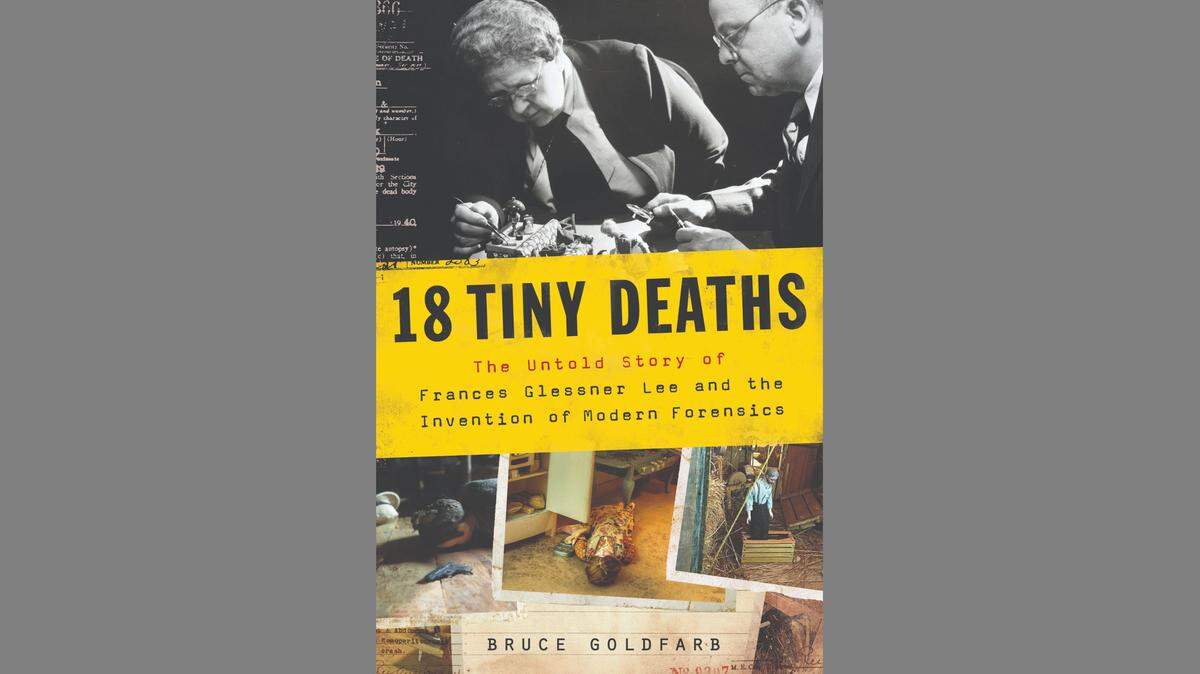
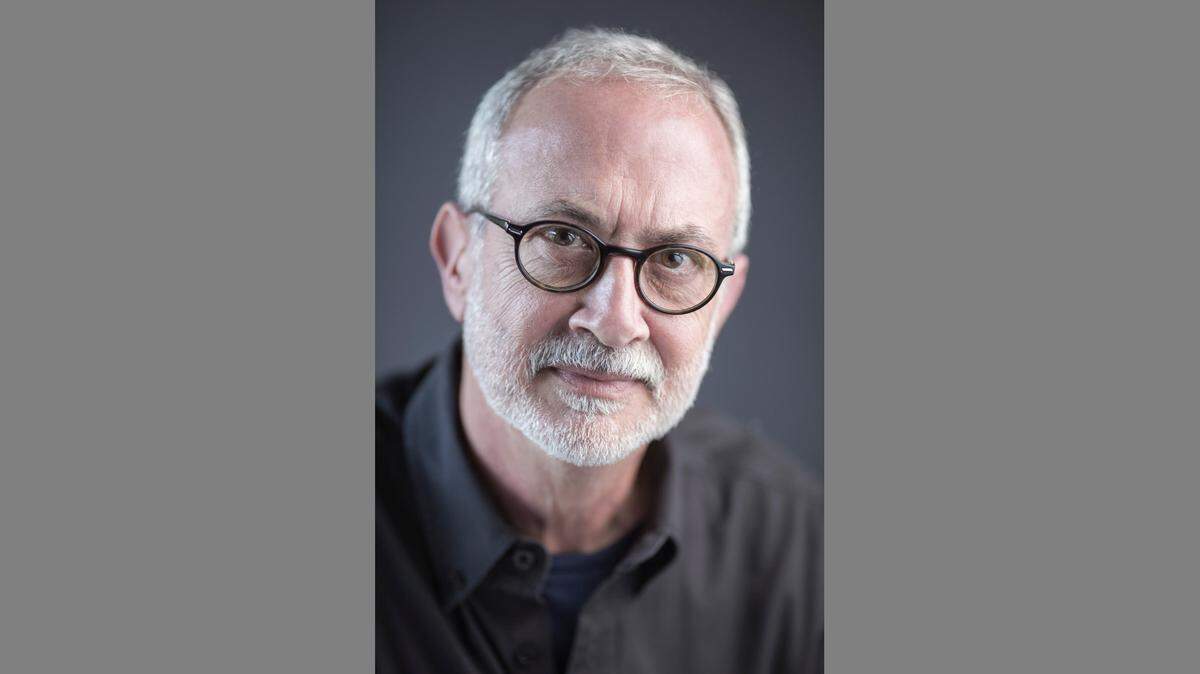
Goldfarb, a former journalist who’s now executive assistant to the chief medical examiner for the state of Maryland, spotlights her improbable life and work in a new book, “18 Tiny Deaths: The Untold Story of Frances Glessner Lee and the Invention of Modern Forensics.” Released in February, it’s the Kansas City Public Library’s latest FYI Book Club selection.
“If you read about Frances, what’s available online, it’s very superficial,” Goldfarb says. “People tend to view her through their own lenses, their own orientation. A lot of them make her out to be a feminist icon. Or just this strange old lady who made creepy dollhouses. But really neither is entirely the truth.”
As he writes, “She was an agent of change: a reformer, educator, and advocate.”
In a nutshell
Lee looked the part of a grandmother, which she was. But that belied a force-of-nature personality. She used her wealth to endow the nation’s first department of legal medicine — now forensic science — at Harvard University and establish a series of police training seminars revolving around her miniature death scenes. Those annual conferences continue to this day, still featuring the nutshells.
Lee further pressed lawmakers to reform the business of investigating criminal and otherwise suspicious deaths. She wanted to move away from the often inept and corrupt coroner system of the day and leave the oversight to medical examiners, who had to go through medical school.
All this, mind you, she did in an era that prescribed far different “womanly pursuits.” Lee, the daughter of one of the founders of International Harvester, had an early interest in medicine but was educated at home and never attended college. She married young and had three children, eventually divorcing.
As a child, she learned sewing, knitting and crochet. She got into miniature-making — not an uncommon craft at the time — and in her 30s created a finely detailed depiction of the entire 90-member Chicago Symphony Orchestra to present as a gift to her mother.
It was a prelude to the nutshells.
Lee’s older brother George was a Harvard classmate and good friend of George Burgess Magrath, who would become the chief medical examiner for Suffolk County, Massachusetts. Frances was transfixed by his stories of the cases he was handling, in all their grisly detail. She also came to share the frustration that Magrath expressed with his work, with coroners not needing medical degrees and untrained investigators too often mishandling or overlooking crucial evidence and tampering with crime scenes.
She made it her calling, immersing herself in forensics after inheriting her family’s fortune in 1930. She was 52.
The nutshells would be her signature work. (The dioramas take their name from an old police saying: “Convict the guilty, clear the innocent, and find the truth in a nutshell.”) Lee, an exacting person, gave them remarkable detail. A tiny ash tray is littered with burned cigarettes made from real, hand-rolled tobacco. Doors swing on tiny hinges. Red nail-polish blood splatters are distinctly patterned, and bullet holes have precise angles of entry. Doll-size bodies are stiffened with embedded wire to indicate stages of rigor mortis.
In the model of the dead housewife in her kitchen, the handles of the gas stove are in the “on” position. Was it an accident? Staged by a murderer?
“They’re not just inert pieces that people look at and say, ‘Oh, isn’t that nice,’” Goldfarb says. “They’re designed to draw you in. You look, and you have to look closer and study them. And before you know it, you’re examining these minute details and you get sucked into this whole little world.”
One of Lee’s nutshells was somehow lost or destroyed over time. Another surfaced some 15 years ago at the site of Lee’s former home in Bethlehem, New Hampshire. The remaining 18 are housed today in the Maryland medical examiner’s office in downtown Baltimore.
Homicide, suicide or accident?
Goldfarb, their de facto curator, discussed them in March at the National Museum of Toys and Miniatures in Kansas City and recently talked further with The Star about the dioramas, their inimitable creator and his work on the book. Excerpts from the conversation are edited for length.
Q: What do we make of a woman who twisted the concept of the innocent dollhouse, turning it into a grisly death scene 20 times over? And having almost all of the victims die in their homes?
A: That’s something people pick up on. They say she must be making some kind of comment about domestic violence or something like that. But the fact is that dollhouses were a thing then — doing (interior) rooms. Secondly, it’s difficult to make an exterior scene look realistic in a diorama. Lee wanted to do a drowning and wasn’t able. Simulating water, that whole thing, is a totally different challenge. So, I wouldn’t read too much into it most of them taking place in the home.
Q: These aren’t designed as whodunits, correct?
A: The dioramas are purposely ambiguous. And they’re incomplete. You don’t have crime scene forensics, you don’t have an autopsy report, you don’t have the ability to question witnesses, and those are all important things. So, any conclusion you might have is based on speculation, on incomplete information.
In some cases, the person who did it is obvious. Or it’s a person or persons unknown. But whodunit is really immaterial. What matters is: Did you notice this blood splatter? Did you notice that this is out of place? The solutions are the clues in the scenes that you should have picked up on and, in general, they tell you whether it was a homicide, a suicide or an accident. You’re not going to get much resolution beyond that.
Q: You were 5 when Lee died in 1962. From your research, what image of her has formed in your mind?
A: I wish I could hear her voice. She’s very intimidating. Did not suffer fools gladly. Absolutely had no patience for nonsense. She would cut you in half with a remark if you wasted her time.
She spent on things that she wanted to spend on, the dioramas and teaching tools and those sorts of things, but she would not hesitate to send back a miniature china plate from a seller that was in the wrong scale and demand her $1.67 back. She counted every penny.
She also had a very kind of loving side. She was very affectionate toward her children and grandchildren, and she loved police officers.
Q: Did she accompany police on cases? Sit in on autopsies?
A: Oh, yes. Her carpenter and others discussed her going to (death) scenes for research. Her assistant described attending autopsies with her. He couldn’t stand being in the room, but she had no problem with it.
Q: Is it true that Lee was the inspiration for Angela Lansbury’s character, Jessica Fletcher, in “Murder She Wrote?”
A: I actually repeated that myself because that’s what I’d heard. There’s a lot of misinformation that has persisted over the years. But the producer of “Murder She Wrote” said no. The character was based on (Agatha Christie’s) Miss Marple.
Q: Lee preferred to stay out of the limelight, to keep the focus on forensics. But she was an interesting story. Couldn’t more publicity have been good for an emerging field?
A: She had a pretty good run. She got covered in Life magazine, The Saturday Evening Post, Popular Mechanics, The Boston Globe over and over. But the stories tended to focus on the murder-solving grandma, that kind of thing. I think she thought she was being depicted as sort of a caricature.
Whenever you hear about Frances Glessner Lee, it’s still in the context of these dollhouses. But they’re almost parenthetical to what she did her whole life. It wasn’t about the dioramas. It was about treating people fairly and getting to the truth of why they died.
Q: You indicate in the book that forensic medicine still is underutilized today — more than two-thirds of all U.S. counties use the coroner system rather than medical examiners. Why is that?
A: Many reasons. One is that the office of coroner in death investigations has always been under local authority, by county or city, and those jurisdictions are reluctant to give up that authority to a state or someone else. And with the medical examiner system, there’s an initial upfront cost. The medical center that I’m in right now cost $50 million to build and equip.
The third thing is that forensic pathology jobs are almost all public sector. You work for a government. But you can make twice as much money in the private sector, working in a hospital, reviewing test results and signing cytology results and those sorts of things. It’s terribly difficult to recruit people to choose forensic pathology.
Q: Haven’t “CSI” and other TV shows spurred interest in the field?
A: Oh, they have. But then, people look at medical school and go “ehhhh.” It’s tough to get into medical school … and they don’t make forensic pathology interesting. I think doctors and medical educators would say the same thing: They don’t do autopsies enough in medical school. They don’t teach enough about post-mortem (procedure) and end-of-life care and all that stuff.
Q: Kansas largely uses coroners. Missouri has both coroners and medical examiners, but the basic qualifications for coroners are minimal (U.S. citizen, at least 21 years old, resident of the state for one year and county for six months, at least 20 hours of training a year). Are there consequences, such as a greater likelihood of not identifying or solving murders?
A: Absolutely. Not only that, but you have less surveillance. We’re in the midst of an opiate epidemic. In the state of Maryland, if you die of drug intoxication, we will do the toxicology and identify on the death certificate what the drug is — fentanyl or whatever. That happens 100 percent of the time, and in the average medical examiner state I think it’s something like 80 to 90 percent. But it’s done only, like, 25 percent of the time in coroner states.
So, if you’re reviewing data and you want to know how big a problem there is with methamphetamine, cocaine or opiates, can you rely on the data produced by the state? It might not even have done the tests. It’s not identifying what the drug is.
So yeah, it has an impact on all sorts of things.
Steve Wieberg, a former reporter for USA Today, is a writer and senior editor for the Kansas City Public Library.
Join the discussion
The Kansas City Star partners with the Kansas City Public Library to present a book-of-the-moment selection every six to eight weeks. We invite the community to read along. Kaite Mediatore Stover, the library’s director of readers’ services, will lead online discussions of “18 Tiny Deaths: The Untold Story of Frances Glessner Lee and the Invention of Modern Forensics.” Email Stover at kaitestover@kclibrary.org to be a part of these events via Zoom:
▪ Author Bruce Goldfarb will speak with Stover about the book at 6:30 p.m. May 7 and take questions from the audience.
▪ The FYI Book Club will discuss the book, with Goldfarb joining in, at 6:30 p.m. June 2.
How to borrow the book
Libraries are closed because of the coronavirus outbreak. But digital copies of “18 Tiny Deaths” are available in Hoopla, a digital subscription service provided free to users with a Kansas City Public Library account and access to a web browser, smartphone or tablet. Visit kclibrary.org/digital for further information.
An excerpt
From Chapter 9 (In a Nutshell) of “18 Tiny Deaths: The Untold Story of Frances Glessner Lee and the Invention of Modern Forensics” by Bruce Goldfarb, published by Sourcebooks.
Lee carefully applied red nail polish to simulate blood spatter on walls, puddles of blood, and bloody footprints on the floor. The walls around light switches were smudged with fingerprints. With cloth wrapped around her fingertip, Lee spent hours rubbing a worn spot on a piece of linoleum to make it look authentically aged. She included things that would never be seen by observers — a stamp-size poster for a boxing match inside a saloon that is only visible to a six-inch-tall patron walking inside and graffiti scrawled on a jail cell wall.
“I found myself constantly tempted to add more clues and details and am afraid I may get too ‘gadgety’ in the process,” Lee said to (the head of Harvard’s Department of Legal Medicine, Alan) Moritz. “I hope you will watch me and stop me when I go too far.”
This story was originally published April 26, 2020 at 5:00 AM.