Series 6 prep adds up fast…
The right Series 6 course can save you weeks of studying, while the wrong one can leave you stuck with weak questions, confusing lessons, or tools you never touch.
After testing the top options myself, I learned that the biggest difference was what happened after I missed something. I built quizzes, watched lessons, reviewed explanations, opened reports, and tested the support.
This guide covers the six best Series 6 courses I tried, where each one helped, what fell short, and who should actually choose it. Keep reading!
Best Series 6 Study Materials for Different Study Styles
- Best Complete Series 6 Course: Securities Institute of America – Its 1,500-question Test Bank, videos, reports, and unlimited exams gave me the fullest setup.
- Best for Live Instructor Support: STC – Its lectures, instructor hotline, and virtual class gave me several ways to get help.
- Best for Adaptive Review: Achievable – Weaker topics kept returning based on my progress instead of disappearing after one chapter.
- Best for Custom Practice: Kaplan – The QBank let me choose the topics, question count, and quiz format for each session.
- Best for Video-First Studying: ExamFX – I could watch a lesson, take its SpotCheck, and see right away whether the topic stuck.
- Best for Personal Accountability: Knopman Marks – Its monitoring, reminders, and strategy support kept a close eye on my progress.
| Top Series 6 Prep Course Comparison Chart | ||
 |
| GET STARTED |
 |
| GET STARTED |
 |
| GET STARTED |
 |
| GET STARTED |
 |
| GET STARTED |
 |
| GET STARTED |
Top Series 6 Exam Prep Courses: Behind the Scenes
Below, you’ll see exactly how I moved through each course, from the dashboards and study features to my final ratings. Let’s begin.
1. Securities Institute of America: Best Complete Series 6 Course

SIA felt more like a course I could build around myself than a fixed routine. I started with practice to see where I stood, then used my results to decide whether I needed the manual, a video, or another question set. That worked better for me than completing every resource in the order it appeared. The platform gave me a lot of freedom, but it also expected me to make more decisions. Once I knew which tools I cared about, SIA became much easier to use.
TotalGenius AI Tutor
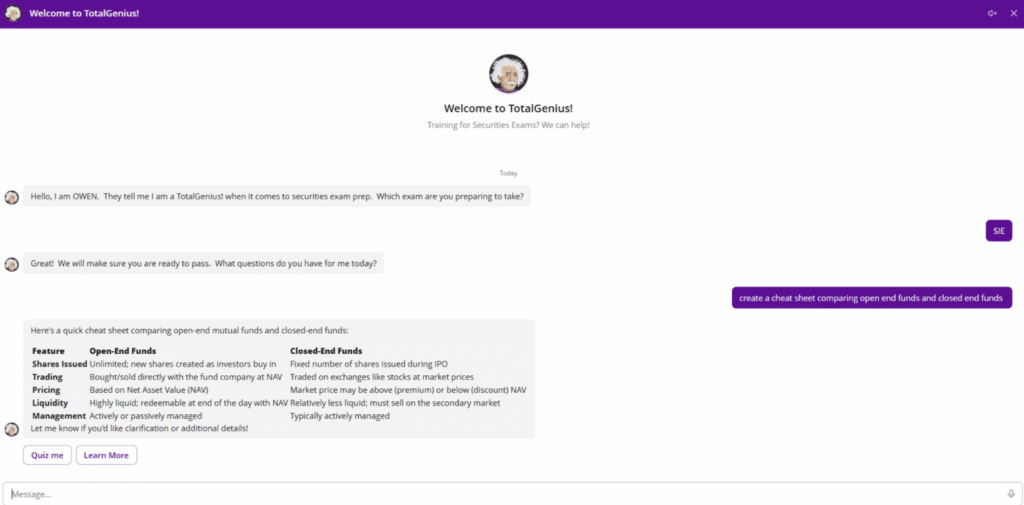
I used TotalGenius when an answer explanation still left me confused. Instead of asking it something broad, I typed in the exact Series 6 rule I was stuck on and asked for a simpler example. I also had it turn longer sections into short cheat sheets before practice exams.
The answers stayed focused on the course material, which made it more helpful than opening a random search result. Some responses still needed a follow-up question before they made sense, but it gave me immediate help when phone or chat support would have taken longer.
1,500-Question Test Bank
I used the Test Bank differently depending on what went wrong. After missing several questions about investment companies, I created a short set covering that area instead of retaking a full exam. I could choose unseen, incorrect, or marked questions and control when the answers appeared.
The incorrect-question filter saved me the most time because it gathered my mistakes without making me search through old attempts. There were 15 settings available, which gave me plenty of control. The downside was that creating a basic five-question quiz sometimes took more clicking than it should have.
GreenLight Exam
I saved the GreenLight Exam until I had already taken several randomized finals. Once I opened it, the report showed my overall score, category results, selected answers, and explanations for every question.
That gave me more than a basic pass-or-fail screen. I could see exactly which Series 6 section lowered my result and return to the Test Bank for another focused round. GreenLight also connects to SIA’s guarantee, although I would read the requirements before counting on an automatic refund.
Read my full SIA review to see whether the platform was worth using.
Securities Institute of America Packages
| Package | Includes | Best For | Price |
|---|---|---|---|
| Complete Exam Prep Course | Textbook, eBook, videos, Test Bank, exams, calendar, and reports | Complete prep | Check Pricing |
| Textbook & Exam Prep Test Bank | Textbook, eBook, Test Bank, exams, calendar, and cheat sheets | Reading and practice | Check Pricing |
| Video Course & Practice Exam Package | Videos, section tests, Test Bank, exams, and cheat sheets | Video-based prep | Check Pricing |
SIA Course Ratings
| Rating Area | Score |
|---|---|
| Series 6 Content | 9.5 / 10 |
| Question Quality | 9.8 / 10 |
| Study Experience | 9.3 / 10 |
| Instructor Access | 8.9 / 10 |
| Platform Usability | 8.7 / 10 |
| Overall Value | 9.5 / 10 |
| Final Rating | 9.3 / 10 |
Pros
✅ I could turn missed questions into a new quiz
✅ TotalGenius explained confusing rules inside the course
✅ The 1,500-question bank gave me plenty of variety
✅ GreenLight reports showed where my score dropped
Cons
❌ The platform expected me to make more study decisions
❌ The dashboard took me a second to learn
❌ Simple quizzes required more setup than expected
Why SIA Earned Its Place
SIA gave me the fullest Series 6 setup without forcing one study routine. The dashboard could be cleaner, but the Test Bank, TotalGenius, videos, and GreenLight report gave me everything I needed in one place.
2. Securities Training Corporation: Best for Live Instructor Support
STC reminded me more of an actual class than a collection of online tools. The manual led everything, so I always knew which quiz or lecture belonged with what I had just studied. I started by reading a chapter, then used the next exam stage to see what stayed with me. That setup was easy to follow without spending time arranging my own routine. The Standard package felt a little plain, but Premier added the lectures and extra exams that made STC feel more complete.
Crunch Time Facts
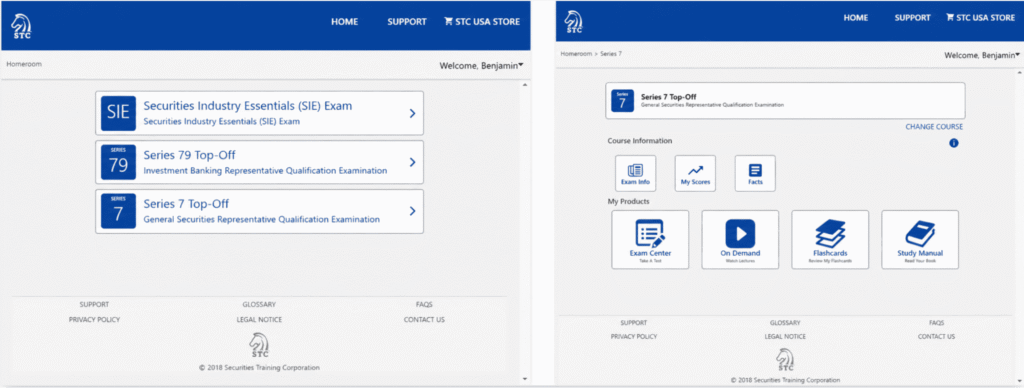
I opened Crunch Time Facts near the end of a study session when I wanted to review without starting another chapter. It pulled the smaller rules and details into a shorter format, which worked well for material I had already learned once.
I used it to catch facts that were easy to lose in the full manual. It was especially helpful before a larger practice exam because I reviewed several areas without rereading every explanation. I would not use it to learn a brand-new topic, but it made the final review feel much less heavy.
Virtual Class and Instructor Hotline
I called the Instructor Hotline with a question about why one recommendation was unsuitable even though the product itself was allowed. Explaining the whole scenario aloud was faster than trying to shorten it into an email.
The Virtual Class gave me more time to cover broader topics. I kept a small list of questions during the week and brought them into the session. When the instructor moved quickly, I used the recording to replay that section later. STC gave me the strongest direct instructor access, but Premier Plus only makes sense when those live sessions will actually get used.
On-Demand Lectures
I used the lectures when the manual made a rule sound more complicated than it needed to be. Hearing the instructor explain the same idea helped me separate similar products and remember which details applied to each one.
I could pause for notes, replay one example, and return to the chapter quiz afterward. The lessons worked well beside the manual because they followed the same general order. They were still fairly traditional, but they gave me a break from reading without making me relearn the course layout.
Learn more in my STC review before choosing between its three packages.
STC Packages
| Package | Includes | Best For | Price |
|---|---|---|---|
| Series 6 Top-Off Standard | Manuals, chapter quizzes, final exams, and Instructor Hotline | Textbook-based studying | Check Pricing |
| Series 6 Top-Off Premier | Standard tools plus lectures, flashcards, Progress Exams, and Green Light Exams | Independent study with videos | Check Pricing |
| Series 6 Top-Off Premier Plus | Premier tools plus live and recorded virtual classes | Scheduled instructor teaching | Check Pricing |
STC Course Ratings
| Rating Area | Score |
|---|---|
| Series 6 Content | 9.4 / 10 |
| Question Quality | 9.1 / 10 |
| Study Experience | 8.9 / 10 |
| Instructor Access | 9.7 / 10 |
| Platform Usability | 8.8 / 10 |
| Overall Value | 9.1 / 10 |
| Final Rating | 9.2 / 10 |
Pros
✅ The testing stages gave my studying a clear order
✅ I could call an instructor with one exact question
✅ Recorded classes let me replay difficult examples
✅ Crunch Time Facts shortened my final review
Cons
❌ The platform never reshaped my review around weak areas
❌ Longer reading sessions still carried much of the course
❌ Reports gave me limited next-step guidance
Where STC Landed for Me
STC made the most sense when I wanted real teaching behind the material. Its study tools stayed traditional, but the hotline, lectures, and virtual class gave me more human support than most Series 6 courses.
3. Achievable: Best for Remembering Older Material

This course had one package, one online textbook, and a study plan telling me what to work on. Achievable had a much simpler setup than SIA and Kaplan, but it also gave me fewer ways to learn. I started with the reading and chapter questions, then noticed weaker topics returning as the course learned my scores. That saved me from planning every review session myself. The dashboard was easy to follow, although most of the teaching came from reading, and I sometimes wanted a real instructor to explain what I kept missing.
Videos on Key Topics
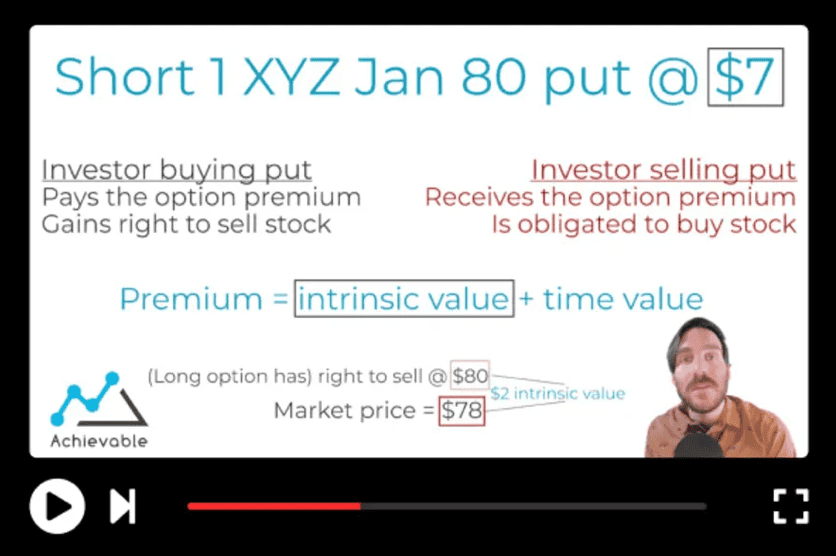
Achievable’s videos were easy to sit through and never felt like long, boring lectures. The visuals helped me follow topics that were harder to picture from the textbook alone, especially when several products or rules needed to be compared. I stayed focused without constantly checking how much time was left. There were more than 14 videos, but they covered selected key topics instead of teaching the entire Series 6 course. I still relied on the textbook for most lessons, although the videos were one of Achievable’s better learning tools.
Practice Questions and Readiness Score
Achievable had more than 900 chapter questions and 35-plus full-length exams. I completed the shorter sets while moving through the textbook, then waited until later to take the full exams. Math questions returned with new numbers, so memorizing an old answer got me nowhere.
The readiness score helped me compare my results across several attempts instead of trusting one strong exam. Some explanations were too short when I was genuinely confused, but the amount of available practice gave me plenty of chances to improve before test day.
Adaptive Study Plan
The study plan adjusted my schedule as I completed assignments or missed study days. When I returned after a break, the course had already moved my work around, so I never had to rebuild the entire week myself.
That made self-paced studying easier, although I sometimes wanted the live instructor help STC gave me when a topic still was not clicking. Achievable handled the planning, but most of the actual learning remained up to me. That balance should fit someone who prefers working independently.
See my complete Achievable review for a closer look at its self-paced approach.
Achievable Package
| Package | Includes | Best For | Price |
|---|---|---|---|
| Series 6 | Online textbook, 900-plus chapter questions, 35-plus exams, audio, bonus videos, adaptive planning, retention tracking, and readiness scores | Reading with automatic review | Check Pricing |
Achievable Course Ratings
| Rating Area | Score |
|---|---|
| Series 6 Content | 9.2 / 10 |
| Question Quality | 9.3 / 10 |
| Study Experience | 9.6 / 10 |
| Instructor Access | 7.9 / 10 |
| Platform Usability | 9.5 / 10 |
| Overall Value | 8.9 / 10 |
| Final Rating | 9.1 / 10 |
Pros
✅ Missed concepts returned after the original quiz
✅ I followed one package without comparing several tiers
✅ Changing numbers kept math practice from becoming memorization
✅ One year gave me room for schedule changes
Cons
❌ Reading carried most of the instruction
❌ The bonus videos were not a full lecture course
❌ Repeated weak topics sometimes became tiring
Who Achievable Makes Sense For
Achievable kept older Series 6 material from quietly fading while I moved forward. The reading-first setup will not satisfy someone wanting regular instructor lessons, but its adaptive review gave me a steady routine without a crowded dashboard.
4. Kaplan: Best for Building Custom Series 6 Quizzes

Kaplan gave me more tools than I knew what to open during my first login. The manual, QBank, Study Plan, videos, exams, and community all lived in different parts of the dashboard. After I learned the layout, I stopped trying to use everything in one session. I followed the Study Plan
for my regular assignments, then opened the QBank whenever one topic kept lowering my score. That balance worked well because I had a clear course order without losing control of my practice. The dashboard stayed busier than necessary, but the actual study tools gave me plenty of flexibility.
SecuritiesPro™ QBank
I opened the QBank after missing several questions that asked me to separate similar investment products. I selected that topic, chose a short question count, and built a focused quiz instead of taking another full exam.
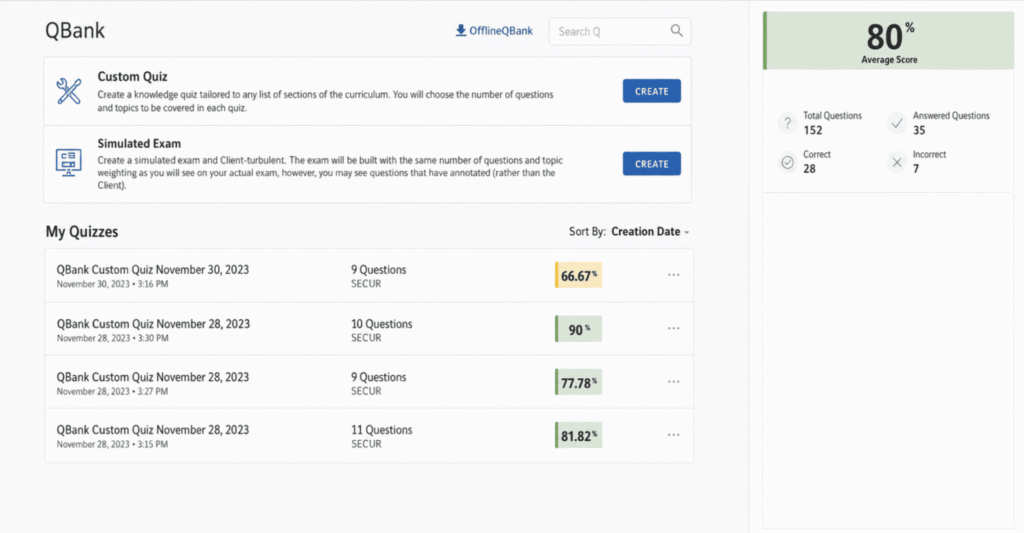
After my score improved, I mixed those questions with customer accounts and recommendations to see whether I still understood the differences without expecting the topic. Kaplan let me create unlimited randomized exams, review older results, and track my time. I also downloaded one attempt for offline review. The controls were useful, although SIA made returning to only missed or marked questions feel quicker.
Study Plan and Progress Exams
I checked the Study Plan at the beginning of each session and started with the next assignment. That saved me from choosing between the manual, QBank, videos, and exams every time I logged in.
Essential and Premium added Checkpoint Exams, a Midterm, and unit videos. I used those assessments to see whether information from earlier units stayed with me before moving into final review. When I skipped a day, unfinished work remained beside my new tasks and made the week look heavier. The schedule kept me moving, but rearranging several missed assignments took more effort than I wanted.
Classes and InstructorLink
When the manual made a Series 6 rule harder than necessary, I opened the OnDemand lesson, paused for notes, and replayed the example before returning to practice. Premium lets students choose OnDemand or Live Online instruction, depending on whether they want flexibility or scheduled classes.
InstructorLink became my backup when the manual and answer explanation still left me confused. I sent the exact question and pointed out which answer choice was throwing me off. Replies stayed saved inside the course, but they could take two business days. That was too slow for quick questions, so I saved it for times when I was genuinely stuck.
My full Kaplan securities review breaks down where the course helped and where it dragged.
Kaplan Packages
| Package | Includes | Best For | Price |
|---|---|---|---|
| Premium Instruction Package | Classes, Class Notes, InstructorLink, QBank, Study Plan, videos, and all exams | Full instruction and practice | Check Pricing |
| Essential Self-Study Package | Manual, QBank, Study Plan, unit videos, Midterm, and Checkpoint Exams | Guided independent study | Check Pricing |
| Basic Self-Study Package | Manual, QBank, Study Plan, Practice Exam, and tracker | Basic reading and practice | Check Pricing |
Kaplan Course Ratings
| Rating Area | Score |
|---|---|
| Series 6 Content | 9.1 / 10 |
| Question Quality | 9.4 / 10 |
| Study Experience | 8.9 / 10 |
| Instructor Access | 9.1 / 10 |
| Platform Usability | 8.2 / 10 |
| Overall Value | 8.7 / 10 |
| Final Rating | 8.9 / 10 |
Pros
✅ I built short quizzes around one weak topic
✅ Lower-cost plans make it easier to fit into a tight budget
✅ The Study Plan gave each session a starting point
✅ Premium lets me choose Live-Online or On-Demand instruction
Cons
❌ Missed assignments piled up inside my Study Plan
❌ The tracker showed weak areas without changing my schedule
❌ Unit videos were too short for harder Series 6 topics
Where Kaplan Worked Best for Me
Kaplan made sense when I wanted a schedule but still needed control over my question practice. The QBank became the main reason I returned, while the crowded dashboard and shorter access period kept the course below my top three.
5. ExamFX: Best for Video Lessons With Quick Practice
ExamFX made every study session feel divided into small finished pieces. I saw what was next, completed it, and moved forward without arranging the rest of the course myself. The videos received most of the attention, but the assessment system was what kept the experience organized. Competency Exams, Checkpoints, Standard Finals, and the Benchmark Exam each appeared at a different stage. I always knew whether I was checking one lesson or judging my overall readiness. The platform stayed easy to follow, though it gave me fewer choices once I wanted a more detailed review.
Live Webinars and Note-Taking Notebook
I used the built-in notebook during a focused webinar and kept the instructor’s examples beside my other coursework. I added short reminders instead of copying the entire presentation.
After the session, I opened those notes before taking related questions. The webinar gave me a live explanation without controlling my full weekly schedule. Phone support also helped when one customer scenario was easier to explain aloud. The live package added useful contact, but the webinars covered selected areas rather than replacing every recorded lesson.
Videos and SpotCheck Quizzes
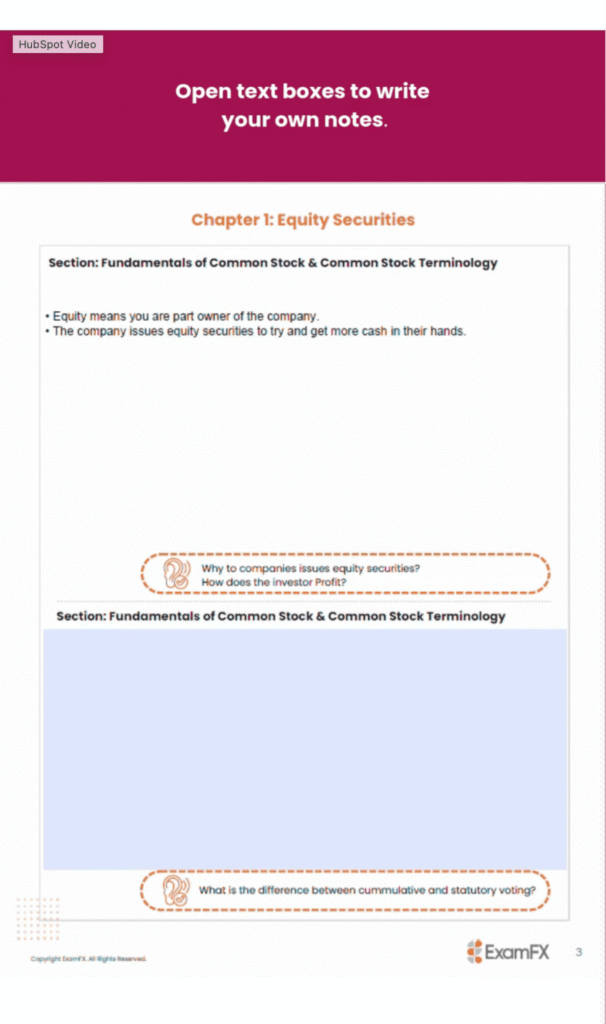
I took each SpotCheck right after its video instead of saving several quizzes for later. That exposed the small details I had missed while the explanation was still fresh. One question would change the wording or scenario and quickly show whether I understood the rule.
After a wrong answer, I returned to that part of the lesson and tried the concept again through a Practice Question Set. This video-to-question flow made short sessions feel complete. Some harder topics moved quickly, though, and I opened the eBook when the lesson needed another example or a slower explanation.
Competency and Final Exams
ExamFX increased the amount of material through several exam stages. I started with SpotChecks and Practice Question Sets, then moved into Competency and Checkpoint Exams. Standard Finals came later, and I saved the Benchmark Final for my final readiness check.
This order helped me read a low score properly. A weak Competency Exam pointed to a group of recent lessons, while a poor Standard Final showed a larger problem across the course. I reviewed the Report Center between stages, but it stopped short of telling me exactly which assignment to open next. I still had to choose how to fix the weak area.
Check out my ExamFX review to see whose faster study style it fits.
ExamFX Packages
| Package | Includes | Best For | Price |
|---|---|---|---|
| Live Online Package | Webinars, videos, eBook, notebook, quizzes, custom exams, final exams, and instructor support | Video study with live help | Check Pricing |
| Online Course Package | Videos, eBook, quizzes, custom exams, final exams, tracking, and instructor support | Self-paced video learning | Check Pricing |
| Textbook Package | Printed textbook, online exams, Study Plan, tracking, and phone support | Reading with exam practice | Check Pricing |
ExamFX Course Ratings
| Rating Area | Score |
|---|---|
| Series 6 Content | 8.9 / 10 |
| Question Quality | 8.7 / 10 |
| Study Experience | 8.8 / 10 |
| Instructor Access | 9.1 / 10 |
| Platform Usability | 9.0 / 10 |
| Overall Value | 8.5 / 10 |
| Final Rating | 8.8 / 10 |
Pros
✅ SpotChecks tested each lesson while it was fresh
✅ I was able to keep webinar notes inside the platform
✅ Phone support helped with detailed questions
✅ The exam stages gave my practice a clear order
Cons
❌ Reports stopped short of choosing my next lesson
❌ Custom testing controls remained fairly basic
❌ The study path changed very little after weak scores
My Honest Take on ExamFX
ExamFX kept me moving when I wanted a shorter video-and-practice session. The clean flow was its biggest strength, but the basic exam controls and limited next-step guidance made it less useful once my review became more specific.
6. Knopman Marks: Best for Staying Accountable
Knopman Marks did not feel built for casually logging in whenever I remembered. The whole experience pushed me to treat Series 6 studying like an actual commitment. I received a plan at the beginning, updates while I worked, and follow-up when my progress slowed down. Even the support felt more personal than a normal help button. I always knew someone was paying attention to my pace. That can be great when consistency is your main problem. For me, it occasionally felt like the course was checking in before I actually needed help.
Expert-Led Video Lectures
I opened the lectures when the textbook made variable products sound more complicated than they needed to be. The instructor used examples that helped me separate the product from the customer situation around it. I paused the lesson, wrote down the differences, and tested them through a custom question set afterward. The teaching was detailed, but SIA’s shorter videos and section tests helped me remember more because I practiced each topic immediately. Knopman’s lectures worked better for a deeper explanation, although some ran too long for quick review.
Benchmark Exam
I treated the Benchmark Exam like a real checkpoint instead of another casual practice set. I took it after completing the lessons and enough questions to understand my normal score range. The result showed whether my daily practice was carrying over to a full Series 6 exam. I reviewed the weaker categories afterward and compared them with the patterns already showing in my analytics. That kept one good or bad score from taking over my entire opinion of my progress. The exam helped with readiness, but I wanted another comparable Benchmark attempt before test day.
Private Faculty Strategy Calls
I saved the Private Faculty Strategy Call for a problem that involved more than one confusing question. My scores had stopped improving, and adding more random practice was getting me nowhere. During the call, I explained what I had completed, where my results kept dropping, and how much time I had left. The conversation helped me change the order of my review instead of simply studying longer. Scheduling a call took more effort than sending an email, so I would not use it for something small. It made the most sense when my entire Series 6 plan needed fixing.
Knopman Marks Package
| Package | Includes | Best For | Price |
|---|---|---|---|
| Series 6 Exam Prep | Textbooks, lectures, practice questions, analytics, Benchmark Exam, progress follow-up, and faculty support | Students who want accountability | Check Pricing |
Knopman Marks Course Ratings
| Rating Area | Score |
|---|---|
| Series 6 Content | 8.5 / 10 |
| Question Quality | 7.8 / 10 |
| Study Experience | 8.3 / 10 |
| Instructor Access | 8.8 / 10 |
| Platform Usability | 8.0 / 10 |
| Overall Value | 7.3 / 10 |
| Final Rating | 8.1 / 10 |
Pros
✅ My study plan started with an actual conversation
✅ Score patterns kept weak topics from getting buried
✅ Faculty handled the content questions I sent
✅ Strategy calls helped when my whole routine needed fixing
Cons
❌ The regular follow-up felt a bit excessive for what I would need
❌ One Benchmark Exam gave me no second comparison
❌ One course format gave me little flexibility
My Last Word on Knopman Marks
Knopman Marks stayed involved instead of handing me materials and disappearing. I would like that level of attention when accountability is the reason I keep falling behind. If you want to control your own prep or have a quick final review, it is more course than you would need.
Series 6 Options That Fell Just Short
These did not earn a ranked spot, but each one still has a clear use depending on what you want to add to your studying.
- Study.com: The 140 short lessons, videos, and quizzes make this an easy option for lighter review. Its practice and tracking tools are not as deep as the full securities platforms I ranked.
- PassMasters: The course includes more than 13 hours of video and 1,700 exam-specific questions. The instructor-led style has real substance, but the shorter access period and less flexible platform kept it outside my main six.
- Brainscape: Its 401 Series 6 flashcards are spread across 15 decks, making it helpful for quick facts and product rules. Flashcards alone leave too many gaps for complete exam prep.
- Mometrix: I would use the study guide and practice questions for another explanation of difficult material. It works better as an extra book than a complete online system with detailed planning and reports.
- Training Consultants: This option offers textbook, online, and live webinar prep. It may suit someone who wants traditional instruction, but I left it outside the ranking because I did not test the full platform as deeply as my main six.
- WebCE: Its Series 6 packages include a dynamic planner, custom exam simulations, and online flashcards. The tool mix looks solid for self-paced prep, but I would need more hands-on time before placing it against the ranked courses.
What I Tested Before Giving Any Scores
I used the same six rating areas for every Series 6 course. I worked through lessons, answered questions, opened reports, followed the study tools, and tested the support before deciding where each provider belonged.
| Rating Area | Weight | What I Tested |
|---|---|---|
| Series 6 Content | 25% | Accuracy, clarity, organization, and exam coverage |
| Question Quality | 20% | Wording, explanations, variety, and exam realism |
| Study Experience | 15% | Daily flow, review options, and progress guidance |
| Instructor Access | 15% | Classes, teaching quality, response methods, and availability |
| Platform Usability | 15% | Dashboard layout, navigation, mobile use, and reports |
| Overall Value | 10% | Tools, access time, guarantees, and package flexibility |
Series 6 prep needs clear product comparisons and plenty of scenario-based practice. I gave higher scores to courses that explained why an answer was right, showed where I was struggling, and made the next study step easy to find.
Still Stuck? Match the Course to Your Study Style
My ratings compare the full experience. For a faster answer, pick the line that sounds most familiar.
“I want full control over every quiz.” → SIA
Deep exam settings make focused practice easier.
“Hearing it live helps everything click.” → STC
Classes, recordings, and the instructor hotline add real teaching.
“Older topics leave my brain way too fast.” → Achievable
Adaptive review keeps fading material in rotation.
“Give me a plan, but let me take over when needed.” → Kaplan
The Study Plan adds order while the QBank stays flexible.
“I learn faster from short videos and questions.” → ExamFX
Lessons move directly into SpotChecks.
“I need someone to notice when I fall behind.” → Knopman Marks
Monitoring and strategy support add accountability.
My Final Take on the Best Series 6 Courses
After testing all six courses, SIA was my top choice because it gave me the most control over practice without leaving out videos, reports, or final review tools.
STC came next for its instructor support, while Achievable handled repeated review better than the others. Kaplan had a strong QBank, ExamFX kept shorter sessions moving, and Knopman Marks stayed closely involved in my progress.
The right pick depends on how you study. Choose SIA for flexibility, STC for live help, or Achievable for a simple self-paced routine that keeps weak topics coming back. None was perfect, and every course had tradeoffs.
If you are ready to enroll, compare pricing at Achievable, Kaplan, and ExamFX.
FAQs
What is the best Series 6 prep course?
SIA was my top choice because it combined a 1,500-question Test Bank with videos, reports, custom exams, and several package options. STC may fit better when live instructor help is your main priority.
How long should you study for the Series 6 exam?
A common estimate is around 40 to 60 hours. Your timeline may be shorter if you recently passed the SIE and still remember the overlapping material.
Is the Series 6 exam hard?
It can be because the questions expect you to apply product and customer rules to specific situations. Memorizing definitions alone may not be enough. The SEC investor resources page can help when you want official licensing context beyond prep material.
Do you need a sponsor to take the Series 6 exam?
Yes. You must be associated with and sponsored by a FINRA member firm or another eligible self-regulatory organization.
How many questions will I see on the Series 6 exam, and what score do I need?
The Series 6 exam has 50 scored questions plus five unscored questions, with 90 minutes to finish. You need a score of 70% to pass.
Is a Series 6 license worth it?
It can be worth it when your job involves mutual funds, variable annuities, variable life insurance, UITs, or municipal fund securities. Its value is more limited if you need to sell individual stocks, bonds, or options.
What is the hardest FINRA licensing exam?
The Series 7, Series 24, and Series 79 are often considered among the hardest FINRA qualification exams because they cover more material or test advanced job responsibilities. The hardest one for you will depend on your role and experience.