
If Lorenzo Cain duplicates his success at plate, Royals can duplicate their success in standings
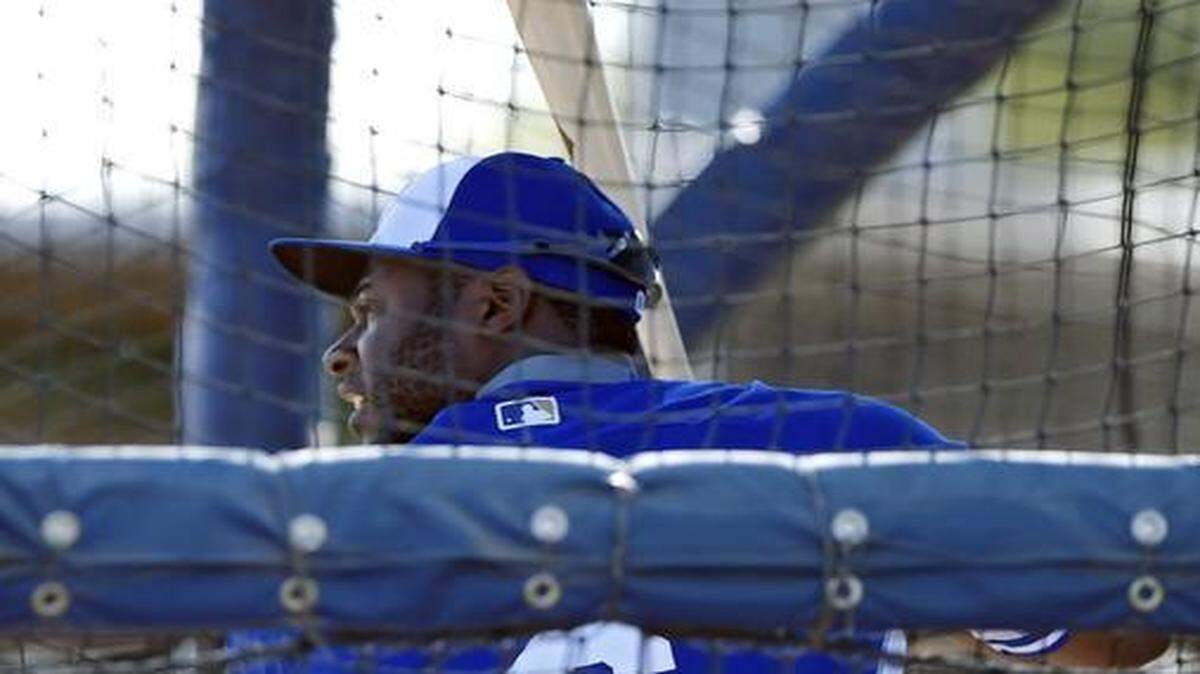
Lorenzo Cain is in the batting cage and there goes a line drive to right field. Now another one. And another. The questions often focus on this man, and the Royals are hoping the answers are in this moment.
Last year the Royals made one of the most unexpected playoff runs in recent baseball history. That month changed so much about Kansas City and its relationship with baseball, but now that it’s over and there is a new season to play, people around the game are wondering how much of it can be duplicated.
Those questions often turn to Cain, who introduced himself to much of America during the playoffs. He was the MVP of the American League Championship Series, a worthy encore to a breakout season in which he set career highs in virtually all categories, most notably batting average (.301), doubles (29), stolen bases (28) and spectacular defensive plays (tons).
Much of the Royals’ follow-up to their best season in a generation depends on how much Cain can replicate that success, particularly on offense.
“There was a transformation in his game,” manager Ned Yost says. “From about the middle of September on, he literally took his game to the next level. It was amazing to watch. You always knew it was in there, you just didn’t see it. You’d see it in flashes.”
Yost believes this is the new normal for Cain, and he sees the answer here in front of him, in this batting cage. More than anyone else on the roster, Yost says, Cain’s batting practice is always with a purpose.
Cain came to baseball late, of course, after being cut from his high school basketball team. And in some ways it’s as if he’s been making up for lost time ever since. When he steps into the cage, it is to hit the ball up the middle and the other way. No wasted swings. No wasted movement.
“It’s not changing,” Cain says. “Same routine, every day. Right field, right field, then working my way to center field.”
He thinks this is the best way for him to cover both sides of the plate, to let his hands do the work, in hitter parlance, and to remind himself to not overswing.
That last point is a crucial one, both to Cain personally and more generally the issue of whether the Royals can duplicate their success.
Cain’s natural tendency is to swing hard, and he thinks a conscious effort to cut that down is a major part of last year’s success. He means that in two ways. The first is more obvious and generic. Because he is not a home-run hitter, so a smoother swing means more consistent contact.
Here it’s worth mentioning that Cain hit line drives more often — 26 percent of the time, according to Baseball-Reference.com — than both the big league average (21 percent) and his career average (23 percent).
But there’s another factor at play here, too, and this one might be even more important when wondering whether Cain can duplicate last season.
Cutting down on his swing made him quicker out of the batter’s box, particularly as a right-handed hitter, and he’s convinced this was a major part of his success.
Cain had 24 infield hits last year according to FanGraphs.com. Only 10 players — including Jose Altuve, Dee Gordon and Ichiro — had more. And among players with at least 500 plate appearances, only Mike Trout (15.9 percent) and Starling Marte (14.5 percent) turned grounders into hits more often than Cain (12.9 percent).
This is a particularly important point, because the case for Cain regressing after last year often is built with batting average on balls in play.
That measurement is often used to judge batting luck, because one player’s BABIP can vary widely year to year but over time typically will average to around .300. Cain hit .380 on balls in play last year, which led all hitters with at least 500 plate appearances and is generally considered unsustainable.
But his career number is .345 — which, last year, would have tied for 17th — so this isn’t as out of line as you might think.
And if last year’s bump came in part because Cain was getting out of the box quicker, then maybe this isn’t at all a one-year blip. Maybe it’s a maturing player still in his athletic prime who better understands how to use his strengths.
Other than Wade Davis and Yordano Ventura, no Royals player made as much of an individual jump as Cain did last year. He is such a spectacular outfielder that he always will be a valuable big-leaguer, but how well last year’s breakout is followed up depends largely on Cain’s hitting.
On the surface, there are plenty of reasons for skepticism. The view behind this batting cage and a subtle tweak to Cain’s swing make an interesting counterargument.
To reach Sam Mellinger, call 816-234-4365 or send email to smellinger@kcstar.com. Follow him on Twitter: @mellinger. For previous columns, go to KansasCity.com.
This story was originally published March 16, 2015 at 7:28 PM.