
As OPEC declines to cut production, oil prices plunge to a four-year low
Global and U.S. oil prices tumbled sharply to four-year lows Friday on news that the oil producing cartel OPEC will not cut production, raising the prospects of a world oversupplied with crude for the foreseeable future.
The price for a barrel of West Texas Intermediate crude — above $100 over the summer — plunged 10 percent Friday on the New York Mercantile Exchange, closing at $66.15, down $7.54.
The price for Brent crude, an international reference price that U.S. gasoline producers use to set their own prices, tumbled $1.01 to $71.57 in European trading Friday after falling 6.7 percent the previous day.
The drops follow a decision by the oil cartel Thursday to leave its production target of 30 million barrels per day in place.
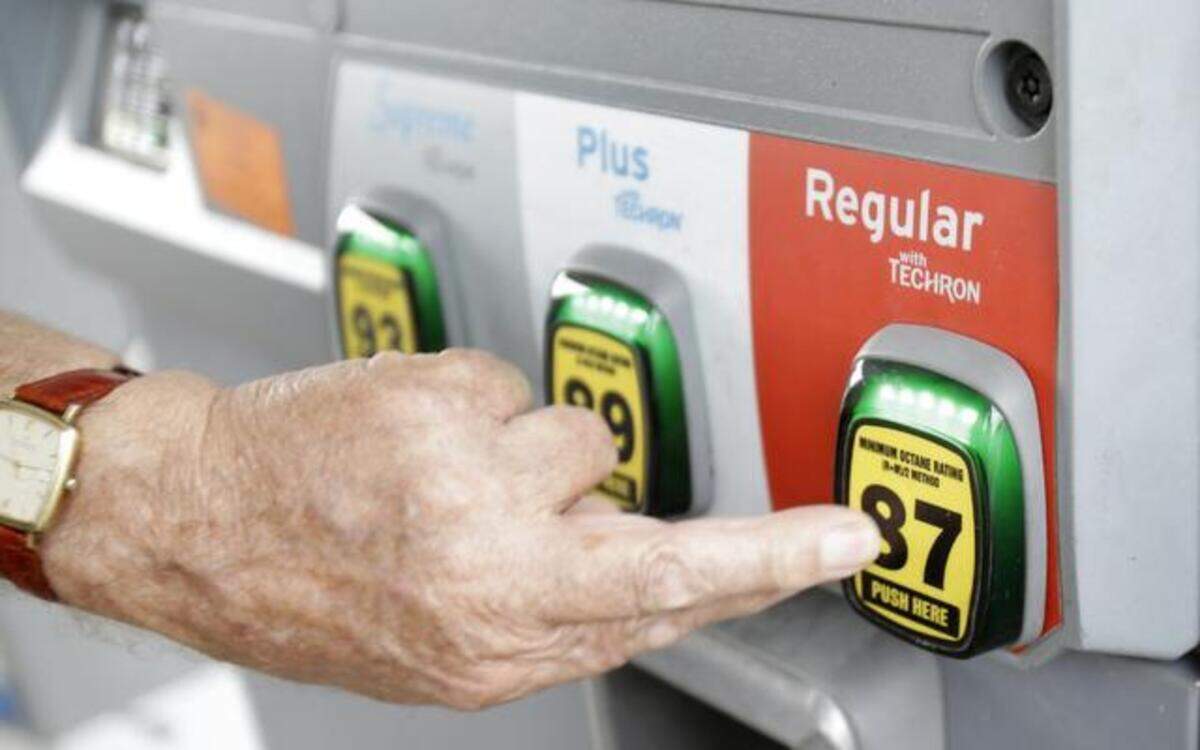
As a result, U.S. consumers, already enjoying the cheapest Thanksgiving travel period in five years, will see gasoline prices fall further. A gallon of regular unleaded gasoline averaged $2.792, the AAA motor club said Friday, compared with $3.034 a month earlier and $3.283 a year ago. Midwest prices usually are lower and, according to AAA, averaged $2.503 on the Missouri side of the metro area and $2.592 on the Kansas side.
Tom Kloza, chief oil analyst at the Oil Price Information Service, expects the price to fall another $5 to $10 a barrel before stopping.
“It’s that kind of rout,” he said, adding that he expected the national average price to bottom out between $2.50 and $2.70.
With demand flat in the U.S. — in part because of improved car mileage standards — and other developed nations and U.S. production from shale fields up, Citibank analysts wrote in a report this week that global supplies exceed demand by 700,000 barrels a day now.
OPEC’s hold-the-line approach, allowing for an oil glut, amounts to a high-stakes game of chicken. Here are some answers to questions about the road ahead:
Q: Why is OPEC’s move a game of chicken?
A: Falling oil prices hurt unsavory oil-rich nations such as Iran, Russia and Venezuela, but they also hurt the U.S. oil industry, which has hit record daily production levels above 9 million barrels per day thanks to technological developments that allow oil trapped below shale deposits to be drilled. Rather than lower production to make oil supplies tighter and push up prices, OPEC, led by Saudi Arabia, seems intent on a game of mutual harm. Saudi Arabia wants U.S. producers, who don’t belong to any cartel, to share the pain of any cuts.
Q: Is this a temporary action by OPEC?
A: That’s the $1 million question. Analysts for now expect prices to fall further.
“It’s obvious that the market is convinced that OPEC is going to continue to flood the market with oil,” said Phil Flynn, a senior energy analyst with the Price Futures Group. “The market is going to be in for a long slog. U.S. shale producers are going to be able to withstand lower prices. … In the meantime, we’re just going to have to get used to lower prices.”
Q: Why do analysts think prices will stay low next year?
A: Absent any OPEC production cuts abroad or large-scale bankruptcies among U.S. oil producers, the world will continue to have more oil pumped out of the ground than there is demand for it.
“This leaves the oil market with a prospective supply surplus of around 1 million barrels per day for 2014,” noted a report Friday by Gordon Gray, the head of oil research for the bank HSBC, and the bank’s senior global economist, Karen Ward.
Q: What do low oil prices mean for bigger oil companies such as Exxon Mobil and the like?
A: If the stock market is any indication, the near term is not bright for energy stocks. Share prices for Exxon Mobil fell 4.2 percent Friday in a shortened trading day. Chevron saw its stock fall 5.4 percent. As a sector, oil exploration and production companies saw their share prices fall 8.43 percent Friday, a sign that Wall Street is frowning on their near-term future and fretting over economic fallout from a downturn in a jobs-creating sector.
“The U.S. oil boom has really been a boon to our economy. It’s created a lot of jobs,” said Flynn, the oil analyst. “But if it’s under threat, it could hurt our (economic) growth down the road.”
Q: Consumers want low prices. What’s the problem?
A: Price swings too sharply up or down are problematic. If the price drops too far, say in the $50-a-barrel range, it will become too costly to extract oil from the ground for some U.S. producers. They’ll lay off employees, and eventually they’ll be forced out of the market. The reduced supply that follows will create a self-correcting rise in prices.
The Associated Press contributed to this report.
This story was originally published November 28, 2014 at 6:33 PM with the headline "As OPEC declines to cut production, oil prices plunge to a four-year low."