
Kansas cattle industry shows bullish signs
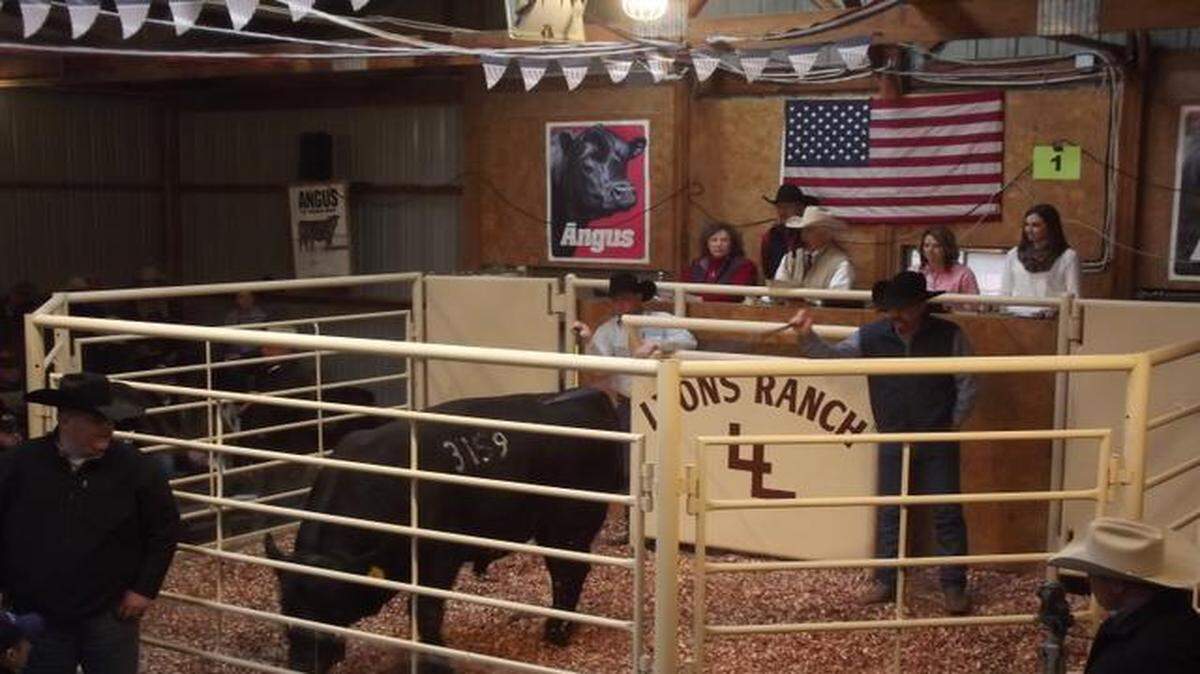
In a positive sign for the Kansas cattle industry, ranchers dug deeper into their pockets this week to pay record prices at a major auction of Angus bulls.
Indeed, the first bull out of the gate Monday at the 27th annual Lyons Ranch Superior Genetics Sale near Manhattan raised eyebrows when it sold for a whopping $17,000 to a commercial cattleman.
The Lyons family, with the help of auctioneer Jim Birdwell, sold 103 bulls for an average price of $8,334, up 38 percent from a year ago. That average price beat last year’s average price by $2,322 per bull, said Frank and Jan Lyons, owners of the ranch. In one day, the sale grossed $858,402.
Ranchers are building up their herds by buying more bulls and heifers to take advantage of the current economics rippling through the beef industry. At the retail level, beef is in short supply and prices are higher. Yet there is strong demand from consumers.
Cow-calf operators made record profits in 2014, with prices for calves at levels many had never seen. Cattlemen, for example, received $2.20 to $3 per pound for their calves. In other words, calves that sold for $600 to $700 three years ago were selling for $1,400 to $1,600.
“They have money to invest in bulls,” said Jeff Mafi, regional manager for the American Angus Association. “We will see records. It could get even stronger toward the end of the sales season.”
Ranchers such as Charles Munson of Junction City, Kan., were astonished by the prices Monday at Lyons Ranch. The cheapest bull sold for $5,000, and several sold for more than $12,000.
Munson paid $8,500 for one Angus bull, about $1,500 more than he expected. He raises and slaughters his own cattle to be served at his restaurant, Munson’s Prime at Junction City.
“These are good quality bulls,” Munson said. “They have good marbling and ribeye.”
The bull selling season started in January and concludes in April. There are about 70 bull sales in Kansas this season. Cattlemen buy bulls and heifers to build or maintain their herds. A young bull can impregnate about 25 cows.
Better economics
The economics of the cattle industry have improved vastly over the past three years, especially for the cow-calf operator. Low fuel prices and reasonable grain and hay prices helped improve profit margins.
“Last year was a good year,” said Ralph Leonhard, a Berryton, Kan., rancher. “But there were years we paid for the privilege to do this.”
Todd Domer, a spokesman for the Kansas Livestock Association, said several years of drought, culminating in 2012, caused cattlemen to reduce their herds because grasses were short and feed costs were expensive.
As a result, many ranchers sold off their weaker-performing heifers and bulls. Since then, the drought has subsided, although there are parts of cattle country that still need moisture. But U.S. farmers have now produced two record corn and soybean crops in a row.
“Demand for bulls is high,” Domer said. “It’s all about the meat under the hide.”
Moisture in pastureland is critical. Cattle in Kansas spend most of their lives on grass. Only in their final months of life are they fed grains, Jan Lyons said.
Lyons Ranch
Jan Lyons grew up raising Angus in northeastern Ohio and later moved to Kansas with her husband, Frank. Their 4,000-acre ranch is near the Kansas River in the Flint Hills. Their daughter and son-in-law, Amy and Karl Langvardt, and grandsons Tanner and Trey are part-owners and managers. Other family members also help.
Frank and Jan Lyons pulled about a dozen bulls from their sale this week because they did not meet quality standards.
“We have great customers,” Frank Lyons said. “In the 27 years we have done this, we have only had one check bounce. And that person was so ashamed that he delivered cash the next day.”
Ranchers said the beef industry has battled several challenges over the years, including mad cow disease in the early 2000s. More recently, ranchers are upset about a federal advisory panel discouraging meat consumption. The initiative follows up on research from the National Academy of Sciences, which concluded raising beef is more harmful to the environment than other meats such as pork or chicken. The National Cattlemen’s Beef Association is fighting the recommendation.
Politics, weather and competition from other proteins are risks facing the cattle industry.
Jan Lyons, a former president of the Kansas Livestock Association and a former president of the National Cattlemen’s Beef Association, said ranchers have worked hard in recent years to improve the quality of their beef. Years ago, she said, some cattlemen sold calves at the highest weight, with fat, to make the most money. But consumers wanted less fat. Now there is tremendous emphasis on producing lean meat with proper marbling to retain a juicy flavor.
This story was originally published March 5, 2015 at 2:00 AM with the headline "Kansas cattle industry shows bullish signs."