
'I find it shocking,' says KC poet who just won two major awards
At first Anne Boyer ignored the calls she was receiving daily from a New York number.
“I hardly ever answer the phone,” explained the 44-year-old poet, a Kansas City Art Institute creative writing instructor and a breast cancer survivor.
“It took me a week to return the call. I figured it was a bill collector.”
Instead Boyer learned that she was one of 10 emerging writers to receive a $50,000 award from the Whiting Foundation “based on the criteria of early-career achievement and the promise of superior literary work to come.”
Add to that honor the $40,000 grant she received in January as the inaugural recipient of the Cy Twombly Award for Poetry, and 2018 is already shaping up to be Boyer’s year.
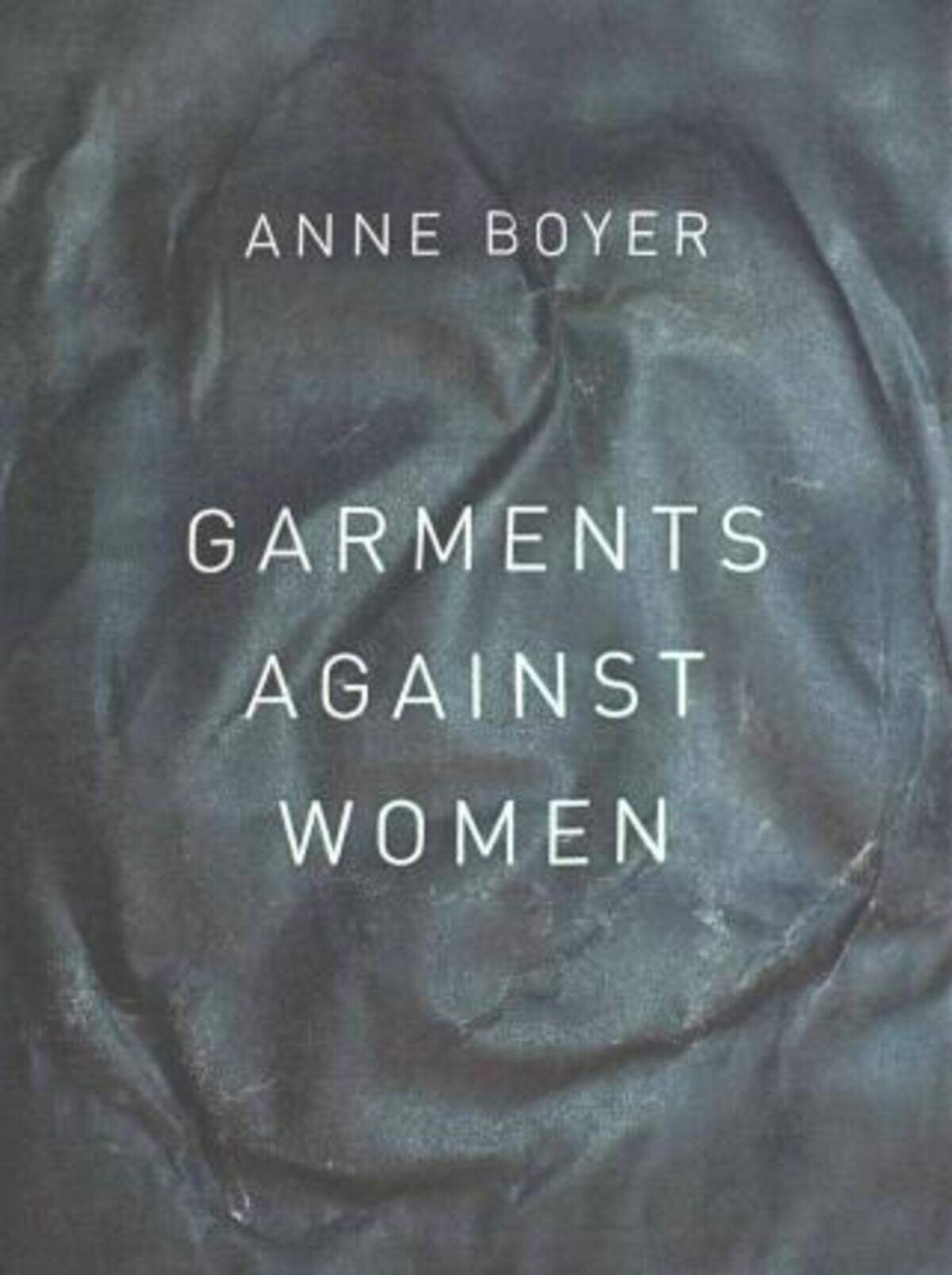
Both awards were largely the result of her 2015 collection “Garments Against Women,” described by one critic as “deeply, quietly, savagely perverse.” Publisher’s Weekly declared that “Boyer attempts to abandon literature in the same moments that she forms it.”
The honors came out of the blue, Boyer says. She didn’t apply for them; she was chosen by panels of experts, which makes the awards all the more appreciated.
“I haven’t done the things that a poet is supposed to do. I’ve not gone to the right schools, not lived in New York City or the Bay Area. I’ve got no powerful mentors. I find it kind of shocking, actually.”
And gratifying, of course.
“One thing I love about this mid-career success ... when you’re young and produce something good it’s kind of an accident. Now I feel I’ve earned it.”
“Garments Against Women” doesn’t look like traditional poetry. In fact, each “poem” is rendered in prose, usually a handful of sentences. Her approach seems more conversational than studiedly poetic.
“I really believe short prose passages are the poetic form of our time,” Boyer says. “For one thing, it’s really reader-friendly. We’re all so busy and exhausted, and this style is mercifully brief.”
But the form poetry takes is secondary to its impact, Boyer believes. Good poetry is “distilled consciousness, a condensing of ideas into a few tight sentences that sing.”
Singing is precisely the effect created by Boyer’s words.
There is, for example, her love/hate relationship with sewing ("It is probably more meaningful to sew a dress than to write a poem"):
“This is the day in which I will sew a straight seam, cut a piece of fabric precisely, follow the directions written by the pattern maker: stay stitch, clip notches. I will not presume to know more than the experts. I will always iron. No more jumping ahead, rebellion, daydreaming.”
It’s a good bet that Boyer did not keep that promise to herself; in fact, failure to follow the rules, to do what is expected of her, is a key to her literary persona.
So is irony. A good Boyer poem embraces subversiveness — but the reader is always aware of the idealism percolating just below the surface.
And then there’s her refusal to take herself or her work too seriously:
“Poetry in general involves a lot of self-celebration. There’s this heroic idea of a poet, but I find I’m drawn to experiences too minor to be the stuff of great literature.”
Topeka born and Salina reared, Boyer is “the child of a country lawyer whose real interest was literature. He had shelves of poetry and Shakespeare.”
That rubbed off on his daughter, who recalls going to math class with a Russian novel hidden inside her algebra text.
But becoming a poet — much less a celebrated one — was a struggle. At one point Boyer gave up writing for nearly a decade.
“It was kind of disturbing to learn that you just don’t become a great writer. You have to live a bit. You have to work to survive. Otherwise what do you have to write about?”
After attending several colleges — the University of Kansas, Kansas State, Wichita State — Boyer got married, had a daughter, got divorced and held jobs as varied as legal secretary and a tutor for homeless children and foster care kids.
“I wasn’t very good at it,” she recalls, “but I wanted to have a practical impact.”
For several years she struggled with depression and dissatisfaction. “I felt I was meant to do something but kept denying it. At that point I was suspicious of literature.”
With a job as an adjunct professor at Drake University in Des Moines and a young daughter to care for, Boyer wrote when she could — usually awakening at 4 a.m. and scribbling until she had to stop and prepare breakfast.
Little by little she began making a name for herself with volumes like “The Romance of Happy Workers,” “A Form of Sabotage,” “Anne Boyer’s Good Apocalypse,” “Art is War,” “The 2000s” and “My Common Heart.”
The latter was published in 2011, the same year Boyer was invited to join the faculty of KCAI. It was, she said, a major lifestyle change: steady paycheck, health insurance, no more hand-to-mouth living.
But a big challenge awaited her. In 2014 — in fact, in the same week that she turned in “Garments Against Women” to the publisher — Boyer was diagnosed with an aggressive form of breast cancer.
While undergoing rounds of treatment, she wrote about her condition, producing essays and observations that popped up on the internet and which will be the basis of “The Undying,” an upcoming prose memoir about illness, mortality and the politics of care.
Recovery is “tough and often lonely,” Boyer says. “I spent a lot of time being exhausted and confused.”
The cancer is now in remission; Boyer says she is grateful for “this extension of my time on earth.”
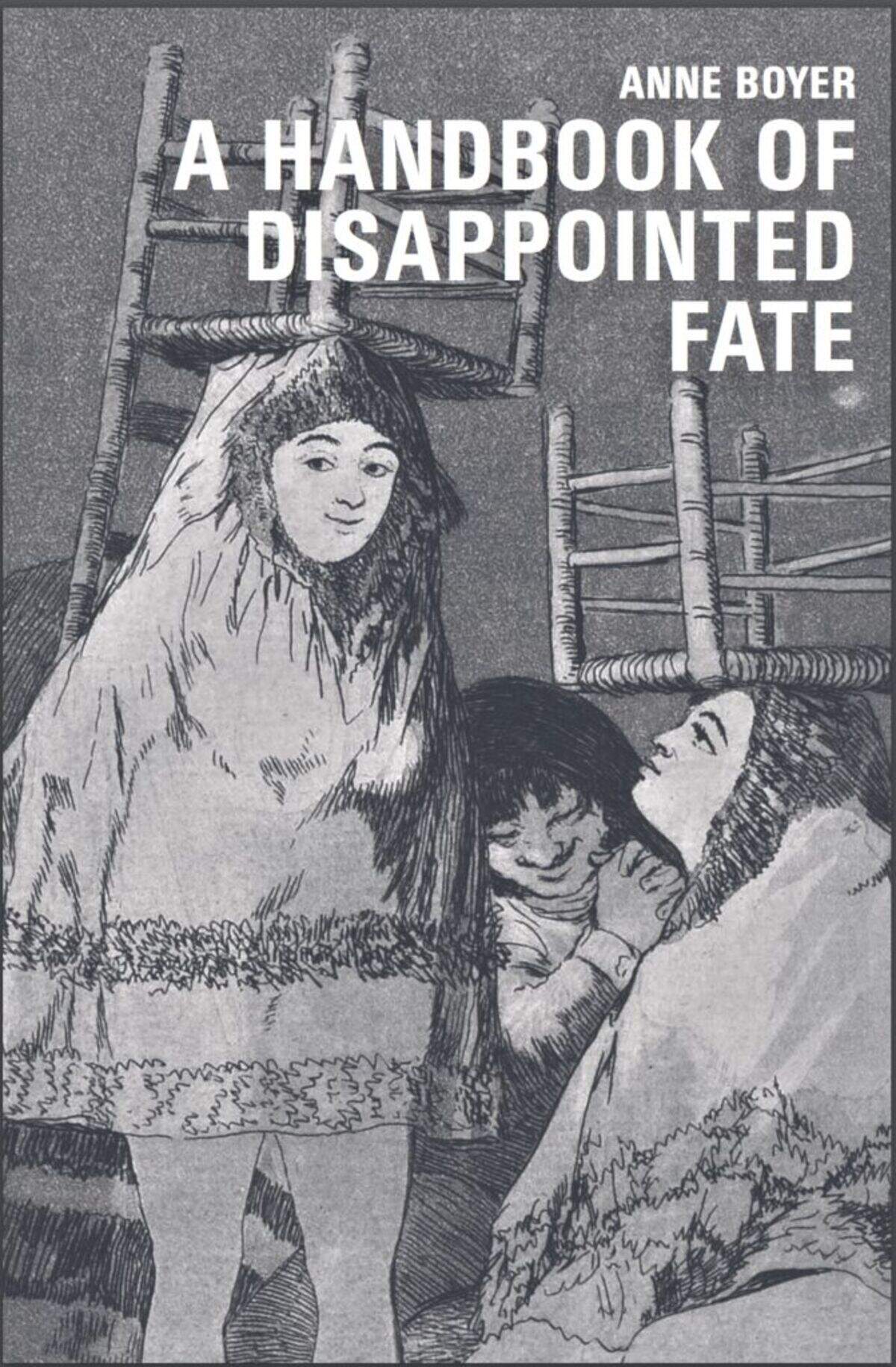
In the meantime Boyer’s latest collection, “A Handbook of Disappointed Fate,” is being readied for a spring release. In it, early rock star Bo Diddley, writer Langston Hughes, rapper Mary J. Blige and other subjects become stepping-off points for rumination about topics big and small.
In the poetry world, Anne Boyer is now a very big deal. Not that she lets it go to her head.
She recently flew to New York to receive the Cy Twombly award and was amused/appalled to find herself being ferried around in a fleet of black SUVs.
“There was so much money being tossed around I nearly lost my cool,” she laughed.
Inside the world-class poet, apparently, you can still find the Kansas girl.
This story was originally published March 20, 2018 at 2:31 PM with the headline "'I find it shocking,' says KC poet who just won two major awards."