
MLB policy change hurt Royals’ ability to honor Negro Leagues. Will it change?
AI-generated summary reviewed by our newsroom.
- MLB's uniform policy limits teams to five designs, curbing tribute uniforms.
- Royals' Negro Leagues salute lacked throwbacks, impacting tradition and revenue.
- MLB and teams could restore impact with limited-use exemptions for special causes.
In case you missed it in its diluted form, last Sunday at Kauffman Stadium marked what once was a delightful, even vital, annual celebration: Salute to the Negro Leagues.
Sure, certain elements of the weekend remained in place, including Negro Leagues Baseball Museum president Bob Kendrick being everything everywhere all at once during the proceedings.
But the most compelling aspect of the local treasure — with abiding national interest — was rendered a hollow version of what it’s been.
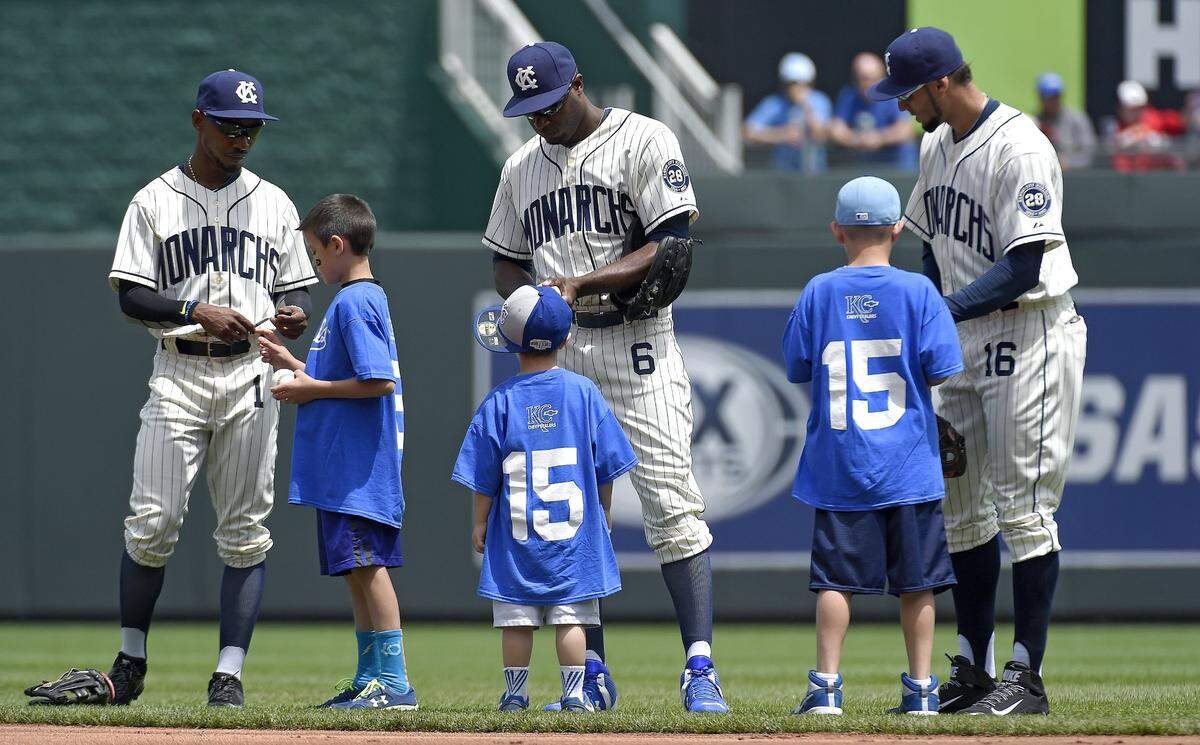
Because the Royals and Los Angeles Dodgers weren’t clad as they could and should have been: in throwback uniforms commemorating the 1945 Kansas City Monarchs and 1947 Dodgers — teams forever linked by Jackie Robinson’s season in the Negro Leagues that led to his integration of Major League Baseball.
Instead, the story was illustrated through … customized hats.
Not that there’s anything wrong with a doff of the cap, a concept the NLBM put to deft use in its “Tipping Your Cap” campaign a few years back.
But there’s something fundamentally amiss here, something that’s an unintended consequence — but a meaningful consequence, nonetheless — of an MLB policy instituted in 2023 and implemented last year.
“As a longtime supporter of the Negro Leagues Baseball Museum and Bob Kendrick’s efforts to recognize and celebrate the Negro Leagues and its players, MLB appreciates the Royals’ Salute to the Negro Leagues,” an MLB spokesperson wrote in a statement emailed to The Star. “Several years ago, MLB instituted league-wide uniform guidelines that allow (clubs) to wear up to five uniforms throughout the season. Clubs have the freedom to incorporate any style or inspiration into those five uniforms that they choose.”
Considering, too, MLB’s strong history of supporting the NLBM, this in no way was personalized toward the NLBM.
Trouble is, it effectively is personal to Kansas City, especially since the impact is regressive toward one of our most cherished institutions.
Honoring the Negro Leagues
The result is a collective gridlock with no one entity to blame … but that could be reconciled with some shared vision and goodwill.
Inadvertent as this was, now it’s time for advertent action.
Because it doesn’t need to be this way.
And it’s significant on many levels.
Not simply because of the revenue stream lost in the process for the NLBM, which in the past has raised into the hundreds of thousands of dollars by auctioning off those uniforms and other game-used items.
While Kendrick reckons a Shohei Ohtani uniform tailored to 1947 alone would have “garnered a king’s ransom,” longtime NLBM supporter and Royals owner John Sherman will for a second straight year ensure that the NLBM is made whole, a Royals spokesperson confirmed.
“I certainly appreciate their generosity,” Kendrick said, “but they shouldn’t have to do that.”
What’s really lost is the living, breathing splendor that animates the story to the public and helps tether the present generation of fans and players to a past that must be memorialized lest this pivotal part of history be suppressed.
Especially amid a movement to whitewash our past and other actions by the current administration that even make it an open question whether attempting to integrate baseball today would have been opposed as a diversity, equity and inclusion initiative.
“I know the players enjoy it,” said Kendrick, who through his calling has met with hundreds of current and former players over the years. “And it’s just a tremendous way to continue to publicly honor the heritage of our game. And that moves beyond the financial ramifications. …
“Everybody loves the pageantry of that day, and it’s just a far more visible (approach). The caps serve their purpose, but it’s hard for the caps to replace the uniform.”
Here’s how it came to this … and why we think there’s a way to restore what’s right.
Why and how MLB’s uniform policy changed
Over the last few years, MLB, in conjunction with Nike but ultimately its own call, decided to streamline what it perceived as a glut of uniforms and create more consistency.
Some teams had as many as 10 or 11 uniforms, for instance, to say nothing of various one-offs any given franchise employed and league-wide jerseys for events such as Mother’s Day and Father’s Day.
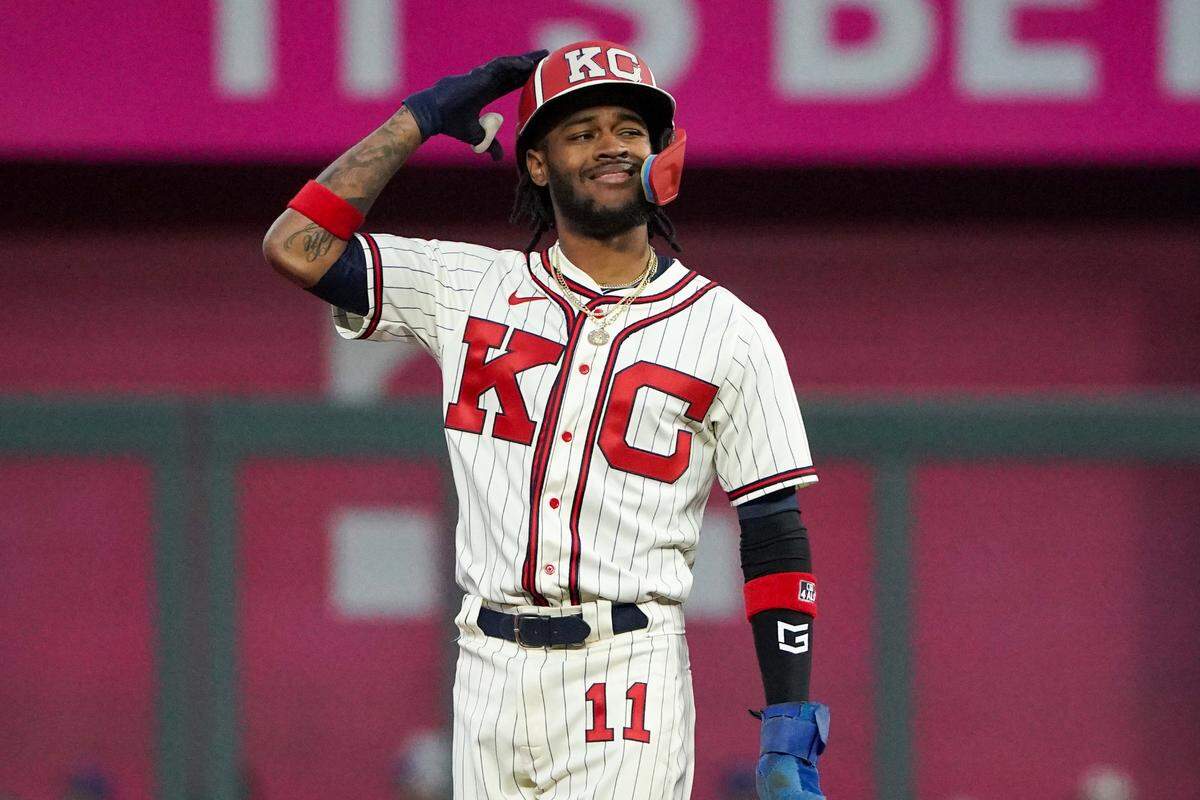
With the advent of the City Connect jerseys in 2021, that now leaves clubs with four other options. In the case of the Royals this season, it’s powder blue, white, rush blue and gray.
Theoretically, anyway, the Royals could choose to hold one of the five spots for a Monarchs uniform.
And while there’s room for them to consider that, it also seems impractical for what would be worn for just one game, or perhaps up to one full weekend, a season.
Some might take issue with the Royals for that.
But they are ardent supporters of the NLBM and surely want to restore this tradition.
Royals and MLB heavily support the NLBM
For the last four years under Sherman’s stewardship, for instance, the Royals have covered the costs of admission to the NLBM for the month of February in honor of Black History Month.
Among many other ways they are invested in the museum.
“You can’t have a better ally than John Sherman,” Kendrick told me last year, adding that Sherman is playing a key role in the museum’s capital campaign to raise $30 million for an expansive new building. “He has the ability to influence others to join him. That’s how these projects get supported.
“That’s how a new Negro Leagues Baseball Museum will ultimately get supported, because of the respect that he has in the world in which he operates.”
That world includes MLB owners and the league office led by commissioner Rob Manfred, who was instrumental in the movement to integrate Negro Leagues stats into MLB records.
Among the financial gifts to the NLBM from MLB and the MLB Players Association Youth Development Foundation was a $2 million grant toward the new museum.
MLB last year donated $500,000 to the Negro Leagues Family Alliance and conducted the MLB at Rickwood Field event in Alabama with the Cardinals and Giants wearing uniforms of Negro Leagues teams from St. Louis and San Francisco.
On Juneteenth this year at Rickwood, it put on the East-West Classic with a host of former MLB stars. And MLB has long celebrated Jackie Robinson Day on April 15 by having all on-field personnel wear his No. 42.
The point is all concerned appreciate the crucial relevance of the Negro Leagues and the museum itself.
And it’s understood that MLB, and surely Nike itself, initiated this change out of a sense that uniform options had gotten out of control with no real limits or guidelines.
Logic suggests that cost-cutting would have figured in that, too.
And, yes, it’s also true that any number of teams have causes they’d like to support in this most visible of ways and the notion of the one-time use uniform is a lot of why they made this policy.
But this also shouldn’t be that complicated, should it?
Can Nike, MLB & teams find a compromise?
Whatever the costs and logistical issues may be, why not just give every franchise a couple one-day exemptions?
Or even just one, compelling each to identify the cause with which it’s most uniquely connected.
Even if there’s more parts to this than we can imagine from the outside looking in, more to navigate between MLB and Nike than meets the eye, it’s hard to believe they can’t untangle this.
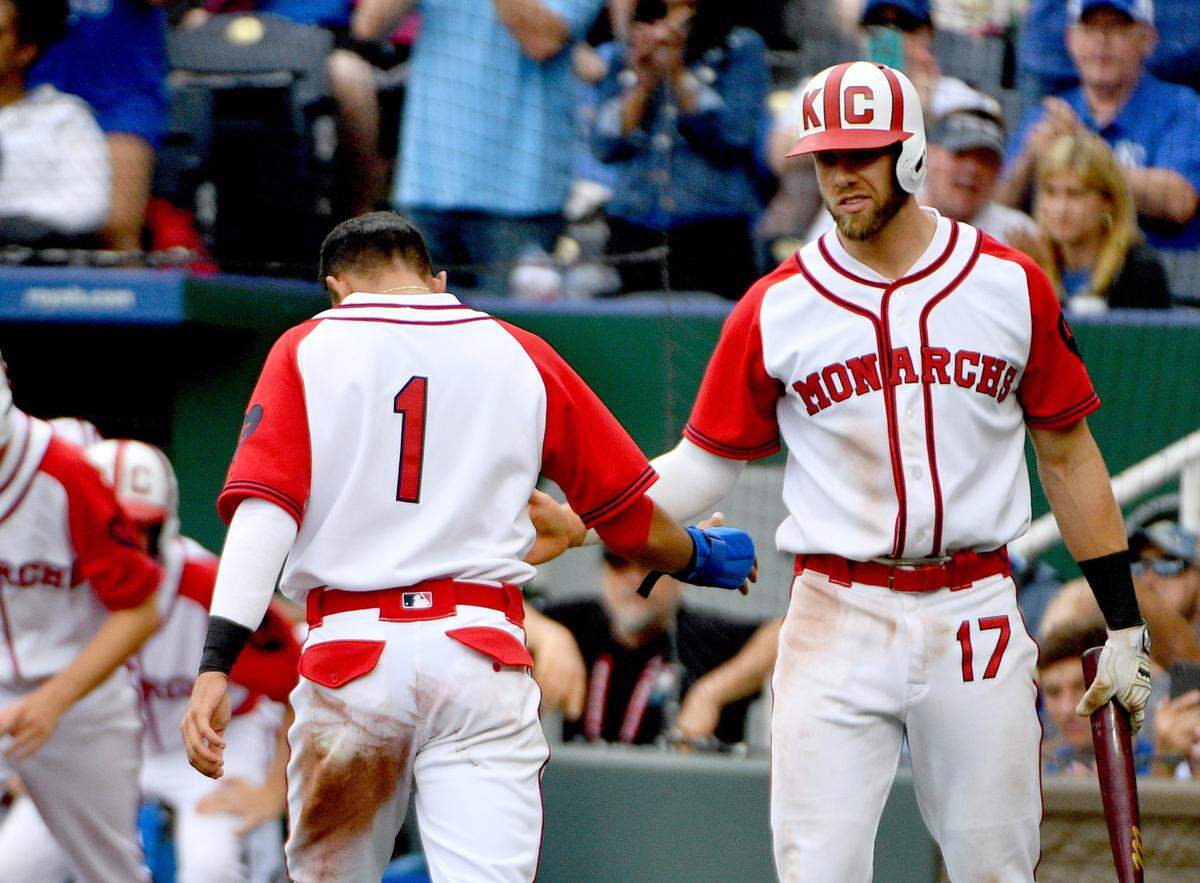
MLB believes that patches and signage and pregame ceremonies and scoreboard and in-game presentations elements — and yes, caps — can achieve much the same effect as the uniforms.
It also believes that any club can resolve this themselves through one of its five uniform designs.
But neither of those notions adequately addresses this.
So now there’s a void where there should be a thriving tradition
And given that no one intended to push the NLBM aside and that all involved seem to have the right spirit about the enduring meaning of the Negro Leagues, there has to be a way to revive something so significant, doesn’t there?
“I hope,” Kenrdick said, “that we can find a happy medium.”