
74 years later, Kansas City’s fascinating first golf icon finally gets a gravestone
Chances are you never heard of Miriam Burns, but she was an endlessly compelling, norm-defying wonder summoned straight out of central casting for the Roaring Twenties.
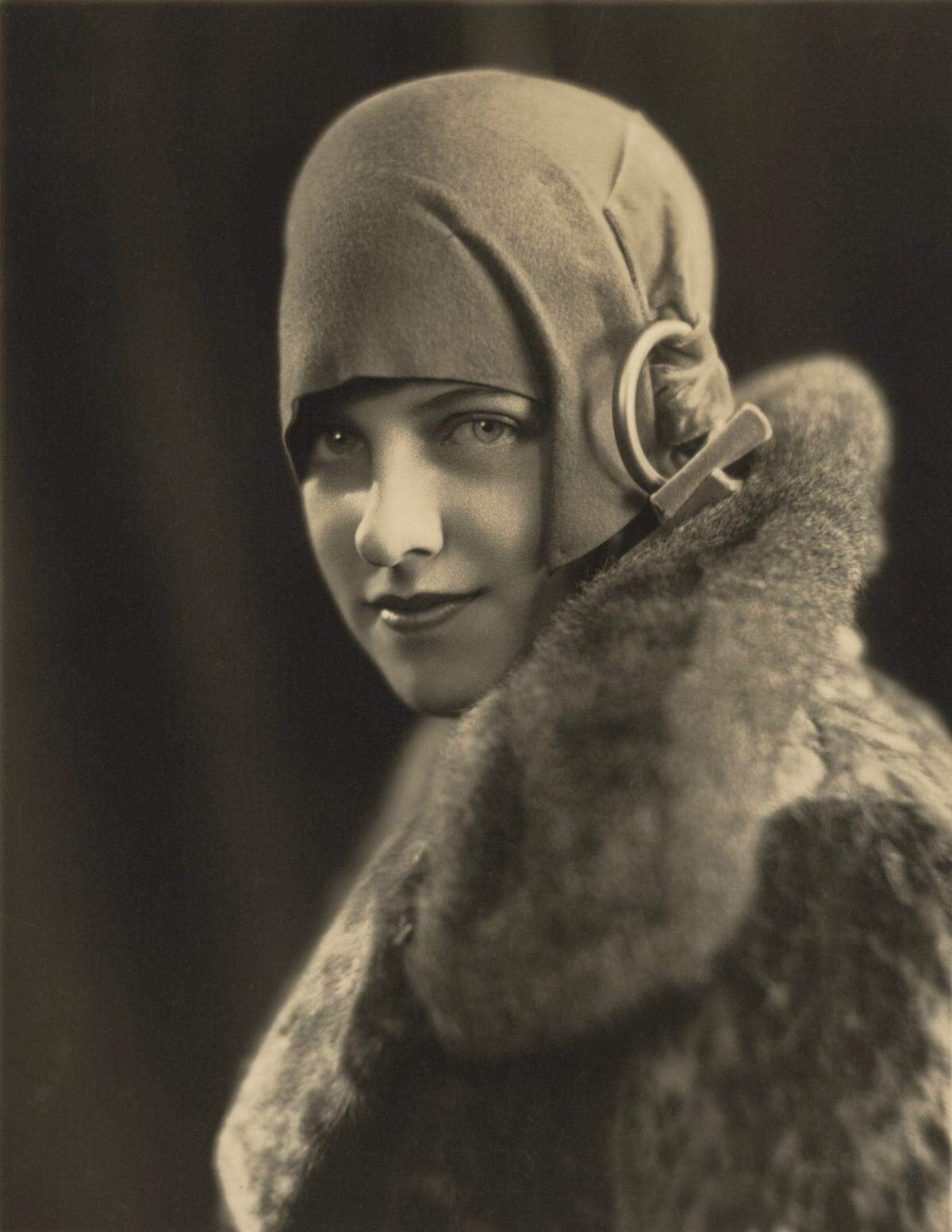
If you’re like me, all you have to do is see the hypnotizing Strauss Peyton portrait of her at Milburn Country Club in Overland Park to sense that about the uniquely Kansas City force of nature.
She was part Renaissance Woman (studying music at Northwestern University, an articulate and humorous quote source and later writing for newspapers across the country) and part ripsnorting rebel known for chain-smoking, gum-smacking and wise-cracking on the golf course.
Burns was 23 when she won the 1927 U.S. Women’s Amateur tournament (there was no women’s professional tour then) in Garden City, N.Y., to become Kansas City’s first national champion in any major sport.
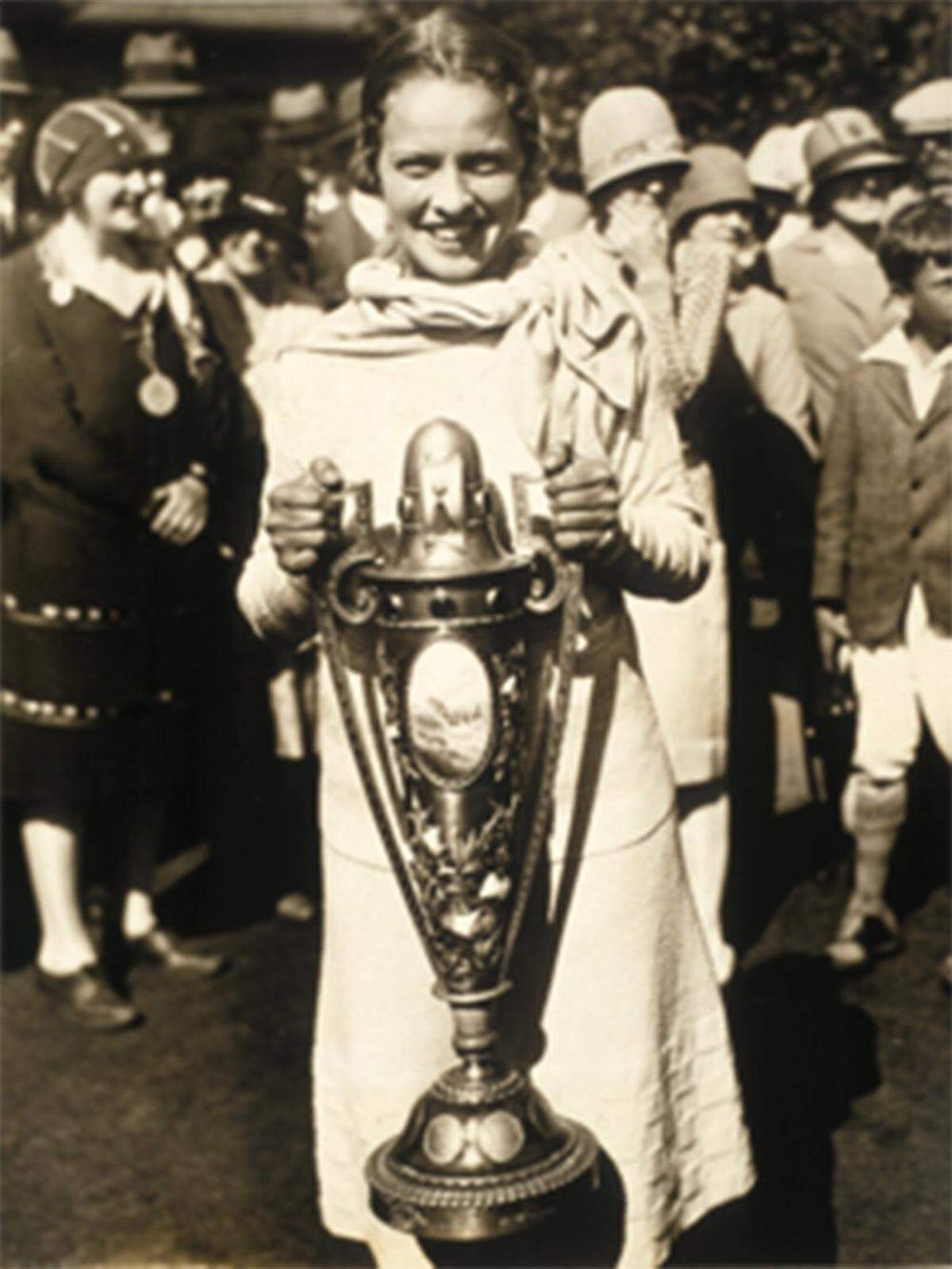
In the aftermath, she was widely referred to as the nation’s “Golf Queen” and called the “IT girl” of women’s golf by sportswriter O.B. Keeler.
Considering her story and image on Friday, Kansas City golf legend Tom Watson made that past feel present when he said, “Whoa, she is it,” and added that the area’s rich golf history has her to thank for its foundation.
But while Burns long has been honored and recognized by local entities such as the Kansas City Sports Commission (1984) and the Kansas City Golf Hall of Fame (in its inaugural class in 2013), the most essential commemoration of her life had gone neglected since her death in 1951 at age 47 under murky circumstances.
Until Friday at Forest Hill & Calvary Cemetery, that is, where Burns at last was properly memorialized with a gravestone among some of Kansas City’s most prominent names and forces.
Standing graveside with a group including those who finally made this happen and descendants they hadn’t even known existed until the last few years, the Rev. John Spicer of St. Andrews Episcopal Church dedicated the gravestone with prayer:
“We give you thanks that her name will no longer be forgotten and that future generations of Kansas Citians may come to know and celebrate her achievements and the honor that she brought to our community.”
So now she’s visible among many familiar names of building blocks of the city, National Baseball Hall of Famers Buck O’Neil, Satchel Paige and Zach Wheat and Burns & McDonnell co-founder Clinton S. Burns — Miriam Burns’ father.
Symbolically enough, though, she’d been there all along in the cemetery where Clinton Burns’ business co-founder, Robert McDonnell, also was laid to rest.
As it happens, Miriam’s ashes had been in an urn buried beside her father’s gravestone virtually ever since her death 74 years ago from what The Star at the time called “a respiratory ailment which developed into lobar pneumonia.”
As if that description and short story weren’t cryptic enough, the report noted her funeral would be private and requested “no flowers be sent.”
The twice-divorced only child whose parents had preceded her in death had one survivor: a son, Kenneth, in his mid-20s.
When I first wrote in 2017 about Burns, who dominated the local golf scene from the time she was in her mid-teens, what became of Kenneth and whether she had any surviving relatives was unknown.
And that’s where “serendipity comes into play, as Kansas City historian and author Bruce Mathews put it.
Because it took a convergence of chance events — albeit enabled by the care and diligence of Mathews, longtime Sports Illustrated writer John Garrity and key others — for this day to arrive.
And especially for it to feature the touching element of being attended by Burns’ grandson, Keith Tyson, and two great-grandchildren: Ashley and Kenny Tyson.
As he absorbed the moment on Friday, Keith Tyson (who was born in Kansas City a year after his grandmother died) marveled at what he’d learned about the woman of whom he had only a vague notion until recently because his own father rarely spoke of her before he died in 1990. At one point, Keith choked up as he spoke about the roller coaster this all has been.
Reflecting the deep gratitude of the family for the ceremony and gravestone paid for through Mathews’ fundraising, Ashley Tyson presented a donation to Watson’s First Tee of Greater Kansas City.
And on Saturday, she was scheduled to get a golf lesson at Milburn, where her great-grandmother learned to play.
“Never held a golf club before,” she said later by text, “so I’m going to try not to embarrass the family lineage!”
A lineage that was complicated to track.
In part, that was because it was hard to trace names connected with the woman known on her headstone as Miriam Burns Horn Tyson.
Burns generally was known as Miriam Burns Horn after her first marriage and then Miriam Burns Tyson after her second.
And Kenneth had been born Kenneth Horn, but Miriam’s second husband adopted him and he took the Tyson surname.
The exercise was further muddled by the curiosity of why she didn’t receive a headstone to begin with.
Especially considering that Kenneth felt close enough to have brought his family to Kansas City for her recognition by the Sports Commission in 1984.
And while it was known at the time she was cremated, what became of her ashes had been a mystery.
So a lot of factors went into the harmonic convergence that coalesced into this critical mass.
Among them was my friend Garrity’s tireless research for a book on the centennial of Milburn that led him to become enchanted with Burns — and suggest at the time she might make a nice story for The Star.
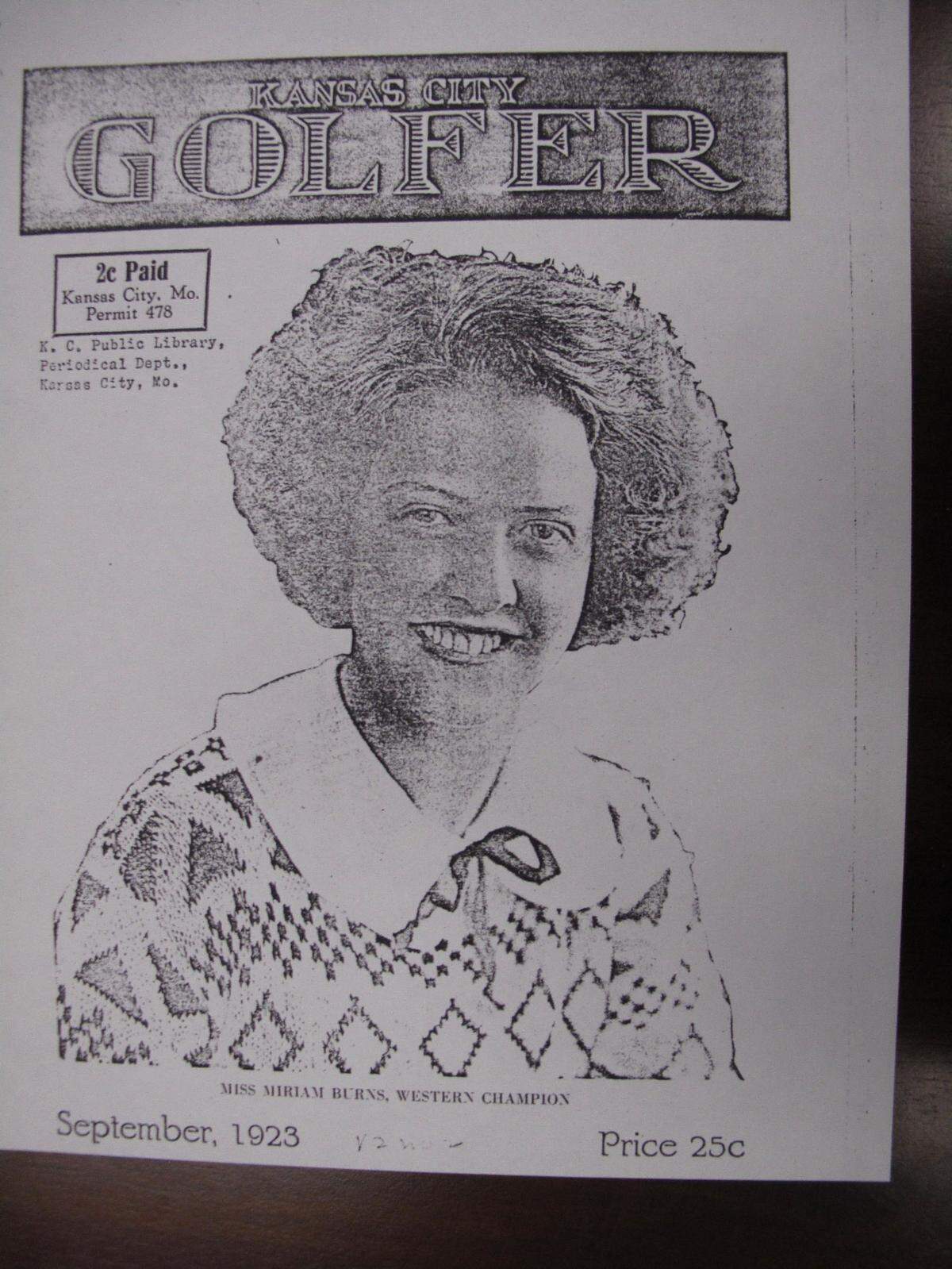
“The thing that fascinated me from the accounts in the newspapers at the time is that not a whole lot of attention was paid to her golf games,” he said at the ceremony on Friday. “In fact, it was pointedly mentioned that her swing wasn’t the most graceful, her overall game wasn’t necessarily the best, but her personality was amazing.”
So when he discovered the 1927 portrait, he decided it had to be purchased to donate to Milburn. Then she became a chapter in the book, helping revive her name.
Meanwhile in Florida, Keith Tyson had been researching family history through ancestry.com.
He knew his grandmother’s name but not much more until he read an extensive blog written by Golfing Herald that was well-informed by Mathews, Burns & McDonnell archivist and historian Lance Warren and local golf historians Jack Garvin and Don Kuehn.
That led to Keith Tyson contacting Milburn and becoming connected to Warren and Mathews — who is researching a book on the cemetery at Forest Hills.
The timing proved excellent: Jamie and Jake Oberfeoll, who recently had taken ownership of the cemetery, were disposed to help. “Almost on a whim,” as Mathews put it, he asked the cemetery’s Tina Sladek to search their interment records for her.
It would be an extra challenge, he told her, because she could be under the names of Burns, Horn or Tyson.
Oh, and they have some 100,000 interments at Forest Hill, Sladek wrote on her Find-A-Grave bio.
It was only through her determined pursuit that the discovery was made: Here Miriam had been for 74 years.
Hidden in plain sight … but in more ways than one exactly where she was supposed to be.
As Watson wrapped up his remarks on Friday, he eloquently underscored the point as he credited Mathews for his historic works on local cemeteries.
“Investigating the history of those people buried in the cemeteries (provides) a rich fabric of what Kansas City has been going back decades — a long, long time ago,” he said. “It glues together those memories and the facts about what Kansas City is.”
Miriam Burns, he added, is part of that.
All the more so now with her enduring and inimitable legacy re-discovered and back in view.
This story was originally published June 1, 2025 at 6:00 AM.