
Why Brett Veach’s football-steeped coal country heritage is perfect fit for KC Chiefs

READ MORE
A ‘Red Tornado’ in Kansas City
At his introductory news conference as general manager of the Chiefs in 2017, Brett Veach alluded to being proud to be a Mount Carmel Red Tornado ... and has been a whirlwind himself ever since.
Expand All
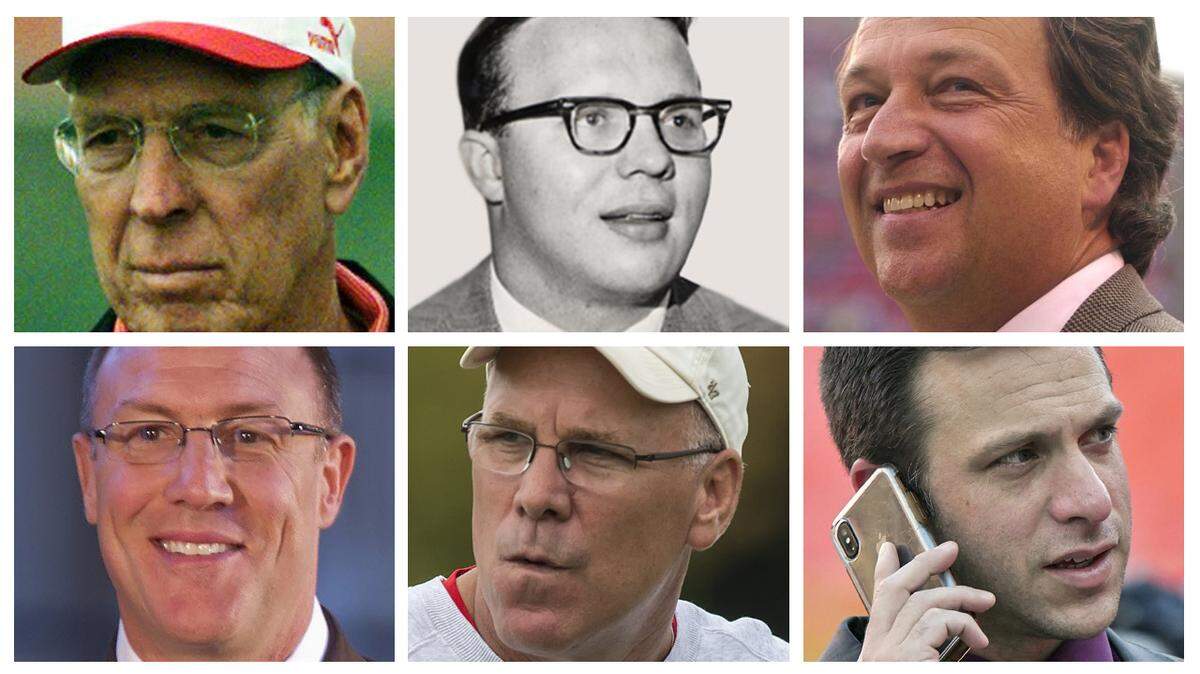
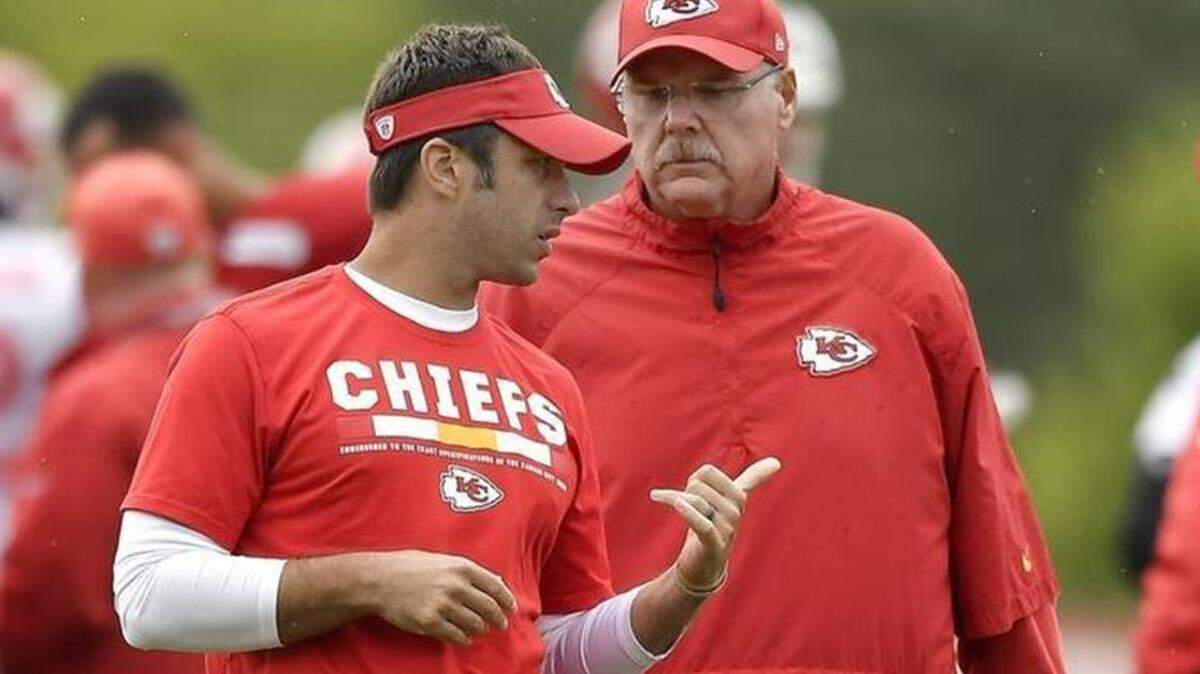
Ostensibly anyway, Brett Veach emerged from out of nowhere when he was named general manager of the Kansas City Chiefs in the summer of 2017 shortly after the surprising dismissal of John Dorsey.
The apparently abrupt change was mystifying then, in part because of what had been the franchise’s resurgence in the Andy Reid-Dorsey era and scant public evidence of the communication and management issues that The Star reported led to Dorsey’s downfall as GM.
But it also was because Veach, then 39 but looking “like he’s about 14,” as head coach Reid put it even a year later, was an ambiguous figure to many. The social media cue to The Star’s profile of Veach as a potential candidate read, in part, “Who is Brett Veach?”
Few knew he had done vital and even visionary work out of view, including as the Chiefs’ co-director of player personnel who became so consumed with quarterback Patrick Mahomes that he exhausted Reid and Dorsey about pursuing him: “All right, just stop,” Veach recalled Reid once telling him.
Meanwhile, the best-known aspect of his resume was that he had broken into the NFL as Reid’s coaching assistant. That job, a fusion of personal aide and shadow, was so essential in Veach’s career path that skeptics wondered whether he might simply serve as a rubber stamp for Reid.
Instead, the voracious Veach and his staff have a distinct imprint: the ever-churning construction of teams that have been to three straight AFC Championship Games, back-to-back Super Bowls and who won the club’s first title in 50 years — with ample reason to believe there is more glory ahead.
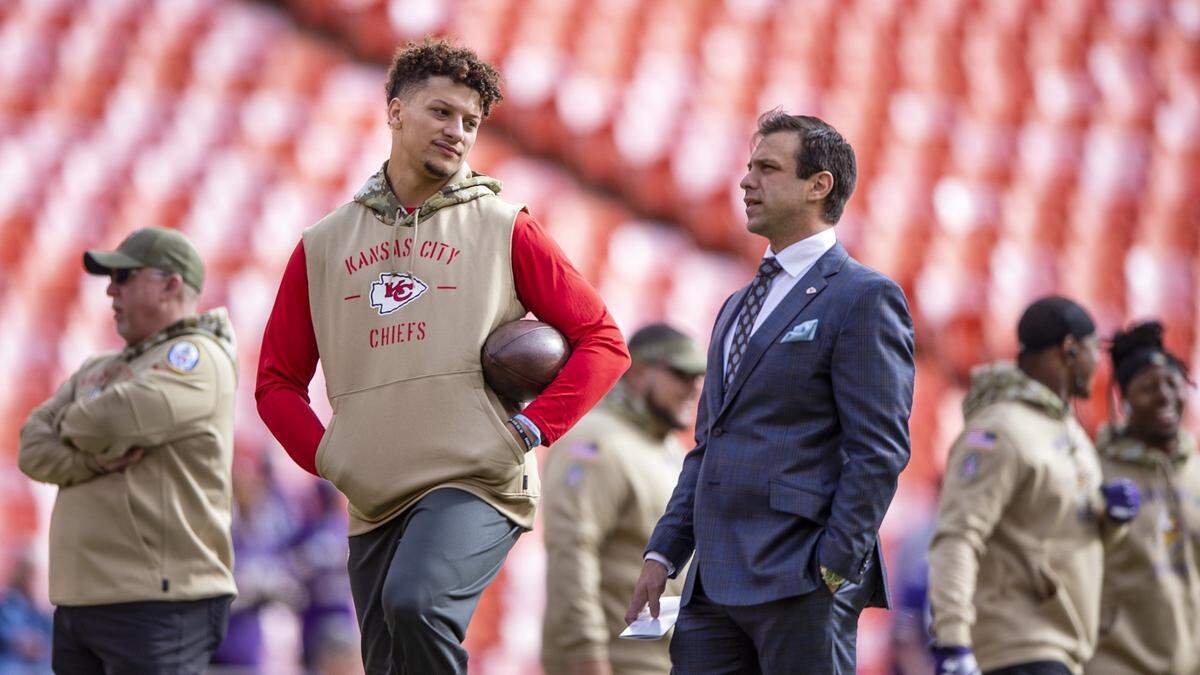
Meanwhile, it turns out that Veach didn’t really come from out of nowhere at all. And in a certain way, you could have seen him coming all along from a childhood in Mount Carmel, Pennsylvania, where football is everything — and where his boundless competitiveness, obsessiveness for all forms of football data and even an early focus on building portended what he was to become.
‘Once it’s in you, it’s in you’
In fact, Veach let us know from where he was coming in more ways than one within seconds of being introduced as GM on July 24, 2017. Immediately after thanking the Hunt family and his own family, including his wife, Alison, and their three children, Veach quite deliberately turned to another essential element of his roots with which he is forever entwined.
“I’d like to take this time to thank my extended family and friends in Mount Carmel, Pennsylvania,” said Veach, whose wife is also from Mount Carmel. “I was very fortunate to grow up in a small town where football meant everything. And I am very proud to say that before I was a Kansas City Chief, I was a Mount Carmel Red Tornado.”
That conspicuous nickname, Mount Carmel Area sports historian Jose Gonzalo said, stemmed from a dust-billowing game in the 1920s. Struck by the image of a red-clad ball carrier whirling through the line of scrimmage, a writer described him as a red tornado.
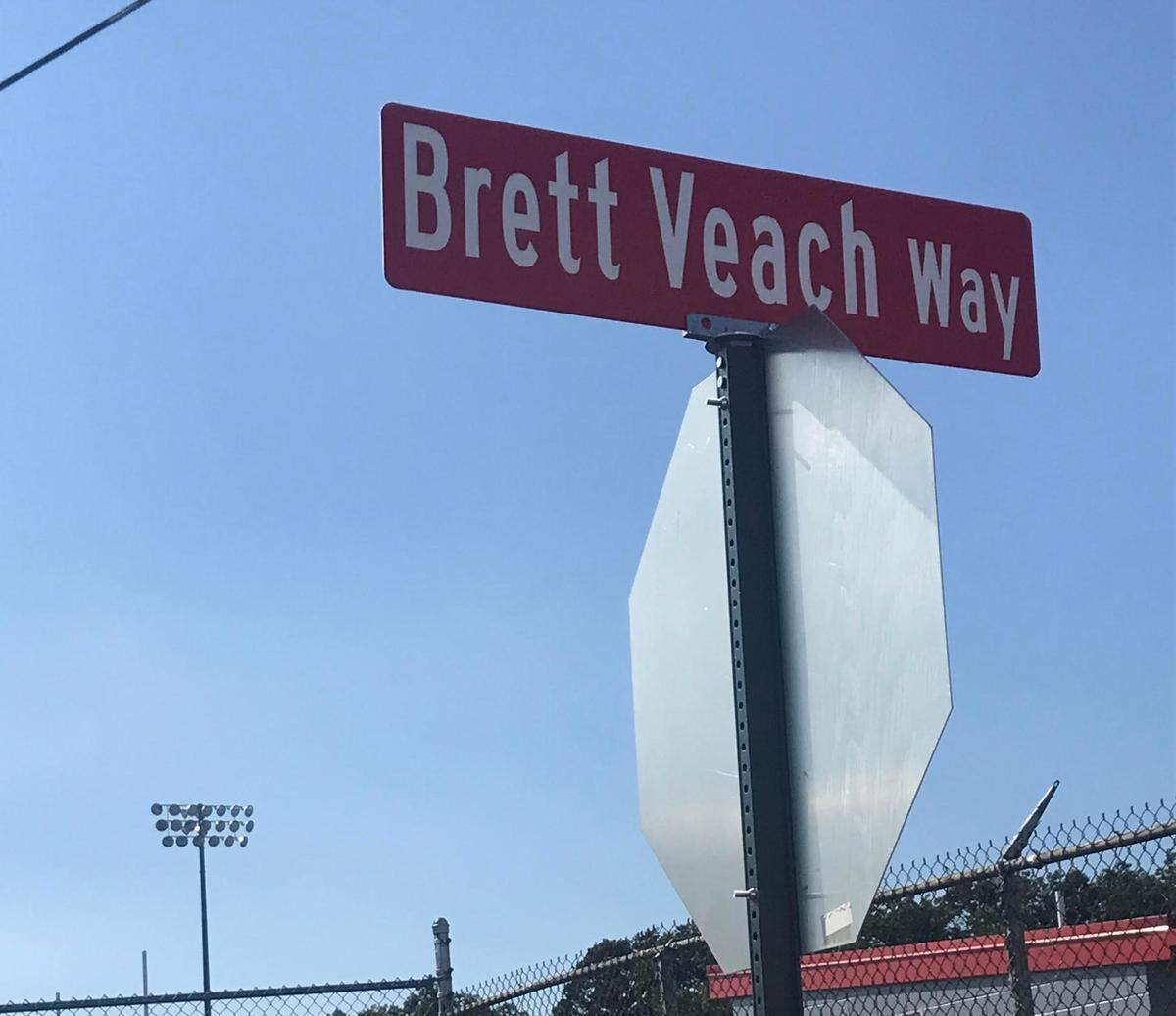
That seems apt, too, for the emergence of Veach, a whirlwind himself whose name now adorns street signs on a two-block stretch bordering the Mount Carmel Area Silver Bowl — where the winningest program in the proud history of Pennsylvania football posts its victory total (878).
The stretch is called Brett Veach Way, which also happens to be a succinct synopsis of his unique journey.
One that might seem improbable but was in the making for years and, in some ways, maybe even was inevitable.
About 90 miles northwest of Philadelphia sits Mount Carmel, a biblical name inspired by its picturesque locale. By the mid-1800s, the discovery of abundant deposits of coal under and around Mount Carmel led to booming business that became forged in the very DNA of the people here.
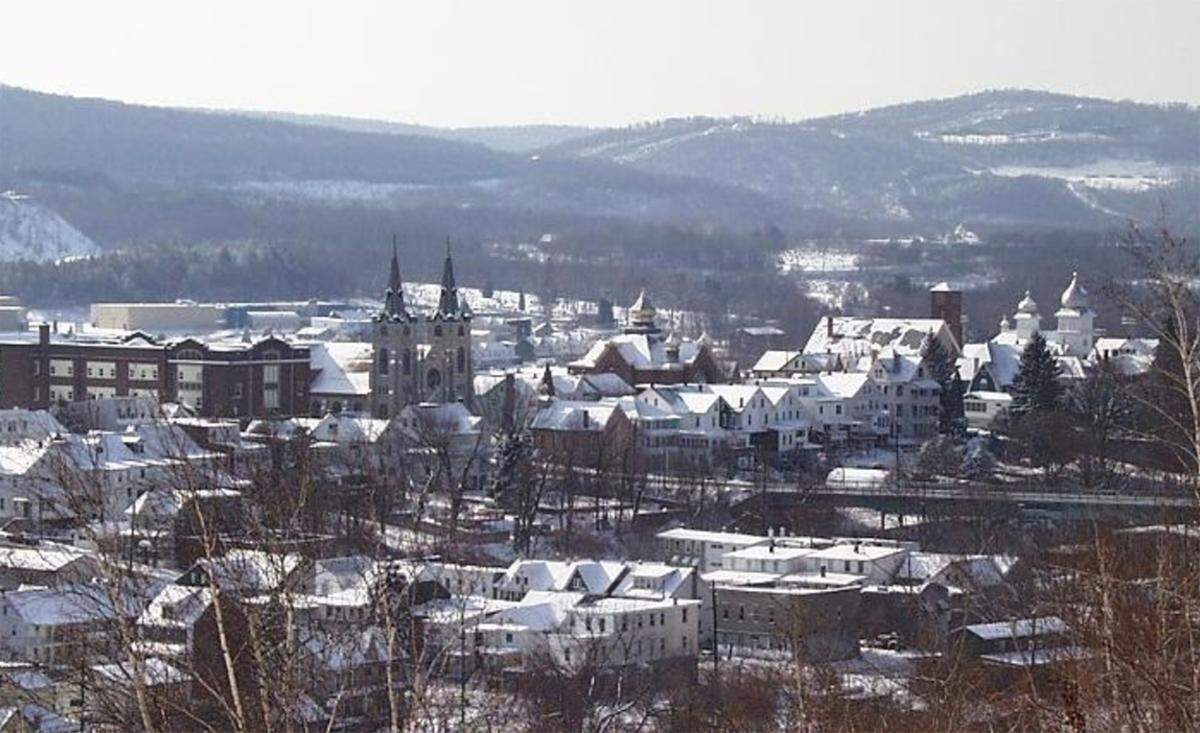
That rugged blue-collar sense of identity still prevails despite generations of decline in the coal industry and the population dwindling to about 6,000 from its peak of 17,000.
“Because it was kind of like the coal miner mentality of ‘you work hard and you do better; you’ll get something better than I had,’” said Veach’s mother, Donna, a retired teacher and administrator. “It was like everybody worked hard to get their kids where they needed to be. And then they left. Because there was nothing here. Coal mines closed. Factories closed. One by one, stores closed.”
But the heritage and ethos are infused in natives and still reverberate in Veach, whose father, Bob Sr., had uncles that worked in the mines. Even as he notes “the town has seen better days,” the Chiefs’ GM speaks of Mount Carmel with reverence for instilling within him the priceless values of hard work and striving to be part of something bigger than yourself.
That ongoing connection shows up in such ways as Veach’s frequent conversational references to home and his wearing a Mount Carmel T-shirt while posing with Reid and the Lombardi Trophy. He later brought the trophy back to Mount Carmel to share and has donated $20,000 to the high school for the “Veach Family Weight Room.”
Because life here is what made everything else possible.
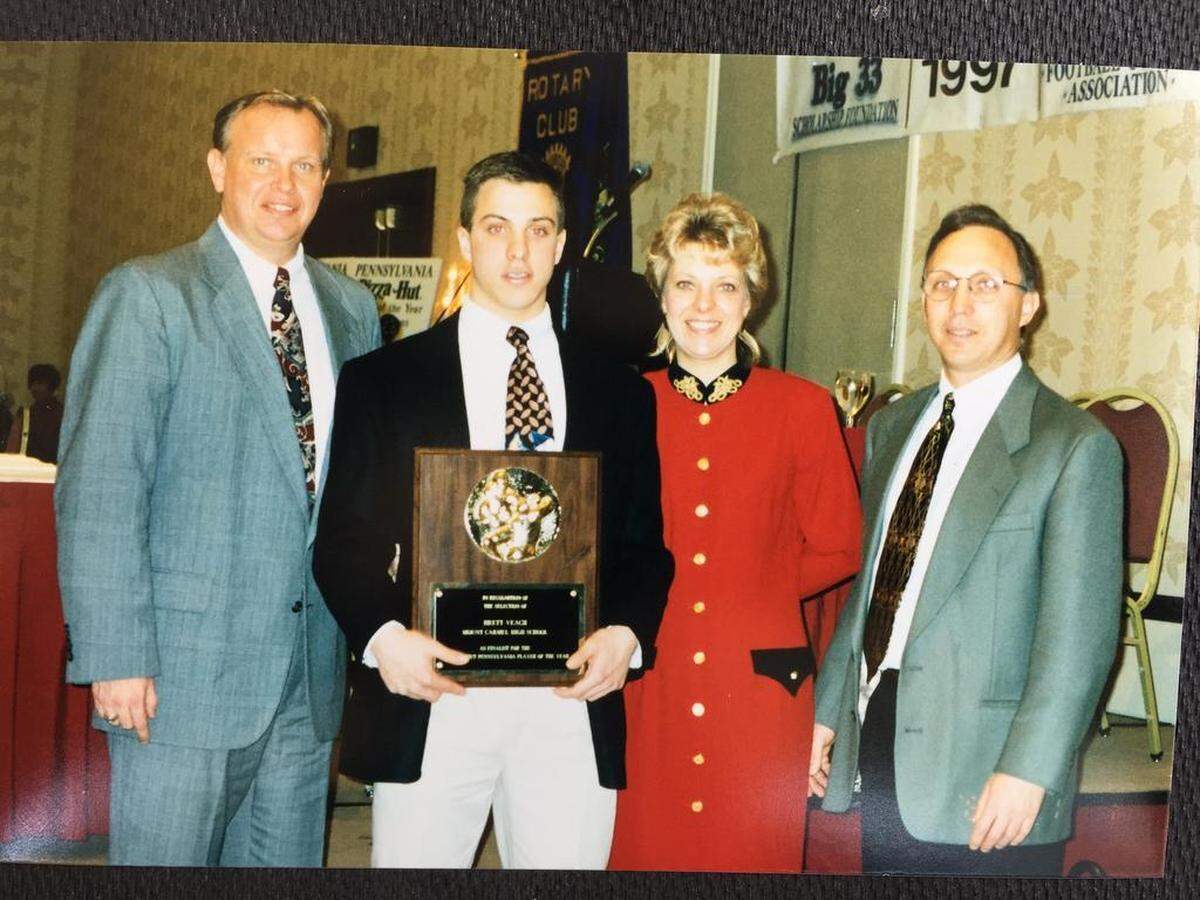
“For me, and for I think a lot of people, the coal region culture that you’re brought up in kind of stays in your blood,” said Mike Higgins, an optometrist who helps coach the team now and was quarterback for Mount Carmel’s 1994 state championship team when Veach was a sophomore.
“Once it’s in you, it’s in you. And that flame kind of always burns. And you just never lose sight of that. And you can certainly see that in Brett — that he’s never lost sight of his coal region pride.”
High school state champ
Early on, that coal region pride became enmeshed with the football fever revolving around a program that started in 1893 and by which the community to some degree defines itself.
Indicative of its cherished place in the culture here, the program became one of the first high schools to install lights (1932) and to have a game televised. That was in 1968, when Veach’s father was a star who went on to a Hall of Fame career at Susquehanna University.
In addition to winning a variety of titles before Pennsylvania formally instituted state playoffs in 1988, Mount Carmel seized five state championships from 1994 to 2002. Indeed, in a town known to some as the “City of Churches” to accommodate the diverse groups who were drawn here, football in some ways is a religion in itself.
In Mount Carmel, the Red Tornado Supper Club has met weekly for decades to honor players and coaches. And since 1919, the town has hosted an annual football banquet that has featured such speakers as Dick Vermeil, Jim Brown, Joe Paterno and Joe Theismann among many other names in the game.
To this day, game day is punctuated by the band marching down Third Street to the stadium that is the epicenter of it all, a place that in the more populous years typically was filled to the capacity of 6,000 but still usually lures 2,500.
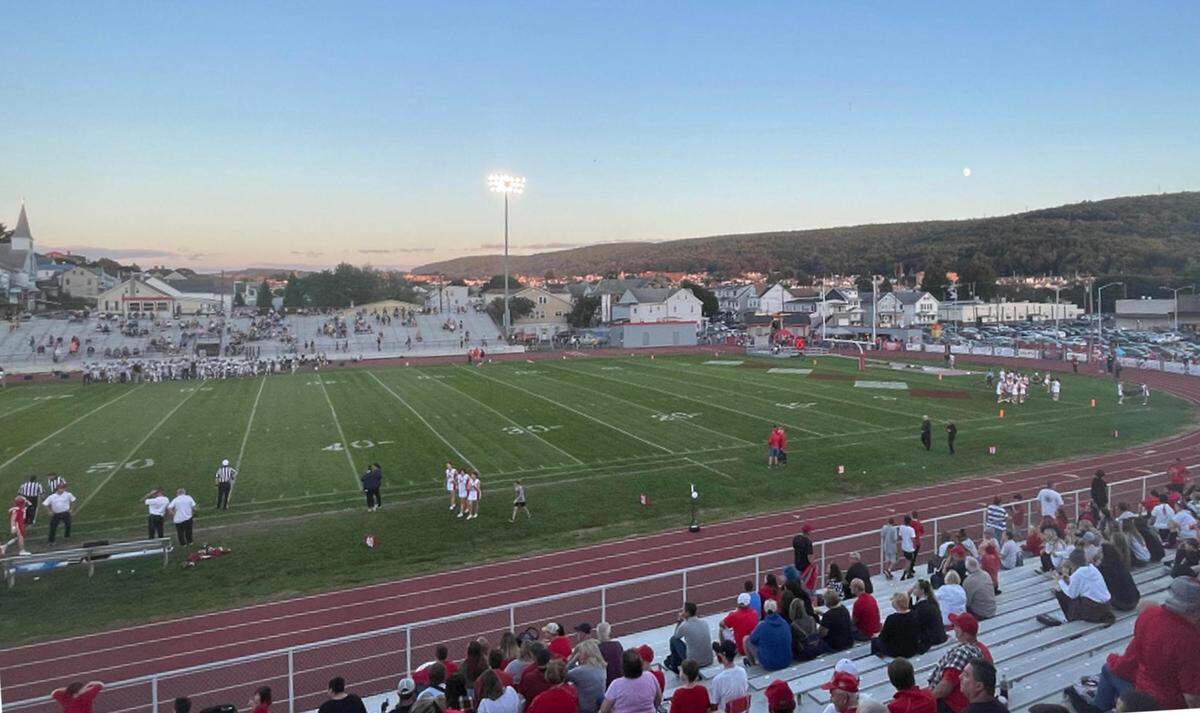
More specifically to the point about it being a religion, Gonzalo, the team historian, laughed as he recalled an episode a few years ago when a priest was ejected from a game after chiding police for being slow to break up a fight.
It runs so deep that, for decades, families routinely held back their sons for an extra year in eighth grade even when they were faring well in school. Bob Veach Sr. believes his class was the first to do so in the late 1960s, with the idea being that players would get bigger, stronger and more mature (though he laughs as he recalls being 5-foot-6 and 145 pounds as a senior).
“We took a lot of heat for that,” he said. “We were labeled ‘the redshirts.’”
The practice, also undertaken elsewhere in the coal region, has diminished with rules changes. But some still are apt to either start their children late or hold them back a year in elementary school for the same reasons. In the case of the Veach family, the two oldest boys, Bob Jr. and Brett, repeated eighth grade, and Jon started school later.
However you might view such extremes, it certainly speaks to a place where the game towers above all else.
“It’s what we were born into,” said Mike Boyer, a sports attorney and NFL agent who has been close to Veach since he began blocking for him in youth football. “It’s the only thing we wanted to do; it was organic.”
Small wonder this might all seep into one’s veins as it did with the Veach family, whose exploits are well-celebrated in a trophy case at the high school that also is adorned with a Chiefs helmet, a football commemorating Veach’s appointment as GM and a photo of Veach with Chiefs’ owner Clark Hunt.
Bob Veach Jr. was a two-year starter at Mount Carmel who went on to play at Lafayette and now is a physician’s assistant in nearby Selinsgrove. Youngest brother Jon was a star who went on to excel at Princeton and now is an assistant to the city manager of Santa Clara, California.
Brett, the middle brother, was instrumental in two state championships and in 1996 was named Associated Press Pennsylvania Small School Player of the Year — feats matched by Jon, who also broke Brett’s school rushing and all-purpose yards records. But at least it was kept in the family: Brett had been on a quest to set those records for the sake of his father, whom Brett felt had been overshadowed by Gary Diminick, the Notre Dame-bound son of legendary coach Jazz Diminick.
‘Off the charts’ competitive
Pursuing that for his father is a window into the insatiable drive that has long been one of Veach’s dominant traits.
Pete Cheddar, who has been close to Veach since the days when they thought they were Bo and Luke Duke of “The Dukes of Hazzard,” calls Veach the most competitive person he’s ever met.
“Off the charts,” said Cheddar, now the superintendent of the Mount Carmel Area School District. “We would have these two-on-two basketball games, and it was like Game Seven of the NBA Finals to him.”
Bob Veach Jr. remembers near-fights in those games and his brother storming out of the room after losing Tecmo Bowl video games. And when Brett’s then-favorite team, the Denver Broncos, got clobbered 55-10 by the San Francisco 49ers in Super Bowl XXIV, he locked himself in his room (where, incidentally, his “Star Wars” action figures still reside).
He was so willful that Donna Veach remembered her husband for a time complaining “That boy is uncoachable! Uncoachable!” Certainly, he was intent on getting what he wanted when he wanted it.
_hq.jpg "VEACH youth football- (179)_hq.jpg")
One year, before Christmas, he intercepted a new Tecmo Bowl game wrapped with his name on it. He secretly opened the gift, careful to slowly pull off the Scotch tape. Then he cut a slit in the plastic to take out the new game and subbed in the old one before rewrapping it.
The brothers played with the new one until Christmas morning, when Brett opened what he pretended was the new game and had to execute the hardest part: pretending to be surprised.
“He couldn’t wait,” Bob Jr. said, laughing. “That’s sort of how he is. When he wants something, he goes and gets it.”
An organizer and do-er
Beyond all that, though, there were what might be considered foreshadowing traits bubbling in Veach, a remarkable athlete who as a senior finished second in the state in the 200-meter dash and fifth in the 100.
As a sophomore, for instance, he had the uncanny savvy to do this against Dallas in a state playoff game: take a screen pass late in the first half and weave 34 yards, “hitting a hole, shifting right, following blockers before cutting hard left and instead of attempting to turn the corner and score, running out of bounds with one second remaining,” as The Daily Item put it.
Because Veach recognized that he may not have been able to get into the end zone, his alertness enabled Mount Carmel to run another play: a fake field goal that stood as the decisive touchdown in a 21-15 win.
“It is mind-boggling, because even most seasoned players with seconds to go and the ball in their hand are thinking, ‘I’m going to score,’ ” said Higgins, calling Veach’s presence of mind “sort of eerie.”
It wasn’t just that Veach understood the mechanics of playing the game, either. He was fascinated with those who played football and already was studying them as a teen.
Boyer remembers often sitting with him on a stoop on their way home and talking about players down to the bottom of the depth charts on any given NFL team.
Often, Veach remembered, they’d turn it into a competition, naming players on any given team in descending order of prominence until one guy was stumped.
“We were going into the weeds,” Boyer said, noting that even as a young teen, Veach had the ability to retain data about players he saw on television or read about in football magazines.
To this day, the two football junkies tend to sign emails to each other with an obscure player’s name out of that past. Higgins, too, recalls that Veach was “always a stat geek,” rattling off numbers and records that he couldn’t understand how or why Veach knew.
As it happens, even back then, Veach wasn’t hesitant to try to get to know collegiate players he’d later make his name on in scouting.
In the pre-internet, pre-Google days, Boyer and Veach and other friends used to send off to colleges for media guides for information on players they wanted to contact. Once they had the players’ hometowns and parents’ names, they’d call directory assistance all over the country to get home phone numbers for stars such as Charlie Ward (the 1993 Heisman Trophy winner) and ask them to send autographs. Veach still has some of those at home, too.
“You find ways to get creative,” he said. “And also you find ways of acquiring information that other people don’t have on people.”
Which helps explain what Jerry Oravitz, a longtime mentor of Veach’s who worked with him at Delaware, told The Star in 2017: “Before Google was Google, Brett Veach was Google when it came to facts and thoroughness in the game of football.”
Then there was another harbinger of what was to come: a fondness for putting things together and curiosity about how systems worked.
Veach’s parents remember how absorbed he was with a Fisher-Price Construx set at around the time he was 6. The directions, said Bob Veach, a retired physical therapist who still helps coach the Mount Carmel team at age 71, “weren’t the easiest to follow. But he was persistent and wanted to get it right on his own.”
The same initiative showed up whether he was lining a baseball field or handling maintenance duties at the Mount Carmel Public Pool, where on one of his first days, Veach mixed chemicals wrong to leave the pool a cloudy mess and vowed he’d never get it wrong again.
“Did you know every day he beat me to work? And I was the manager,” said Bob Scicchitano, who played and coached for Mount Carmel and teaches social studies. “Even back then, he did what he had to do to be the best that he could be.
“He wanted to know how everything worked. When it came to fixing things at the pool, he wanted to know how it worked and what made this machine work. So he wanted to know the whole process, the whole integral part of how the system worked, so he would be able to do any job there, if that makes sense.”
The broader point resonated with Gonzalo.
“Now he’s just working with different pieces,” Gonzalo said. “Human pieces.”
Assembling the ‘human pieces’ of the game
Following his career at the University of Delaware and soon after a serendipitous turn of events led to him becoming Reid’s personal assistant in 2007, Reid perceived that Veach’s future lay more in the “human pieces” element of the game than in coaching.
Reid hired Veach for that obscure but key job based on two summers of Veach interning at training camp for the Eagles, where he performed such tasks as setting up beds in the dorms, setting footballs at the line of scrimmage, laminating practice scripts and carting coaches to and from the fields. And then some.
The job assisting Reid was a different sort of grind, one that at any given time might have Veach learning to break down film or picking up Reid’s wife, Tammy, at the airport. But it’s also a role that meant endless time with Reid, who tends to view his assistant as a confidant with great responsibility.
In Veach, he saw someone who just kept wanting more to do, the sort of person who at times spent nights in the office so he could be sure to be there before Reid.
It was only months before he was seeking feedback from Veach on prospective receivers to take in the 2008 NFL Draft — which led to the Eagles reaping the benefits of Veach’s conviction about taking the undersized DeSean Jackson of the University of California Bears.
By 2009, Reid had elevated Veach to a pro and college scout upon whom he came to rely so much that he brought him along to Kansas City in 2013 after Reid was fired by the Eagles.
By 2015, Veach was named co-director of player personnel with Mike Borgonzi, who last summer was named assistant general manager and is a prime NFL general manager candidate himself.
All of which set the stage for what from the outside looking in seemed to be an inauspicious promotion in 2017 for Veach. He entered the GM job with the franchise having already been revived but also at a plateau with just one postseason win under Reid at the time.
But the Chiefs have moved to another tier from that plateau in his tenure, which has been underscored by both his wavelength with Reid and his independence in the job. It’s all reflected in the way Dorsey put it in a toast on the occasion of Veach’s wedding in 2015, that marriage requires a lot of trust in a relationship: “Just like Andy and Brett.”
Now, the Chiefs have won six of their last eight postseason games. Since a 3-4 start this season, they’ve won seven in a row and seem to be gaining momentum toward another potentially deep postseason run entering their game Sunday against Pittsburgh.
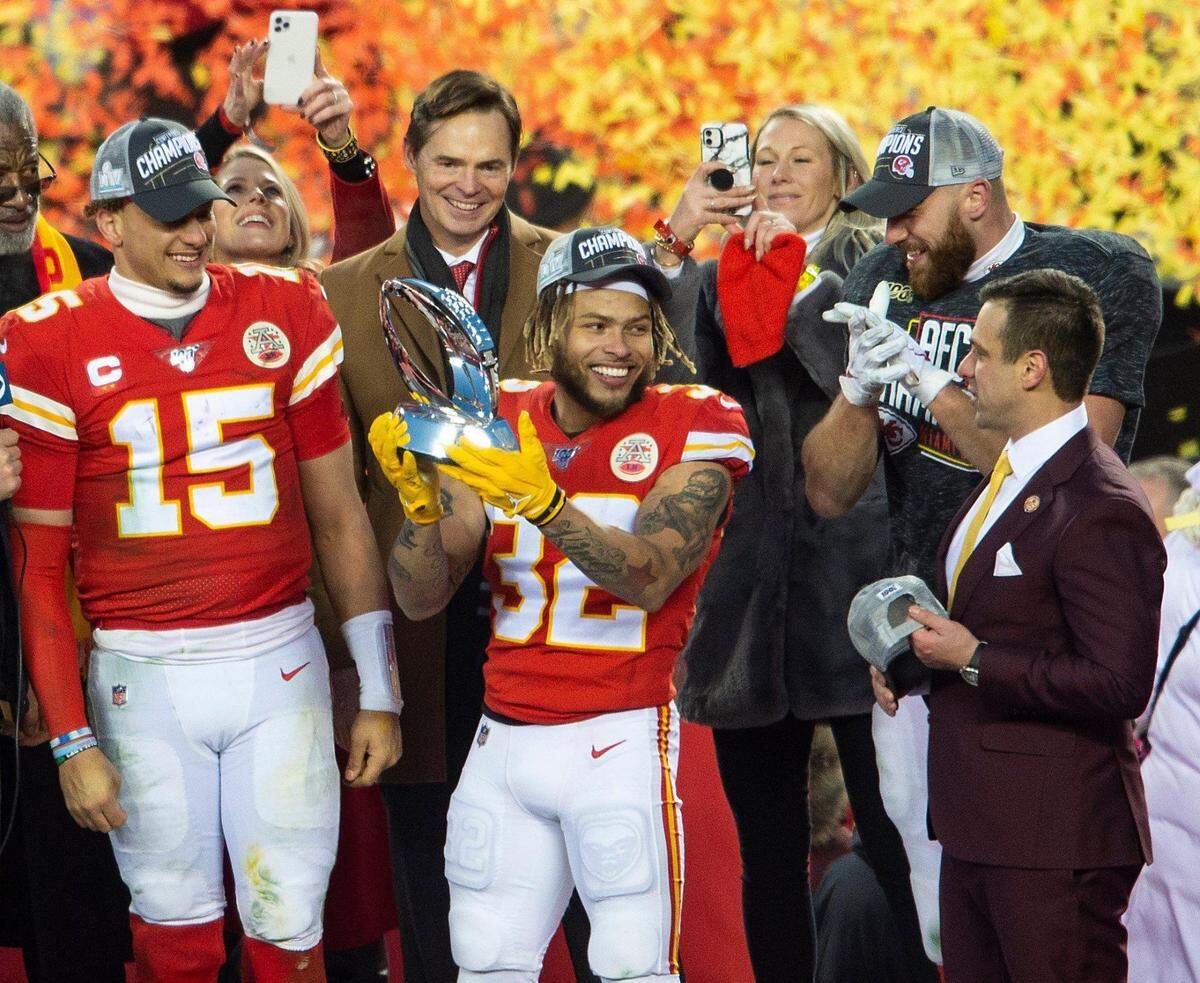
Among endless key moves Veach has engineered as GM, none reverberated more than the radical overhaul of a woeful defense after the 2018 season, with such high-profile acquisitions as safety Tyrann Mathieu and defensive end Frank Clark.
Nearly as ambitious, with results still pending, was his work after a ravaged offensive line was overrun by the Tampa Bay Buccaneers in Super Bowl LV. Presto, he concocted an entirely new one through the NFL Draft, free agency and trades.
More recently, as the Chiefs’ defensive line struggled early this season, he procured veteran defensive end Melvin Ingram — a player Reid recently said has “upped everybody’s game.”
And while the team’s success is all about what takes place on the field, what’s on the field to begin with is a signature of Veach and his staff.
“He’s relentless … (and) that energy isn’t coming out of a can or something,” Reid said in 2018. “That’s real, and he is that way 24/7. He goes and goes and goes.”
And even if you never saw him coming, all along he’s been much the whirling force of nature he grew up to be in Mount Carmel — a Red Tornado yet.
This story was originally published December 26, 2021 at 5:00 AM.