
Inside the Kansas City Royals’ slump: ‘The end result comes back on the manager’
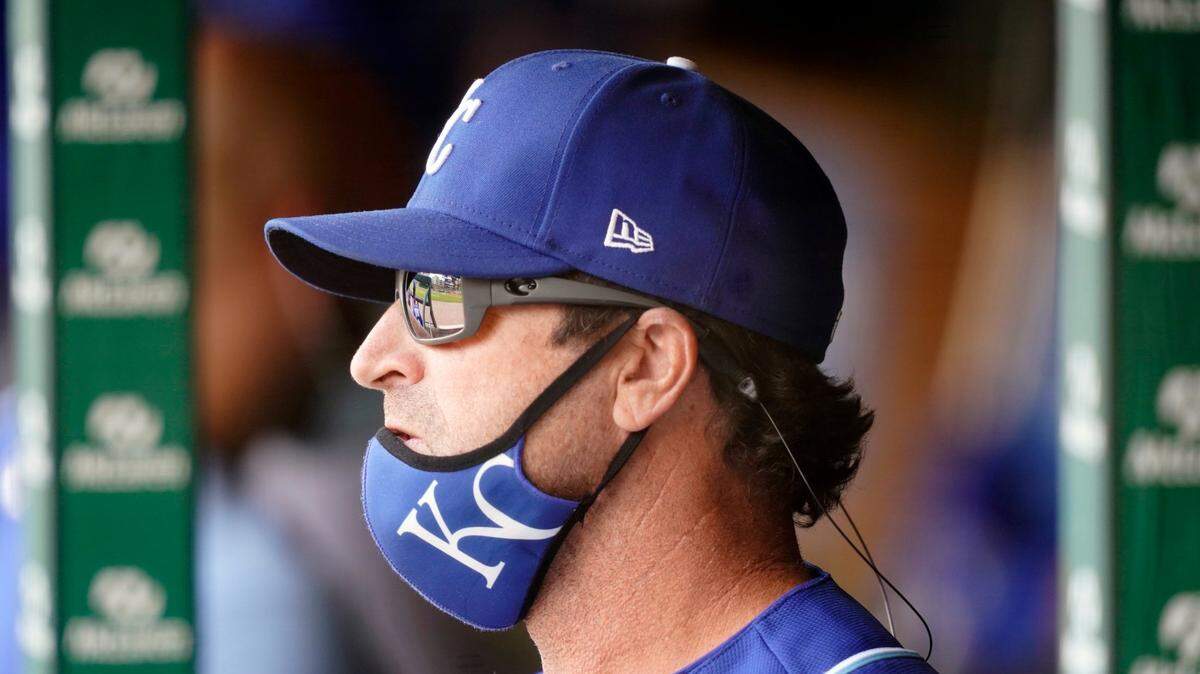
The manager with the best record in baseball turned into the manager with a double-digit losing streak with cruel speed. One day Mike Matheny is on national shows talking about baseball’s biggest April surprise, and the next he’s talking about maintaining perspective and a homeless man in Detroit.
There are a million problems to fix for any manager, and that’s on a good day. The Royals haven’t had a good day in what feels like forever.
Every team has hot streaks, and they all have slumps, but we’re a few days beyond the Royals fitting within the acceptable margins of baseball’s wild ride — they were baseball’s first team to 16 wins, and now have more wins than just two teams in the American League.
The Royals will play their 40th game on Sunday, which for many baseball people represents the first time for logical declarations about a team’s strengths and weaknesses. The Royals are approaching that mile marker with sleepless nights and hard conversations, with guys needing to be steered away from self doubt, and Matheny taking some time to talk us through it.
This is Matheny’s test. This is his professional life now. Right or wrong, fair or not, his time with the Royals will be judged on the Royals’ ability to both get out of this and never struggle this bad again.
“The end result comes back on the manager,” Matheny said. “I knew that too when we’re getting a lot of attention, and I just wanted to make sure we were celebrating what our guys are doing. Because this is a group that needs to know and learn how to win. And part of that is this group needs to know and learn how to bounce back from tough runs like this.”
A major league baseball manager is part coach, part psychiatrist, part spokesman, part motivational speaker. Most find the best approach is with unrelenting positivity, sometimes cut with humor. Matheny has that, but it’s often buried beneath this obsessively competitive side that can butt heads with the rhythms of a long season.
So if Matheny is more intense than most big-league managers, he wants to focus that intensity in the right places. That means diligent prep, thorough staff meetings, and intentionally presenting a model of confidence.
That’s easy to say, and harder to execute. The other night the Royals came back from down 7-0 to tie it late, only to lose in the bottom of the ninth. What would have been a defiant way to end a lousy streak instead turned into the single worst loss yet.
Matheny felt awful afterward, and looked it during the postgame press conference. He watched the video later and saw what everyone saw — “like I got kicked in the gut, because that’s how I felt,” he said.
This is Matheny’s extra weight. He is rip-roaringly intense in a job that judges his worth 162 times in 181 days. He is emotional in a job most try to approach with reason. He is honest about his disappointment in a job usually done with stubborn optimism.
“I do believe we owe it to ourselves to be honest with what we’re thinking or feeling at the time,” Matheny said. “But also to fight that, whatever that is when I wake up this morning: ‘Screw that. Today’s our day.’ I think you need a good portion of that in this clubhouse for the long haul of the season. One to tamper down where there’s just too much noise. Let’s not buy into all the hype, and let’s not buy into all the negativity.
“I want to be this, but I also know one of the things I’ve tried to improve on is enjoying it. Because times like these just hurt so bad that we’ve got to enjoy it when things go well. I’m learning all the time, and I do know that I’m responsible for the attitude of this team.”
You just don’t hear managers talk like this very often. This is a man willing to be vulnerable in a sport that expects a stiff lip. He’s open about frustration in a sport usually operated with relentless positivity.
There is no book on this. For as long as baseball has been played, those who play it have been occasionally but inevitably frustrated by the sport’s peculiarities. At the moment, the Royals are full of the wrong kind of peculiarities.
Metrics tracking quality of contact suggest Jorge Soler and Hunter Dozier should be among the league’s better sluggers. Instead, bad luck and other factors mean each are among the least effective hitters. Soler ranks 130th in OPS and is visibly struggling with pitch recognition and defense. Dozier ranks 151st and was hitless in 31 straight at bats after Thursday.
This is not to scapegoat Soler or Dozier, or even to suggest that the Royals’ struggles are merely bad luck. They are not. The Royals are playing poorly. But even through the losing streak the Royals’ exit velocity and other supporting metrics describe a team that’s not overmatched.
“These guys are competing,” Matheny said. “It may sometimes not look like it because the results aren’t there, but I’m telling you as I watch them come in and I’m listening to them. You should hear them, early in games, all through games, it’s, ‘Keep coming, keep coming, keep coming!’ That isn’t normal. What we’re seeing and feeling, for us, to just be solely focused on the results? Shame on me.”
You see how tenuous this whole thing is, right?
Matheny is naturally intense and unnaturally competitive in a job that requires him to balance games months in the future. He is in a plainly results-based business while managing a team that he’s convinced has enough talent and the right processes.
At the moment, it puts him on this brutal loop — he wakes up every morning convinced this is the day things changed, buoyed by a staff he adores and friends who keep him honest.
He gets to the ballpark early, impressed with the work ethic and focus of a roster he believes in, supported by dozens of man hours of planning and thinking and then … he watches the whole thing deflate, another loss, another postgame press conference where he does a bad job holding his frustration, another hour or two staring at his hotel room ceiling before dozing off and waking up to another burst of optimism.
Matheny guides much of his life with books. He’s heavy into self-help and leadership stuff, and lately has been nodding his head and scribbling notes while reading a book about perspective. This is a hard thing, balancing what you feel and what you think is best to keep moving, but even in the worst times he’s still managing a major league baseball team.
This is where he thinks about alternatives, of not being in baseball, of that homeless man on the side of the street. It’s hard to know where the mind games stop and where the real juice begins, but one truth about slumps is that you don’t get out of them being timid.
“There’s a sick part of people that I find myself drawn to, and I realize it’s part of me too, where you realize it’s a privilege when you get stuck in a mess,” Matheny said. “When things get hard, it’s a privilege to be able to go and serve people and try and help them do some things that maybe they were doubting they could do on their own. I think that’s a big part of the position.”
Matheny said those words, then projected more strength on a video call with reporters. Then the game started, and his starting pitcher missed a few spots, and his defense botched a few plays, and the whole cycle renewed — thinly veiled frustration, a flight to Chicago where he presumably stared at his hotel room ceiling, and the next day woke with another burst of optimism.
Screw that. Today’s our day.
This story was originally published May 14, 2021 at 5:00 AM.