
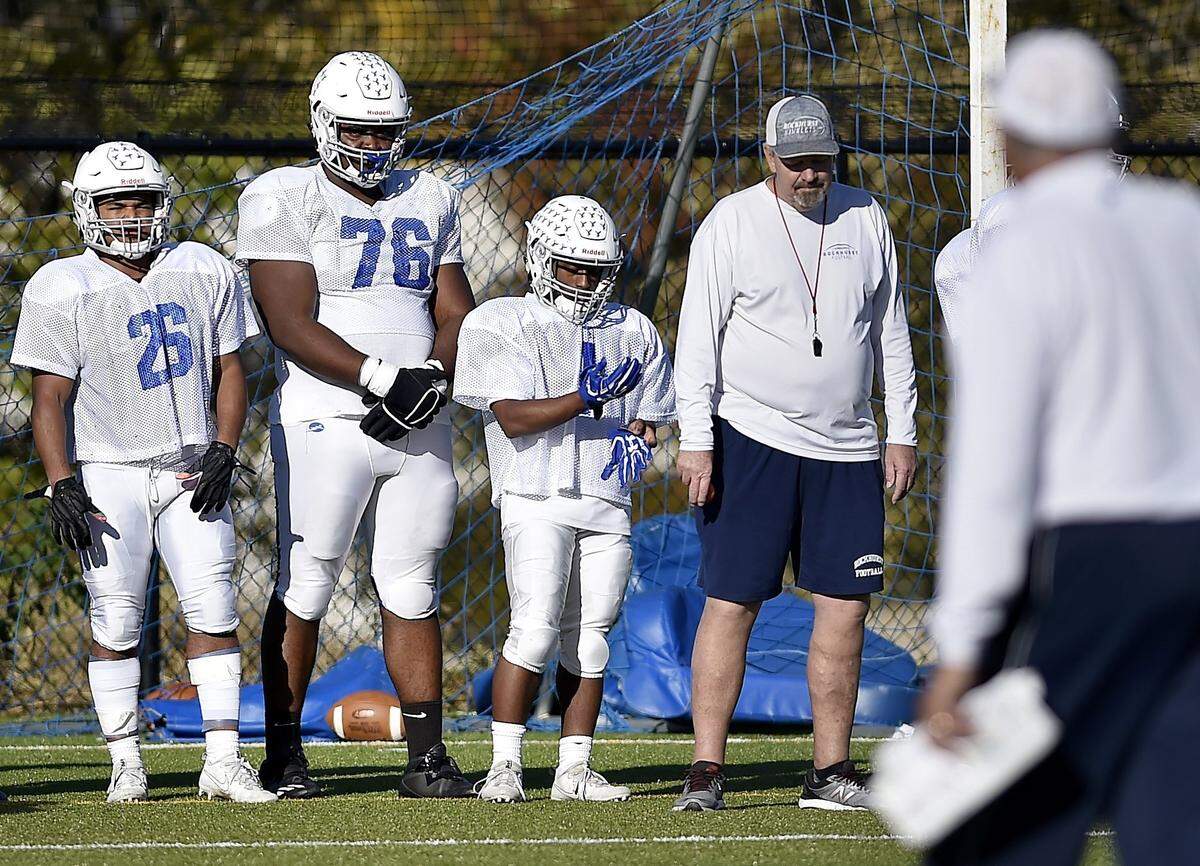
This six-and-a-half-foot-tall Nigerian isn’t your everyday Rockhurst football player
The 330-pound teenager grew up on the other side of the planet. He is still learning about life here, about what’s important in America, and what’s possible. He is answering a question about how football helps with this when he grabs a black pen and begins to draw the moment that made him feel like he belongs.
Danielson Ike always wanted to escape that other life in Nigeria, for reasons that still elude him. He just knew. Knew he wanted more than what he saw back home. He knew this from the beginning, before he had ever heard of Kansas City, or Rockhurst High School, or even the game of American football. And certainly before he knew 44 Sweep, the play he’s drawing in front of you that literally opened up a new world for him.
At the snap, Ike — pronounced EEE-kay — rises from his right tackle position, pulling to his left to be the tailback’s bodyguard. A teammate is tasked with taking the first defender, and Ike wipes out the second.
“My first time playing football,” he said. “The feeling, it was like, ‘This right here is what I was made to do.’”
The play requires fast feet and strong hands and a heavy hit. Ike is perfect for it. From snap to block takes less than two seconds. No time to think, which is fine, because thinking comes later, sometimes when he stays at a local youth home some 6,000 miles from his parents.
Eight years ago, he was 5-foot-2 and skinny. Four years ago, he went to a camp in his home country to play basketball, but he was too rough for that. He was told about a new sport called football, and since then, life has been a blur. A flight across the Pacific Ocean, then three different schools in Florida, including one experience that was so bad he kept a calendar counting down the days until it would end.
Then a flight to Kansas City, then Missouri’s high school sports’ governing body making him ineligible to play, then completing two years of high school in one so he could graduate on time with his class, and finally, actually playing football.
Ike stands 6-foot-6 and can deadlift more than 600 pounds, with nimble feet that used to play soccer. He is so big, strong and athletic that an NFL career seems possible. Alabama offered a scholarship, the first time that’s happened in coach Tony Severino’s 36 years at Rockhurst. Clemson wants him. Oklahoma. Ohio State. Michigan.
Everyone.
He wants to play football. He wants to do so much more than play football.
“Sometimes I sit in my room, like, ‘How did I get here? What did I do right? What did I do wrong?’” Ike said. “It’s crazy. All these things have happened, and if I had to explain this position I’m in right now, wow.”
‘That’s why he stuck out’
Seven-hundred and fifty kids in a camp, each desperate for one of just 20 spots for a chance in the States, and Danielson Ike got the first one after finishing last in a drill.
“That’s just God right there,” he said. “I believe in God. That’s God. Nothing else.”
Ike grew up in Lagos, the capital of Nigeria and the biggest city in Africa. He went to the camp with a dream, just 14 years old and growing every day. He had a good life at home. Two parents who loved him, three older siblings who set good examples.
Ike was a good student, and he played sports, but he wasn’t particularly good. He said nobody in his family is athletic. Getting picked in that camp was the first time he ever thought he might be different.
“I used to be very, very skinny,” he said. “You won’t believe that. But it’s true.”

But he was always thoughtful. Perceptive. Ambitious. Education is highly important in that culture, but for some reason they value degrees from foreign countries over their own.
Doesn’t matter the specifics, either. Ike said a degree from Coffeyville Community College carries the same cache as one from Michigan back home, and maybe he bought into that. Maybe that’s why he wanted to cross the ocean so badly while his older brothers never cared.
“Staying in Nigeria was not in my plan,” Ike said. “I don’t know why. I just had that feeling in my spirit.”
All that thinking. His mother is a God-fearing lady who never cursed but had a way of getting her point across with a simple look. She told him he thought too much, told him all his food went to his thoughts so there wasn’t anything left to make him grow.
“Now she looks at me like, ‘How did you go from that to this?’” Ike said.
His father, Emeka, is tall. Six foot four, and strict. Ike lost count of how many whoopings he took — usually beginning with the words, You must be very stupid.
The worst was when he stole some money from his sister. He felt bad about it, and tried to put it back. But he got caught, and Emeka hit him so bad that pus was dripping from his ear for days.
“I love my dad, though,” Ike said. “That’s just how he is. You know you’re not getting away with anything.”
Ike’s parents wanted more for their youngest son, which is why they took him to a camp run by Ejike Ugboaja, a pro basketball player from Nigeria. The idea is to find Nigerian kids with the athleticism, intelligence and ambition to go to America. About 120 kids have gone through the program so far, attending colleges from Georgetown to USC.
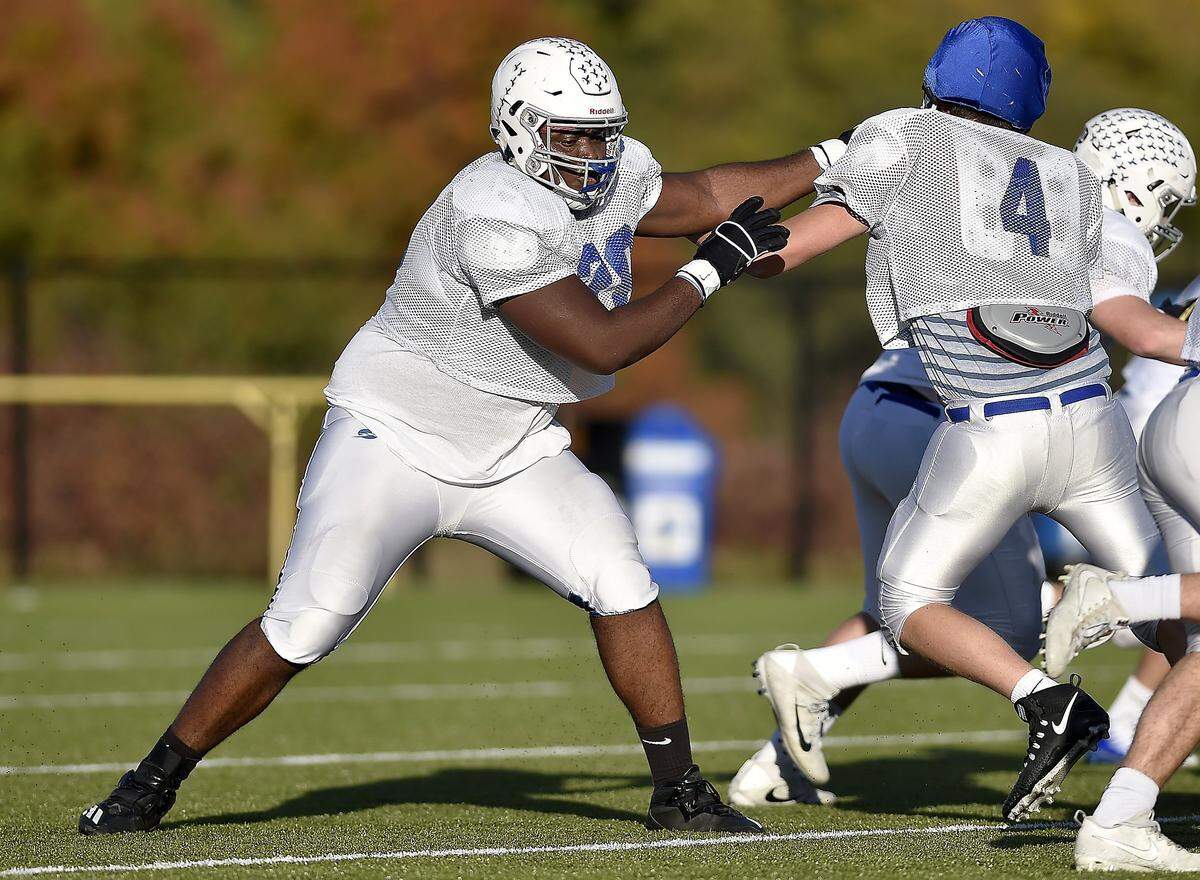
Ike never thought of himself as athletic. But his dad has height, his mom a strong build, and by the time he was 14 there were signs he was taking on the best parts of both.
But, still. What they expected was for Ike to finish last in most of the camp’s drills. They could not have expected that would be enough to catch the first spot out of the camp and toward the United States.
Ike calls it God. Ugboaja calls it belief.
“I know he’ll do the work,” Ugboaja said. “That’s why he stuck out. He was trying to show me something different.”
‘I don’t want to talk about that’
Danielson Ike needed less than a year to see some of our country’s worst.
The original plan was to attend Arlington Country Day School in Jacksonville, Fla. Trouble arose there almost immediately (the school would eventually close in January), which set off a domino line of even worse problems.
Ike was in the U.S. on a Form I-20, which is essentially a clearance through Homeland Security for a foreign citizen to study here. The forms are tied to specific schools, so once Ike wasn’t attending the private school in Jacksonville, he had to scramble.
He ended up under the care of a man in Miami who promised school and football but turned out to offer something else entirely. Ike described long days at the man’s house, taking some English classes online between football drills in the morning and afternoon.
Neither Ike nor Tijani Idris, his legal guardian, would name the man. Efforts to reach him in Florida failed.
“I don’t want to talk about that,” Ike said. “Some things happened, and I wasn’t happy being there.”
Ike was there with another kid in Ugboaja’s program. They went to enough camps that Syracuse, Bowling Green and Temple offered scholarships before he’d ever played a down.
Looking back, it’s a wonder he had the energy. He was so sad. The distance from home, the isolation from anything they’d expected to find in the States, just Ike and one friend feeling like captives.
Ike was miserable. He would go to his room as early as possible after football, sometimes by 5:30 or 6 p.m., just to be by himself. He marked off the days on a calendar, counting down to graduation, even as a freshman.
Idris and Ugboaja were each traveling a lot, and communication was spotty. By the time they knew how bad Ike’s situation was, they threatened the coach in Miami enough that Ike briefly attended Miami Edison, a low-income school in a heavily Haitian neighborhood.
But that wasn’t good enough, either. If it was so easy to put him in a real school, what took so long?
“They were just using him for football,” said Idris, who works with Ugboaja’s foundation. “They see these coaches, they think, ‘Maybe we can get a job from this.’ So we’re like, ‘No.’ We took him out.”
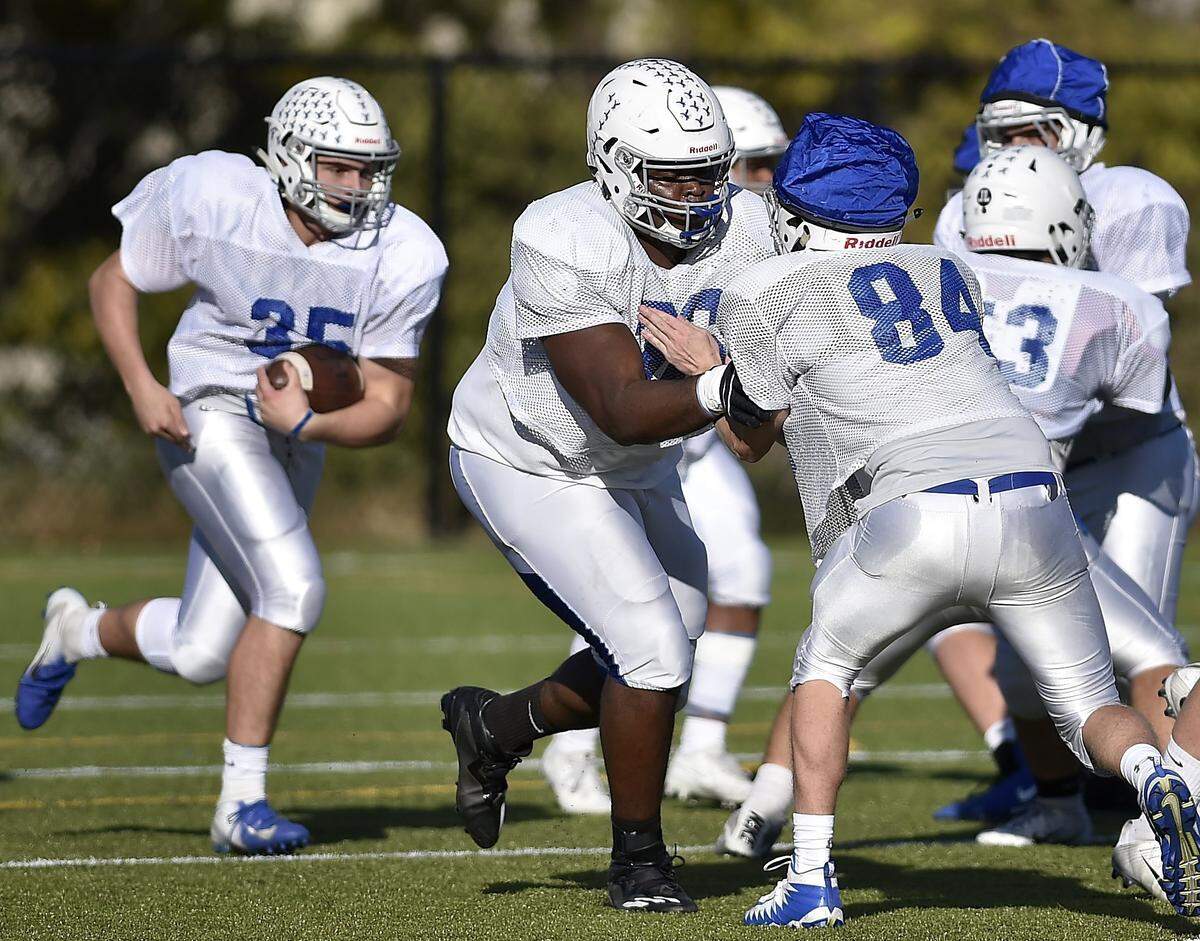
Idris was based in Kansas City by then, a job with a roofing company taking him to the Midwest. Most of the kids in Ugboaja’s foundation went to high schools along the East Coast, but Idris decided to bring Ike to Kansas City. He was tired of the drama.
One of the first people he and Ike met here was Myron Piggie.
‘Don’t trust him completely’
Danielson Ike saw Piggie the minute he walked off the plane at Kansas City International airport three summers ago.
Piggie was there with his brother, Leo Wright, a local youth basketball coach. They were to drive him to Piggie’s house, where he would stay, a request from Idris because he didn’t have a place of his own in Kansas City yet.
Ike had no way of knowing Piggie’s past, including 37 months in federal prison for charges stemming from payments to high school basketball recruits that in turn defrauded universities in the early 2000s.
“Nicest kid you’d ever want to meet,” Piggie said of Ike. “I gave him some structure. You get up in the morning, you work out, you do some chores around the house. We never had any issues.”
Ike stayed with Piggie’s family for a few weeks. Then he went to live with Wright for the rest of the summer. This part of Ike’s story is complicated, with the adults around him tugging in different directions, often telling different stories.
Idris trusted Wright and Piggie in the beginning, but the relationship quickly turned, to the point that now they don’t even agree on how they met. Idris said it was on a roofing job; Piggie in the parking lot of a Brookside grocery store.
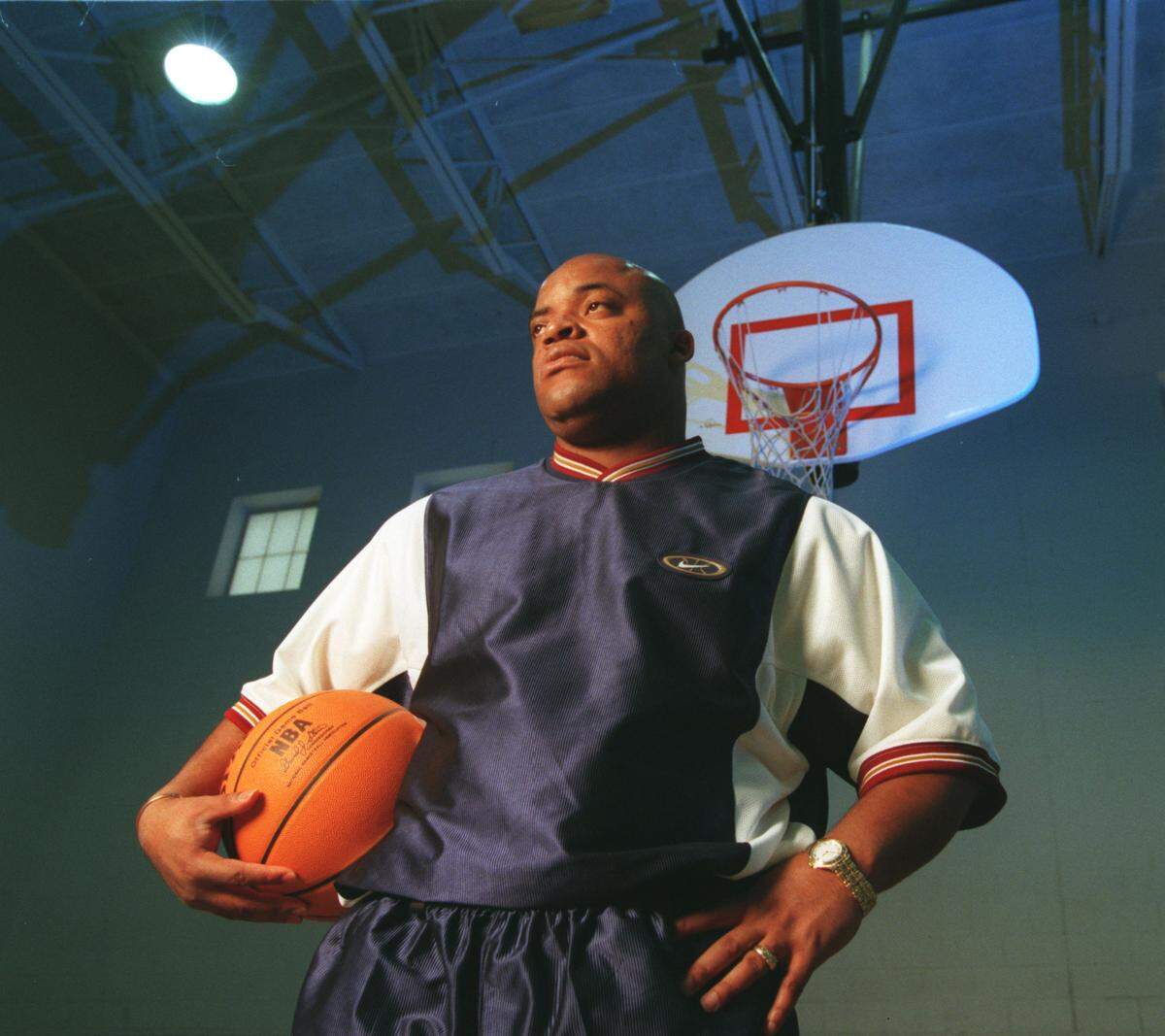
Idris is a roofer by trade and said Piggie took advantage of him on a job. Piggie said he “never did business with TJ like that” and called Idris “ungrateful” considering the help he and Wright gave Ike that first summer.
Idris said he cut Piggie out after finding out about his past — including drug dealing and a 2014 guilty plea to possessing stolen property — while Piggie said Idris didn’t do enough to help Ike.
“Every time I see him,” Idris said, “It’s like, ‘Oh, we take care of Ike.’ I know people who buy stuff for kids like that thinking, ‘Oh, if we get him this now then he owes me.’ There’s a lot of stuff that goes on in the States, people using kids because they’re athletes. That’s what I don’t want.”
Piggie was emphatic when asked about this.
“In the name of Jesus I never ever thought about that,” he said. “When Ike left my house, that’s the last time I talked to Ike. I don’t even have his phone number. If I wanted money, I’m going to stay in touch with money, don’t you think?”
Either way, Ike now stays at Boys Hope Girls Hope of Kansas City, a home for academically capable and at-risk kids. He’s happy there, stable, and his last four years have been nothing if not a demand to mature quickly. He was let down in Florida and saw other kids in Ugboaja’s foundation transfer universities after feeling mistreated by coaches.
Ike remembers watching a documentary on an NFL star who promised to milk football for everything it offered — the money, the fame, the opportunity — because he knew football would milk him for everything he had. Along with the year in Florida, that message stuck with Ike: look out for yourself, because nobody else will.
“Leo is a good man, but his brother puts the shade in him, just paints him bad,” Ike said. “Leo is also a person I don’t want to trust because I think he might come back and bite me. I don’t know. I have that gut feeling in me, like, ‘Don’t trust this dude.’ If you’re going to trust him, trust him halfway. Don’t trust him completely.
“I’m very careful not to allow anybody to bite me like it did already. I don’t want to be in anybody’s debt. I don’t want anybody to come out two years from now and say, ‘I did all of this. All of this happened because I was there.’ No. If anybody can tell me that, that would be Ejike and TJ.”
‘Whoaaa ...’
Tony Severino is in his 36th season at Rockhurst. The well-known and respected Kansas City football coach had never had a conversation quite like his first with Danielson Ike.
“’I don’t want to just be the best lineman you’ve ever had here,’” Severino remembered Ike saying. “’I want to be the best in the NFL.’”
Severino chuckled when telling the story.
“I mean, he just skipped over college,” he said.
Even as a sophomore, Ike would have likely started on the Rockhurst offensive line, but the Missouri State High School Activities Association would not clear him. There was just too much to sort out, between Nigeria and Florida and everything else.
He was told he’d need to sit out at least the 2016 season, with no guarantee he’d be able to play after that. He had so much classwork to make up he was told that he might want to reclassify, to take an extra year to finish high school. Ike was too ambitious for that. He completed two years of schoolwork in one.
“I wouldn’t say it was easy,” Ike said. “But it wasn’t killing me.”
Ike’s main contribution to that 2016 team was as something of an inside joke before the Shawnee Mission East game. Nobody knew about Ike back then, so Severino made sure Ike walked off the bus first.
“You could see all the East kids go, ‘Whoaaa,’” Severino said. “They didn’t know he couldn’t play. That’s a true story.”
He’s playing now, and even in just his second year of football you can see the potential. His highlight tape is gruesome, a series of scenes in which he lays out whoever happens to be in front of him. Sometimes it’s easy to forget that he’s only beginning to learn about football technique and how to train.
“He’s the best I’ve seen since we’ve been here,” said Bishop Miege coach Jon Holmes, who has won four straight state championships and is in his 15th season as an assistant or head coach. “The athleticism, how big he is, the power. You don’t see that in that size and age.”
One Division I assistant who has recruited Ike called him “my favorite lineman in years, not just the upside but just a terrific kid.” Severino stresses that the attention on Ike is about his potential, not his current skill.
“And there’s so much more to him than football,” Severino said. “We’ve had better football players here. I’m not sure we’ve had many better kids.”
This is a stressful time for Ike. College coaches show up every week, pushing him to make a verbal commitment he doesn’t feel ready to make. He has some favorites. Oklahoma. Louisville. Michigan. Iowa State. Alabama is out. Too many layers between players and the head coach, he said.
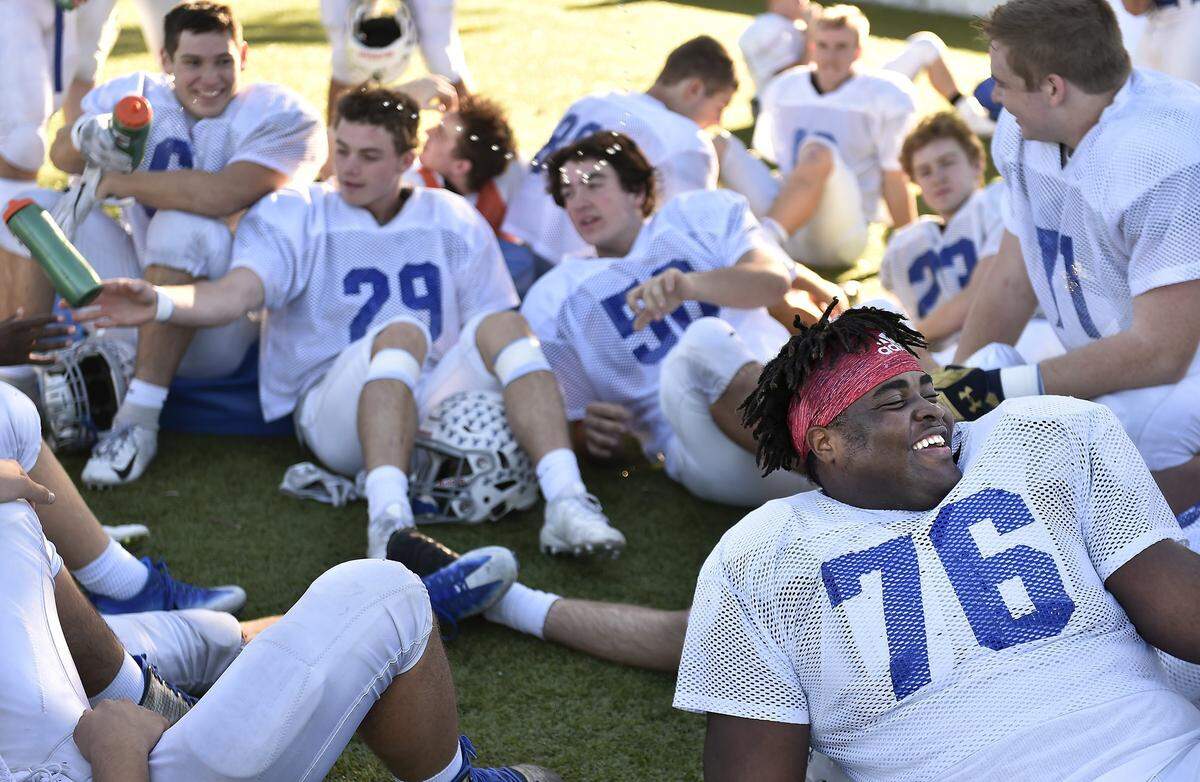
Severino has been trying to convince Ike to make a verbal commitment. As protection, more than anything else. Commit somewhere now, so that if you get hurt you still have a place to land.
Ike didn’t want to do that. Didn’t want to be another kid who gives a verbal commitment on the first offer, then switches a few months later. He’s a man of his word. Wants to pick one school, then stick with it.
But now he’s planning visits earlier than he originally intended, just to speed up the process and get it over with. Some of this stems from the sort of emotion that every 18-year-old experiences when thinking about college. Even for Ike — born and raised in Nigeria, a rotten year in Florida behind him, now flourishing in Kansas City — change is stressful.
“Some days it really scares me, I’m not going to lie,” he said. “Like, ‘Oh my God, I’m going somewhere I know nothing about.’ I hope I don’t have the Miami experience again.”
Ike has found a home here. Not just at Boys Hope Girls Hope, and not just with the football team, but in Kansas City. He discovered an African grocery store for when he wants to make Jollof rice or Egusi soup (fair warning — pretty much everyone who tries his cooking says it’s unfathomably spicy).
He sings in the choir, a beautiful tone an octave or two higher than you’d expect from a man his size. Singing calms him. He does it when he gets angry, which doesn’t happen as much as it used to — just enough to keep him moving forward.
“If I feel relaxed, it always comes back to bite me,” Ike said. “I’m happy I’m here. I’m around people who care about me. I would even say some of them love me as a person. So I’m happy I’m here. I’m comfortable. But I don’t ever want to relax.
“This is just a stepping stone to where I want to be, and I don’t want to lose that fact. I’m going somewhere else. This right here is not it.”
‘That’s what I want’
Danielson Ike hears about The Blindside all the time. The comparison to the best-selling book and box office hit movie about former NFL offensive lineman Michael Oher, is just too easy. People — including three who talked for this story — cite it constantly.
The description works as a sort of crude shorthand: enormous teenager with extraordinary athletic gifts lives with people who aren’t his parents and achieves football success.
But Oher’s story has little useful application here. Ike is nobody’s sequel.
Ike chose this, for starters. He has needed nobody’s encouragement, nobody’s shelter. He wasn’t born to an addict mom and deadbeat dad. His parents are strong, loving and supportive (even if Mom freaked out a little when he sent her a YouTube clip of the NFL’s hardest hits).
Ike has been lucky, in some ways, not just because of his natural athleticism and parents’ support, but for Ugboaja choosing him at that camp and for finding love and stability here in Kansas City. But he’s also made this his own story.
Ugboaja chose Ike for a reason, after all. It wasn’t his ability, because that came later. It was his determination, and that’s still here. The adults finally got out of his way in Florida, and look now at the life he’s building for himself — enough talent that every program in the country wants him, enough brains and ambition that they’re all selling him on their business schools.
“It’s funny how many schools say they have No. 1,” Ike said. “I’m like, ‘It’s No. 1? There can only be one.’”
Ike wants to major in international business and entrepreneurialism. He’s been to three countries and speaks English, three African languages, plus some French. But he wants to see so much more. Wants to experience so much more.
He still shakes his head at the idea that here in America he can get a free education at the school of his choice just for being big and strong. And the idea that some players are drafted immediately into the NFL and given million-dollar contracts? Come on.
He has plans for these opportunities. He jokes that sometimes he thinks he’s crazy for the plans he has, but they won’t leave his mind. He has come to think of his life as a book. The first chapter was his first 14 years in Nigeria. The second is happening now, and will continue for the next decade or so.
After that, who knows?
“Football is something that can get me to where I’m going,” Ike said. “That’s all it is to me. I’m not one of those guys who say they would kill for football, they can’t do nothing without football. I love football, don’t get me wrong. I love football. But I can do so many things without football.”
Ike talked in person three times for this story, and the layers are so numerous and complicated it’s still hard to know how to tell it best.
He has every reason to be angry, for the way he was treated in Florida, and for some bureaucrats making him sit out his first year here in Kansas City. He has every reason to be cynical, because he has already been treated like a commodity, already been the unwitting subject of a power struggle, already been shown how football chews up the naive.
Ike is none of those things, somehow. His eyes are bright, his handshake firm, his focus unwavering. Once, he was asked what he hoped would be the message from this story.
“People are different,” he said. “Some people really want this, and some people don’t. I know what this can do for me. I know what this opportunity can do for me. Some people think, ‘Oh, I’m in the States, I’m OK. I’m good.’
“I want people to know that I don’t plan to waste this opportunity. I’m not the typical athlete they know, that’s like, ‘Yeah, I’m good at football.’ I want to use football to go to school. I want to go to the (NFL). Make a path.
“I want people to know I’m going to take advantage of every single chance. That’s what I want.”

Sam Mellinger
Sam Mellinger is a Kansas City Star sports columnist.



This story was originally published November 2, 2018 at 12:02 PM.