Why the Chiefs’ playoff path is a legacy opportunity that Patrick Mahomes should covet
January 18, 2024 5:30 AM
Rice had different plans. “How can we make this work?” he asked his coaches. He wouldn’t give up on the season — or his teammates.
“That’s when I knew, like, ‘OK, this guy has an easy way out,’” Likens said, “and he did not take the easy way out.”
Likens is convinced the decision cost Rice the chance to be a first-round pick. Rice’s testing wasn’t as impressive after the injury, and Likens remembers talking to pro scouts — including the Chiefs — ahead of the draft about Rice’s potential.
“If you’ll trust me,” Likens remembers saying, “you’re going to be glad that he’s on your football team.”
The Chiefs took Rice with the 55th overall pick during last April’s draft in Kansas City.
And since then, they’ve learned — for themselves — exactly what Likens was talking about.
Nagy says he began to see things turn for Rice around the Chiefs’ Week 9 game against Miami in Frankfurt, Germany.
Up to that point, KC’s coaches were most worried about getting Rice to line up correctly and run plays the right way.
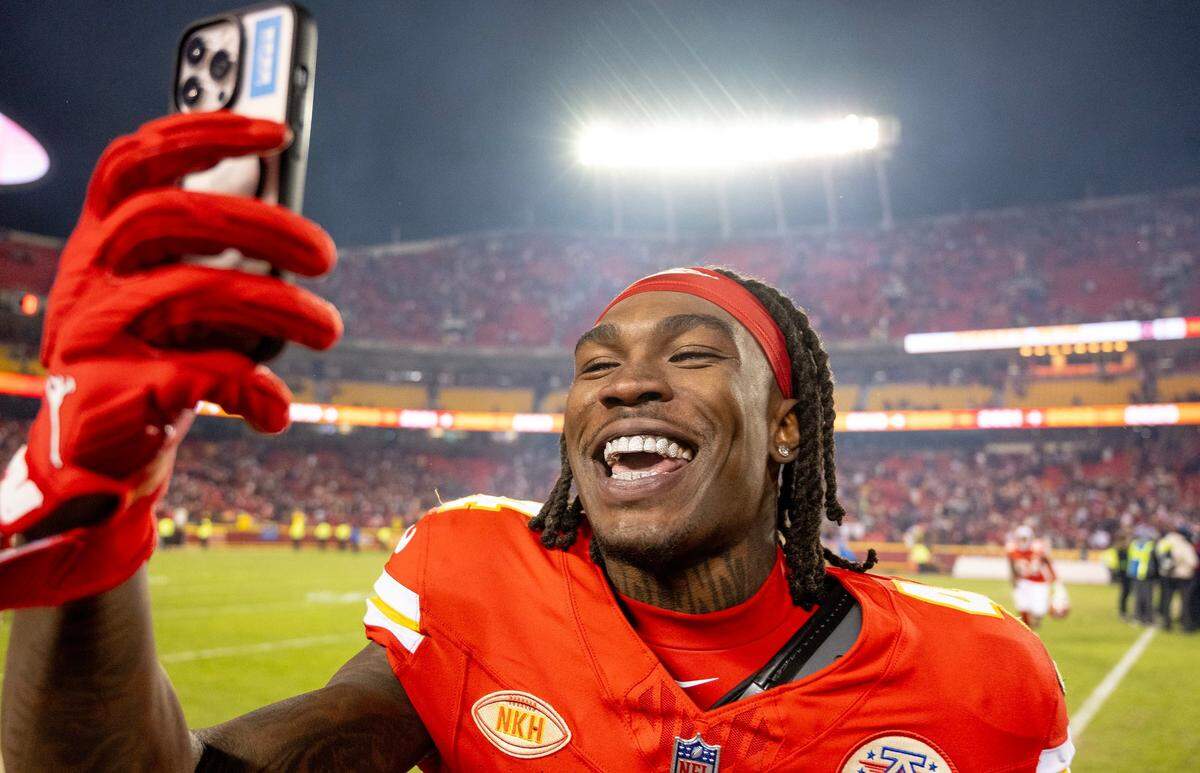
Nagy says Rice is “way past that now.” The rookie — thriving in a coach Andy Reid offense that doesn’t typically have first-year standouts at receiver — now gets to the line of scrimmage quickly and surveys how defenses are playing him.
The Chiefs’ coaching staff also started to see the mental mistakes vanish around that point. The Monday morning film sessions, in other words, showed Rice playing cleaner football.
“As a coach, when you have guys that don’t make the same mistake twice, you love that,” Nagy said. “And that’s what he’s done.”
That’s taken persistence — and also some help.
Nagy says some players deserve an assist with Rice’s development: the guys in the Chiefs’ proverbial receivers room. They’ve been able to help Rice because he’s always asking questions.
And also because Rice is willing to listen — while understanding he doesn’t know it all.
Chiefs receiver Justin Watson has seen this often. He said the team will talk about a concept in the meeting room; then, at walk-through later that day, Rice will pull him or quarterback Patrick Mahomes to the side.
“Hey, what did you mean by this route? Can you explain that to me again?”
“So he’s always willing to learn,” Watson said. “There’s definitely humility with that, and then there’s a confidence, too.”
With that knowledge, Watson has seen Rice embrace his growing role without fear. He attacks the football and is violent with his runs after the catch. He also has learned the offense without getting bogged down by details that might slow his playing speed.
“I think he has the mental attitude to go out there and get better and better every single week,” Mahomes said. “Obviously, we need him to be great right now, but I think he’ll continue to get even better after the season and into the rest of his career, because that’s the type of attitude that he has.”
Reid has been impressed by Rice’s selfless thoughts, as well. He shared that earlier in November when complimenting Rice for becoming more “Patrick-friendly.” He reiterated that message Wednesday, saying the receiver was open to feedback.
“He wants to be great, and he’s willing to work at it,” Reid said. “He’s willing to listen, which a lot of guys turn the veterans off, but he wants to absorb all of that and take it in.”
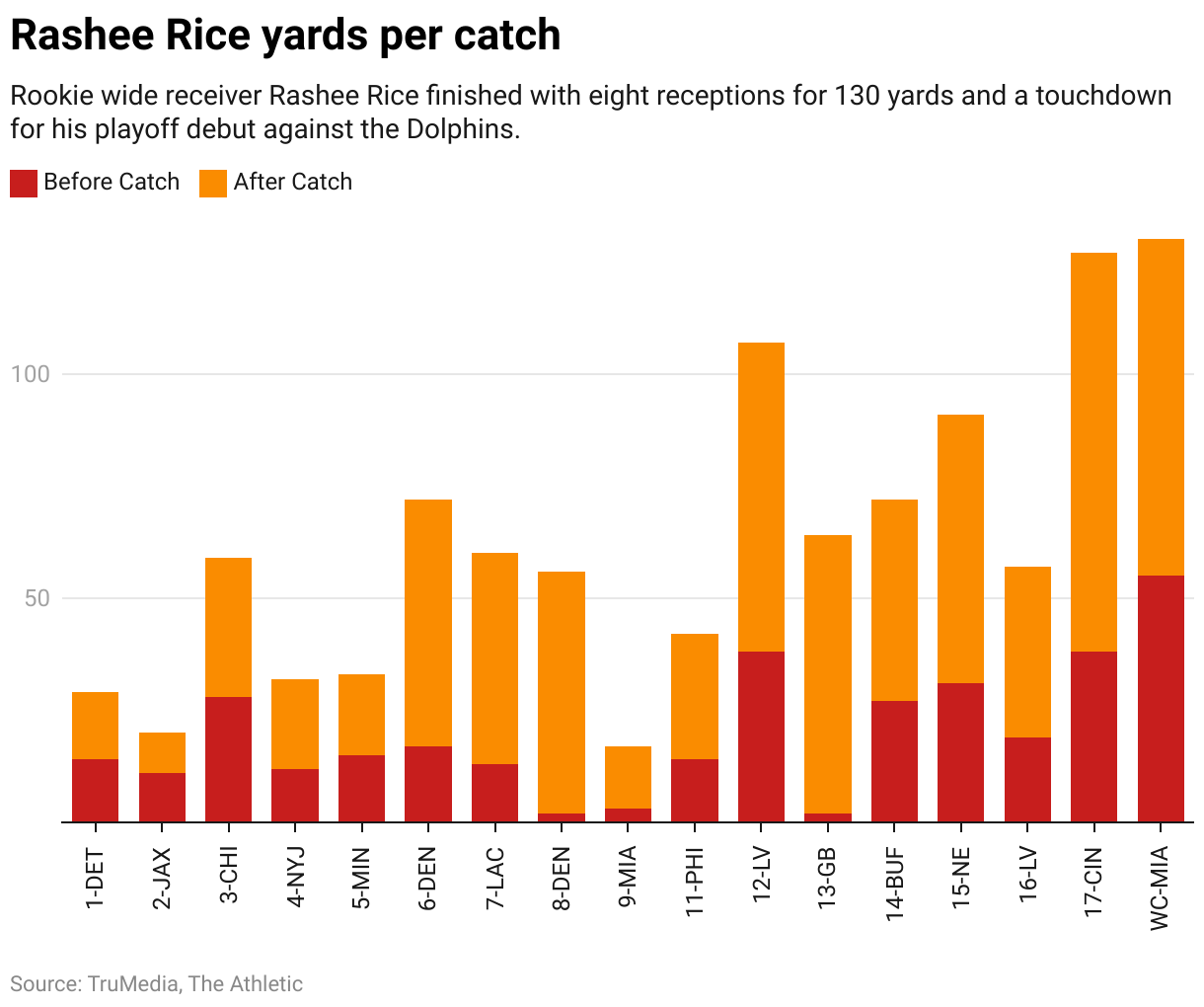
Through all that, Rice has become Mahomes’ most reliable weapon of late. He has three 100-yard receiving games in his last seven contests, averaging 93 yards per contest over that time.
The last one, though, was his best outing. Rice had a career-high 130 receiving yards against Miami in the playoffs, in the coldest conditions he’d ever played in.
Likens — a few hundred miles away from GEHA Field at Arrowhead Stadium — couldn’t help but be proud.
Especially because Rice had come through on his promise.
Rob Likens had carried the slogan with him from Central Connecticut State to Louisiana Tech, but it had never resonated like this.
Early on, he explained one of his favorite messages to his SMU receivers: “DBS.” The three letters stood for a phrase: “Don’t be soft.”
The SMU receivers thought it was funny at first, but they soon adopted the code words. Whenever a wideout made an excuse in a position meeting, or complained about something difficult, he likely knew what was coming next.
“Come on, man,” a teammate would say. “DBS.”
Likens re-emphasized the point even further before one practice.
He was joking with his guys when he talked about how they should get the letters tattooed on their bodies. That way, the reminder would stick with them every day — something that goes well beyond football.
“Anything that you want to do in this world, man. ... You’ve got to be tough in this world,” Likens said. “You’re gonna get rejected. People are going to tell you you’re not good enough. And you’re gonna have to fight that, and you’re gonna have to be mentally tough and you can’t be soft.”
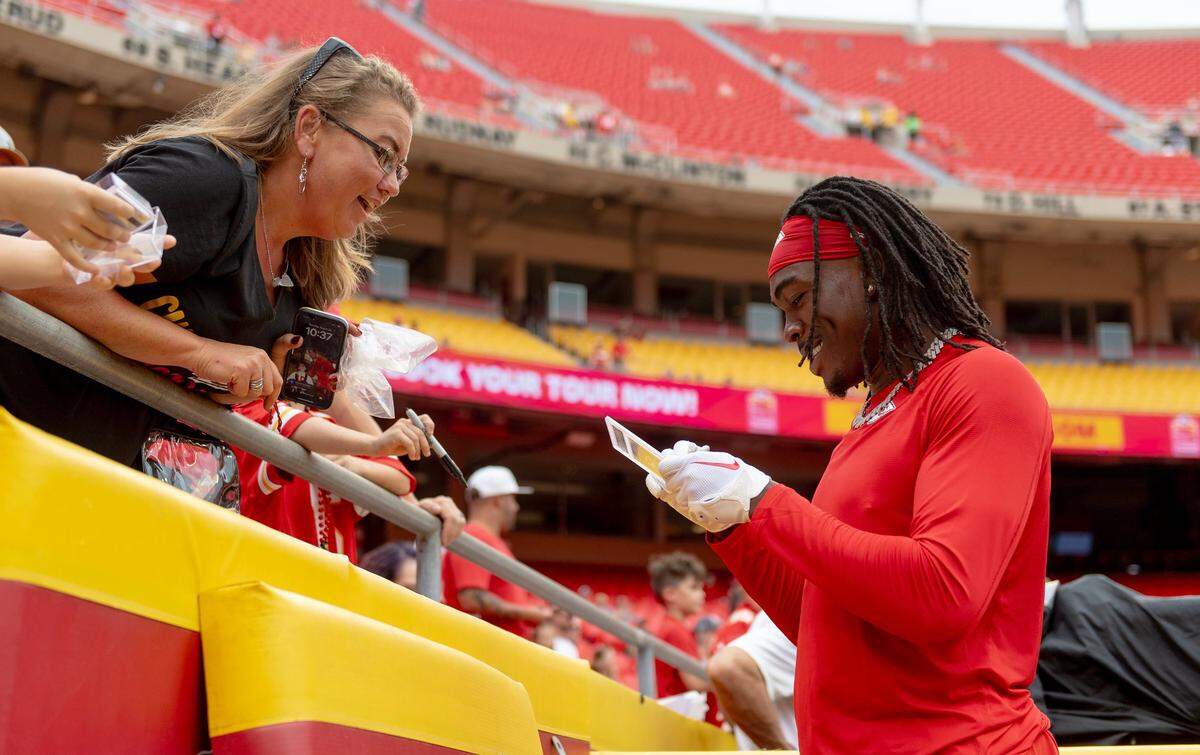
A few days later, Rice stopped Likens during a meeting and raised his hand. And then he showed off his new tattoo — one he’d gotten along with a teammate.
“DBS.” On his right hand, just below the pinky.
The words had made a permanent imprint on the SMU receiver.
Likens said he knew what had to happen next.
The following week, he joined his SMU receivers at the tattoo parlor. There, on his right bicep, he had the three letters pressed into his skin.
Others joined in, too. Two more players put the tagline on their legs, while another positioned it across his chest.
That history meant that Likens knew exactly what to say ahead of Rice’s first playoff game last week.
The weather was going to be cold. Really cold. And honestly, Likens didn’t know how Rice would handle those conditions, given the fact that he had never encountered them before.
So he shot Rice a text message, meant not only to encourage, but also to inspire.
“Don’t forget why you got that tattoo,” Likens wrote, “and what it means.”
Rice’s response? A text message first.
Then, a 130-yard game after.
“Coach,” he said, “I’m going to show you what real DBS looks like.”

Get in-depth, sideline coverage of Kansas City area sports - only $1 a month
VIEW OFFER