
What happened to the KC Kings? A look back at Kansas City’s NBA team
Do you remember when Kansas City had an NBA team?
For 13 seasons in the 1970s and ‘80s, the Kings called Kansas City home.
The Kings were the city’s first and only NBA franchise, playing in town from 1972 to 1985 before relocating to Sacramento ahead of the 1985-86 season.
And as the league looks toward expansion, this team’s history offers a reminder of KC’s complex relationship with professional basketball.
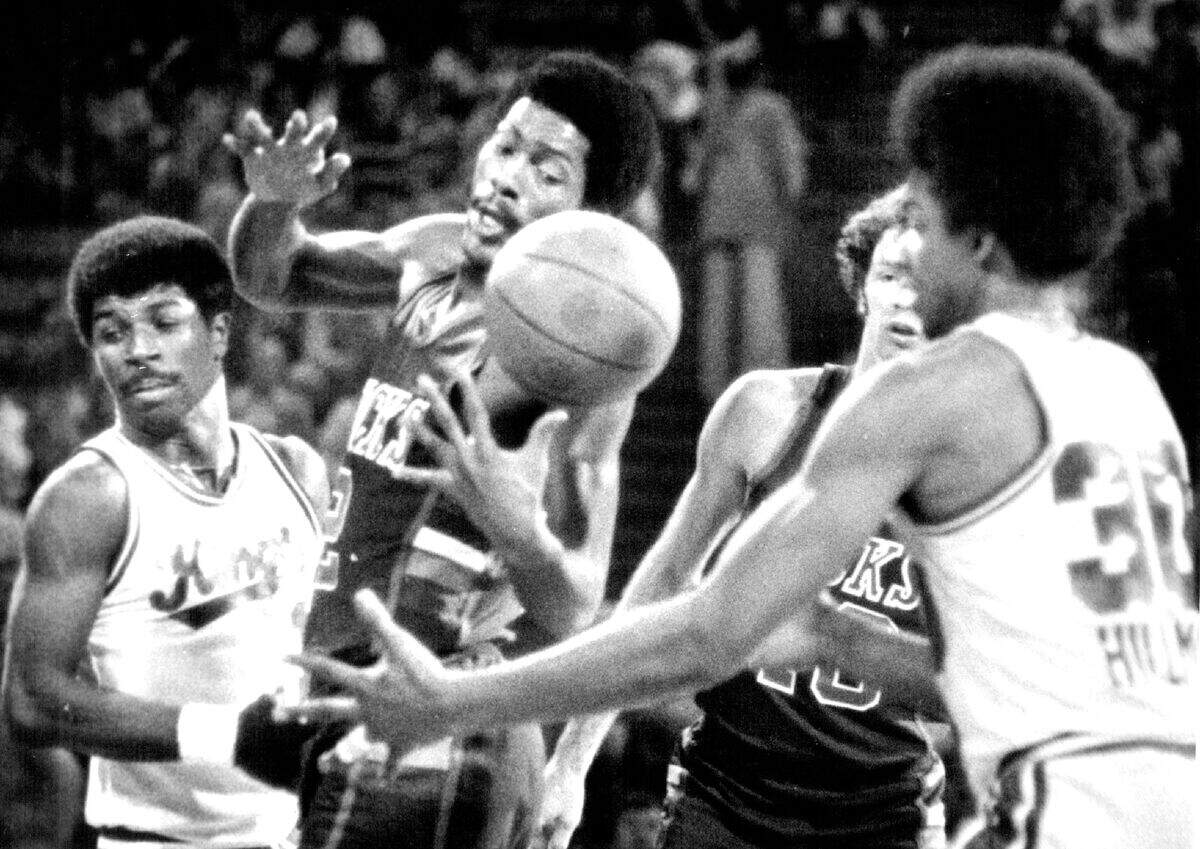
The history of the Kings in the NBA
The Kings’ history stretches back well before its Kansas City days.
The franchise began as the Rochester Royals in 1945 before moving to Cincinnati and becoming the Cincinnati Royals in 1957.
In 1972, the team relocated again, and this time landed in KC. The team was renamed the Kansas City-Omaha Kings, a name change made to avoid confusion with the Kansas City Royals Major League Baseball team.
For its first few seasons here, the Kings split home games between Kansas City and Omaha. That changed in 1975, when “Omaha” was dropped from the name and the team began playing full-time in Kansas City at the newly built Kemper Arena — now Hyvee Arena.
Notable players & coaches in KC
The Kings’ early years in Kansas City featured notable names on the sidelines and on the court.
Hall of Famer Bob Cousy coached the team in its first KC season before Phil Johnson took over in 1973 and later won NBA Coach of the Year in 1975.
One of the franchise’s most electric players, Nate “Tiny” Archibald, arrived with the team from Cincinnati. In the Kings’ first season in Kansas City, the 6-foot-1 guard led the NBA in both scoring and assists — a rare feat that cemented his place in league history.
He’s also recognized as one of the NBA’s top 75 players of all time.
Other fan favorites during this era included Otis Birdsong, Sam Lacey, Scott Wedman and Phil Ford. Ford, who was selected No. 2 overall in the 1978 NBA Draft by the Kings, went on to win NBA Rookie of the Year that season.
Hall of Famer and 5-time NBA champion Magic Johnson nearly joined the Kings in the 1978 NBA Draft. But Johnson later decided to return to Michigan State, where he won a national championship before being drafted to the Los Angeles Lakers in the 1979 NBA Draft.
How successful were the Kansas City Kings?
The team reached the playoffs for the first time of the Kansas City era during the 1974-75 season, but lost in the conference semifinals to the Chicago Bulls.
The Kings made multiple postseason appearances over the next few years, with their most successful run coming in 1981, when they advanced to the Western Conference finals before losing to the Houston Rockets in five games. The Rockets would fall 2-4 to the Boston Celtics in those NBA Finals, and Archibald, who’d joined Boston in 1978, was a part of that ‘81 Celtics championship team.
Despite that success, the franchise soon began to decline.
In 1979, a severe storm caused the roof of Kemper Arena to collapse, forcing the Kings to play at Municipal Auditorium, a much smaller venue that seated about 10,000 fans. Attendance struggled in the following seasons, and the team’s final year in Kansas City (1984-85) ended with a losing record and average crowds around 6,000 fans.
Financial instability also played a role. Frequent roster changes, unstable ownership and limited revenue contributed to the team’s difficulties according to The Kansas City Times in 1985. College basketball — particularly KU and Mizzou — drew far more regional attention than the NBA franchise.
In 1983, The Kings were sold for $10.5 million to a group that planned to move the team to Sacramento. The franchise honored its lease at Kemper Arena through the 1984-85 season before officially relocating in 1985.
Today, the Sacramento Kings remain the continuation of the franchise that once played in Kansas City.
With NBA Commissioner Adam Silver expressing interest in adding two expansion teams in the future, the question remains:
Should Kansas City get another shot at pro basketball?
This story was originally published January 27, 2026 at 6:00 AM.
.jpeg)