
How the landscape of the NBA changed forever one April 1984 night in Kansas City
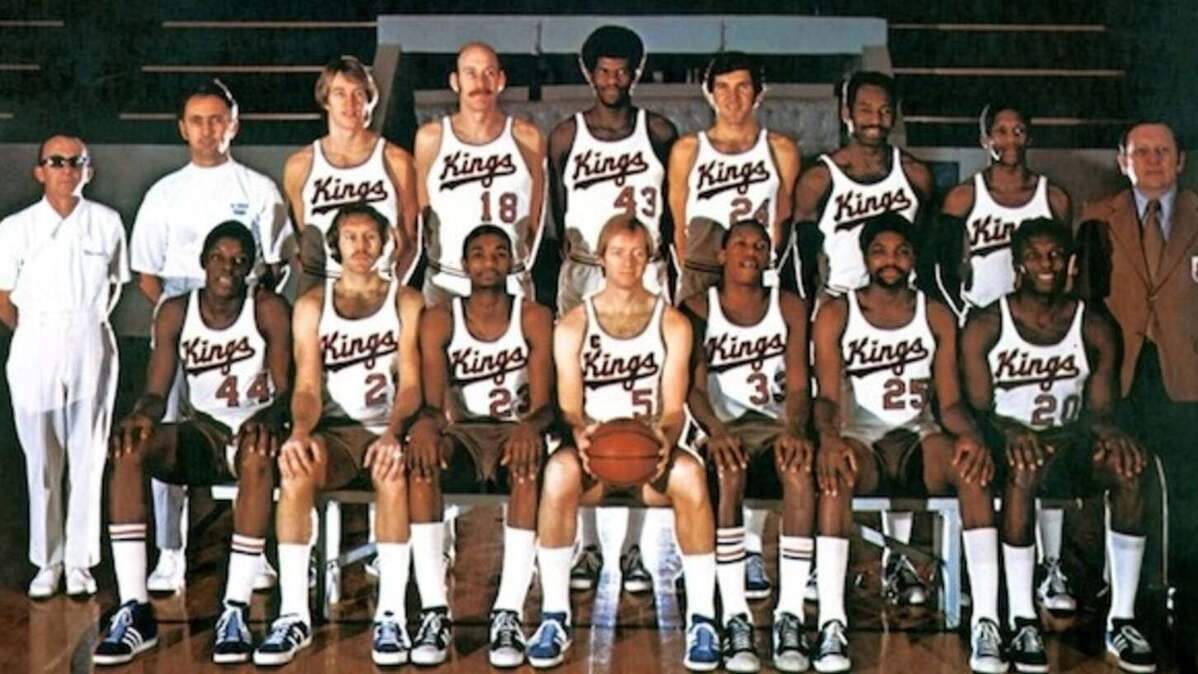
What would you say if we told you Michael Jordan most likely would’ve never become a Chicago Bull, and quite likely could’ve been a Philadelphia 76er instead, if not for one event that happened in Kansas City?
What if we told you that eight consecutive NBA champions from 1991-98 might not have been crowned if not for one event that happened in Kansas City?
And what if we said the made-for-TV spectacle known as the NBA Draft Lottery may never have been born if not for one event that happened in Kansas City?
Just over 36 years ago — on April 14, 1984 — the historical landscape of the NBA was forever altered by a confluence of mostly bizarre events that culminated with one watershed evening at Kemper Arena. Nobody could have possibly grasped the vast ramifications at the time, of course. It was just a regular-season finale between two sub-.500 teams, the Kansas City Kings and the Houston Rockets.
The Kings, 37-44, needed to win in order to gain the No. 8 seed in the Western Conference playoffs. A victory would propel them into a first-round series against the Los Angeles Lakers. The Showtime Lakers were entering their prime in 1984, and Kansas City fans were assured of seeing Magic Johnson, Kareem Abdul-Jabbar, James Worthy and Pat Riley at least one more time at Kemper if the Kings could just qualify for the best-of-three opening-round series.
But that’s the footnote, not the lead, of this story.
The overriding significance was that Houston, 29-52, required a loss to wrap up a spot in a coin-flip scenario that would determine the No. 1 and No. 2 picks in an upcoming draft that would feature Jordan and Akeem Olajuwon.
Elite draft class
On the horizon was perhaps the greatest top-heavy draft ever in the history of team sports. Four future Hall of Famers would be selected in the first 16 picks in 1984, with Jordan and Olajuwon representing the crown jewels in a true treasure chest of talent.
The crazy thing is that it could have been an even richer draft. The four top underclassmen were considered to be Olajuwon, Jordan, Patrick Ewing and Wayman Tisdale. Ewing, after leading Georgetown to a national title in his junior year, decided to remain in school. Tisdale did too. This would be unfathomable today, but it shows how much quality there was in college basketball during that era. Ewing and Tisdale wound up going Nos. 1 and 2, respectively, in the 1985 draft.
As an Overland Park resident now and a Rockets beat writer for The Houston Post back then, current events make me think back to that April 14 night in ‘84 at Kemper.
Like many of you, I recently watched The Last Dance documentary series and mused about how Jordan likely would not have wound up in Chicago if the Kings had blown their regular-season finale in ‘84. I’ll watch draft lottery this year and chuckle about how Houston rather miraculously managed to backstroke into two consecutive coin flips, prompting the NBA to dump that compromised system and replace it with ping-pong balls in 1985.
The juiciest part of this revisionist-history tale is how Jordan could have, and probably should have, gone to the 76ers and not the Bulls.
In the days of the coin flip, the teams with the worst records in the Eastern and Western conferences, respectively, would face off in a simple “heads or tails” game of chance to determine the No. 1 and No. 2 picks. Thereafter, clubs would draft in inverse order according to records. Indiana had the worst record in the East but had traded its pick to Portland. In the West, the San Diego Clippers appeared for most of the year to be headed for the worst record. But in true Clippers-like fashion, they had traded the pick to Philadelphia.
Houston, with No. 1 overall pick Ralph Sampson and No. 3 overall pick Rodney McCray already on the roster from the 1983 draft, rolled out to a 20-26 record. With 36 games remaining, there wasn’t even a thought about the Rockets “qualifying” for a second consecutive coin flip. But then the Rockets began to backstroke with all the precision of an Olympic swimmer. A 9-26 slide sent them to Kansas City tied with the Clippers for the worst record in the West. Coach Bill Fitch started experimenting with different lineup combinations. The losses mounted and the 76ers grew increasingly antsy.
Alternate realities
Had Philadelphia and Portland wound up in the coin flip, there was little doubt about how it would have gone down.
If the 76ers won the flip, they were ready to take Jordan No. 1 and bill him as the next Julius Erving (Dr. J was nearing the end of his career). Portland would undoubtedly have followed by taking Olajuwon with the second pick and the Sam Bowie debacle never would have happened. Had Portland won the flip, the Trail Blazers would have gone with Olajuwon No. 1 and the 76ers would have had Jordan at No. 2.
In either case, Jordan never gets to the Bulls at No. 3.
Was there a chance Philly could’ve won the toss and selected Olajuwon? Would the 76ers have dared pair Olajuwon with Moses Malone in a Twin Towers concept, just as Houston ultimately did in pairing Olajuwon with Ralph Sampson?
The chances of that were slim. Olajuwon and Malone were back-to-the-basket centers while the Rockets had a unique big man in Sampson, who could face up in a high-low combination. Plus, the Rockets were privately worried about how the thin, 7-foot-4 Sampson would be able to hold up physically if forced into the role of low-post center for the bulk of his career.
Then there was the North Carolina connection.
Philadelphia coach Billy Cunningham was a North Carolina guy and a Dean Smith disciple. Smith would have given Cunningham all the verbal ammunition necessary to convince him that taking Jordan over Olajuwon would have been the prudent move for the 76ers.
And so, Jordan’s future home — and Olajuwon’s — would be determined by what happened on April 14, 1984 at Kemper Arena.
Had the Rockets and Clippers finished in a tie, a drawing would’ve followed to determine the Western Conference coin-flip participant. But it never came to that as the Clippers (representing Philly) won their finale over Utah while the Rockets were losing 108-96 in KC.
The Kings had ample incentive to win and reach the playoffs. Houston was assured of a once-in-a-generation player if it lost the game. And yet it wasn’t easy to arrive at an outcome that benefited both organizations. The Kings looked tight for much of the night. The five players on the floor for Houston at any given time were doing their best because the draft wasn’t on their personal agendas.
It was the final game of Hall of Famer Elvin Hayes’ career. He needed 35 minutes to reach an even 50,000, and the plan was for him to stay on the floor for 35 straight rather than sit periodically and run the risk of his 38-year-old body tightening up. Sure enough, The Big E made it. He left with 1:19 remaining in the third quarter and collapsed onto the bench while being saluted by the 16,147 fans in the stands that night. When Houston’s team bus headed back to the Westin Crown Center later that evening, Hayes was still wearing his uniform.
Despite running out makeshift lineups and the fact that Hayes was running on fumes, the Kings led just 90-86 midway through the fourth quarter. But then they used a 10-0 run to pull away. Ironically, the Kings were ignited by Larry “Mr. Mean” Micheaux, who had been Olajuwon’s Phi Slama Jama teammate at the University of Houston. Micheaux finished with 15 points and 17 rebounds off the bench and the public address announcer shouted “Kings are in the playoffs” as the final seconds ticked down.
Back at the Westin Crown Center late that night, word circulated that everyone connected to the Rockets should be solemn about the loss around the media. Nobody was to talk about what it meant for the big picture for fear that tanking would become a national narrative.
Nature of the business
Philadelphia GM Pat Williams took the high road, refusing to publicly accuse the Rockets of tanking their way to the coin flip.
“The disappointment here is that we were in contention for the coin flip 164 out of 165 days,” Williams told The Houston Post. “But that’s the nature of this business. Like I told the Philadelphia writers, the Rockets were obviously looking at their young personnel and paying tribute to Elvin Hayes in the final days of the season. That is certainly their privilege, and we wish Houston well.”
Even with Houston’s colossal late slide, the Clippers still would have likely finished last in the West if they hadn’t traded for guard Norm Nixon, who had a big hand in securing the Lakers’ first two championships of the 1980s. That deal, one of many shrewd ones by GM Jerry West, brought the Lakers the draft rights to Byron Scott.
“When you think back on it, the thing that really hurt our chances of getting in the coin flip was Nixon going to San Diego,” Williams said. “He made them a much-improved ballclub, good enough to win 30 games.”
There was a nice consolation prize for Philly. At No. 5, the 76ers drafted Charles Barkley. He wasn’t Jordan; he wasn’t Olajuwon. But not too bad.
By winning on the final day of the regular season to solidify a playoff spot, the Kings were left with the No. 9 draft pick. They used it to take a blue-collar power forward named Otis Thorpe. Thorpe was a fine player for Kansas City, and then Sacramento, but he didn’t win a championship ring until he was teamed with Olajuwon in Houston a decade later. The Kings, and several other clubs, passed on eventual Hall of Fame point guard John Stockton, who went No. 16 to Utah.
Want to dream a little?
Imagine what it would be like in downtown KC today if the Kings had stuck around instead of moving to California. Think about the buzz and excitement around the Power & Light District on Kings game nights, with bars and restaurants filling up 41 times a year and Stockton evolving into the face of the Kansas City franchise.
It wasn’t to be. When all was said and done, Otis Birdsong, Phil Ford, Scott Wedman and the ultra-charismatic Cotton Fitzsimmons delivered some exhilarating moments, but the Kings’ history in Kansas City could’ve been so much more.
Kansas City watches the NBA from afar now. But for one day — April 14, 1984 — KC was the place where the landscape of the NBA changed forever.
This story was originally published June 16, 2020 at 12:55 PM.