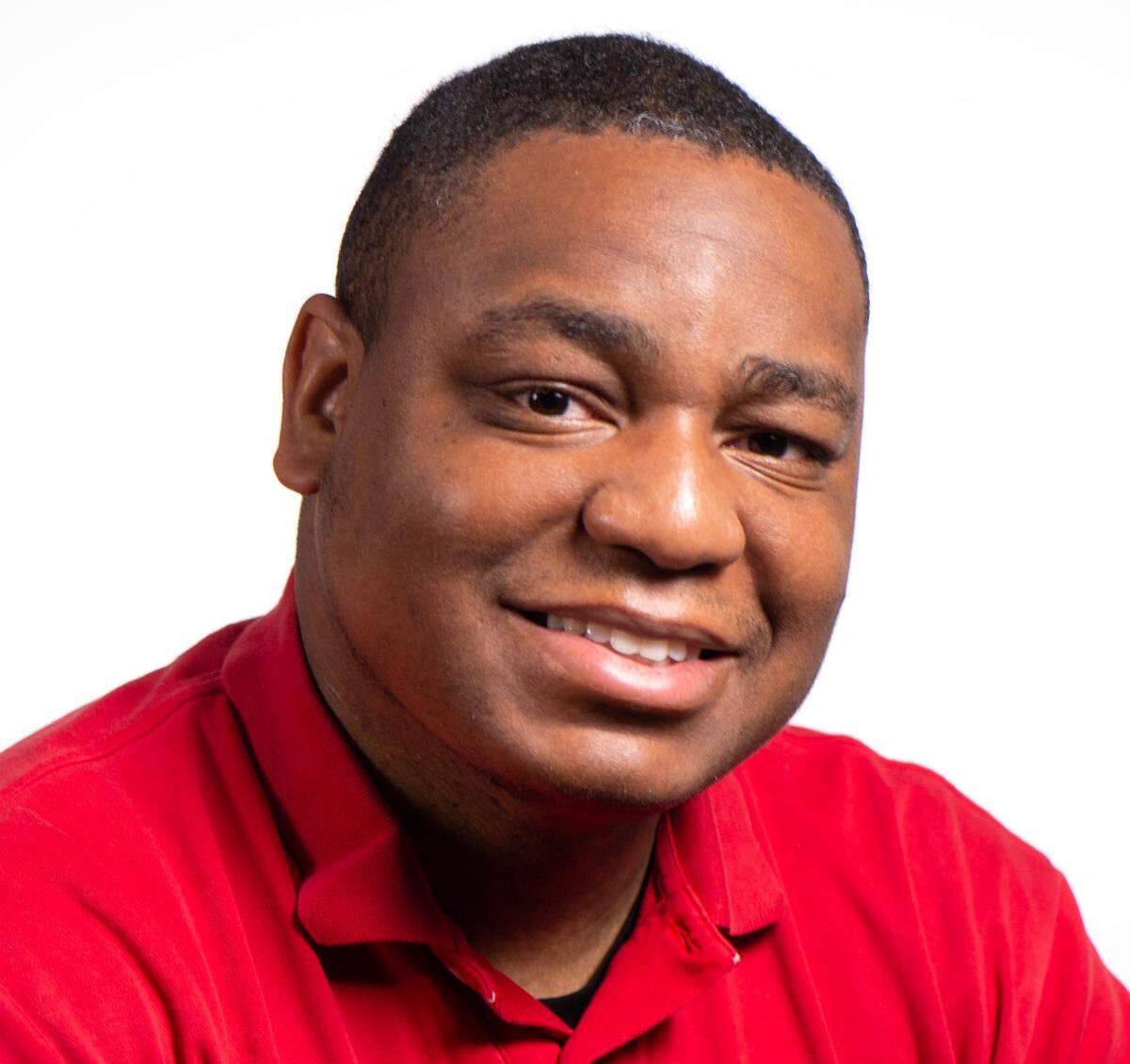
Meet the guy who challenges calls for Kansas City Royals — in 15 seconds or less
AI-generated summary reviewed by our newsroom.
- Bill Duplissea has overseen the Royals’ replay crew since 2014.
- Duplissea uses 17 camera angles and four high-frame-rate cameras.
- The Royals overturned 65.6% of challenges in 2025, ranking fifth in the majors.
When Kansas City Royals manager Matt Quatraro raises his hand skyward, all on-field action grinds to a halt.
It’s the typical precursor to a potential challenge.
A lot happens in the span of 15 seconds. The umpires alert all players as Royals bench coach Paul Hoover places a phone call.
There’s a direct line to a small room inside Kauffman Stadium. The incoming call emits a blaring ringtone that alerts a three-man crew at a moment’s notice.
At the helm is Bill Duplissea, known as ‘Duper’ to his contemporaries. The 21-year veteran knows the ins and outs of the operation. Since 2014, he has been at the controls and is well versed in challenge situations.
Duplissea is joined by Ethan Blouin and Drew Epperson on the team. Blouin has been with the Royals for six seasons while Epperson is in his fifth year. The trio builds analytical reports derived from video scouting.
As the 15-second clock dwindles, Duplissea is fast at work at the replay monitors. There are 17 different cameras to capture the action. Generally, it takes Duplissea a few seconds to render his decision to the coaching staff.
If his hunch is correct, the Royals will challenge.
“The first four innings, I’ve got to be 100%,” Duplissea said. “I can’t lose a challenge in the first four innings. The fifth and sixth (innings), a little tougher for me. And the seventh, I’ll roll the dice.
“… I try to play it like leverage. Importance of the game and stuff like that.”
A different path
Duplissea initially didn’t want to join the advance scouting team. When he first started, he was against the idea of sitting inside a room and looking at computers.
In his mind, Duplissea was a ballplayer. He went to college at UC Santa Barbara and spent six seasons in the Los Angeles Dodgers organization.
He climbed the minor-league ranks, playing with the Albuquerque Dukes in Triple-A and earning some MLB service time.
Then in 2006, Duplissea joined the Royals as a bullpen catcher. He got the job after a recommendation from his godfather Bob McClure, who was the club’s pitching coach at the time.
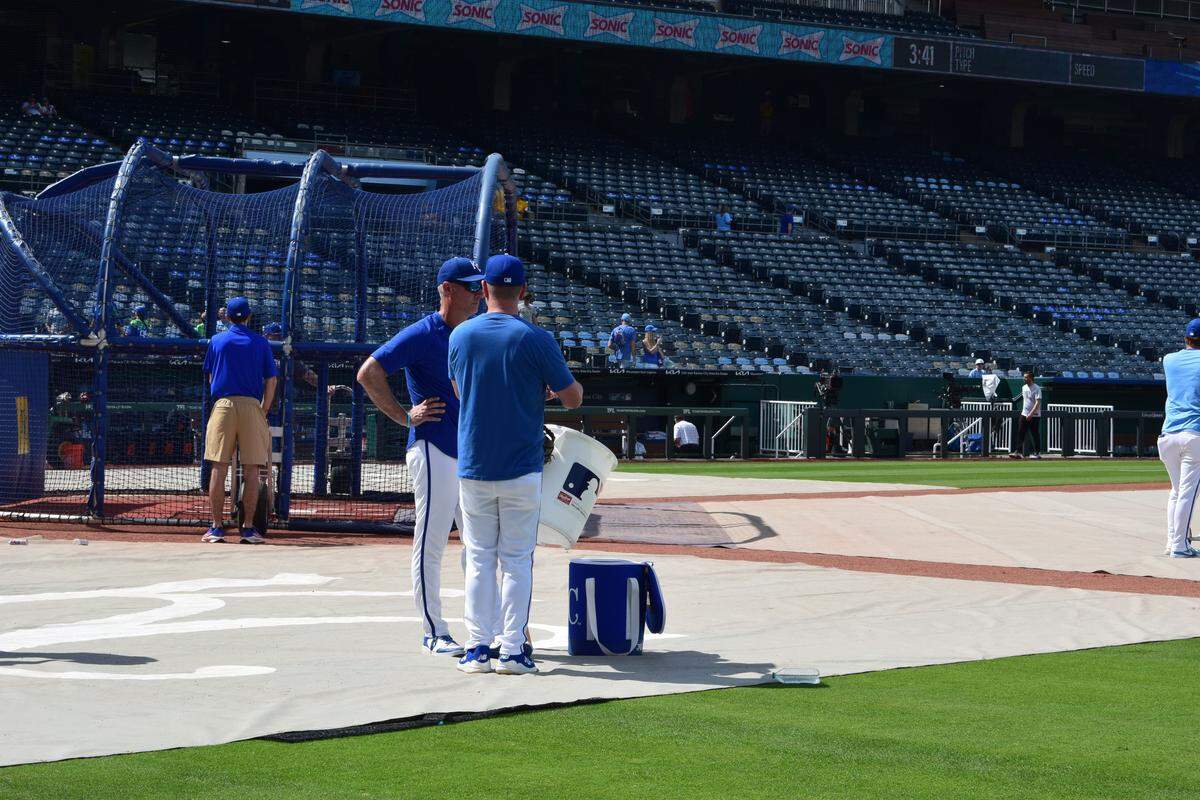
After an interview with former Royals assistant general manager Jin Wong and a trip to Hall of Fame third baseman George Brett’s now-defunct restaurant, Duplissea had a new job in pro baseball.
Duplissea served as the bullpen coach for nine years. Then, he received an interesting request from legendary Royals manager Ned Yost.
Yost wanted Duplissea to work in advance scouting. And to oversee the replay challenges for the organization.
“I told Ned, I don’t want the job,” Duplissea said. “I don’t want to leave the bullpen. I love being out there with the guys. Love being in uniform. And he was taken aback by that. He was like, ‘All right, let’s see how it goes throughout spring training. We’ll revisit later.’”
Major League Baseball first instituted replay review in 2008. The league expanded reviewable plays and gave on-field managers the ability to challenge.
Duplissea wasn’t convinced.
“Nobody knew what it was going to be,” he said. “The technology wasn’t out. We had no access to any of the equipment.”
Duplissea vividly remembers learning the system that spring. There were hot days in Surprise, Arizona, sitting in the parking lot next to the TV crews. He had a small desk, a few computers and a walkie-talkie.
Just as he currently does with Hoover, Duplissea relayed the challenge decision to Yost’s bench coach Don Wakamatsu.
Things still didn’t click.
It took time for Duplissea to adjust. He had to believe in the vision and that he could thrive in a non-bullpen catcher role.
Little did he know, life had a way of things working out.
“I’m super appreciative that it happened that way,” Duplissea said. “The next couple of years, my back started bothering me and my hips were bad. And I wouldn’t have been able to be out there.”
A technological shift
Duplissea is in his 14th year handling advanced scouting duties. He is often regarded as one of the best in the business by MLB counterparts.
The reason? He has a keen eye for detail.
“He’s always on top of it,” Royals starter Kris Bubic said. “We’re always looking for a little competitive advantage that we can have on the field. And you know, he’s a big part of that. The whole replay crew is a big part of that. So it doesn’t go unnoticed. Every out matters in a game. So we are glad that he’s on our side and very successful with all those calls.”
Duplissea looks at things from a strategic perspective. His command center utilizes all 17 camera angles to depict an accurate picture.
At his disposal, there are four high-frame-rate cameras in the stadium. He lines them up centrally on his computer screen. Those camera angles are low first, left field, mid-third and tight center field.
“I can make 95% of the calls on these four (camera angles),” Duplissea said.
His setup also has slow-motion cameras. And there’s a way to synchronize the camera angles to evaluate each play. All the camera angles are on a one-second delay.
“In my first year and a half (2014-15), I really communicated with our TV people and our camera people,” Duplissea said. “… And I now have the ability to create my own layout.”
However, the replay control room is constantly monitored. There are security and protocol checks at each MLB stadium. The league also has remote surveillance so that there isn’t any circumventing of rules.
Replay coordinators can’t leave the room with any paper, can’t be on their phones and can’t bring anything out of the room.
Duplissea doesn’t worry about the strict measures. He follows the protocols and practices each potential replay review alongside Blouin.
Blouin assists with spotting different actions on the field. He will relay what the initial call is and the immediate reactions from players and the coaching staff.
“It’s a privilege to work alongside ‘Dup,’” Blouin said. “Obviously, been doing it since the very beginning. I think he is the only one now that can say that. I think we see every game he can affect (the action) from the video room. So it’s just a privilege to see that up close and personal.”
Duplissea loves the team effort. It’s why he feels invigorated to help the Royals in any capacity.
“So over the years, this role has developed where I rely on Ethan Blouin a lot,” Duplissea said. “He’ll tell me the call on the field.”
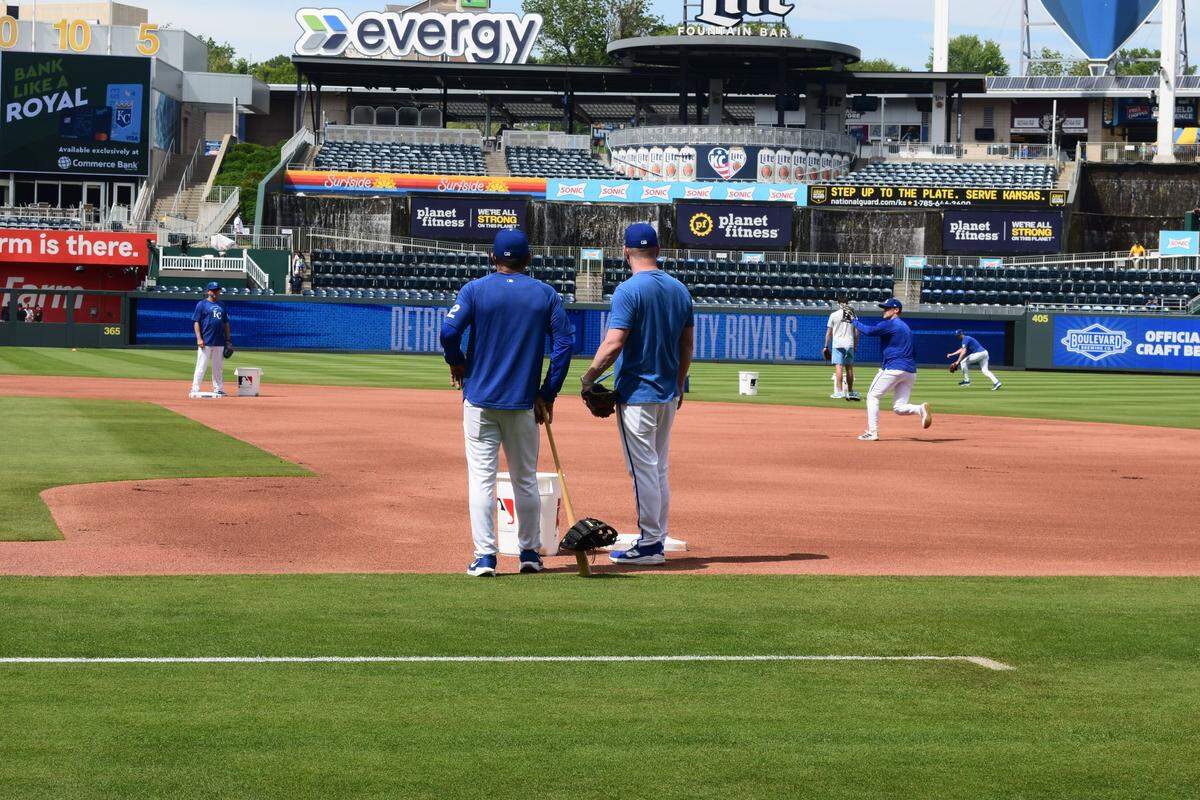
The Royals had major replay success in 2025. They overturned 65.6% of challenges — which ranked fifth in the majors.
In the last 12 seasons, the Royals have eight top-5 finishes with instant replay. They also finished inside the top-10 and are among the best teams — alongside the New York Yankees — in winning challenges.
“He’s been around the game for a long time, so he knows a lot,” Royals star Bobby Witt Jr. said. “So just having him and knowing if there is a close play, I like our chances. He’s great. He stays sharp at all his work. It’s great to see him do what he does because it really helps us.”
The journey continues
Duplissea takes pride in his work with the Royals. He knows that each day is different, and that allows him to constantly improve.
“I eat my dinner and sit at my desk and watch every challenge (sent by the league) that happened yesterday,” Duplissea said. “Just to get my eyes loose and to just get going again.”
He has worked with multiple bench coaches such as Wakamatsu (2014-17), Dale Sveum (2017-19), Pedro Grifol (2020-22) and now Hoover. Each taught him a new way to handle replay challenges and enhance his toolbox.
“Working with Don Wakamatsu, it was just learning the whole system,” Duplissea said. “Dale Sveum, we kind of started taking it a little more seriously. And Pedro, he and I really worked well together and he was really into it, just the little stuff.”
“Hoov is one of the most prepared people I’ve ever been around. He wants to know exactly what are the rules? What can we do to speed things along?”
And, of course, there have been some favorite challenges in his career.
He fondly remembers successfully challenging Wade Davis’ pickoff of Carlos Gomez in the 2015 American League Divisional Series.
“They called him safe,” Duplissea said. “We challenged it and got him out, which was a big out. He was going to go, and if he stole second, they might tie it up and we lose that game.”
Yet, there are also some challenges that he wishes he could have back. The toughest ones are stolen base attempts.
“There’s usually not one camera that has both the tag and his foot. So I’ve got to use two (different angles),” Duplissea said.
This season, the Royals are 12-3 on replay challenges. At one point, the club had 10 consecutive calls overturned in their favor.
“Duper is really good at what he does,” Quatraro said. “That is a really challenging job that I don’t think most people understand with how in tune to the game you have to be.”
As such, Duplissea knows his role is valued. It’s given him a new appreciation and fueled his passion for the sport.
One that he now shares with his son Billy and close family and friends.
“I think it’s kind of extended my tenure around here,” Duplissea said. “And now, I just love this job. I love having some sort of impact on the game.”
This story was originally published May 14, 2026 at 5:00 AM.