Southpaw Surge: How Daniel Lynch IV’s past unlocked his future with the Royals
AI-generated summary reviewed by our newsroom.
- Daniel Lynch IV converted to a high-leverage reliever and excelled in 2024.
- Offseason work at Maven Baseball corrected his rotational delivery and glove height.
- Lynch nearly doubled his SO/9 to 11.0 with 18 strikeouts and four walks.
Kansas City Royals left-hander Daniel Lynch IV popped in some old film from his collegiate days at the University of Virginia.
It was a trip down memory lane.
A decade ago, Lynch arrived on campus as a top high-school pitcher. He could touch the upper-90s and maintain high velocity. Still, he’d much rather get outs with pristine execution.
His amateur numbers told the story. In 2018, Lynch posted a 3.96 ERA while recording 105 strikeouts in 88 ⅔ innings. The Royals were impressed with his metrics. And later that summer, the club selected Lynch in the first round of the 2018 MLB Draft.
Since then, Lynch has remained with the organization. However, this offseason, he didn’t travel back in time for nostalgic highlights.
No, Lynch was looking for something specific. He sought a key piece of his past that could ultimately change his future.
“There are some things you can draw back on,” Lynch said.
A road trip to Georgia
Lynch was compelled to elevate his game. In 2024, he made the full transition to being a high-level big-league reliever. It was a new role after spending years being a valued starting pitcher.
There were encouraging results. Last season, Lynch posted a 3.06 ERA and a 1.3 WAR (wins above replacement) in 57 games. He seemed to thrive in the biggest moments and admittedly enjoyed the “grittiness” of being in the bullpen.
Lynch was successful in retiring batters. He surrendered 24 runs in 67 ⅔ innings while becoming a left-handed specialist. At the time, the Royals paired Lynch alongside fellow lefties Sam Long and Angel Zerpa.
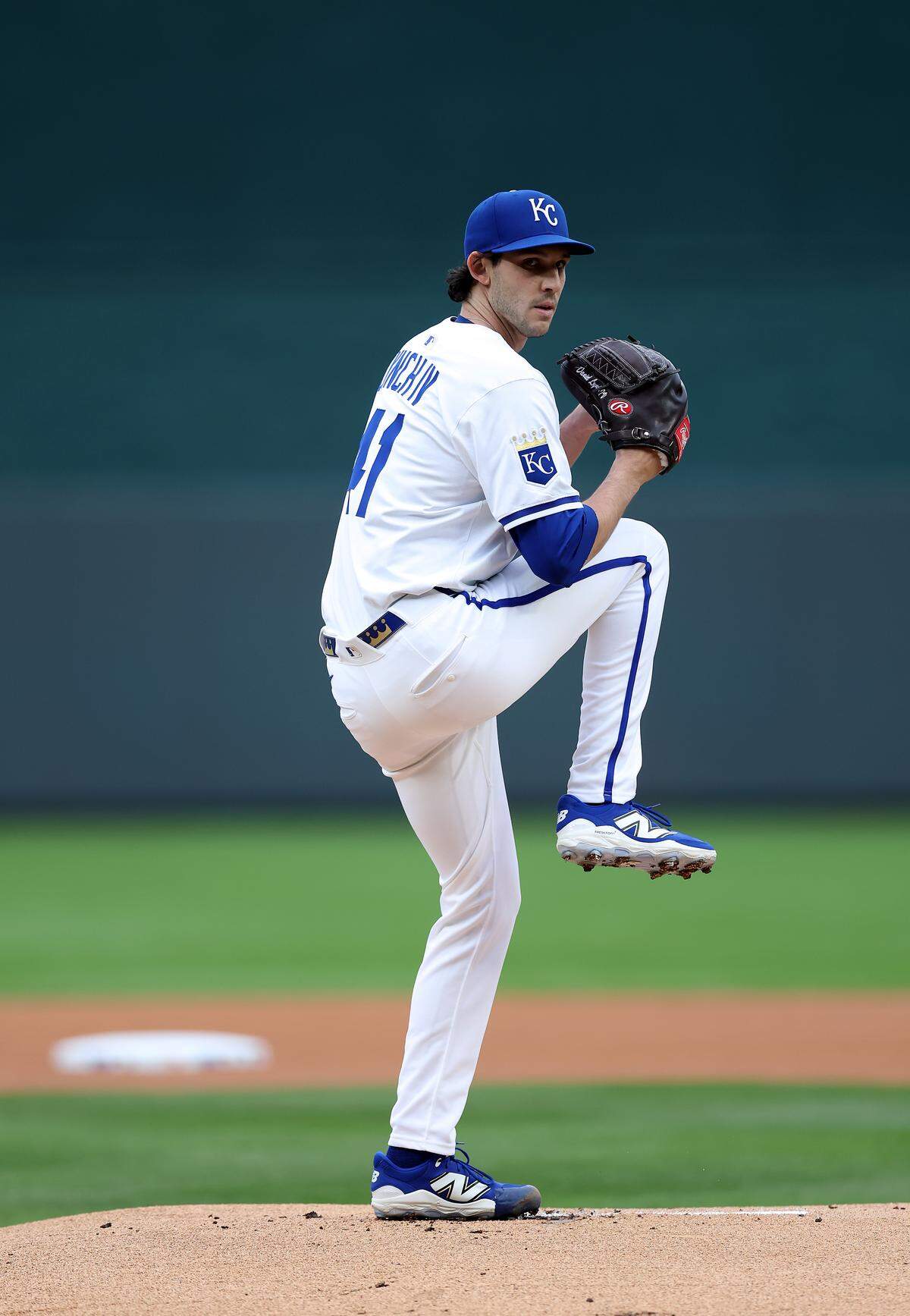
Those other players departed the organization this offseason, which positioned Lynch to take on a bigger role.
“It’s been great to get those opportunities,” Lynch said. “As competitors, we always want opportunities. And you know, we’ve talked about it a lot. I’m open to pitching whenever the team needs me.”
The Royals needed Lynch to pitch in higher leverage. To do that, the club insisted Lynch look to generate more strikeouts.
Lynch already had a high groundball rate. He could duel with hitters into deep counts, but sometimes that drove up his pitch count. At times, Lynch would surrender walks, which led to him getting into troublesome situations.
So the Royals wanted to correct the issue. The club wanted Lynch to change the way he delivered the baseball while still maintaining his effectiveness.
In essence, the Royals wanted Lynch to throw harder.
“I never really thought about striking people out before,” Lynch said. “And then, going into this offseason, they kind of communicated to me that they wanted me to get more strikeouts.”
Lynch took heed of the directive. He got a recommendation from Royals teammate Drew Waters to check out Maven Baseball in Atlanta.
The training facility has worked with multiple MLB stars. Guys such as Matt Olson, Dansby Swanson, Francisco Lindor and Max Fried have worked in conjunction with Maven Baseball founders Tyler Krieger and Sean McLaughlin.
Maven Baseball was founded in 2022. McLaughlin, who also starred at the University of Georgia, took a hands-on approach to help Lynch reach his goals.
Lynch arrived for an initial testing. He threw a standard bullpen that allowed McLaughlin and his team to diagnose how to help.
“We were able to put him under our full assessment and we found a couple key things that stood out to us,” McLaughlin said. “To why, you know, his stuff had taken a step back and why his command wasn’t as good as it was kind of earlier.”
A revamped plan
Maven Baseball uses cutting-edge technology in their facility. As McLaughlin puts it, their assessment is like getting an MRI.
The facility houses the TrackMan system, slow-motion cameras, force plates and motion captures to study players. There’s also Edgertronic cameras that are commonly used by MLB teams.
“For him, we identified some things in our motion capture and force-plate assessment in his delivery that made him far too rotational,” McLaughlin said. “He was getting a little bit out of his old linear delivery and he was rotating so hard and so firm that he wasn’t able to stay behind the baseball anymore.”
McLaughlin coordinated with Lynch and the Royals. He provided a detailed plan — via a mobile app — that showcased his biometric report and training drills. It also included guidance for Lynch to return to form.
McLaughlin saw an avenue that could help Lynch. He uncovered that Lynch had his glove positioned lower throughout his throwing motion.
So as Lynch turned to throw the baseball, he wasn’t staying balanced through his delivery. It caused him to be erratic and lose his command.
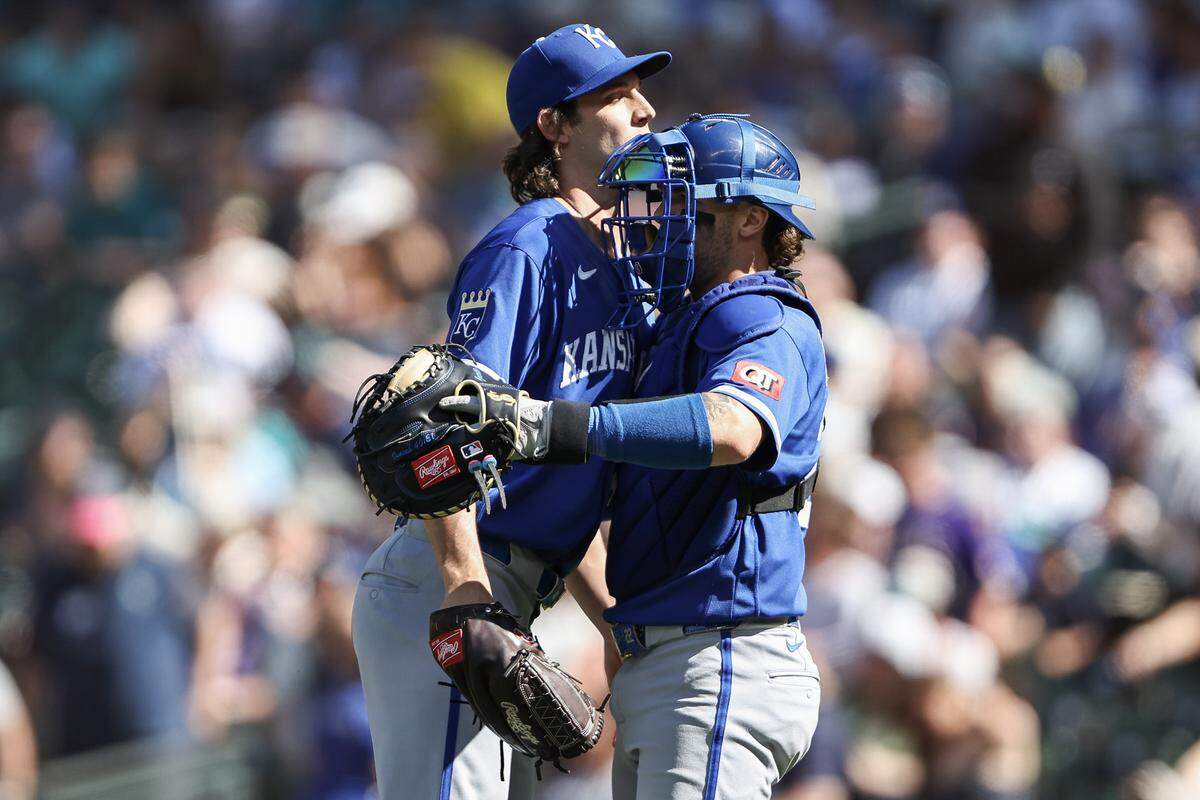
And ultimately, that led to more walks and fewer strikeouts.
“His back was almost turned to the hitter when he was driving down the mound,” McLaughlin said. “And it would make him spin off and spin open. So we went back to an old move when he was at the University of Virginia where he got his glove higher in the air.”
Lynch worked to get his glove in the correct place. He studied his old film and put the changes into action. There was a focus on being more fluid — leveraging his torso — and creating more vertical break.
Additionally, Lynch also added more deception. Now, it isn’t easy for teams to pick up his pitching arsenal. He has a new advantage there.
“Sean is just, like, really good,” Lynch said. “I just listened to what he told me blindly because he’s helped a lot of people.”
Lynch was appreciative of his offseason training. However, he understood there was one last checkpoint he needed to clear.
The southpaw reliever needed to pitch in a game.
A new mentality
Lynch looked like a different pitcher in spring training. His pitches were sharper and he didn’t waste time attacking hitters.
In Cactus League play, Lynch recorded 12 strikeouts in 9 ⅔ innings. He allowed three runs and cut down on the walks.
“I think it just changes how you see yourself,” Lynch said. “I didn’t ever tell myself I’m not a strikeout guy. It was, ‘Oh, I’m efficient and I get quick outs.’ When I was a starter, I wanted to be in the seventh inning every game. And you get quick outs. You don’t do that by trying to strike people out.
“And it’s shifted to — I think I have a better understanding now of what that actually means. It’s get to two strikes as quickly as you can and then throw your nastiest pitch.”
Lynch carried his spring momentum into the regular season, where he’s become one of the Royals’ top high-leverage relievers.
“There’s a lot of pieces to the puzzle and you’ve got to be resilient doing that,” Royals pitching coach Brian Sweeney said. “And that resiliency is paying off. … The move through the stride phase with his front side is a little higher.”
Sweeney stayed in contact with Lynch this winter. The messaging has remained constant, and it’s proven beneficial to all parties involved.
Now, Lynch feels ready to take the next step. With each passing day, Lynch learns from his veteran teammates — such as fellow lefty Matt Strahm.
Strahm helped him start pitching exclusively from the stretch. The change helped Lynch not divert his warmup and allowed him to dial into his plan of attack.
And Strahm assisted Lynch in understanding the dichotomy of the strikeout.
“He was the one to help me with that,” Lynch said. “And then his mindset of just like always trying to punch guys out, I never really understood (it). He helped me understand the importance of it. The fact that it’s a true outcome. And then, you don’t get those weak contact hits. …
“It’s just attack, attack, attack. It’s not about trying to make them miss or make them chase. No, it’s just get ahead and throw nasty stuff.”
This season, Lynch has nearly doubled his strikeouts-per-nine rate. He jumped from 6.0 to 11.0 (SO/9) in 14 games. The Royals lefty has recorded 18 strikeouts and issued just four walks in 14 ⅔ innings.
Prior to Wednesday’s action, Lynch had held opponents to a .100 batting average (5-for-50), fourth-best in the majors. He also notched his first save on May 3 against the Seattle Mariners.
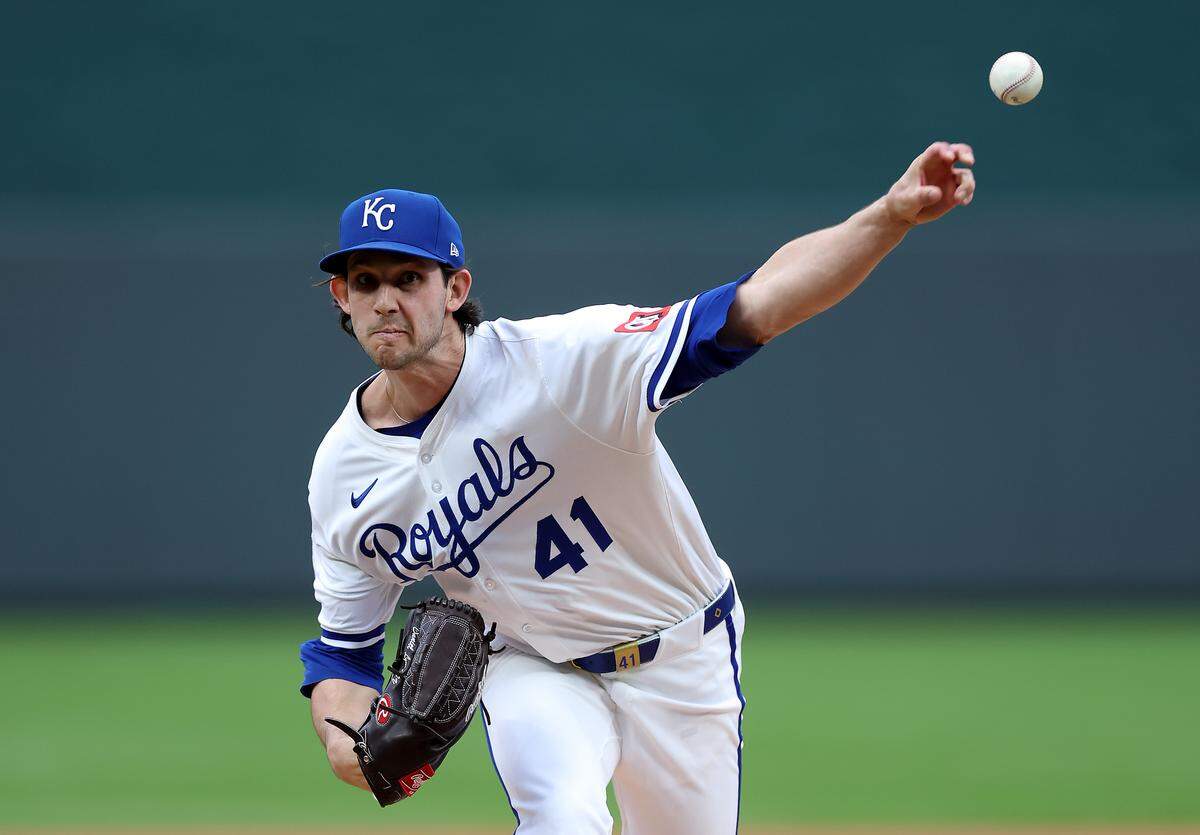
“The confidence, I think, is what it is,” Royals manager Matt Quatraro said of Lynch’s hot start this season. “I mean, the velo has ticked up this year. You know, throughout the offseason we knew that. The changeup execution has been really good, which I think has really helped get the opposite side hitters out.”
Lynch is averaging 94 mph with his sinker and four-seam fastball. He also ranks in the 94th percentile with a 32.7 strikeout percentage, per Statcast.
The chase and whiff rates also score highly.
“I don’t think I have that one pitch that is kind of like (the finisher), but I have multiple options that I can go to,” Lynch said. “And I feel like, when I execute, it’s a good outcome.”
The Royals plan to give Lynch more opportunities moving forward. He has earned them and developed into a go-to player late in games.
Lynch cherishes the responsibility. His mindset remains the same as his production has skyrocketed. And it just might lead to more recognition in the upcoming weeks.
“I feel like almost every game that I’ve pitched in has been high leverage,” Lynch said. “So it’s good to get that experience.”