Here’s a pre-game change Kansas City Royals have made with help from new hitting coach
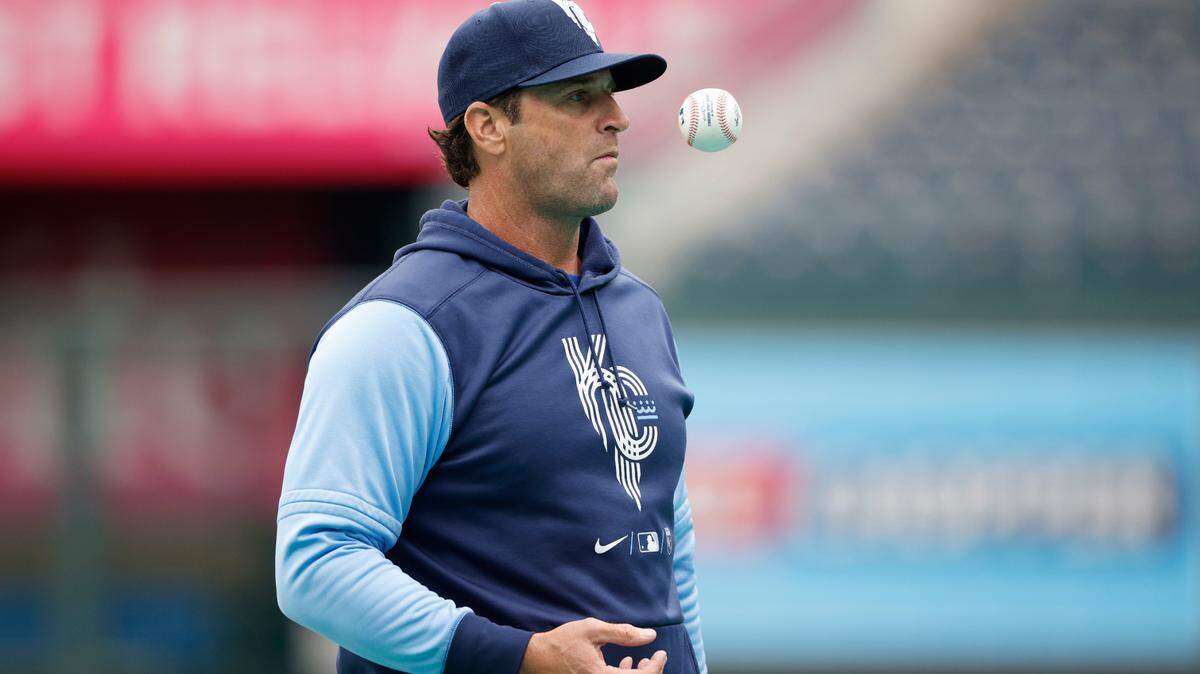
Four and a half hours before first pitch on Friday night, Royals hitting coach Alec Zumwalt arranged a pitching machine to the side of a screen ahead of early batting practice.
The device’s precise positioning was intentional. Zumwalt’s setup was meant to mimic exactly what the Royals would see that night against Houston starter José Urquidy; that meant simulating the pitcher’s release point, his starting location on the rubber and his four-seamer’s movement, which Statcast says rises 19% more than the average MLB fastball.
“These machines are pretty accurate,” Royals manager Mike Matheny said later Friday. “But today, it was more about guys that are really working on getting on top of those balls, and to have that vert (vertical break) number that’s a little different from usual.”
The new on-field method is part of what Zumwalt — hired two weeks ago as the Royals’ hitting coach — has added as KC works to best prepare its hitters each night.
Previously, pre-game hitting off this pitching machine was only available to Royals hitters in the indoor cage behind the team’s dugout — an area that can get congested on game days.
Using Friday as an example, Zumwalt setting up the pitching machine made for a more inviting exercise on-field, with veterans like Whit Merrifield and Hunter Dozier taking part alongside younger players like rookie Bobby Witt Jr.
Matheny says it all goes back to a bigger-picture question that the Royals and other major-league teams face: What exactly is the end goal of batting practice?
For example, during his 13-year major-league playing career, Matheny didn’t feel like traditional BP — hitting lobbed-in pitches — helped him. The mid-50s fastballs might’ve felt good to hit hard, but he felt like those swings didn’t prepare him for the game because they were so different from what he’d see from big-league hurlers.
Matheny is not every player, though. And he says some guys do gain confidence — and feel better about themselves — by roping liners against soft tosses before the game.
It all goes back to the challenge of what Matheny has started to label as “Get good versus feel good.” The pitching-machine batting practice — “get good” — prepares players for what’s to come, though it is also challenging and will come with more failure. Hitting softly tossed throws from coaches — “feel good” — can still be useful for veterans who have made that part of their training.
Matheny says the art from there is figuring out the proportions of BP that each player needs to perform his best.
This much, though, is also clear: Zumwalt’s machine-based on-field BP has become a greater priority over the past few weeks.
“The young guys embrace it to where it’s part of their routine,” Matheny said. “And you’ll see some of the veteran guys are asking the right questions to see, ‘Is there a good why to what we’re doing here? Yes, that makes sense.’”