Kansas City Royals 2018 draft class makes MLB history with Jonathan Heasley’s debut
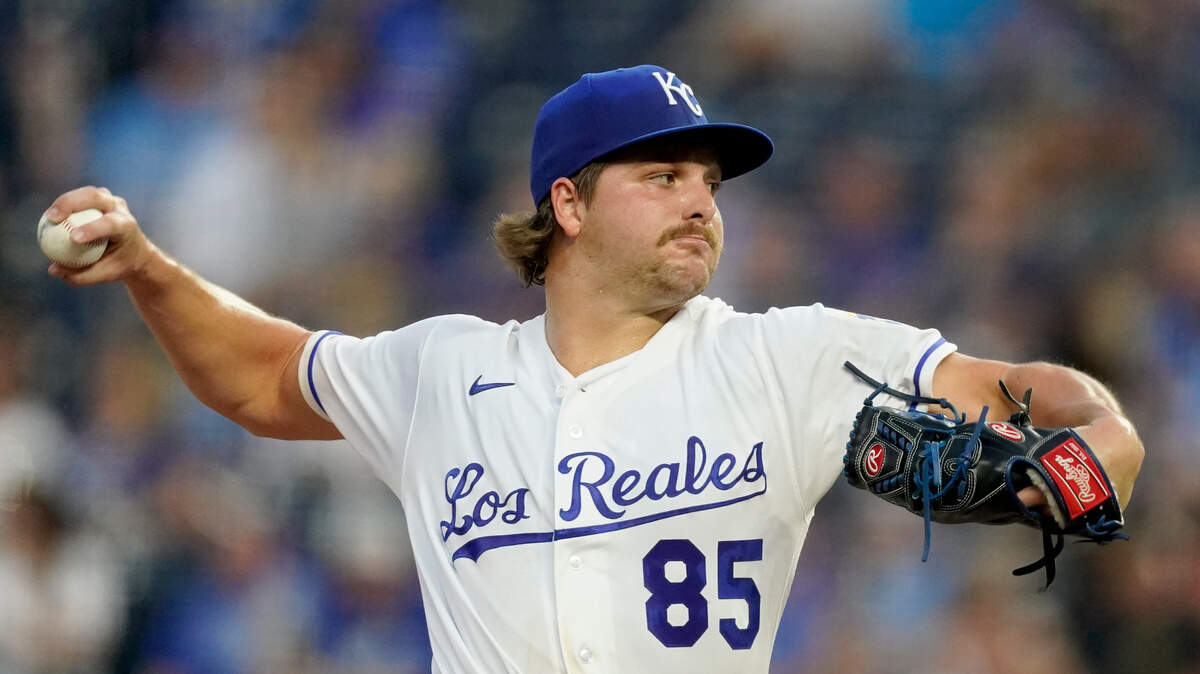
The first rarity that caught the attention of Kansas City Royals assistant general manager and amateur scouting director Lonnie Goldberg wasn’t so much the fact that a fifth pitcher from the 2018 draft class was going to be starting in the majors.
Goldberg was just happy that circumstances lined up for him to be at Kauffman Stadium and be able to watch newcomer Jonathan Heasley play catch with bullpen coach Larry Carter on the field, then shake Healey’s hand and congratulate him in person on getting to the majors on Thursday afternoon ahead of his major-league debut on Friday.
“Typically, that never happens,” Goldberg said. “You never get that. Usually, it’s done by phone when we’re congratulating guys because we’re all traveling.”
Goldberg didn’t realize at the time that Heasley’s pending promotion and debut would set the Royals’ 2018 draft class apart from any group in the history of the game.
Heasley took the place of draft classmate Brady Singer on the roster and in the starting rotation, but he also joined Daniel Lynch, Kris Bubic, Jackson Kowar and Singer to give the Royals the first draft class in history with five pitchers from the same class to start a game in the majors in the same season for the organization that drafted them.
“That’s awesome,” said Royals manager Mike Matheny when informed of the historical implications. “Just, once again, a great compliment to our scouts, the scouting department and Lonnie Goldberg was able to put together that particular draft class. We’re just now starting to be the beneficiaries of that. It’s pretty impressive to think about.”
It didn’t take long for that word to spread to Goldberg, who received a myriad of messages and phone calls on Friday when the Royals announced Heasley’s promotion. Heasley allowed four runs in four innings in the Royals’ 6-2 loss to the Mariners at Kauffman Stadium.
“None of this happens without the vision of what our guys did during that time when, frankly, Paul Gibson was heading up a lot of our pitching in the draft and focusing on it and having unbelievable communication with our staff in regards to the arms that were available in that draft,” Goldberg said.
“We knew that was a big draft for us, obviously, because two of the draft picks were going to be from Lorenzo Cain and Eric Hosmer. So when you go into it and you know you’ve got four picks in the top 40, you’re going to have some flexibility to be able to do some things.
The 2018 season also marked the true start of the post-World Series rebuilding process for the Royals front office. The minor-league pitching that had been dealt away in order to facilitate moves to supplement their World Series runs started to show up in the lack of pitching depth in the farm system.
Gibson, now the director of pitching performance, helped lead the efforts to restock the farm system with major-league caliber arms in 2018 under Goldberg’s direction.
“I think we spent a great deal of time looking for starting pitching,” Goldberg said. “We made a concerted effort to make sure. We thought that draft was pretty deep with arms, high school and college. We told ourselves that if we go college then we want to take guys that have tremendous track record, but still have ceiling left in what they do. We tried to really stick to that, stay with that. It’s crazy, but we still feel like there’s several others that have a chance, from that draft class, to do the same thing.”
Goldberg also pointed to the individual makeup of each of the players as a big factor in each of these pitchers being able to make the jump to the majors in such a relatively short time.
Shared success
“I think it’s really cool that we’ve all had pretty good success in the minor leagues,” Royals left-hander Kris Bubic said prior to Friday’s game. “Obviously, coming up here is a different thing, but to be able to force the hand of the organization like that and be ready for the opportunities — you’ll see Heasley tonight, and he’ll step in and do his job and he’s not going to back down from anything and he’s a bulldog out there — it’s a pretty cool thing to think about.”
Bubic and Singer made their debuts last year during the pandemic-shortened season. Lynch and Kowar broke through this year. That quartet has long been viewed as a collective entity.
They were the organization’s first four draft picks that season led by Singer with the 18th pick followed by Kowar at No. 33, Lynch at No. 34 and Bubic at No. 40.
They all even made their major-league spring training debuts on the same day in 2020 prior to the pandemic shutdown.
“It’s pretty cool because we’ve been through a bunch of experiences together already, both good and not so good. But that’s part of it,” Bubic said. “To be able to come up together, develop those relationships early, develop those bonds early, then when we get here it’s much more of a seamless transition because we know what to expect from each other.
“We’re not trying to be someone we’re not. We know each other pretty well by now. We come up here, we do our jobs, and that’s that. There’s not really a secret formula or anything to it. I think just developing that relationship, those strong bonds early has propelled us into these moments.”
Outfielder Kyle Isbel, the Royals’ third-round pick and their first position player selected in that draft, also made his major-league debut this season. He started in right field behind Heasley on Friday night.
“It is a pretty unique day,” Goldberg said. “I didn’t know that was the first time anything like that has happened in history of the game and the draft. I think a large part is obviously the work that those guys did and the work the player development staff did.”
Goldberg went on to laud the work of minor-league coaches, coordinators, pitching coaches, strength and conditioning and training staffs as well as the clubhouse staff.
He particularly marveled at the work the development staff had done last year coordinating programs to help players improve without a minor-league season and their ability to maximize the alternate site as a venue for development.
Goldberg, having just got off the phone with another member of the organization congratulating him on the scouting department’s achievement, echoed a sentiment often espoused by president of baseball operations Dayton Moore, saying, “Our successes are tied together.”
The next step, Goldberg said, will be for these players to continue working to put themselves in positions to help the major-league club win games.
This story was originally published September 17, 2021 at 8:58 PM.