Kansas City Royals reliever Greg Holland is no stranger to coming back from injury
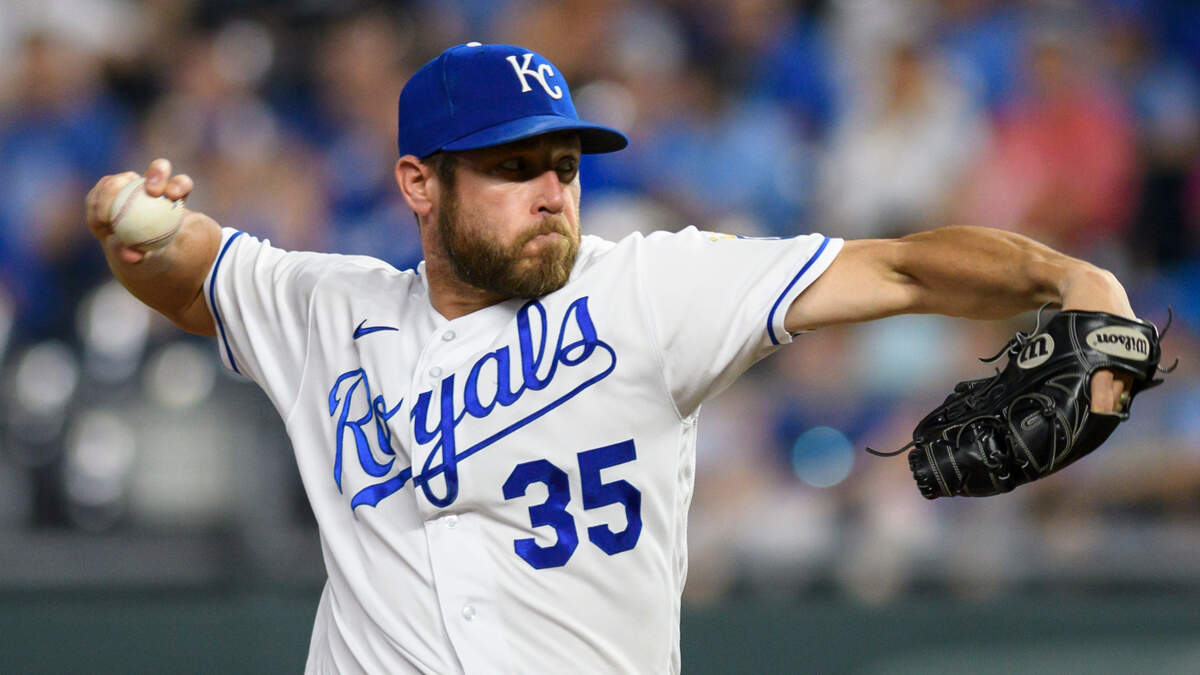
One day after Kansas City Royals relief pitcher Greg Holland recorded his eighth save of the season in his first outing since he missed 23 games with a shoulder injury, he was asked when the shoulder ailment first popped up.
The 35-year-old veteran who made his major-league debut 11 years ago smiled and laughed to himself before he quipped, “2017.”
“It’s one of those things,” Holland went on while chuckling. “The shoulder impingement-type deal kind of comes and goes for me. Ninety-five percent of the time it’s just a matter of getting the body heated up and when you get on the mound it’s a non-issue. It had kind of passed that threshold for me.”
Holland closed out Friday night’s series-opening extra-inning win over the Minnesota Twins at Target Field in Minneapolis. He retired the side in order and finished with a strikeout in his first appearance since August 14.
Prior to his IL stint with right shoulder impingement syndrome, Holland had struggled. In six August outings, he allowed nine runs (eight earned) on seven hits and five walks in 5.0 innings. Opponents batted .333 against him in that stretch.
Holland said in a matter of fact manner that if he’d been pitching well then he wouldn’t have gone on the injured list. By that he meant he’d pitch through pain and discomfort if he was getting outs consistently.
“Would that have been the right decision? Probably not,” Holland said. “But I’ve always been hardheaded, and I’ve paid the price for it before. I think I’ve never really figured out that line because it’s not black and white for me, especially when you know that at this point in the year everyone has got something going on.”
Holland famously pitched through elbow pain in 2015 that ultimately forced the Royals to shut him down in September, prior to their World Series championship run, with a torn ulnar collateral ligament. He missed the entire 2016 season as he recovered from surgery.
While the recent shoulder issue wasn’t nearly that serious, it was keeping him from consistently commanding his pitches. It got to the point where, in Holland’s words, he was “kind of beating a dead horse.”
“To be quite honest, it’s probably a blessing that I wasn’t out there getting outs because I knew I wasn’t right,” Holland said. “I knew I wasn’t throwing the ball where I wanted to consistently at all.
“And you’ll go through phases like that where you’ll feel completely healthy and you make a bunch of bad pitches and still get people out. But I’ve always understood that if you get three outs that doesn’t mean you pitched well, necessarily. You just did your job.”
It took manager Mike Matheny, who managed Holland briefly in St. Louis when he was coming back from surgery, stepping in and forcing the issue for Holland to stand down.
Holland said Matheny understands the mentality of a relief pitcher and the desire to be available and to take the ball every day.
“Sometimes, it’s just not smart to be out there,” Holland said. “And when it starts becoming an issue of can we trust this guy to get outs and win games, it’s a different conversation.
“We’d got to a spot where I’d thrown five out of seven games and our bullpen kind of got in a situation where we needed somebody there who could throw multiple innings. It kind of just worked out where the bullpen as a whole could use kind of a reset and get somebody in here. I went on the (IL) and we got [Joel] Payamps back up and he was throwing the ball great.”
Holland took a week to 10 days to rest his arm and let the shoulder issue calm down before he and Royals physical therapist/rehab director Jeff Blum started a throwing program that began with playing light catch and progressed to throwing off the mound lightly, then a little bit longer side session, a “more aggressive” bullpen session and then throwing to live hitters at Kauffman Stadium.
Matheny described Holland as a “warrior” and said that Holland wouldn’t initiate a conversation about something bothering him, a trait Matheny characterized as both admirable and not helpful from a manager’s viewpoint.
Matheny also said part of the value of having daily conversations with players is being able to identify when something is off even when a player doesn’t want to admit it.
“I could tell Greg was kind of pushing,” Matheny said. “That conversation kind of led to here’s what I see. Here’s what I think is best for you and here’s the position we’re in as a team too. There’s times to push, and then there’s times to be smart. Right now, what I see is we need to be smart.
“He’s a pro. He’s been a pro since day 1 that I met him. He takes ownership, wants to go about it the right way all the time. Then he’s talented too. It’s not easy to do what he did (Friday) night.”
This story was originally published September 11, 2021 at 9:06 PM.