Analytics over athleticism? Royals’ Matheny agrees with Epstein’s concerns about MLB
There’s no lack of criticism from pundits, TV and radio personalities, former players and former executives on how Major League Baseball has morphed in recent years into an exercise in analytics as opposed to an exhibition of athleticism.
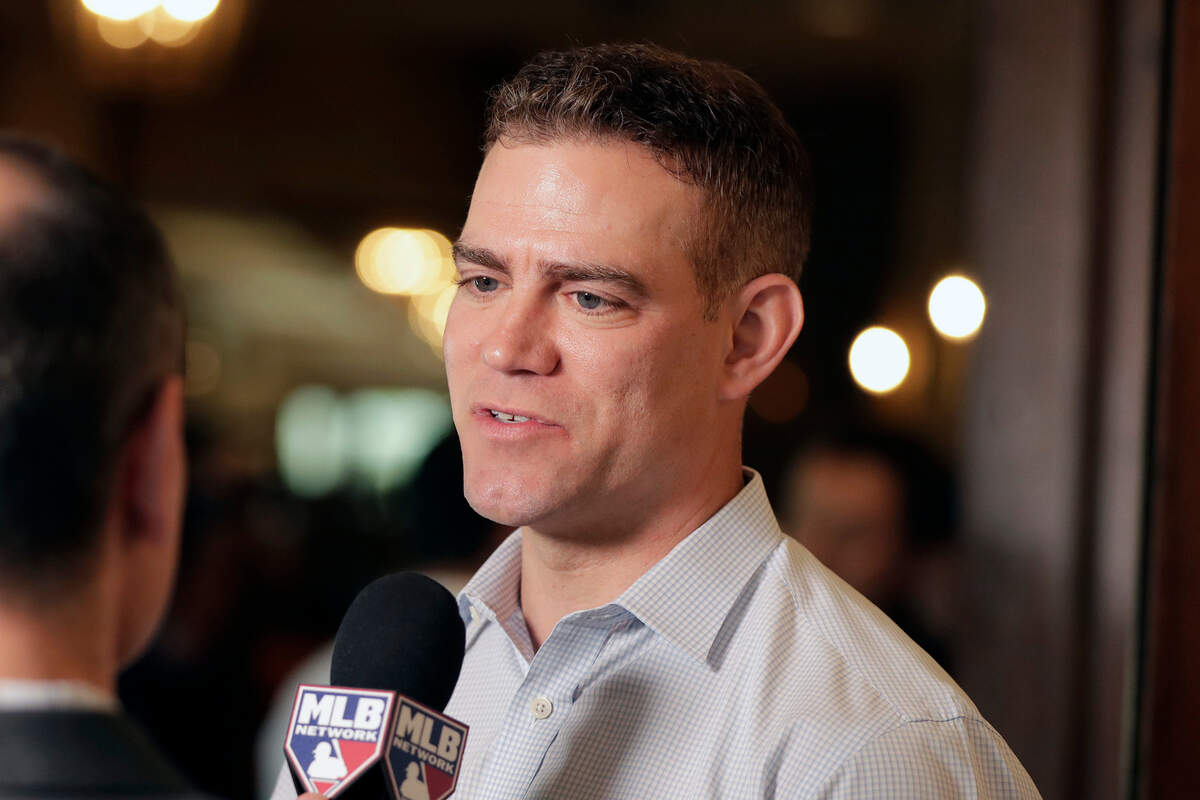
The view from the outside looking in is often crystal clear. But Theo Epstein, already a uniquely accomplished executive and front office icon in the baseball industry at the age of 46, seemingly legitimized if not bolstered those criticisms on his way out the door in comments he made just before he stepped down as the Chicago Cubs’ president of baseball operations late last month.
The Ivy League-educated Epstein, who constructed World Series champions while with the Boston Red Sox and Cubs, sounded the alarm when he suggested a need for a higher level of activity in the game, an increased emphasis on action and athleticism and a departure from the “three true outcomes” — walk, strikeout or home run.
“It is the greatest game in the world, but there are some threats to it because of the way the game is evolving,” Epstein said, “And I take some responsibility for that, right, because the executives like me who have spent a lot of time using analytics and other measures to try to optimize individual and team performance have unwittingly had a negative impact on the aesthetic value of the game and the entertainment value of the game in some respects.
“Clearly, the strikeout rate is a little bit out of control and we need to find a way to get more action in the game, get the ball in play more often, allow players to show their athleticism some more and give the fans more of what they want. Maybe there is a way to do that through changes over time, and to put the game back in the hands of the players and let them do their thing on the field.”
This season, the rate of plate appearances ending in one of those true outcomes reached a high point of 36%.
Matheny an advocate in the dugout
A former player and four-time Gold Glove-winning catcher who has managed in both the National League and American League with a 617-508 career managerial record, Kansas City Royals manager Mike Matheny finds a lot of validity in Epstein’s comments and the critique of the current major-league game.
“I couldn’t agree with Theo more from a general perspective that that’s the type of baseball that I’d love to see,” Matheny said in a recent phone interview with The Star. “I’ve been in conversations even with the commissioner’s office of how can we somehow reward quality at-bats. How can we incentivize putting together a tough at-bat, putting the ball in play, putting pressure on the defense.
“Those are things that I know, as a fan of baseball, I appreciate when that’s a focus in the game. That’s the kind of at-bats that you just can’t take your eye off of.”
Matheny recently expanded on them in his virtual Winter Meetings media session, during which he said he wouldn’t be opposed to banning defensive shifts. Matheny also spoke of a need for increased pace of play, provided it serves the desires of the fan base which he called the “lifeblood” of the game.
While Matheny has embraced many aspects of the analytics movement in the game such as shifts, lineup construction, bullpen usage based on match-ups, he maintains that the game’s continued move towards the so-called true outcomes is a “bad product.”
In a pandemic-shortened season, the Royals stole the fourth-most bases (49) in the majors and were caught stealing more times (20) than any other team in Matheny’s first year at the helm. Adalberto Mondesi led the majors with 24 stolen bases.
Over the years, Matheny has been involved in several spit-balling sessions where baseball officials brainstorm potential ideas that might address similar issues in the game.
For Matheny, it comes back to one overarching method of altering players’ approach to the game — “putting dollars in their pockets.”
If some of the less glamorous aspects of the game like having quality at-bats, moving runners and using speed on the basepaths were promoted, celebrated and given a significant role in arbitration or free agency discussions, then Matheny thinks it might facilitate wholesale changes in the game.
“I think it comes down to somehow incentivizing the player, besides us just preaching it until we’re purple in the face that we want to see these better at-bats,” Matheny said.
“When guys are getting compensated to do something different, whatever we say is kind of hollow. I think the compensation model needs to somehow support the kind of product that we want to see.”
Moore: Focus on players
The athleticism and action based approach — as opposed to a station-to-station slow-pitch softball-esque slugfest that has become more common — should feel distinctly familiar to Kansas City baseball fans.
In 2014 and 2015, the Royals consistently put the ball in play, applied constant pressure to the defense and wielded speed as a weapon on their way to back-to-back World Series appearances and one World Series championship.
After all, that group made the phrase “that what speed do” a permanent part of the local sports lexicon.
That style was ingrained in them from their early days in the farm system.
The 2015 Royals ranked 24th in the majors in home runs, but ranked fifth in stolen bases. The 2014 edition ranked last in home runs and first in stolen bases.
Royals general manager Dayton Moore served as the primary architect for those teams, and he still believes in that style of play.
However, he also made it clear that his attention remains firmly on his organization and not the game at-large.
“I can tell you right now, I don’t spend a lot of time thinking about it,” Moore said. “I really don’t. I’ve always been laser-focused on Kansas City and what we need to do to make our team better, make our organization better, to improve the game of baseball and softball in our community. I make the main thing the main thing.”
Moore suggested too much gets made of the supposed decline in the entertainment value of the major-league game.
Yes, hitters often try to do more than they’re capable, Moore acknowledged, but hitters also strike out more because pitching has improved, hitters’ weaknesses get identified quicker than ever before, coaches are smart, front offices provide a wealth of information and hitters have to deal with shifting defenses much more than any other point in the game’s history.
Moore espoused a holistic approach to caring for and developing players as the best way to maximize performance and the entertainment value of the game.
That focus on individual well-being is particularly pivotal in a time when players are tremendously gifted physically, but those involved in the spot at all levels have noticed how destructive mental health issues, poor choices and the traps of social media and constant comparison have proven on young people, Moore asserted.
“I’m extremely focused on how we can make our team better for the future and our game better for the future. However, I don’t see some of the same flaws in the game other people do. I think the game of baseball is very entertaining,” Moore said. “The athletes playing our game today are as skilled in our game today as they’ve ever been in the 27 years that I’ve been in professional baseball. They’re more talented physically. They have a better mind for the game.
“But as we move forward, it is very apparent to me that the organizations that do the very best job of developing their players’ spiritual health and mental health will have an advantage going forward.”