
Mellinger Minutes: Baseball is back (! and ?), sports’ role in societal change, its existence in 2020 and statues
Been thinking a lot lately about the difference between symbolism and action, and the often blurry line that separates the two.
Social media is full of symbolism. We can tweet some hashtag, believing it furthers a favorite cause, but that’s not much of an action when compared to, say, voting.
Somehow, we’ve created a world in which wearing a mask has been politicized. It’s seen by some merely as symbolism, when it’s quite literally the least we can do help protect each other and slow the spread of a disease that’s already killed so many.
The ugliness around Bubba Wallace and NASCAR is impossible to separate symbolism and action. Wallace, the circuit’s only Black driver, called on NASCAR to ban the Confederate flag at races. NASCAR agreed.
Chaos then ensued.
The flag is, at least at a base level, mere symbolism. But it prompts feelings, which prompted action, and then the story took a dark twist when a noose — a NOOSE! — was found hanging in Wallace’s garage.
That’s some ugly action, taken from horrific symbolism.
But then the story brightens! Watch this:
Again: is that mere symbolism? You can take that view.
But that’s also the sport’s biggest stars being as clear as they possibly can that they support Wallace.
Now, none of this is simple. You do not get credit for merely stating you believe a qualified colleague should be able to work without the worst images of nasty racism. Close your eyes and picture this happening in literally any other American sport.
There is a long way to go, in other words. But you have to start somewhere. And, based on certain clues, parts of NASCAR’s audience are starting from the beginning.
“I thought it was funny myself,” NASCAR fan Luke Johnson told the AP of the noose.
We’re in another weird mix of symbolism and activism, or rhetoric and change. Reasonable people can demand more than an Aunt Jemima rebrand. Reasonable people can also tire of social issues tying so intricately with sports.
There will be resistance. There always is. Some don’t believe racism still exists, and I’m not sure what can be done to change their minds. But the world is moving forward, with or without them, and this is what progress and change look like.
Symbolism comes first, and if it resonates, it leads to change. We’re starting to see that, in small steps at least. That’s more than we’ve had in recent years. Hopefully it’s less than we’ll have in the coming years.
This week’s reading recommendation is Bill Plaschke on the dangerous game being played by leagues, and the eating recommendation is the H1 (or M9) at Vietnam Cafe.
If you haven’t already, please give our Mellinger Minutes For Your Ears podcast a try. I appreciate your time, and hope we’re worth it. Last time, Peter Vermes talked about his 20 years in Kansas City and told the story of the time he was the muscle behind Jiffy Lube’s top performing bay on the East Coast.
If you have a question you’d like answered on the show, please call 816-234-4365 and leave your first name, where you’re calling from, and almost literally any question.
Please give me a follow on Twitter and Facebook and, as always, thanks for your help and thanks for reading.
OK, here’s the show.
This question was asked (and, if we’re honest, originally answered) before news broke late Monday night that owners voted unanimously to forego further negotiations with players and implement a schedule on their own terms.
Hurdles remain, but this is the biggest step yet toward major league baseball returning. This is the owners taking the players up on their “when and where” offer, and giving up on a negotiated resumption that would’ve included benefits (for the owners) like expanded postseasons, ads on uniforms, and the promise of no grievances filed.
For most of the last few months some on the players’ side have believed the owners are not negotiating in what reasonable people would label “good faith.” They have believed the owners have wanted to bare-bones this season all along, cutting costs, claiming financial hardship, then grabbing concessions for a return to play that will be in the game long-term.
An honest assessment of the facts could lead one to that very conclusion.
There is lots of nuance here, and in a context where lots of baseball fans don’t have the time or patience for nuance, that plays well for the owners.
Let’s be clear on a few points:
- “Tell us when and where” was a terrific catchphrase that pulled public sentiment toward the players, but it was also misunderstood by at least some fans. The owners had the right to implement a schedule without any agreement from the players.
- The owners would’ve rather not done that, for lots of reasons, most of them money. They’re giving up on expanded revenue, more revenue streams, and, not incidentally, no grievance filed by the players.
- “Tell us when and where” means less revenue for the owners, and sets up a monumentally acrimonious CBA negotiation after the 2021 season, but it’s also the option that means the lowest operating costs for the owners.
The contrast between baseball and other leagues is stark and embarrassing. All leagues — all businesses, really — are facing similar changes with the coronavirus. Maybe this all becomes a moot point because games simply cannot be held safely. That’s certainly a possibility.
But baseball spent so much time and energy — time and energy they can’t get back — arguing about money that they’re behind where they should be on safety.
We can see the NBA and MLS will have obstacles. MLB will face the same. But those other leagues are better positioned to navigate because they’ve already taken care of the financial framework and, notably, they’ve proven they can work together.
Baseball is so far behind in that way. It would be funny it weren’t so sad.
This isn’t getting as much attention, but the NFL season is absolutely in question, and the worst-case scenario is something similar to baseball’s current reality.
NFL players, in general, don’t trust owners. They believe they’re not appropriately valued, particularly in relation to the brutal nature of their sport. Owners have long been able to leverage players’ short careers against them, with CBAs that are routinely the most team-friendly in professional sports.
As players increasingly find their voice and power, might that be changing?
Could players galvanize, demanding safety protocols that owners might believe are too much? It’s all possible.
Then, in addition to all that, we have the unknowns about where the virus will be in two months, four months, six months, and so on.
All of that is beyond the control of any sports league, and here come the mixed emotions of watching European soccer these last few weeks. The English Premiere League restarted on Wednesday, and while it was fun to finally see a league I follow hold actual games, it also served as a reminder of how far off our mainstream American leagues are.
England was a hot mess early. Not as bad as Spain or Italy, but their initial response was generally uneven and ineffective. They rallied, though, and came up with cold and effective measures that allowed them to restart.
America is a much bigger country, obviously, and with that come challenges that England doesn’t have to worry about. But we’re seeing that it can be done, if we have the stomach for it, and it’s sad on a lot of levels to know we haven’t so far.
But, anyway, your question. Yes, I believe we’ll have an NFL season. I wouldn’t make any predictions about what exactly that will look like, or whether we’ll have delays. But the NFL has the most immediate money to gain by having a season, and the most to lose by not.
That’s a lot of incentive, for both players and owners.
We’re seeing more pauses, more delays, and most locally with K-State. Gene Taylor called it a “pretty easy call” after 14 positive tests.
The hope is that quarantining now — not just at K-State, but with Houston and the Phillies and Blue Jays and everywhere else that positive tests are stacking up — can provide a better runway to playing games later.
If that’s not how it goes, then Taylor and others will be faced with much more difficult decisions. Because pausing right now, months from competition, yes, that’s an easy call. Pausing in September, with real money on the table, is a whole different deal.
College sports present a bigger challenge, too. Because these are — let’s say it together! — student-athletes. They are not paid. The risk-reward calculus is much different than in professional leagues, with grown men making great money and empowered to make their own decisions.
We should always keep in mind how little we know. Even the health experts, the people who live in these worlds, have few certainties. They’re still learning the best ways to prevent spread, the best ways to test, and (this is important) whether carrying the virus will lead to long-term health problems after a person is seemingly recovered.
We just don’t know.
Now, life moves on. And people are generally tired of restrictions. We’re seeing that with restaurants picking up and traffic reappearing. An enormous desire exists for live sports, even if it has to be without fans*.
* The Germans developed a great word for this — they call them ghost games.
Leagues, then, are highly incentivized to satisfy that desire.
So, yes. We will have American sports, and soon.
But I don’t know how anyone can be certain we’ll have a champion of any 2020 season. It’s not put to us. It’s up to the virus.
EDITOR’S NOTE: In a decade of this time suck, I’m not sure this has ever happened before, but a reader submitted a question, I answered, and when I went back to include it here it had apparently been deleted. If the reader didn’t want his name attached, that’s fine, I won’t out them here. But I thought the question was a good one, and something that at least some have been thinking:
“How long till the media stops “reporting” every Covid Test in one of the least vulnerable populations?”
OK, here’s the answer:
Genuinely excited to get an It’s The Media’s Fault question.
We live in a world in which Patrick Mahomes Dips His Steak Into Ketchup became like a 72-hour story that created an endorsement contract for him so, yes, you’re damn right it’s news when an athlete contracts a virus that has killed some 120,000 Americans.
There are clear reasons for leagues and schools to do everything possible to control spread among players and employees. Billions of dollars, obviously, but also the fact that an otherwise healthy person can apparently carry the virus without issue but pass it to someone else who has major complications or worse.
It’s hard to believe we don’t all want to do our part in helping slow the spread of a disease that has already killed so many, and is showing no signs of slowing down.
You bring up a good point. Yes, college athletes — all young, all active, virtually all in great shape — are among the least likely to die of coronavirus.
But this is a heck of point from a UCLA player to Brady McCollough, who reported 30 football players signed a letter demanding additional protections before resuming practice:
“... what people don’t understand is, they say there’s a .1% chance of somebody dying, but last time I checked, that .1% has to be somebody. We’re going to come to a point where a college player will literally have to die from COVID-19 for someone to understand what’s going on. I hope it doesn’t have to reach that point.”
This is another source of frustration. Sports in other countries are resuming, but here in America we have somehow turned a deadly infectious disease that’s wrecked the economy and canceled sports into a political issue. It’s nonsense.
To be clear, I’m not accusing anyone of making it political. A reader just asked a question. But we all know it’s become political, and I don’t know how anyone could believe that’s helped our country fight this thing.
This seems appropriate:
The Chiefs are in a whole different place now. Losing 2020 wouldn’t be quite as devastating as losing 2019, I think we’d all agree on that, but losing 2020 would be much more devastating than, say, losing the 2008 season.
The Chiefs have their Super Bowl win and, as frustrating as it would be to lose the Run It Back season, they still have their Super Bowl.
But you bring up a good point. Every season Mahomes plays — every game, every drive, every snap — is precious. Mahomes gives the Chiefs a significant advantage, a head start of sorts that a strong support system from front office to coaching staff to teammates have helped maintain.
It would be an all-time what if here in Kansas City, for sure, and a missed opportunity that would hang on the Chiefs no matter if Mahomes retires with one Super Bowl win or 12.
Just as a point of comparison, the Royals can absorb this. We can talk about the delay of development for prospects like Brady Singer and Jackson Kowar and Bobby Witt Jr., but if we’re being honest, missing 2020 is much worse for contenders like the Dodgers and Nationals (and Astros?) than it is for building organizations like the Royals.
Also, I have to just say this: It would be sad as hell.
If we don’t have an NFL season, we have much bigger problems than anything with sports. Let’s be honest about that.
But beyond all that, sports in general and Mahomes in particular provide a thrill that we’ve already been lacking for too long.
That would be felt everywhere, because Mahomes has long since crossed the threshold from local treasure to national. The best example of this might be between the moment Mahomes’ kneecap went sideways and the diagnosis came back positive.
He’s the game’s most exciting player, and football is our country’s most beloved form of entertainment.
Please come back, sports. All will be forgiven.
Well ... most, anyway. Baseball’s going to have some ‘splaining to do.
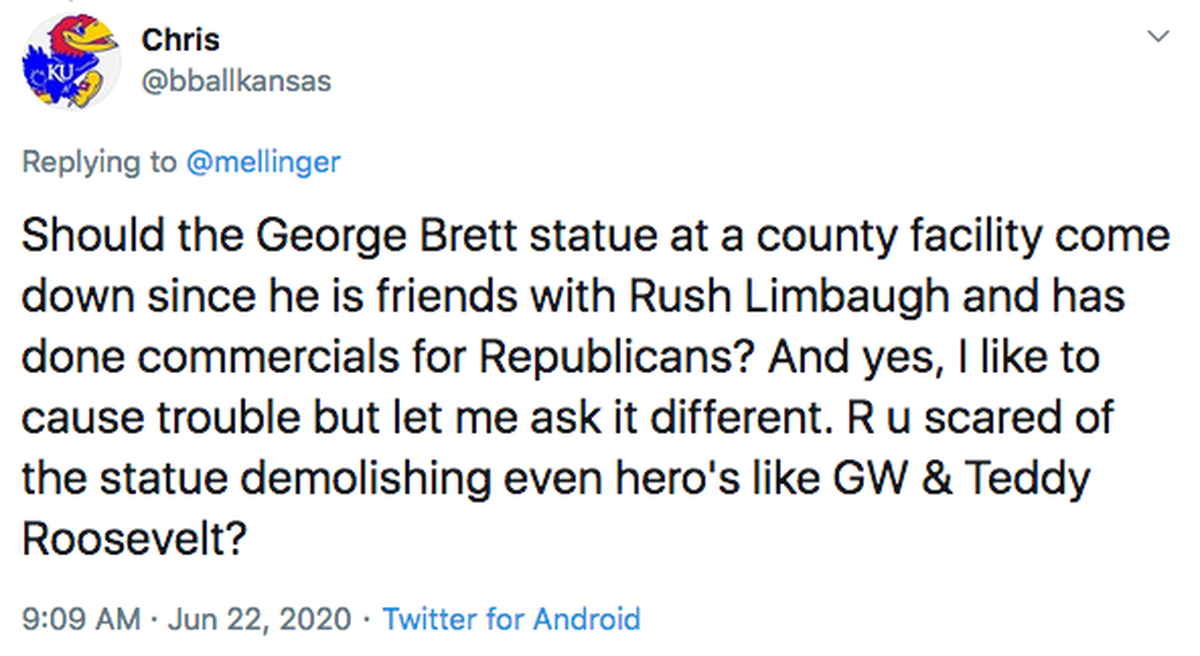
I know you’re exaggerating to prove a point, but this is something we could spend hours on.
The exaggeration: being Republican is grounds for clapback.
The point: it’s a slippery slope once we start deciding what’s worth a statue and what’s not.
As is typical, nuance has been lost. J.C. Nichols is a great local example.
You know there is push from some to rename J.C. Nichols Parkway and/or the fountain on the Plaza. The headline takeaway has become something like Nichols Is Racist, Should Be Expunged From History.
Eric Adler recently wrote an interesting piece, talking with Nichols’ grandson about the issue. Among other points, Nichols said this:
“I think one of the problems of asking if J.C. Nichols is a racist is you’re asking the wrong question. It’s too simplistic. Were people racist in 1903 in the United States? Was the general white population a teeny bit racist? Even the Jewish people and the Italians were in restrictive deeds. How do you think they felt?”
In other words, and I suppose I should clarify this is my reading of his point: You can rename something or take down a statue, but don’t allow yourself to pretend you’re making progress by singling one person out.
The only statement being made is a tangible denouncement of a period of time in which minorities and women were treated as something less than fully human.
Nichols did not create racism, is the point, but he has come to represent segregation and redlining particularly in Kansas City.
So if we make these moves and dump the anvil of racism on one particular person, we’re missing the whole point. We’re missing an opportunity to learn, to grow, to be honest about our past.
I hope that doesn’t happen. These chances don’t come along everyday. If we’re going to do this, let’s make the most of it.
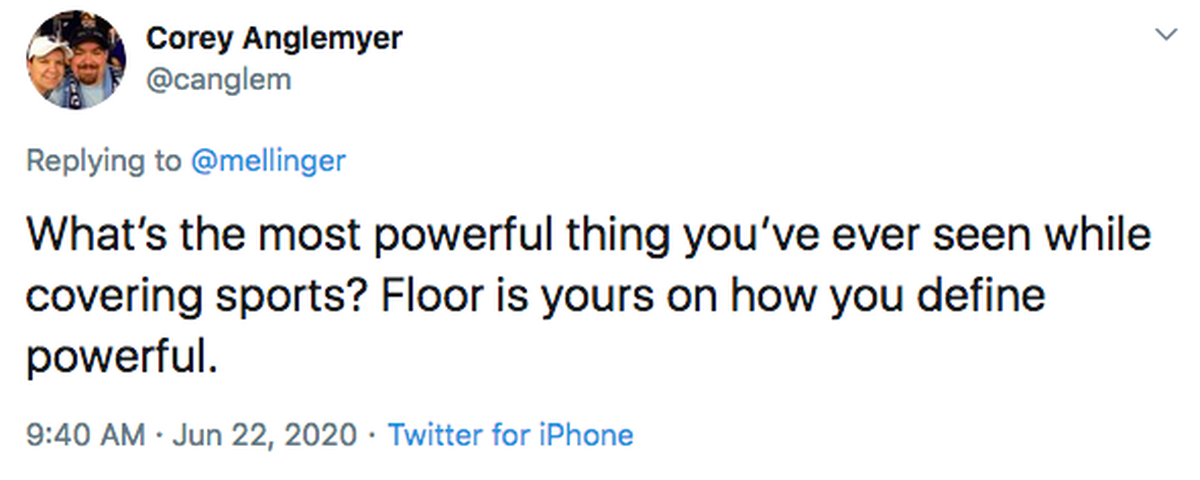
I once saw a high school basketball player who — if I remember right — found out during the second quarter that his house was on fire. He stayed in the game and scored something like 25 points.
I’ve seen high school kids make brutal mistakes to lose a game, and immediately be surrounded by friends and teammates with support. Those moments stick with you, because if you see sports from a certain angle, that’s the good stuff. It’s not championships. It’s what we learn, how we grow.
There are a million examples of competitors helping each other, of injured racers finishing races, and I don’t mean to diminish any of that.
But the example that comes first to mind is what the 2014 and 2015 Royals did to Kansas City.
It is probably impossible to overstate how bad the Royals had become, and how fully their fans had been trained to prepare for the worst. Few will remember how much of a disappointment that 2014 team was into July, when many around town were furious that Ned Yost and Dayton Moore hadn’t yet been fired.
But starting sometime in August, and going straight through to the dog pile in Queens the next year that group grabbed a city and went on a bonkers ride of comebacks and diving catches and clutch plays.
They accomplished something few thought possible, a small market team winning consecutive pennants and a World Series with athleticism and few home runs, this symphony of speed and guts that I’ve always thought was best illustrated by Lorenzo Cain scoring from first on a single without running on the pitch. Wade Davis pitched on both sides of a rain delay that night, too, for crying out loud.
Those teams forever changed the relationship of a city and a sport, and for a lot of us who live here and have longed loved baseball, I’ll forever be grateful to feel the ride from start (maybe when Raul Ibanez accounted for the only run with a solo homer in a 1-0 win over the A’s in August 2014) to finish (when one foul pop fly took out two All-Stars).
I never felt so personally moved by sports before or since.
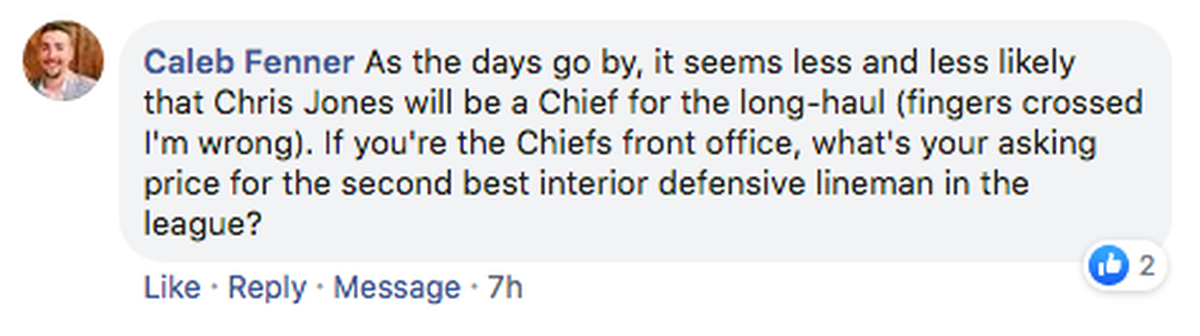
This is a real thing. If we lived in normal times, we’d be talking a whole lot more about this.
July 15 is the important date here. That’s the deadline for franchise tagged players to agree on an extension. If there’s no extension by then, the player is on the one-year tag salary. He could be traded to another team, too, with a new contract there. That’s what happened with Frank Clark last year.
I would be very surprised if Jones is traded. The Chiefs are trying to win a Super Bowl, and trading a star player for draft picks that can’t help you until next year would be a heck of a way to try to win a Super Bowl this year.
I say all this as a way of altering your question. Because unless the return for Jones includes a plug-and-play star, I’m not sure there’s a price another team would realistically pay that I would realistically accept for Jones right now.
The likeliest outcome here has always been that Jones plays the 2020 season under the franchise tag and then is traded before the 2021 draft.
In that scenario, I think you’re looking at a low first-round pick or something in the second round, depending of course on Jones’ performance and health.
We will talk much more about this, of course.
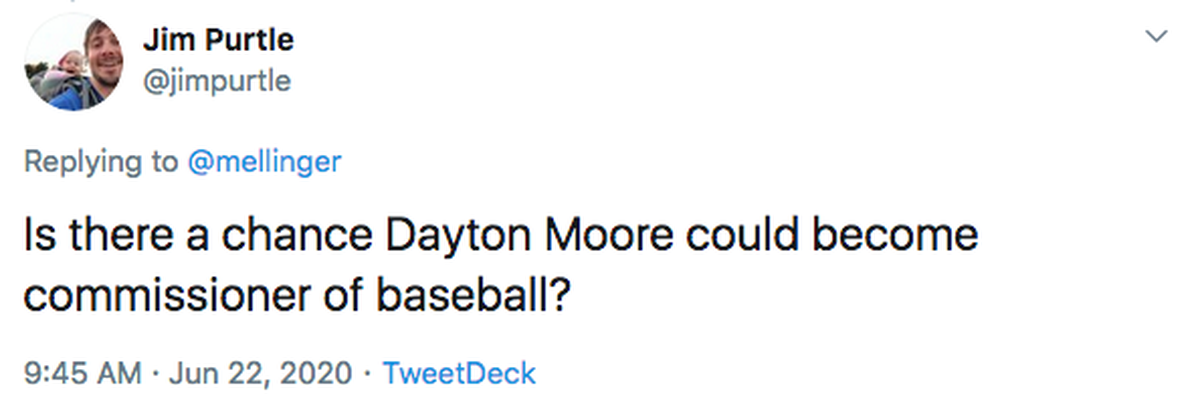
This is going to sound snarky but it’s just the truth: Dayton Moore does not care nearly enough about revenue to be baseball’s commissioner.
Moore is over here caring about silly stuff like the health of the game, and spreading the joy and access to baseball to kids and communities that have been or have felt shut out. He has this weird idea that the point of being in baseball leadership is to leave the game better than you found it, when the rest of us can see the point of baseball leadership is to suck every damn penny possible from those rascal players.
More seriously, I’ve often wondered what Moore will do in his next job.
He’s 53, which is too young to retire anytime soon, and realistically he’s unlikely to have a 30-year run as general manager.
I do hope, for baseball’s sake, that his next job has a tangible impact on the future of the game.
I don’t know exactly what that would be. Maybe he could help build new and expand existing youth academies across the country and world. Maybe he could, as he’s said he’d like to do, establish an academy for superior athletes who don’t have a professional pathway in another sport. You know, sort of like the Royals Academy but for all of major league baseball.
Maybe he could simply work for the commissioner’s office as a sort of Executive Vice President of Treating The Game With Respect. He could help influence top level decisions to be more in the spirit of spreading love for baseball and less with the charge of creating immediate short-term revenue.
I might be writing about him this week, so I want to cut this short except to say that I’m glad he’s speaking out more. What he’s saying now is what he’s long said more privately.
It’s in baseball’s best interests that he says them as loudly as possible now.
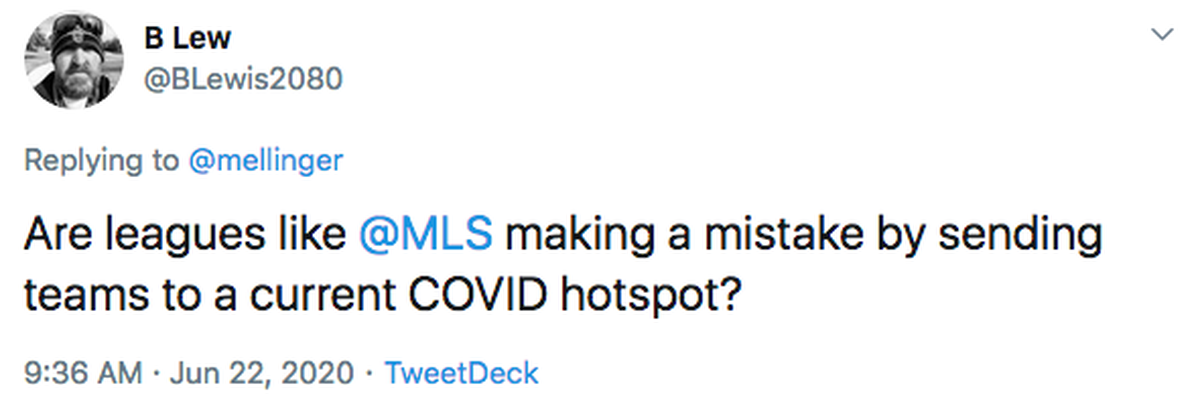
Probably? Maybe?
I know I say this constantly, but I also feel more people should be saying it more: We’re all guessing.
Nobody knows nothin’.
Today’s hotspot can be tomorrow’s declining cases, and vice versa.
In theory, at least, the bubbles have a chance to be effective. If players and leagues can agree on who’s allowed in, then your primary concerns are those we might call support staff: hotel workers, bus drivers, cooks, cleaners, etc.
Obviously you’d like that all to be in a place that has fewer cases than Florida does right now, but — again, at least in theory — that can be managed if everything else is in place.
One thing I think a lot of people are missing: perfection is impossible. Positive tests are inevitable. Risk must be accepted.
We said this earlier, but that risk-reward calculus has to be different with college athletes compared to the pros, but however sports move forward we all need to understand that some risk is involved.
If the standard is zero positive tests, then let’s just wrap it up right now. But I know that the standard is not zero positive tests, or else restaurants would be closed, kids leagues would not be happening this summer, and so on.
There will be positives.
Leagues simply need to work as hard as they can to keep the numbers as low as they can.

This sounds weird but I was a HUGE Gary Thurman fan as a kid. If my memory is right it happened because he lasered a guy tagging up at third one one of the first games I ever went to. The ability to throw a ball that far and fast looked majestic to me.
Craig Hodges was the man. Guy wasn’t very tall, and didn’t appear all that athletic by NBA standards. But boy he’d sit that corner, his feet perfectly between the 3-point line and the sideline, and it meant that Jordan had a wider lane to drive or the Bulls had one of the great high-percentage shots available.
Robert Horry is probably too stock of an answer, but how could he not be on a list like this? Big Shot Bob, man.
Can Willie Mays Hays count? No? OK, fine.
Glenallen Hill. That guy looked like a dang robot, so strong. I never understood how he generated so much power without ever appearing to take a full swing. This home run onto a rooftop across the street from Wrigley is legendary.
Speaking of legends, Charles Oakley has to be on this list, as much for his post-playing career as what he did during. One of the few guys who probably liked how he was depicted on the Jordan doc, too.
Technically all football players except for Patrick Mahomes are role players, but Bennie Thompson will always have a special place in my heart for pretending to pee like a dog after special teams tackles.
I used to love watching Rod Beck pitch, especially toward the end of his career, when his fastball had a noticeable peak to it on the way to the plate. That guy had nothing left in his arm, but he was still getting the biggest outs of the game against the world’s best hitters with nothing but guts and smoke and mirrors.
Terrance Gore was a good time.
You might think this is a stretch, because he became something like a star, but the Fridge is the literal definition of a role player. He clogged the middle of the line, occasionally came in as a fullback, and smiled with some teeth missing. That was his role, and nobody did it better before or since.
That’s 10. That’s a decent list. I’m sure I’ll think of more as soon as this posts.
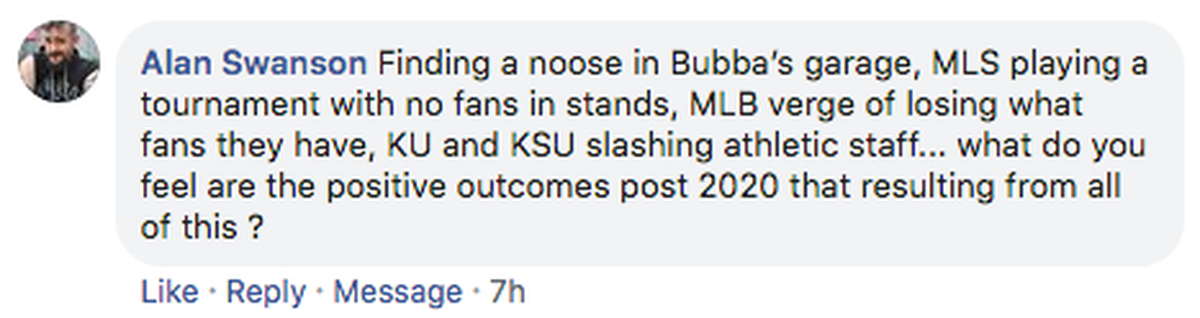
Well, look. If the engine in your car is broken, you have to take it apart to fix it. If your kids are acting up, sometimes they need consequences that lead to tears. If you want to get in better shape, you have to push through some uncomfortable moments.
So, yes, absolutely I can feel some positives coming from this.
You mentioned the noose in the Black NASCAR driver’s garage. I don’t believe that everyone who opposes Confederate flag bans is racist. I believe some are genuine in talking about history, or free speech, or whatever.
So, then. My hope is that at least some of those believers have their eyes opened now. That even if they don’t see the flag as a symbol of hate, others have damn good reason to, and that maybe a flag presumably supported by someone who would hang a noose — a noose — is not worth supporting.
My hope is that the protests lead to actual change beyond NASCAR or the SEC banning the Confederate flag. I think that’s possible. We need to get past this us vs. them stuff, but I do believe it’s possible.
It’s hard to see positives in people losing jobs, but if you’re searching for something optimistic on the other side of all this maybe it’s that leagues and players will do a better job valuing fans.
Maybe it’s that teams need to be responsible enough with their money that one disrupted season — one year of anything but record revenues — won’t send their business model into freefall.
They say that necessity is often the mother of invention, so maybe baseball changes a bit to be in better shape moving forward. Maybe they lift blackout restrictions, maybe they find a way to inject more action, maybe they do a more honest job of reaching out to families and middle class people.
Maybe the anger motivates baseball to promote the sport more in cities, for kids, to better teach the game and make it more accessible.
Those would all be good outcomes. I’m not saying it’d be worth what we’re going through at the moment, but it would mean a few steps forward after we’re done moving backward.
This week, I’m particularly grateful for health. There can’t be anything we — maybe it’s just me — tend to take for granted more. I’m really good at appreciating friendships, relationships, family, and a job I enjoy (even now). I’m not as good at appreciating health, and the freedom to exercise and get into better shape. One of these subtle Covid changes I’ve noticed is that I’m taking more bike rides. It’s fun. Less intense than a run, but I still end up as sweaty, with a raised heart rate. I need to do more of this.
This story was originally published June 23, 2020 at 5:00 AM.