Was J.C. Nichols racist? ‘He had to do what he had to do,’ Kansas City grandson says
J.C. Nichols III, the grandson of the storied Kansas City area developer, said on Thursday that attempts to cast his grandfather as racist, and thus no longer deserving of lasting commemoration on the fountain and road that bear his name, are an exercise in revisionist history.
“It is reinterpreting history in the light of our delicate sensibilities,” Nichols, 80, said in a far-ranging telephone call about racism and his grandfather’s legacy from his home in Westwood Hills. “It’s taking emotions, created by events like Ferguson and (the death of) George Floyd, and transposing it into something that has nothing do with it.”
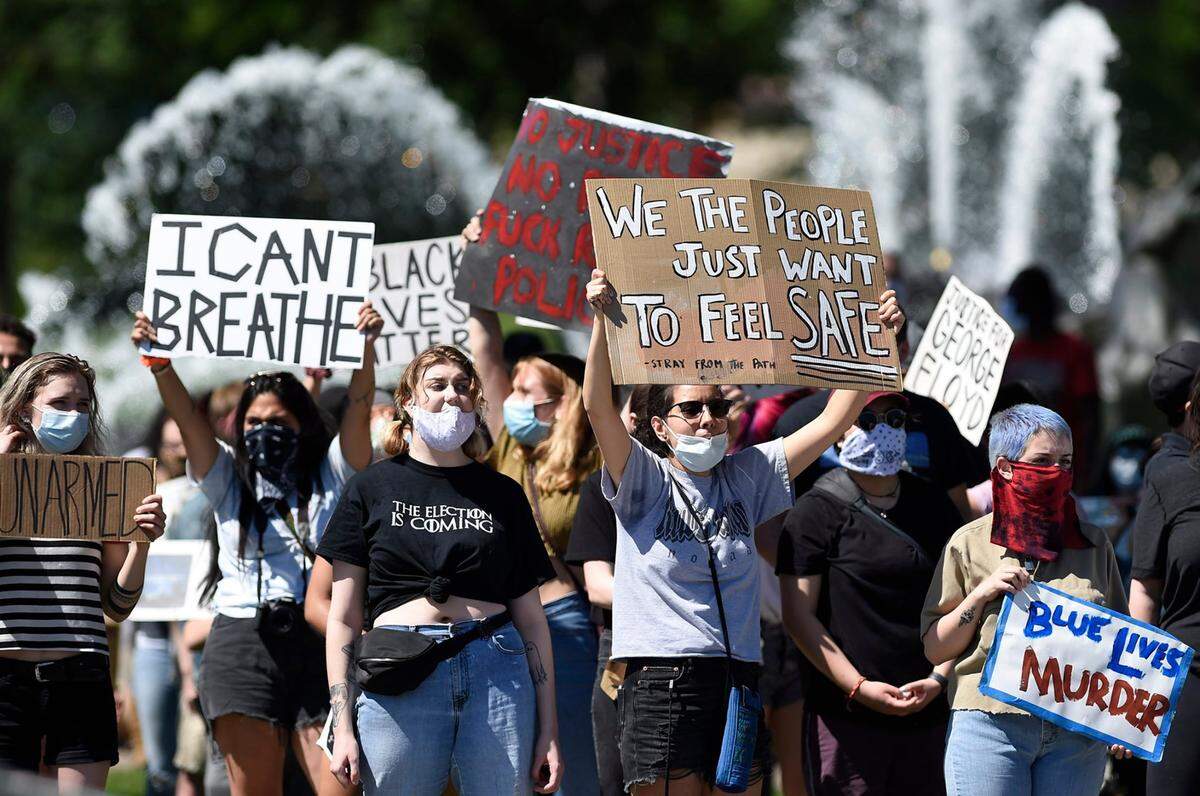
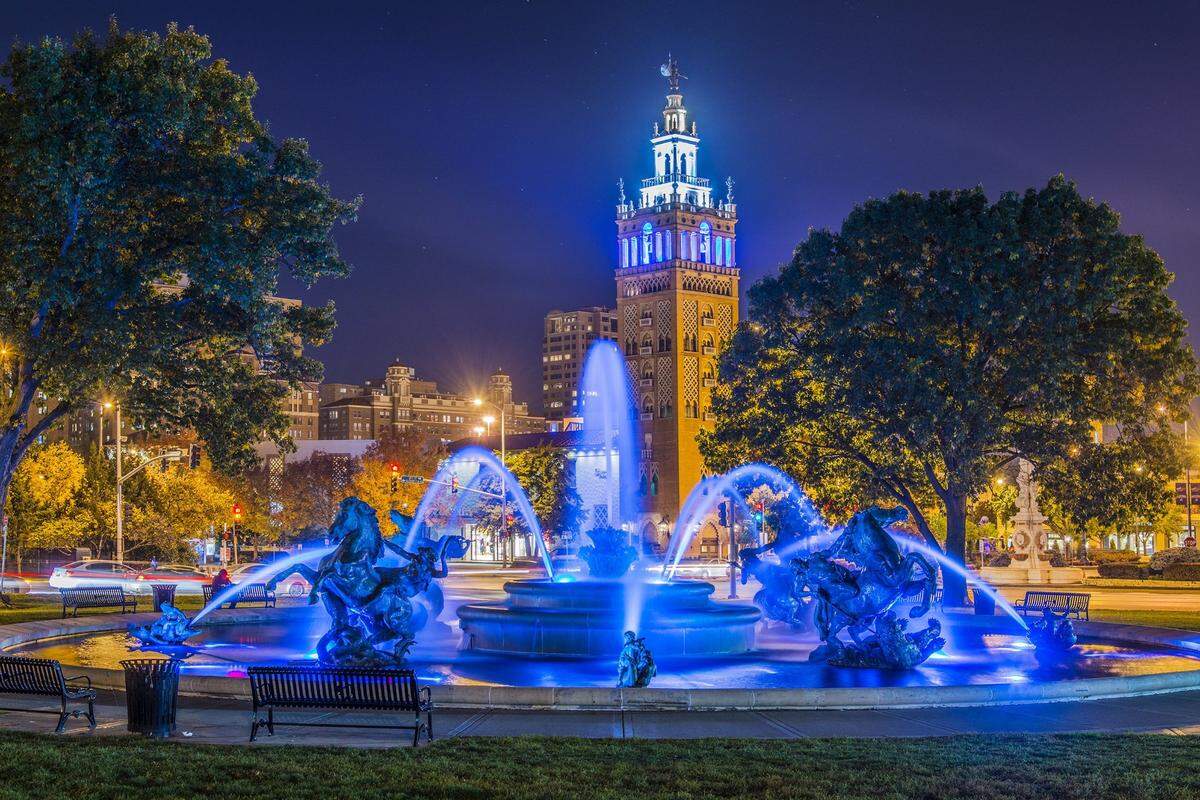
For more than a week, thousands of protesters raised their voices against police brutality and racism at Mill Creek Park, following Floyd’s death on Memorial Day under the knee of a Minneapolis police officer, since charged with second-degree murder. Protesters congregated near the J.C. Nichols Memorial Fountain along J.C. Nichols Parkway on the Country Club Plaza, which the elder Nichols built and opened in 1923.
On Tuesday, Kansas City Mayor Quinton Lucas threw his support behind a move, hotly debated in recent years, to remove Nichols’ name from the parkway and the fountain because of the covenants and deed restrictions written into Nichols’ real estate deals that denied housing to people who were Black.
Chris Goode, a member of the city’s Board of Parks and Recreation Commissioners, wrote a June 4 memo to the mayor and parks officials, recommending that Nichols’ name be removed and that the fountain be renamed the Dream Fountain and that the parkway be renamed after the Rev. Martin Luther King Jr.
“The time has come for us to stop turning a blind eye towards racism of the past and present,” Goode wrote.
Lucas on Tuesday said he would “fully support” the effort.
“No person accelerated white flight, redlining, and racial division in the Kansas City area more than J.C. Nichols,” the mayor said.
‘He was a businessman’
Nichols III did not say whether he thought his grandfather did or did not hold racist beliefs. Nor did he share how he would feel if the name of the fountain and/or parkway were changed.
“It is what it is,” he said. “As the Black athletes say, it is what it is.”
But he said his grandfather was a man of his time and did what business called for.
“Because it was 1903, he had to have restrictive deeds,” he said. “Plain and simple. There were no zoning laws. Restrictive deeds meant that the house had to have certain setbacks on the lot. The size of the house you could build was restricted and, unfortunately, in order to sell to contractors, you had to say no Black people. It was a fact of life.
“I don’t think he had any choice. It wasn’t a matter of feeling. He was a businessman and he had to do what he had to do to be successful.”
He said context matters, as well as the entirety of an individual’s accomplishments.
“I think one of the problems of asking if J.C. Nichols is a racist is you’re asking the wrong question. It’s too simplistic,” he said. “Were people racist in 1903 in the United States? Was the general white population a teeny bit racist? Even the Jewish people and the Italians were in restrictive deeds. How do you think they felt?”
Indeed, Jesse Clyde Nichols, was born in Olathe in 1880, only 15 years after the end of the Civil War. It was the dawn of the American eugenics movement, which by the turn of the 20th century was using faulty science to target numerous ethnic minorities — Irish, Poles, Italians, Black people — as inferior and less fit.
“It was a different country. It was a different time,” his grandson said
Known to friends as Jay, Nichols III is the retired CEO of Nichols Industries holding company. His father, Clyde Nichols, was one of three children, along with Eleanor and Miller, born to the iconic developer.
He said he understands the Black Lives Matter movement and protests against systemic racism.
“I totally sympathize,” he said. “I think Black lives matter. Why wouldn’t they? I don’t think my grandfather would disagree with that.”
But he also said of the recent protests, “there were people who were salted in that crowd who were determined to burn down the Plaza because it was a symbol of white patriarchy, that buzzword, white patriarchy. But when you condemn something because of the way you feel, it’s kind of like Trump. You make up facts to suit your whims of the moment. …
“I’ll tell you one thing, J.C. would have been totally, adamantly, ironclad against Donald Trump. Unlike Donald Trump, Granddaddy read the Constitution.”
A sales tool
He said he thinks people need to know that whatever choices his grandfather made were made as a businessman, salesman and developer of his day, looking to maximize property values.
“He was in the business of selling dirt,” the grandson said. “He said, ‘I buy it by the acre and I sell it by the square foot.’” He did not sell to individual property owners but to home builders at a time before zoning laws.
“Well, if you want to sell lots, what do you have to do? You just don’t take people around and say, ‘Do you want to buy some dirt?’ You have to put in some streets, you have to put in some sidewalks. He set up the homes associations, which were pretty unique. … He had to guarantee nobody was going to come in and put up a boarding house next to a million dollar mansion.”
To maximize and protect property values, Nichols included numerous deed restrictions that controlled the size of the lots, house design, how far back homes could be set from the street. Among the restrictions: not selling to Black people.
“He sold to home builders. They were his customers,” his grandson said. “He had to sell something they would buy.”
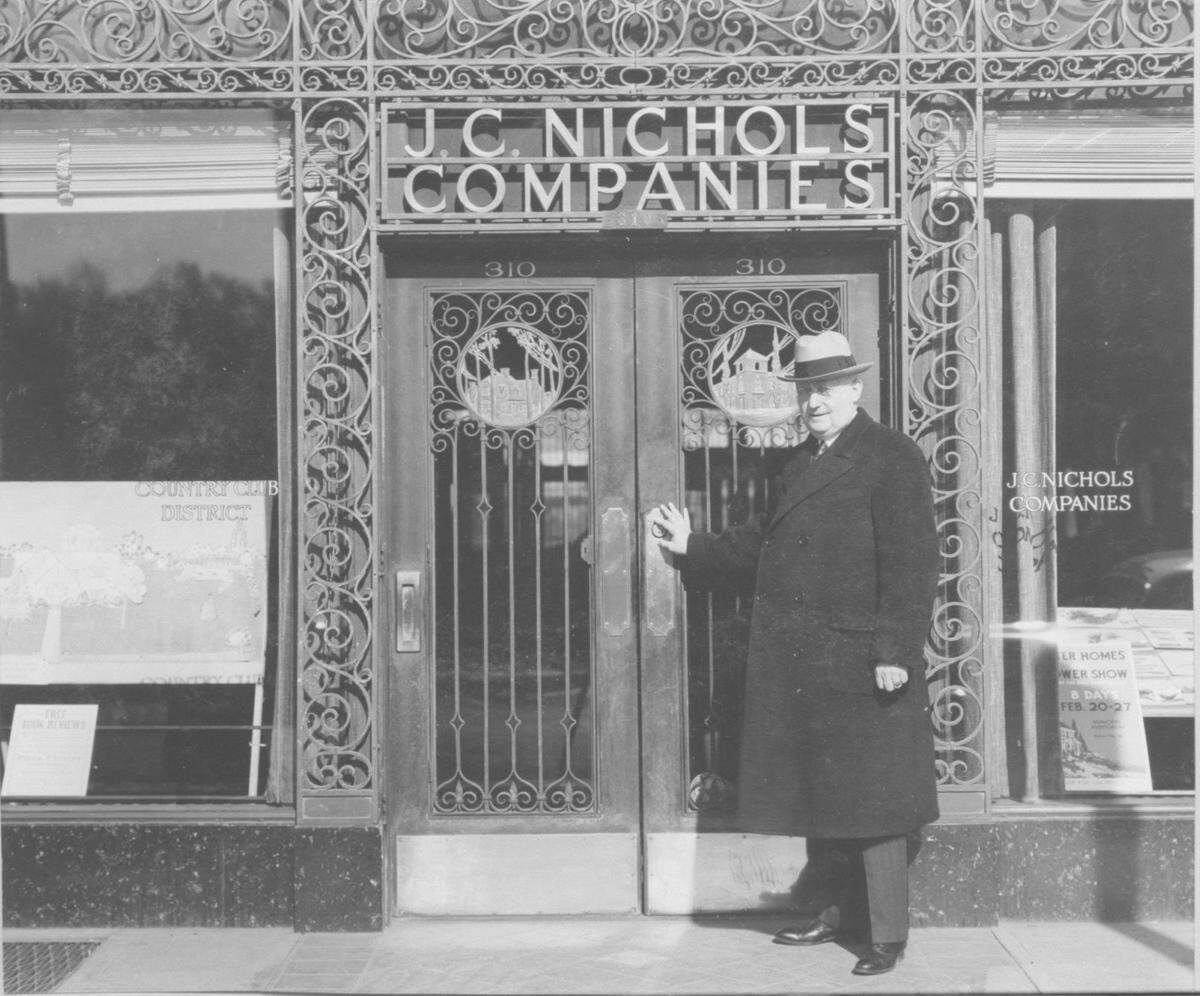
Nichols became very successful, building homes and the shopping center in Brookside, the mansions of Missions Hills and developments in Prairie Village and Kansas City. He died in 1950.
“He was ahead of his time in terms of planning for residential neighborhoods,” local historian William S. Worley, author of the biography “J.C. Nichols and the Shaping of Kansas City,” told The Star on Friday. ”He was also a creature of his own time in terms of race.”
Worley said he’s seen no documented evidence that Nichols bore Black people particular animus. Such restrictions, in fact, existed since at least the mid-19th century, Worley said, predating Nichols’ birth.
Nichols simply saw it as one among a number of sales tools.
“He is a white man selling real estate and he is protecting his real estate values by inserting a racial exclusion clause,” Worley said. “That is his goal. He is absolutely being discriminatory. But he saw this as just one component of protecting property values.”
Nichols’ grandson explained: “When he was in business, no one said you were either a racist or weren’t a racist. People didn’t even talk about it.”
‘The best for Kansas City’
In 1948, the U.S. Supreme Court, in Shelley v. Kraemer, struck down racially restrictive housing covenants. The language, nonetheless, remained in homes associations covenants for decades.
The grandson pointed out that in the early part of the last century, major newspapers at that time, including The Kansas City Star and The Kansas City Times, paid very little attention to people of color. Crime against Black people was little covered.
The Voting Rights Act of 1965 was decades off, as were issues of school integration.
“It was such a different time,” he said.
He said that although it makes for an easy and, he thinks, erroneous narrative to think of “J.C. Nichols as evil genius,” that narrative also ought to include his grandfather’s exceptional love for Kansas City and his major role in creating or supporting many of its institutions.
“He wanted the best for Kansas City,” he said.
That included major support in building the Liberty Memorial, the creation of the Kansas City Philharmonic Orchestra (a precursor to the Kansas City Symphony), the Conservatory of Music that is now the UMKC Conservatory, the Midwest Research Institute.
During World War II, he worked in Washington, D.C., his grandson said, as “a $1 a year man,” making essentially no salary, pushing war manufacturing to Kansas City.
“He put four aircraft factories in Kansas City, because he was a great salesman. I think he created 20,000 jobs,” he said, adding that those plants would later pave the way for the region’s automobile manufacturing in Claycomo and Fairfax.
“I think that a lot of the people who are upset with J.C. wouldn’t be if they knew what he did,” his grandson said. “If you want to rewrite history, you probably don’t care what actually happened.”
This story was originally published June 12, 2020 at 5:00 AM.