
Pain of ‘82: Algerians remember ‘Disgrace of Gijón’ & hope for amends in Kansas City
Saturday’s matchup between Algeria and Austria in Group J of the FIFA World Cup is the last group-stage game, and both will have their Round of 32 spot on the line.
What’s at stake? The winner takes second, and the loser — dependent upon how bad a loss — will take third. In a strange twist, that could actually mean a better matchup in the Round of 32 ... but also the risk of missing out entirely on the knockout stage.
There’s also history between the two dating back nearly 44 years to their matchup Saturday.
Rabah Mohammed Seghir, an Algerian man from Johnson County, immigrated to the United States in 2010, first living in California before moving to Kansas City.
Saturday’s match will feel more personal for Algerians like Seghir, who experienced firsthand the pain in the aftermath of the “Disgrace of Gijon” in 1982.
“What they did,” he told The Star, “made my heart broken.”
What is the ‘Disgrace of Gijon’?
During the 1982 World Cup in Spain, Algeria was placed into a group with West Germany, Austria and Chile.
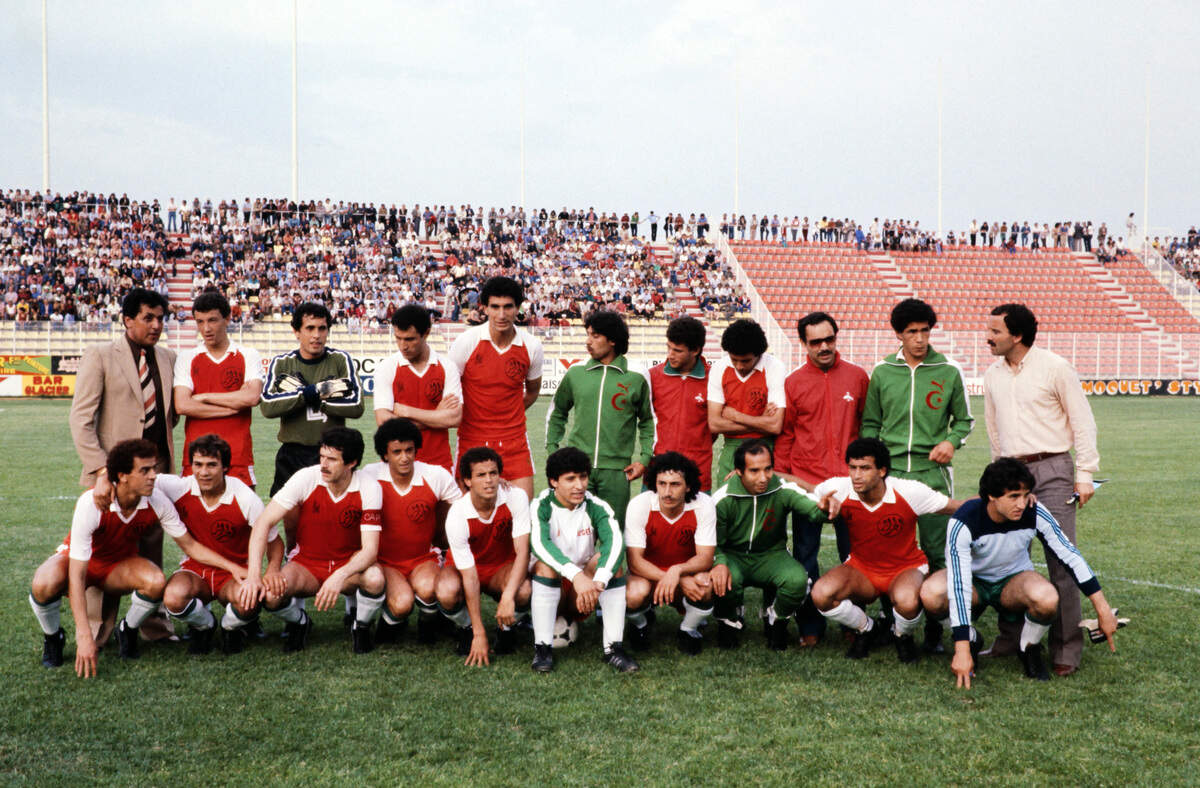
Algeria had beaten the mighty West Germans 2-1 in its first game, but lost to Austria 2-0 in the next. That set up a win-or-go-home game against Chile, which the Algerians won 3-2, becoming the first African nation to win two matches at a World Cup.
That game was played the day prior to Austria and West Germany’s final matchup.
On June 25, 1982, West Germany and Austria took the field at Estadio El Molinón in Gijón, Spain. The Germans scored 10 minutes into the game, and then the match took on a life of its own.
Scottish referee Bob Valentine told The Athletic in 2024 that after 20 minutes, he “started getting a bad feeling.”
The result, as it stood — a 1-0 win for West Germany — would see both Austria and West Germany advance from the group at Algeria’s expense.
New York Times columnist George Vecsey’s dispatch from Gijon said, “It is impossible to prove that the two teams worked in tandem,” but noted the match itself served as evidence.
“West Germany made more kicks backward than forward after its goal,” Vecsey wrote. “Austria, having nothing to lose by a 1-0 defeat — except pride — sacrificed all of that by not attempting to penetrate the West German ring-around-the-rosey.
“For American fans to understand the slowdown employed in the match,” he added, “picture North Carolina’s basketball team going into its four-corner stall after 10 minutes of a tournament game to help the opposition advance also.”
After a similar incident later in the tournament, FIFA responded to the outrage by making all final group-stage matches played simultaneously among teams in a group.
Algeria’s relationship with soccer: ‘It’s in their blood’
Karima, also a Johnson County resident, was living in Algeria at the time. She remembered watching their first-ever World Cup match as a nation. Nobody knew what to expect, but a shock 2-1 win over the Germans sent the country into a celebration.
She remembered running out into the street after the final whistle to celebrate.
“People were cooking and singing songs,” she told The Star. “People were going outside and screaming. It was very beautiful.”
Just 20 years earlier, the country had gained its independence from France, and Algeria was getting a major opportunity to put itself on the global map with the 1982 World Cup.
Then came that infamous match between West Germany and Austria. The country descended into heartbreak the following day, when both the result — and how it took place — became known.
“They didn’t do the right thing,” Karima said. “The older Algerians loved soccer. It was in their blood. People didn’t go to work. I myself was crying, ‘This is not fair!’”
Seghir said he turned away from soccer for some time afterward and still has a bit of a dislike for Germany because of it.
“Germany is a very nice team in the world,” Seghir said. “But what they did made my heart broken.”
Can Algeria exact revenge on Austria 44 years later?
When Austria and Algeria take the field Saturday night, every player who was involved in that infamous match will be well into their 60s — or older — and at least one has passed away. There are four decades and multiple World Cups between the generations of players.
A chance at revenge against those who participated in the Disgrace of Gijón is long gone. Some, though, are seeing how the knockout-stage permutations shake out and flagging the potential for a Disgrace of Kansas City.
A draw between the two would likely see both go through to the knockout stages. But depending on the results in the buildup to Saturday night, third place may not advance, especially with Algeria’s goal differential of minus-2. A win would ensure second for either team.
As things stand, third place could face a significantly weaker opponent in the knockouts, such as Switzerland or Uruguay, while second place would most likely face soccer power Spain. So a narrow loss could actually be a favorable result — albeit a risky one — for Austria, which has an even goal differential. Ditto for a draw for Algeria.
Neither team may truly know the outcome needed to secure positioning in the knockout stages until 30 minutes before their match kicks off Saturday.
For Seghir’s generation, there is hope that this bright new generation of Algerian stars can earn a bit of revenge, which Seghir says can only be felt by those who experienced the pain of 1982.
Seghir also said that it’s time the Austrians asked for forgiveness.
“Not for Algeria,” Seghir said, “But for soccer.”
Daniel Sperry covers soccer for The Star. He can be reached at sperry.danielkc@gmail.com.
This story was originally published June 25, 2026 at 7:00 AM.