
Why World Cup fans in Dallas will see life-size statue of a Kansas City architect
AI-generated summary reviewed by our newsroom.
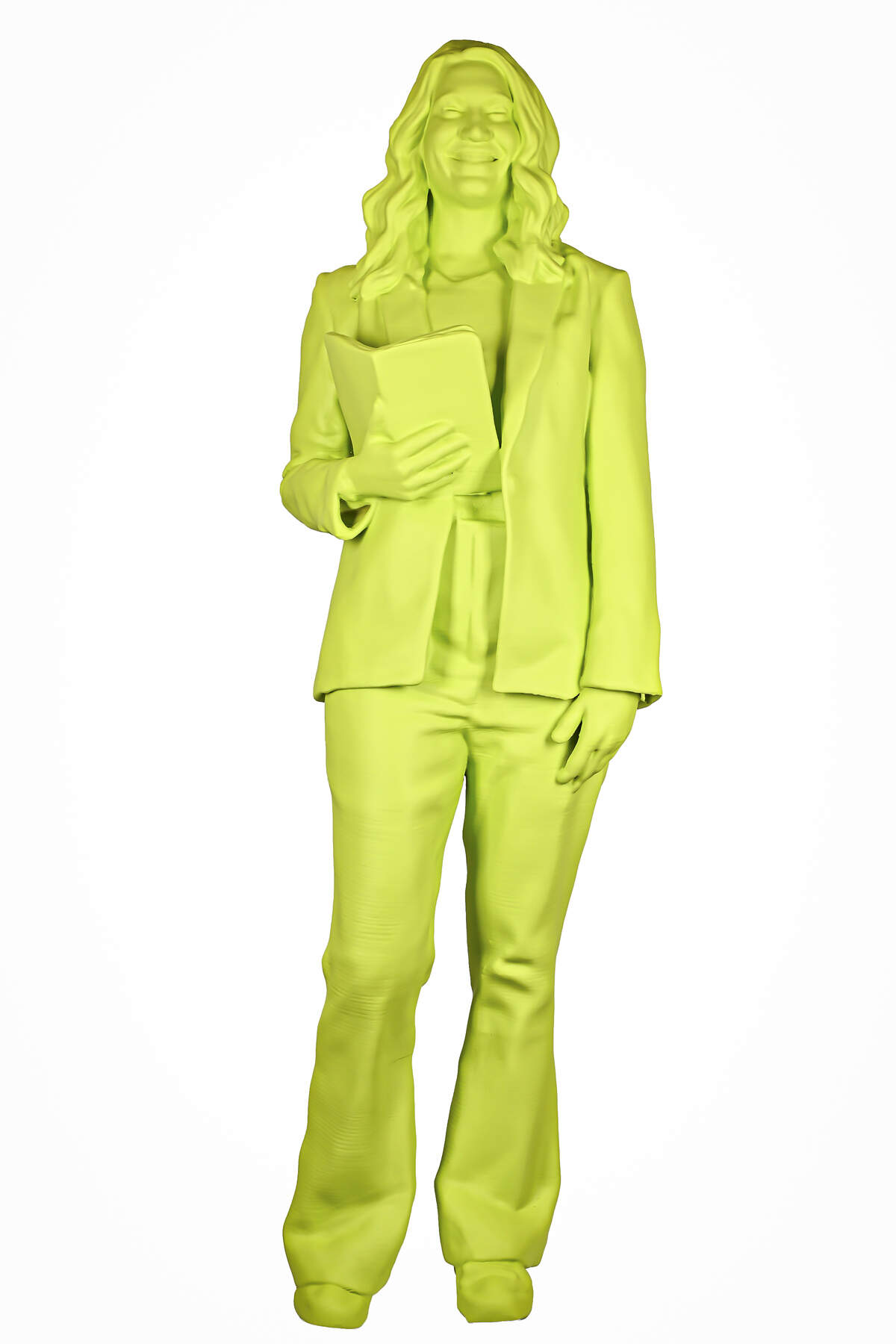
- Jill Monaghan is depicted as a life-size statue at Fair Park’s 2026 FIFA Fan Festival.
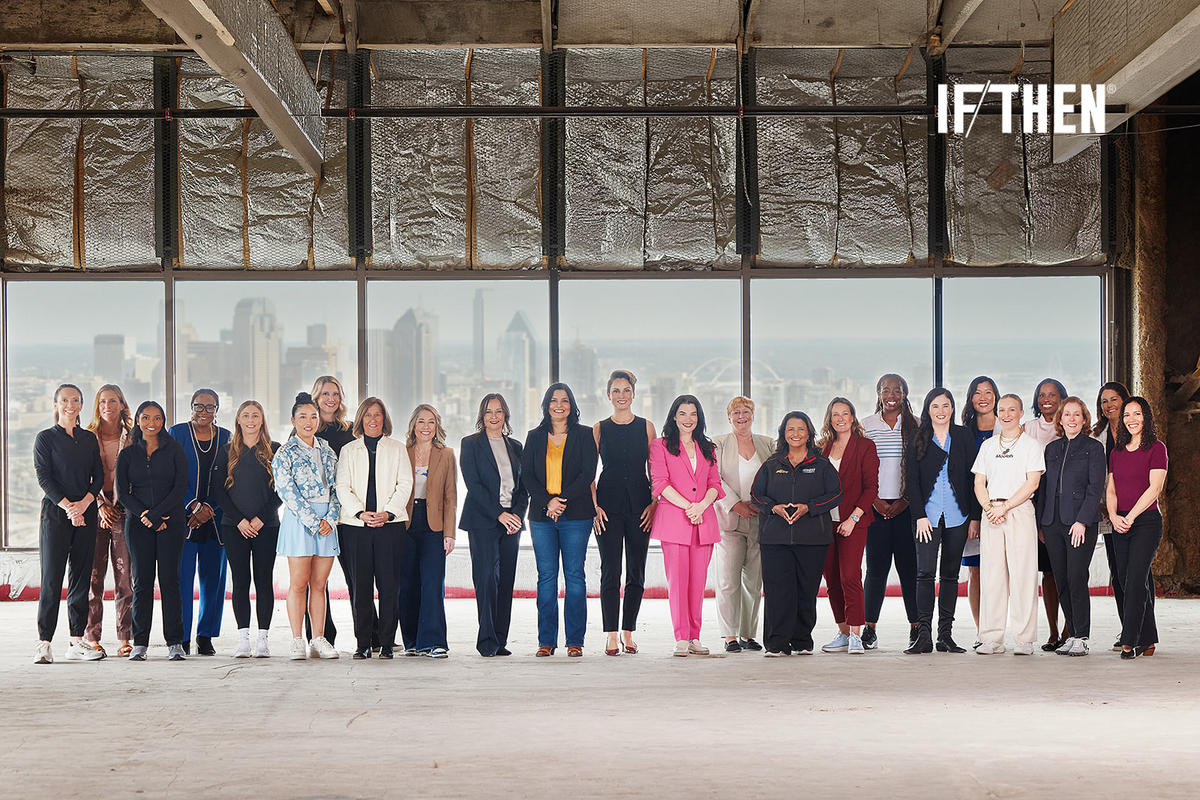
- The exhibit displays 26 life-size, 3-D printed statues of women from 11 states.
- Statues show STEM professionals helping bring sports to life at the 2026 Fan Festival.
Kansas City architect Jill Monaghan ignored the first message she got about becoming part of a FIFA World Cup exhibit in Dallas. It sounded a little odd.
“They had quite the time trying to get a hold of me because they reached out on LinkedIn and I got a message that was like, ‘hey, we want to turn you into a statue.’ So of course your brain immediately is no way, that’s spam,” Monaghan told The Star.
But it wasn’t spam. And now soccer fans can see a life-size statue of Monaghan at the 2026 FIFA World Cup Fan Festival at Fair Park in Dallas.
Monaghan is part of a display of 26 life-size, 3-D printed statues of women from 11 states who demonstrate how science, technology, engineering, and math — STEM — help bring sports to life around the world.
Their statues, located along a pedestrian walkway at the Fan Festival, will greet thousands of fans.
Monaghan led design oversight for CPKC Stadium, home of the Kansas City Current and the first stadium built specifically for a women’s professional sports team.
She worked for Generator Studio at the time and is now a senior associate for Collins Webb Architecture.
The “#IfThenSheCan — The Exhibit: Game Changers” project is meant to inspire interest in STEM careers by spotlighting the stories of women like Monaghan.
The featured women are working in sports medicine, data analytics, elite athletic performance, stadium engineering, biomechanics and a range of other fields.
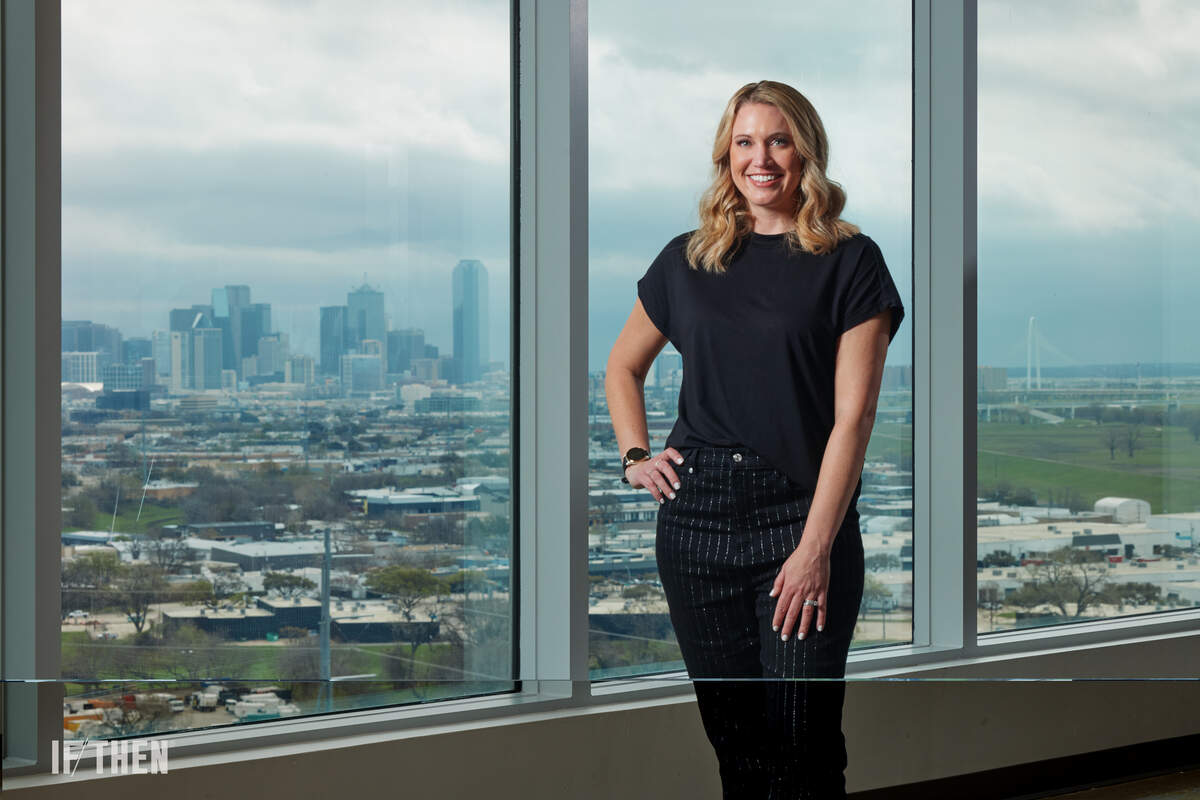
“When girls can see women succeeding in STEM careers tied to something as exciting and universal as sports, it can change how they imagine their own futures,” entrepreneur Lyda Hill, founder of Lyda Hill Philanthropies foundation in Dallas, said in a statement.
“We hope every young person who experiences this exhibit leaves believing there is a place for them in science, technology, engineering, and math. If they can see it, then they can be it.”
The exhibit is part of the foundation’s IF/THEN campaign. The first Game Changers display, showcasing 120 contemporary women working in STEM careers, was the largest assembly of statues of real women ever displayed at one time, according to the foundation.
Each statue in Dallas has a QR code that connects to a digital story, video and photos about each woman and her work. The information is also on the exhibit’s website, ifthenshecan.org.
The statues will be displayed through July 19.
Monaghan, a Kansas State University graduate, answered a few questions for The Star.
So you grew up in Topeka?
“I did grow up in Topeka. I went to Washburn Rural High School and that’s actually where I got my first exposure to the technical side of architecture. I took a CAD (computer-aided design) class my freshman and sophomore year.
“And through that experience, my teacher said, you know, you have an aptitude for this. You might think about going into a profession like architecture or engineering.”
So this goes as far back as high school?
“It actually goes all the way back to elementary school. I had an after-school program that studied and focused on architecture in the Topeka community. And then with research into more historical things like the cathedrals and some of the Baroque architecture in Europe ... just fell in love with it. I actually have a diary entry from then (where I wrote) ‘I went to be an architect.’
“It’s always been ‘be an architect’ once I grew out of the ballerina stage ... ”
How should we go about encouraging girls/young women to get interested and stay interested in STEM?
“I think it’s transparency and access to people that are working in or pursuing STEM careers. Thinking back on it, even from when I was young until now, I didn’t have access to or an understanding of all the different avenues that are available in STEM ... and certainly not a lot of role models at the time that I could look to or reach out to or talk to and ask ‘what is this job’ or ‘what does it mean’ or ‘what does it look like for you.’”
I’ve seen you reference a time in your career when you would be the only woman in the room, so to speak. Is that changing?
“It is changing, I think, because there is more intentionality, just across the professional sports world and also hopefully the world in general to be more inclusive and to embrace different perspectives, whereas perhaps I think my profession, and I’m sure many of others, tended to be more male-dominated.
“Now it feels like that umbrella is opening up and it’s moving in a positive direction.
“There are more women executives, training staff, performance staff, analytics, medical staff, you name it. There are more and more women continuing to have careers in the sports world.”
What do you hope girls and young women will learn from this exhibit?
“If my statue or these statues can spark a conversation that inspires a young person or any person to ask ‘what does she do,’ that’s the first step.”
Tell me a little bit about your other work before the CPKC project. I saw (mention of) the Brooklyn Nets (NBA), the Seattle Kraken (NHL), Tampa Bay Lightning (NHL). What projects did you do with them?
“For the Nets we renovated their locker room and their locker room support spaces to modernize them. For the Seattle Kraken we worked on the Kraken Community Iceplex which is the training facility for the Kraken and also has community rinks ...
“And we actually had multiple years of renovation at Tampa Bay where the Lightning play ... doing lots of things kind of top to bottom in that arena.”
What was your specific job on CPKC stadium?
“I was a part of a very large team that was mostly women-led across the board ... I was the senior project designer. I was responsible for coming up with concepts and then presenting those different ideas to team ownership, along with the firm principles and the senior project team.
“And then once we collectively agreed on an idea or a direction or something that needed refinement, I would work with the client and the internal overall project team to make sure the vision of that idea was executed.”
What specifically makes the stadium female-friendly?
“So the female-friendly thing is an interesting conversation and I say that because there are so many things, regardless of gender, that professional athletes need and should have in their training facilities and stadiums.
“Historically with women’s professional teams being second or third tenants in the stadiums they play in they don’t maybe even have access to what would be like a baseline for a men’s team.
“So right from the start, just giving them equal and hopefully better facilities is one of the groundbreaking aspects of the stadium.
“In terms of specifically female-friendly things, there are ergonomic things and dimensional things that come into play just given the size of the average NWSL player and small things that just to try to make the lockers more comfortable ... looking at the height of the countertops and the wet areas and the vanities and things like that, kind of small things like that all the way up to making sure the ethos and the brand (are) embedded in the stadium.
“I can’t take credit for this, but it was a really great idea ... the hallway that the team walks down when they’re taking the pitch from their locker room they pass by the language from Title IX.”
When did you go through the 3D process? Did you go to them or did they come to you?
“The 3-D scanning process took place in March of this year and it was at Pegasus Park which is an awesome science innovation hub in Dallas.
“Each one of us was scanned in a custom multi-camera ... booth that captured hundreds of high-resolution images. And then those images are compiled to create this composite 3-D scan that was processed into a 3-D model, and that is then ultimately the digital file that is precise and suitable for the full-scale 3-D printing.”
“When was the first time that you saw your statue?
‘I actually saw it for the first time in photos that one of my friends sent me from a TikTok …”
So you haven’t seen it in person yet?
“No I have not … it’s the time … (this is) all during a pretty challenging time of year …”
What happens to your statue after World Cup? Does it go in your backyard?
“The next location for the statues is still being worked out. So I’m not sure yet, but I’m super excited to see where they go, or where I go.”
Are you going to any of the World Cup events here in Kansas City?
“With some of the crazy things that have been going on this summer we didn’t want to buy tickets and then not be able to go. But we’re definitely still watching … and you know we would love to go.”
.jpg)