How changes to IARP will affect timeline for NCAA case against KU Jayhawks basketball
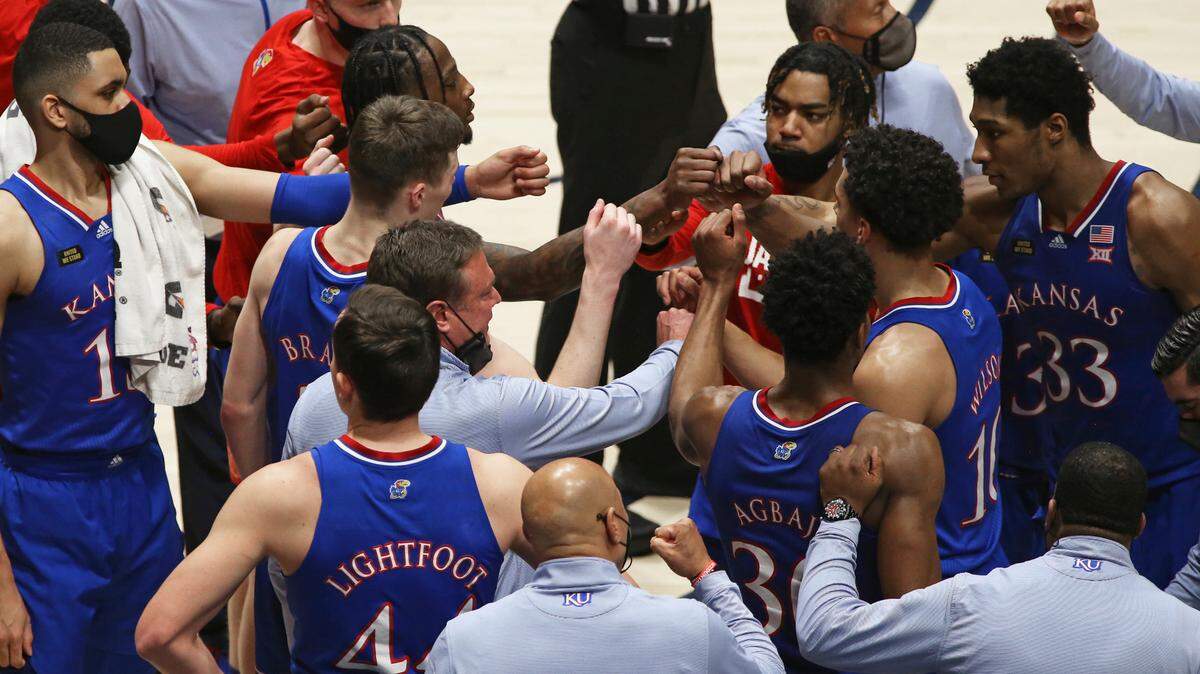
Kansas Athletics’ current NCAA infractions case — which alleges five Level I rules violations within the men’s basketball program — is likely to have an expedited timeline following a change made this month by the NCAA Division I board of directors.
To help explain what’s different now and what’s ahead with cases like KU’s, The Star spoke Tuesday with Derrick Crawford, the NCAA’s VP of Hearing Operations.
The following are some questions and answers, with help from Crawford’s comments. Note that Crawford cannot comment specifically about KU’s impending case and can only speak in generalities about the process.
Q: Can you briefly explain what’s happening with KU’s case?
In previous years, KU would be scheduling a hearing with the NCAA’s Committee on Infractions about its alleged violations. Following the Condoleezza Rice-led commission on college basketball, though, the NCAA created the Independent Accountability Review Process (IARP), which focuses on handling complex cases by using NCAA outsiders to gather evidence and deliver rulings.
As part of this, the “Complex Case Unit” for each case has a vital role. In the past, the NCAA’s enforcement staff would not only investigate potential violations, but it would also present those allegations and findings to the Committee on Infractions.
With this new method, the findings are presented by the CCU, which is made up of external investigators and advocates with no school affiliations, along with one member of the enforcement staff.
The CCU, then, is charged with reviewing the NCAA enforcement staff’s notice of allegations and investigative efforts, then making independent determinations on whether additional investigation is needed. It also can add violations, subtract them if it feels some aren’t warranted or even reissue a new notice of allegations altogether.
Q: OK, so what changes did the NCAA Division I board make?
Two major ones as it relates to cases like KU’s that are being decided by the IARP.
For one, the board of directors — made up of select NCAA school presidents and chancellors — voted that the CCU “accept the investigative work of the (NCAA) enforcement staff unless the unit can demonstrate a compelling reason why additional investigation is required.”
The other change the board approved was to allow case timelines to be developed and published.
Q: When do these changes go into effect?
Immediately ... but with caveats.
When it comes to the board voting to limit the amount of CCU investigations, Crawford said that change is “prospective.” That means it is an alteration for all IARP cases that are accepted after Aug. 4.
Adding timelines to cases, however, is “retrospective.” That means this will be added for all current cases as well as those coming in the future.
Q: Why was a change to the CCU’s role needed?
Crawford said the creation of the IARP led to some unintended consequences.
Originally, the NCAA board envisioned that the CCU investigators would look at the information provided by the NCAA’s enforcement staff, see if there were any holes or gaps, work to fill those in, then move forward with the case.
In Crawford’s view, though, that’s not what happened in most IARP cases, as the CCU instead opted for a wholesale review of everything.
“To use of football analogy, instead of taking the ball from the 5-yard line and going into the end zone, you’re going back to your own territory and the 20-yard line and going back down the field again,” Crawford said. “And so that is not what the membership contemplated, and they made that quite clear in recent discussions.”
While investigators still can choose to re-investigate certain parts of the case, the new ruling requires them to provide a compelling reason.
Q: These are important cases. Why is further investigation a bad thing?
The answer comes down to the No. 1 criticism the NCAA has faced with these cases: how long they’re taking to get decided.
Crawford said, in theory, it can sound simple to schedule a sit-down with someone who has already been interviewed in the NCAA’s previous investigation, but the reality is that each of those new interviews can add two to three months to a case’s life cycle.
“If you’re trying to interview a very prominent head coach, trying to get with his schedule, with his lawyer’s schedule, with the institution’s — because they’re going to be there, their lawyers — it’s kind of a cast of thousands, so to speak,” Crawford said.
The bottom line: Crawford said the board wants to see this process move quicker.
“Members are really, really disappointed that the cases have taken so long to be resolved,” Crawford said, “and we get it.”
Q: So if this change is only intended for future cases, why will it accelerate KU’s current case timeline?
Crawford shared his belief that the board approving this “emergency legislation” — meaning it goes into effect immediately — sent clear notice about how cases should proceed. He described the quick action as “pretty extraordinary” because of its expedited nature.
“I think it will cause the current cases to be sped up and to be looked at and say, ‘Hey, you know, what? The board sent a pretty strong message about this,’” Crawford said. “Let’s make sure whatever we’re doing as appropriate in its focus. If it’s not, let’s just move forward.’”
Q: To be clear, though, the previous investigation the CCU worked on in recent months will be part of KU’s case?
That is correct.
Q: Is the CCU’s investigation on KU’s case almost completed?
According to Crawford, it’s either finished or very close.
“They are all substantially done investigations,” Crawford said of the six NCAA cases referred to the IARP and listed on its website. “There may be a few things that are outstanding, but they are pretty much all winding down and entering the resolution of that investigative phase.”
Q: OK, let’s get to the second IARP change. What is the reason for adding case timelines?
The answer, in short, is an attempt to add transparency to the process.
Originally, after the IARP accepted a case, there was to be no public announcement until a final resolution was reached. This followed NCAA bylaws, which prohibited comments about an ongoing investigation.
The board altered those rules when it chose to add timelines to these cases.
“The concern was from the board that the IARP has a bit of a credibility issue, because no one knows what’s going on in the cases, right?” Crawford said. “The only data point right now is the date that the case got referred, and that’s it.”
When people have no information about a case, Crawford said, they can believe nothing is going on with it. That’s far from the truth, he said, as “quite a bit is going on, but no one knows about it.”
“We want to make sure that we’re putting enough information in there that is useful so that anyone who goes to the site can look at it and have some understanding of what’s been going on in the case,” Crawford said, “and not just have this kind of dearth of information that’s currently out there.”
Q: What will the IARP timelines look like on the IARP website?
That’s still to be determined.
Crawford said because the vote took place only two weeks ago, he hasn’t worked out all the details just yet. He has a meeting with the IARP’s Oversight Committee in two weeks, and then, he plans on providing a proposed draft of a timeline to get feedback about whether it provides too much or too little information.
One important note: The timelines will only be retrospective, meaning they will give dates and details about events that have already happened with the case. They will not, for instance, give an exact future date for when a case’s resolution will take place.
Q: When will the timelines be up?
Crawford says his goal is to have that information up in 30 days. So roughly by the end of September.
Q: What good will the timelines do?
For one, it’ll allow the public to see where each IARP case stands in relation to the others.
Perhaps more importantly, though, it’ll also give a rough estimate of how close a case is to completion. For example: Crawford says with a standard NCAA Committee on Infractions case, a ruling is typically issued a maximum of 90 days following a hearing.
There are exceptions, of course, but once an IARP case timeline shows a hearing has taken place, the public can know that a final resolution is likely coming in the next few months.
Q: What will these changes accomplish?
Crawford, mostly, is hopeful that this “sheds some light on what’s been going on” with these IARP cases.
“This is a membership organization. We work for the members,” Crawford said of the NCAA. “And I want them to have trust in the process and believe in it and that it’s credible.”
To be fair, the extended timeline is not all on the NCAA or the IARP, as for two years, the federal government would not allow the NCAA to look into these cases following the release of its initial investigation in September 2017. Crawford — he previously worked as an FBI agent and started his career in the U.S. Attorney’s office for the Southern District of New York — said the NCAA did not want to interfere with criminal prosecutions nor risk an obstruction of justice charge.
It’s still fair he says, though, to judge the NCAA and IARP on what’s happened with these cases between 2019 and now.
“These cases have taken far longer than any of us anticipated,” Crawford said, “and we need to get them resolved as quickly as possible.”